


Our Blogs
Which Is the Brake in a Car? A Simple Guide for Beginners

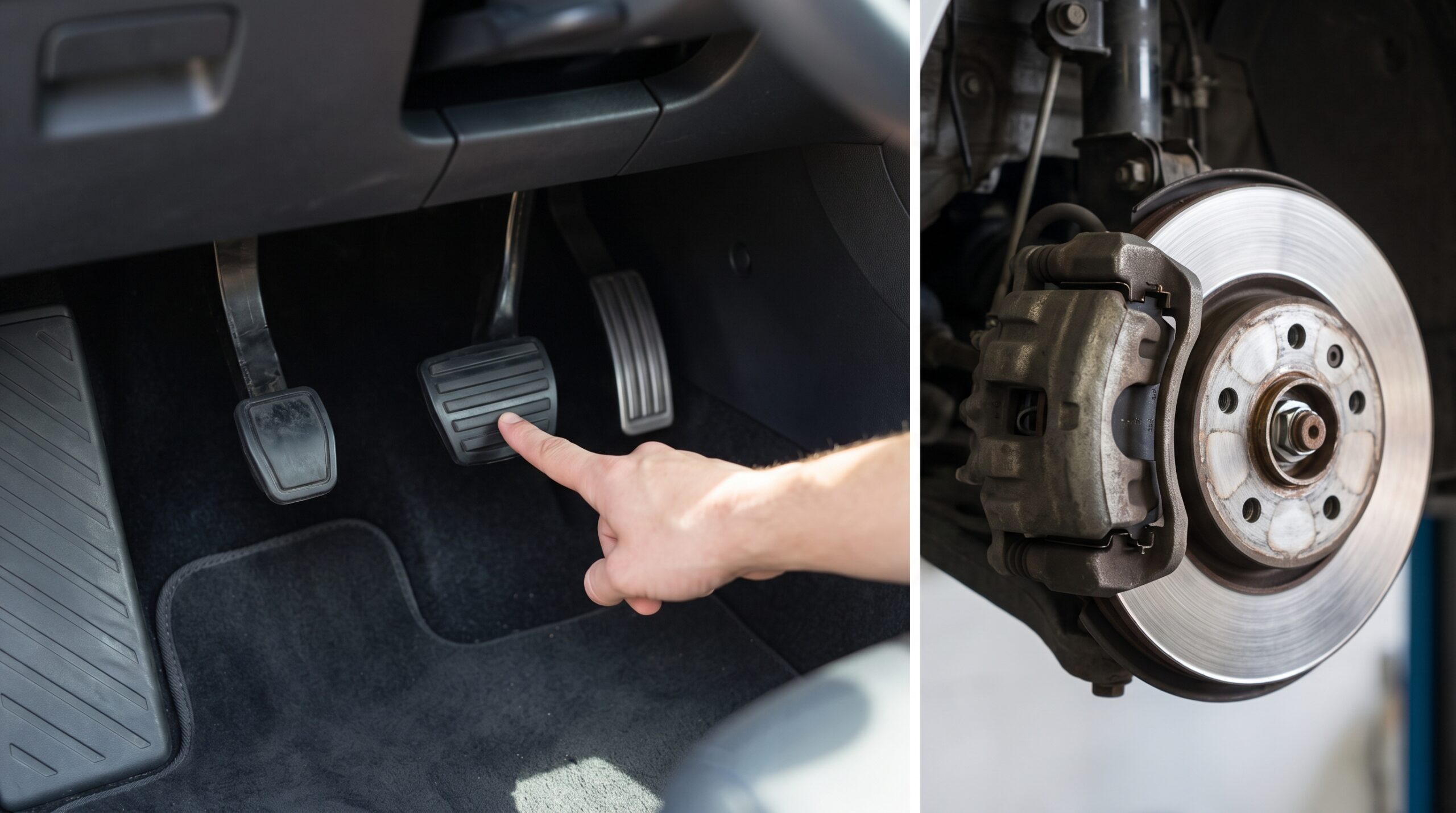
If you’re a new driver, one of the first things you need to learn is what the brake is in a car. The brake system brings your car to a stop or slows it down. In most cars, the brake is the wider pedal on the left of the accelerator.
In an automatic car, you normally have two pedals: the brake pedal and the accelerator pedal. The brake. The brake is on the left, while the accelerator is on the right. In a manual car, you’ve got three pedals: the clutch on the left, the brake in the middle, and the accelerator on the right.
Knowing which one is the brake in a car is vital before you get behind the wheel. If you press the wrong pedal, you can end up with sudden acceleration rather than deceleration. That’s why it’s important for novices to familiarize themselves with the pedal layout before moving the vehicle.
The braking system has several components: the brake pedal, the master cylinder, the brake fluid, the brake lines, the brake pads, the brake rotors or drums, the calipers, and the ABS (anti-lock braking system).
This guide explains what a car’s brake is, where it is, how it works, and how to use it.
What is the brake in a car?
The brake pedal is the pedal you use to slow or stop the vehicle. In most modern cars, it’s the pedal between the clutch and the accelerator in a manual car. In an automatic, it’s the pedal to the left of the accelerator.
For anyone asking which part of a car is the brake, the simple answer is that the brake is the wider pedal you press to slow or stop the car.
The exact shape and size will, of course, vary from vehicle to vehicle, but the brake pedal is pretty easy to identify.
The Brake Pedal
The brake pedal is in the driver’s footwell and is normally bigger than the accelerator.
When you’re in the driver’s seat, look below the steering wheel. In an automatic, you’ll typically have two pedals. The one on the left is the brake, and the smaller one on the right is the accelerator.
If you’re learning which is the brake in a car, don’t just go on the look of the pedal. Check the owner’s manual and familiarize yourself with the controls before you get behind the wheel.
When you press the brake pedal, your foot is applying force to the brake system. That force is then transmitted through the system and ultimately creates friction at the wheels.
Brake Pedal vs. Gas Pedal
The brake pedal and the accelerator have exactly opposite functions.
The brake pedal slows or stops the vehicle. The accelerator pedal (sometimes referred to as the ‘gas pedal’) increases engine power and, hence, the vehicle’s speed.
In an automatic, the brake is on the left and the accelerator is on the right. Both are controlled with the right foot when you’re driving normally.
This simple layout answers the question of which brake is used in most automatic cars.
Confusing the pedals can be dangerous. A driver who wants to stop and presses the accelerator instead may well end up with the car moving forward.
Before you go and drive an unfamiliar vehicle, take a moment to get to know the pedals.
What does the brake pedal do?
The brake pedal initiates braking.
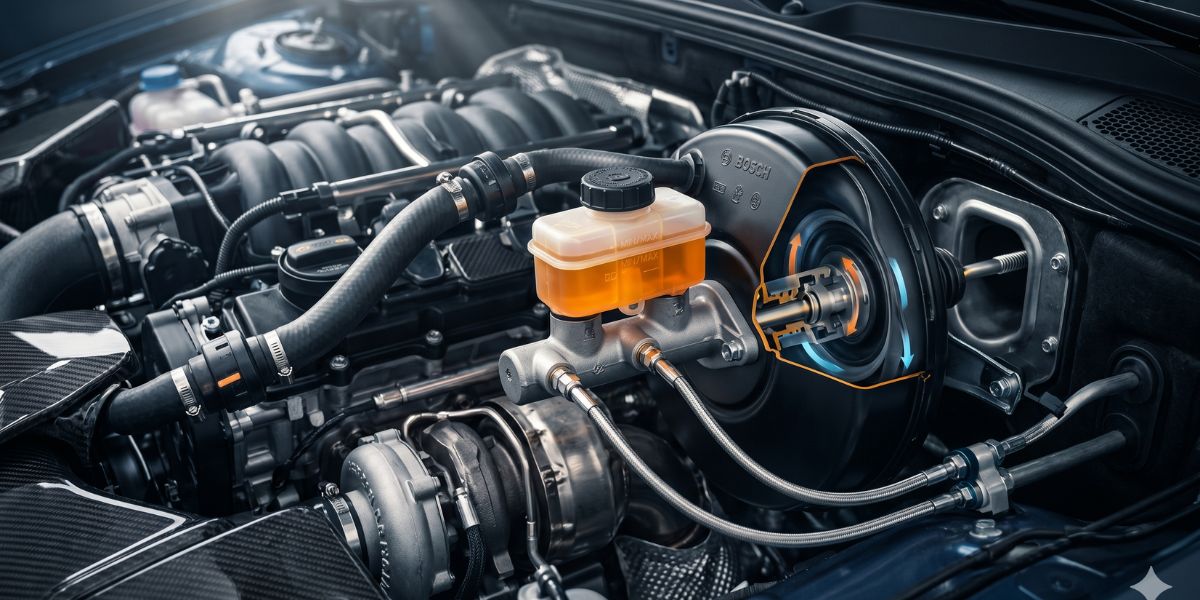
When you press the pedal, it moves a mechanism linked to the master cylinder. The master cylinder then generates hydraulic pressure in the brake fluid. That pressure is transmitted through the brake lines to the brake components at the wheel ends.
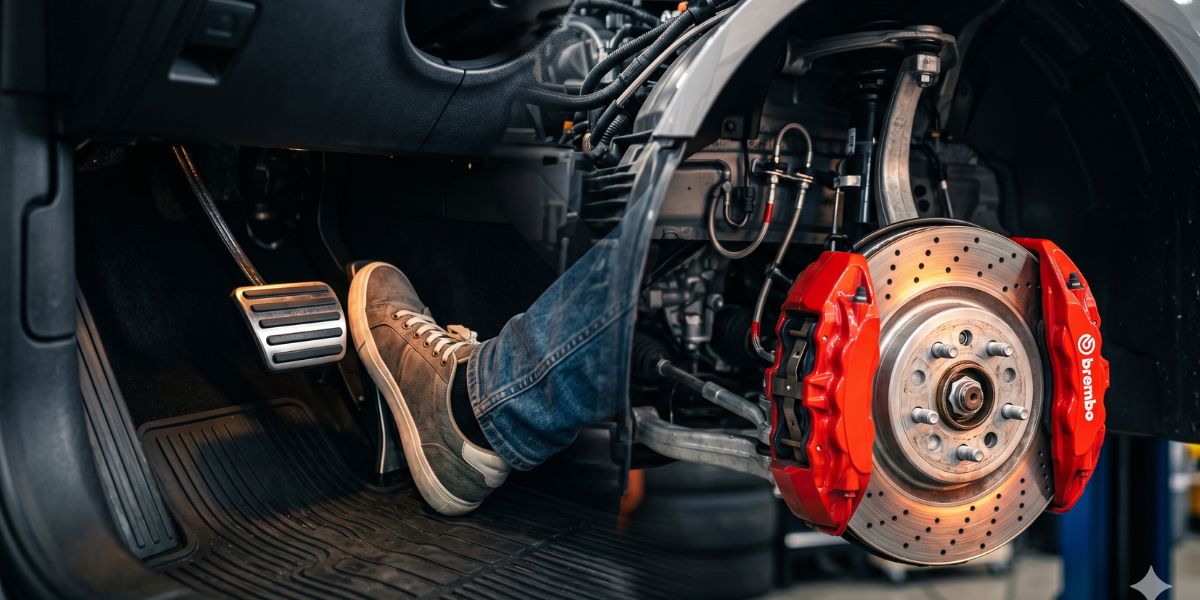
With disc brakes, pressure from the brake pedal causes the calipers to push the brake pads against the rotating brake rotors. The friction between the pad and rotor slows the wheel.
With drum brakes, the brake shoes press against the inside of a rotating drum.
So when you’re learning which part of a car is the brake, remember that the pedal is just the driver’s input. A number of mechanical and hydraulic components work together after you’ve pressed the pedal.
Where is the brake pedal?
Pedal position is dependent on whether you’ve got an automatic or a manual.
Understanding the layout is absolutely critical for new drivers. Before you even go to start the engine, you need to know where the brake pedal is and which pedal is the accelerator.
Brake Pedal in Automatic Cars
Automatic cars normally have two pedals:
- Brake pedal on the left
- Accelerator pedal on the right
The brake pedal is normally wider. The accelerator is normally narrower.
If you’re asked which is the brake on a car with an automatic transmission, the answer is invariably the left pedal of the two.
Drivers normally use their right foot for both the brake and the accelerator. That reduces the chance of them being on both simultaneously.
When you’re starting an automatic, keep your foot on the brake before you shift from Park into Drive or Reverse.
Brake Pedal in Manual Cars
Manual cars normally have three pedals:
- Clutch on the left
- Brake in the center
- Accelerator on the right
The clutch engages and disengages the engine from the gearbox during gear changes. The brake is used to slow the vehicle, and the accelerator to control engine power.
So, in a car with a manual gearbox, the brake pedal is the middle pedal.
The brake pedal is between the clutch and the accelerator.
How do car brakes work?
Car brakes work by using a mechanical, hydraulic, and frictional system to reduce the speed of the wheels.
The exact implementation will vary from vehicle to vehicle, but the general principle is the same. The driver presses the brake pedal; the hydraulic pressure is transmitted to the braking components, and friction is then applied to the wheels to slow them down.
Pressing the Brake Pedal
Your foot is the initial input.
When you press the pedal, the pushrod acts on the master cylinder, which builds pressure in the brake fluid.
Brake fluid then runs through the brake lines to the wheels.
This is why ‘which is the brake in a car’ is more than just identifying a pedal. The pedal is the control that initiates a process involving multiple components.
Modern brakes are designed to multiply the force of the driver’s foot. Brake boosters are used to make braking easier.
Brake Calipers and Brake Pads
Many modern cars use disc brakes.
A disc brake system has a rotating disc (the rotor). A caliper sits around part of the rotor and contains the brake pads.
When hydraulic pressure reaches the caliper, it pushes the brake pads against the rotor, and the friction generated slows the rotor.
As the rotor is attached to the wheel, slowing the rotor will also slow the wheel.
The amount of braking force is a function of several variables, including pedal pressure, vehicle speed, tyre grip, brake condition, and road surface.
Brake Rotors and Drums
Disc brakes use rotors and pads.
Drum brakes work on a different principle. There are brake shoes inside the drum that move outward and press against the drum’s inner surface as it rotates.
Both systems use friction to slow the vehicle.
Many cars will have disc brakes on the front wheels and will have either disc or drum brakes at the rear.
Understanding these bits makes ‘which is the brake in a car’ a lot easier to grasp, as you can see exactly how the pedal relates to the braking action at the wheels.
What are the main parts of a car’s brake system?
A vehicle’s braking system has several parts, each with a specific function.
Brake Pedal
The brake pedal is the driver’s control.
Pressing it starts the braking process. Releasing it will normally allow the brakes to stop applying force.
For someone learning which part of a car is the brake, this is the first component to identify.
Master Cylinder
The master cylinder converts mechanical force from the brake pedal into hydraulic pressure.
It contains brake fluid and pressurizes it as it flows through the brake lines.
If the master cylinder develops a serious problem, braking performance can be affected.
Brake Fluid
Brake fluid transmits hydraulic pressure through the brake system.
It must be appropriate for the vehicle and maintained at the correct level.
Brake fluid absorbs moisture over time, so manufacturers do specify an inspection and replacement interval for many vehicles.
Brake Lines
Brake lines carry pressurized brake fluid from the master cylinder to the brakes near the wheels.
Some systems use rigid metal lines and flexible hoses near moving suspension components.
A damaged or leaking brake line can reduce braking performance and requires prompt attention.
Brake Pads
Brake pads are friction materials used with disc brakes.
They press against the rotor when the brakes are applied.
Brake pads gradually wear down, so they need periodic inspection and replacement when they reach the manufacturer’s service limit.
Brake Rotors
Brake rotors are metal discs connected to the wheel hub.
Brake pads clamp against the rotor to create friction.
Rotors can wear, develop surface problems, or become damaged. Their condition should be checked during brake service.
Brake Calipers
Calipers hold the brake pads and use hydraulic pressure to press them against the rotor.
A sticking or damaged caliper can cause uneven braking, excessive pad wear, or other problems.
ABS Components
ABS stands for Anti-lock Braking System.
An ABS system uses wheel-speed sensors, a control module, and hydraulic control components to help prevent wheel lock during hard braking.
ABS does not eliminate the need for safe driving or good tires, but it can help maintain steering control during certain emergency braking situations.
Front Brakes vs. Rear Brakes
A car’s front and rear brakes work together, but they do not always perform the same amount of work.
Why Front Brakes Do More Work
When a vehicle slows down, its weight shifts toward the front.
This is called brake dive or forward weight transfer.
Because the front tires often maintain greater braking force during deceleration, front brakes typically handle a larger share of the braking work.
This is one reason front brake components may experience significant wear.
Knowing which is the brake in a car does not mean there is only one brake component. Each wheel may have its own braking hardware.
How Rear Brakes Help
Rear brakes help slow the vehicle and provide balanced braking.
The braking system controls front and rear braking force based on the vehicle’s design. Modern vehicles may use electronic systems to help manage braking behavior.
Rear brakes are still important even though the front brakes often provide more braking force.
A problem with the rear brakes can affect vehicle stability and stopping performance.
Disc Brakes vs. Drum Brakes
Disc brakes use rotors and calipers.
Drum brakes use drums and brake shoes.
Disc brakes generally offer good heat management and are common on modern passenger vehicles. Drum brakes are still used on some rear axles because they can be durable and cost-effective.
Neither design changes the basic answer to which is the brake in a car. The brake pedal remains the driver’s primary control for the main braking system.
What Is the Emergency or Parking Brake?
The parking brake is a separate braking control designed mainly to keep a parked vehicle from moving.
It may also be called the emergency brake, handbrake, or parking brake.
Where Is the Parking Brake?
There are several common designs.
Hand Lever
Older and some modern vehicles use a hand-operated lever located between the front seats.
Pulling the lever applies the parking brake.
Foot Pedal
Some vehicles have a separate parking brake pedal near the driver’s left foot.
It is different from the normal service brake pedal.
Electronic Parking Brake
Many newer vehicles use an electronic parking brake.
It may be controlled by a small switch or button.
The exact operation varies by vehicle, so check the owner’s manual.
Parking Brake vs. Main Brake
The main brake system is used regularly while driving.
The parking brake is mainly used to hold the vehicle when parked.
The two systems can have different mechanisms, depending on the vehicle.
If you are asking which is the brake in a car, do not confuse the parking brake control with the normal brake pedal.
The main brake pedal is used to slow and stop the vehicle during normal driving.
What Is the ABS Brake System?
ABS is one of the most important safety systems in modern vehicles.
What ABS Means
ABS means Anti-lock Braking System.
Its purpose is to help prevent the wheels from locking during hard braking.
A locked wheel may have less ability to respond to steering input. ABS can rapidly adjust brake pressure at individual wheels to help maintain traction.
How ABS Helps During Hard Braking
If the system detects that a wheel is about to lock, it can reduce and reapply brake pressure very quickly.
During an ABS event, you may feel vibration or pulsing through the brake pedal.
That sensation can be normal when ABS activates.
During an emergency stop in a vehicle equipped with ABS, apply firm, continuous pressure to the brake pedal and steer toward a safe path. Do not repeatedly pump the brake pedal to imitate ABS.
This is another reason understanding which pedal is the brake in a car is important. In an emergency, you need to know exactly which pedal to press.
What the ABS Warning Light Means
If the ABS warning light stays illuminated after the vehicle starts, there may be a problem with the ABS system.
The normal braking system may still operate in some cases, but ABS assistance may not be available.
Because warning-light meanings vary by vehicle, check the owner’s manual and have the system inspected when necessary.
If the regular red brake warning light also comes on, or the brake pedal feels abnormal, treat the issue as more urgent.
How to Use the Brake Pedal Correctly
Knowing which is the brake in a car is only the first step. You also need to learn how to use it safely.
How to Brake Smoothly
For normal stops, look ahead and start braking early.
Apply steady pressure rather than just bang on the pedal.
As you’re slowing down, you can progressively ease off the pressure right up to a complete stop. That will make the stops much smoother for the passengers.
Don’t wait until you’re at the last moment to apply the brakes.
Good braking starts with good observation. You’ve got to look far ahead for traffic lights, pedestrians, stopped vehicles, junctions, and road changes.
How to Brake During an Emergency
Emergency braking is all about getting your foot down quickly.
If an unforeseen hazard arises, then firmly apply the brake pedal.
If it has ABS, then keep firm pressure on the brake pedal and keep the wheel in control.
Do not deliberately test emergency braking on public roads.
If you’re learning which is the brake in a car, practice identifying the pedal when the vehicle is stationary and off.
How to Brake on Wet or Slippery Roads
Wet roads will reduce tyre grip.
Drive more slowly when conditions demand it, and leave more space between your car and the car in front of you.
Brake smoothly and don’t make any sudden steering inputs.
Remember that ABS doesn’t create any extra tyre grip. It just helps prevent the wheels from locking; the tyres still have only a finite amount of grip.
Common Braking Mistakes to Avoid
Some common mistakes include:
- Pressing the accelerator instead of the brake
- Waiting too long before braking
- Following another vehicle too closely
- Driving too fast for road conditions
- Ignoring unusual brake noises
- Ignoring warning lights
- Resting a foot on the brake pedal unnecessarily
- Using worn tires with poor grip
- Continuing to drive when braking performance feels abnormal
A new driver should always check which pedal is the brake in a car before moving an unfamiliar vehicle.
Signs Your Car Brakes Need Attention
Brake problems must never be ignored.
If you notice any change in braking performance, then get it checked out by a qualified technician.
Squealing or Grinding Noises
Some brake noise will occur under certain circumstances (e.g., after a period of rain, or where surface rust has formed).
However, persistent high-pitched squealing or grinding is a sign of a brake problem.
Grinding is the most worrying sound, as it can indicate severe friction/material wear, or another mechanical problem.
Soft or Spongy Brake Pedal
A soft or spongy brake pedal should be checked.
Possible causes include air in the system, brake fluid issues, or another fault.
Don’t assume a soft pedal is normal.
Car Pulls to One Side
If the vehicle pulls left or right when you’re braking, there could be an issue with the braking force, a caliper, the condition of the tyres, the suspension, or indeed something else.
A professional inspection can establish the cause.
Steering Wheel Vibrates When Braking
Steering vibration during braking can have several causes.
Brake rotor condition is one possible cause, but it could equally be tyres, suspension bits, or something to do with the wheels.
A tech should look at the vehicle rather than just assume the brake rotor is the problem.
Brake Warning Light Comes On
A brake warning light should not be ignored.
Depending on the vehicle, it may indicate that the parking brake is applied, that the brake fluid is low, or another braking-system issue.
Check the owner’s manual for the exact meaning of the warning light.
Longer Stopping Distance
If your vehicle takes longer to stop than usual, take the problem seriously.
Possible causes include worn brake components, tire problems, reduced traction, hydraulic issues, or other mechanical faults.
A change in stopping distance is a good reason to have the vehicle checked.
Frequently Asked Questions
Which pedal is the brake in a car?
The brake pedal is normally the wider pedal used to slow or stop the vehicle. In an automatic car, the left pedal is usually one of the two main pedals. In a manual car, it is normally the middle pedal.
This is the simplest answer: it is the car’s brake.
Is the brake pedal on the left or right?
In an automatic car, the brake pedal is generally on the left of the accelerator.
In a manual car, the brake is normally in the middle, between the clutch and accelerator.
Pedal layouts can vary in unusual vehicles, so check the owner’s manual when necessary.
Which pedal is the brake in an automatic car?
The wider pedal on the left is normally the brake pedal in an automatic car.
The accelerator is on the right.
If you are unsure about which is the brake in a car, keep the vehicle stationary and check the pedal layout before driving.
Which pedal is the brake in a manual car?
In a standard manual car, the brake pedal is the middle pedal.
The clutch is on the far left, while the accelerator is on the far right.
Therefore, the middle pedal is the answer when someone asks which is the brake in a car with a manual transmission.
What happens when you press the brake pedal?
Pressing the brake pedal sends force to the master cylinder.
The master cylinder creates hydraulic pressure in the brake fluid. The pressure travels through brake lines to the wheel brakes.
With disc brakes, the calipers press the brake pads against the rotors. Friction slows the rotating wheels.
Are front or rear brakes more important?
Both are important.
Front brakes often handle a larger share of braking force because vehicle weight shifts forward during deceleration.
However, rear brakes also contribute to stopping and vehicle stability. A problem with either axle should be addressed.
What is the difference between the brake and parking brake?
The main brake pedal is used to slow and stop the vehicle during normal driving.
The parking brake is mainly designed to hold a parked vehicle in place.
The parking brake may use a lever, pedal, or electronic switch depending on the vehicle.
Conclusion
So, which is the brake in a car? In a typical automatic car, the brake is the wider pedal on the left of the accelerator. In a manual car, it is normally the middle pedal between the clutch and accelerator.
The brake pedal starts a process that uses the master cylinder, brake fluid, brake lines, calipers, pads, rotors or drums, and other components to slow the vehicle.
Learning which is the brake in a car is one of the most basic and important steps for a new driver. However, identifying the pedal is only the beginning. You should also understand how to brake smoothly, how ABS works, and what warning signs may indicate a brake problem.
If you notice grinding noises, a soft pedal, unusual vibration, pulling during braking, warning lights, or longer stopping distances, have the braking system inspected by a qualified professional.
Most importantly, always confirm which is the brake in a car before driving an unfamiliar vehicle. Knowing the correct pedal and using it properly can help you control the vehicle safely and confidently.
Related Posts
Which One Is the Brake in a Car? Easy Guide for Drivers

If you are a new driver, one of the first things you need to learn is how to identify the brake pedal. The brake is one of the most imp...
Which One Is the Brake in a Car? Easy Guide for Drivers
If you are learning to drive, one of the first things you need to understand is the pedal layout. Many new drivers ask, which ones the ...
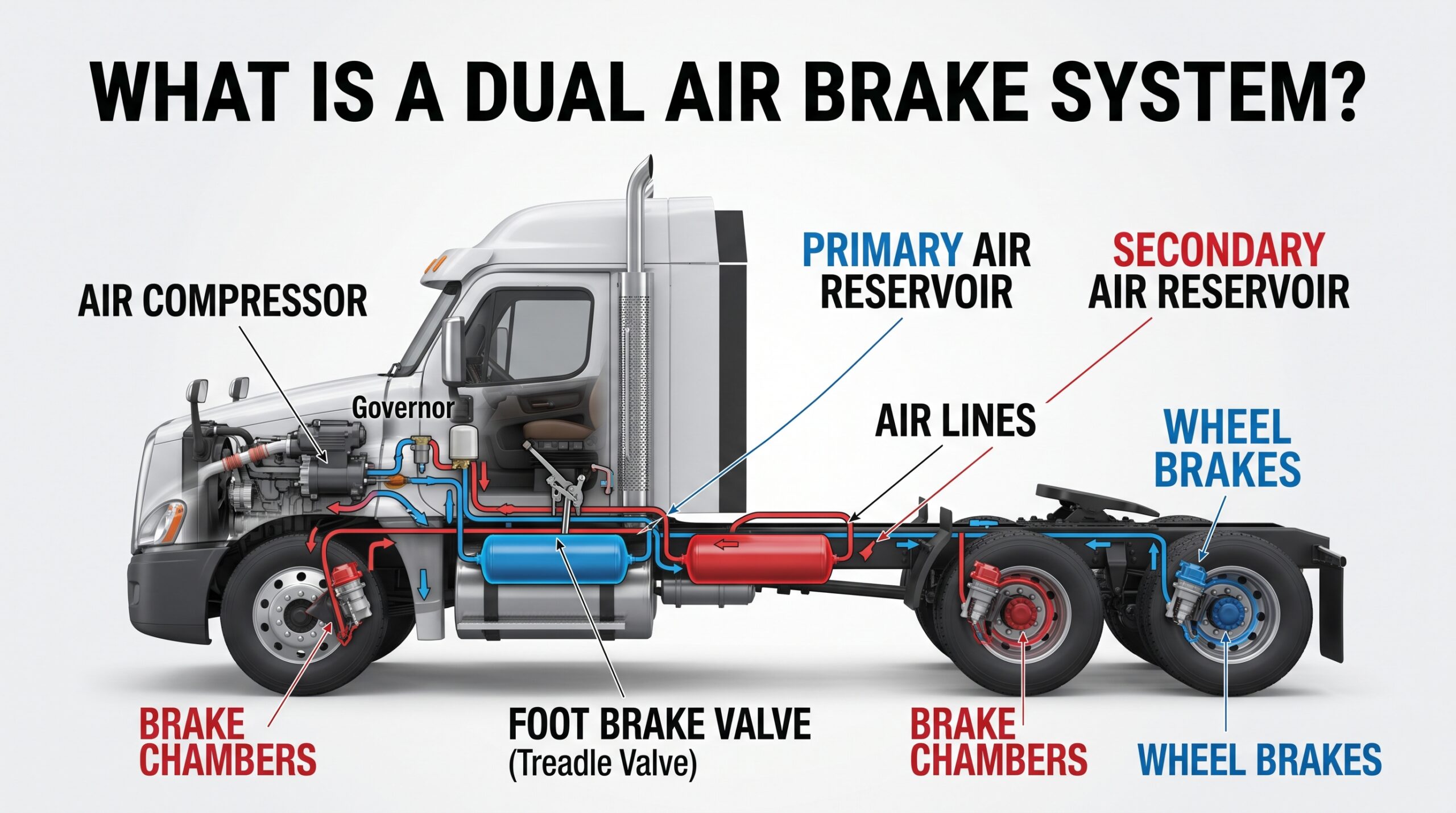
What Is a Dual Air Brake System? A Simple Guide
If you drive or work around trucks, buses, or other heavy commercial vehicles, you may have heard the term dual air brake system. But w...
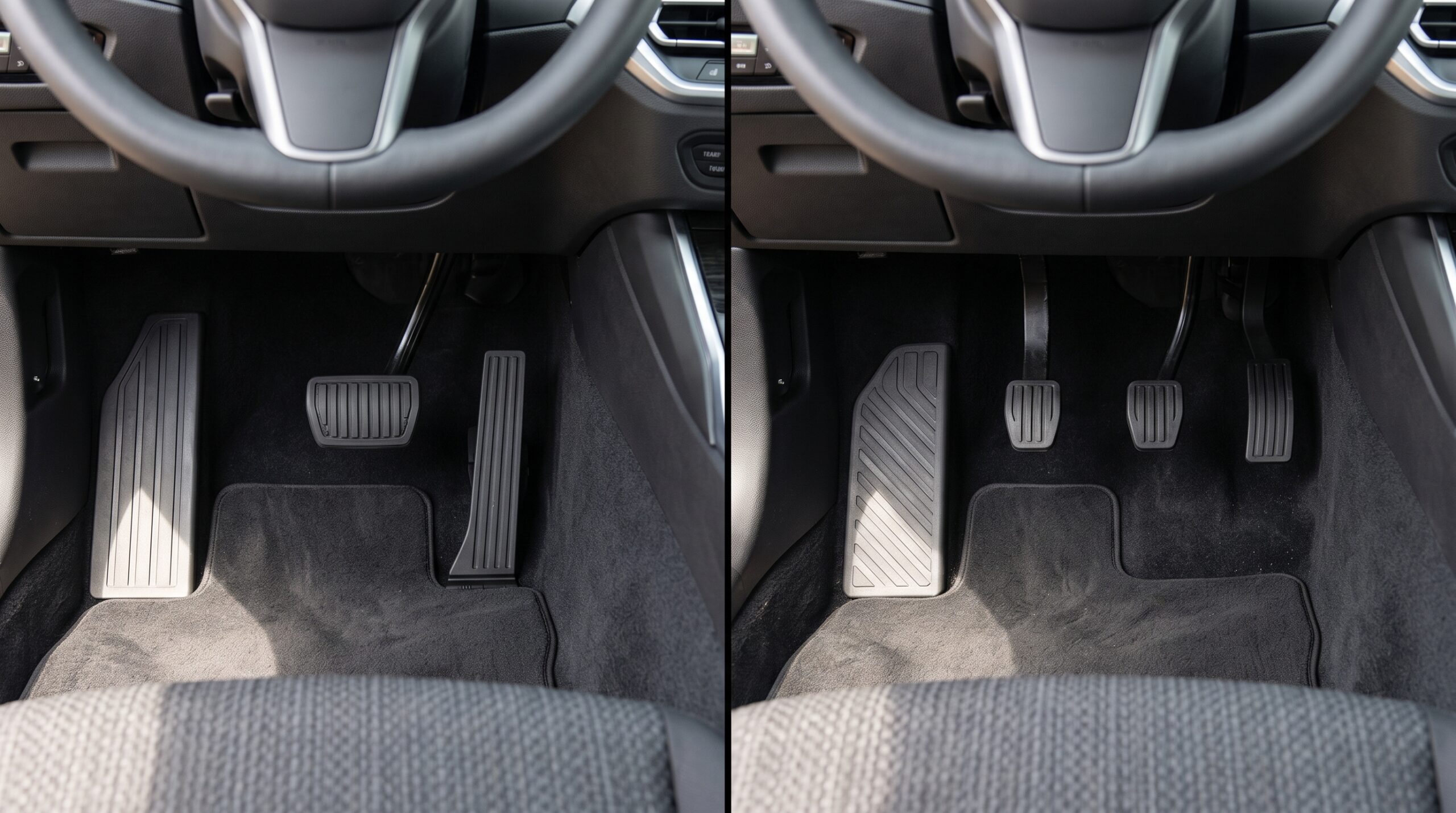
What Side Is the Brake On in a Car? Easy Driver Guide
If you are learning to drive, one of the first things you need to know is what side is the brake on in a car. In most cars, the brake p...
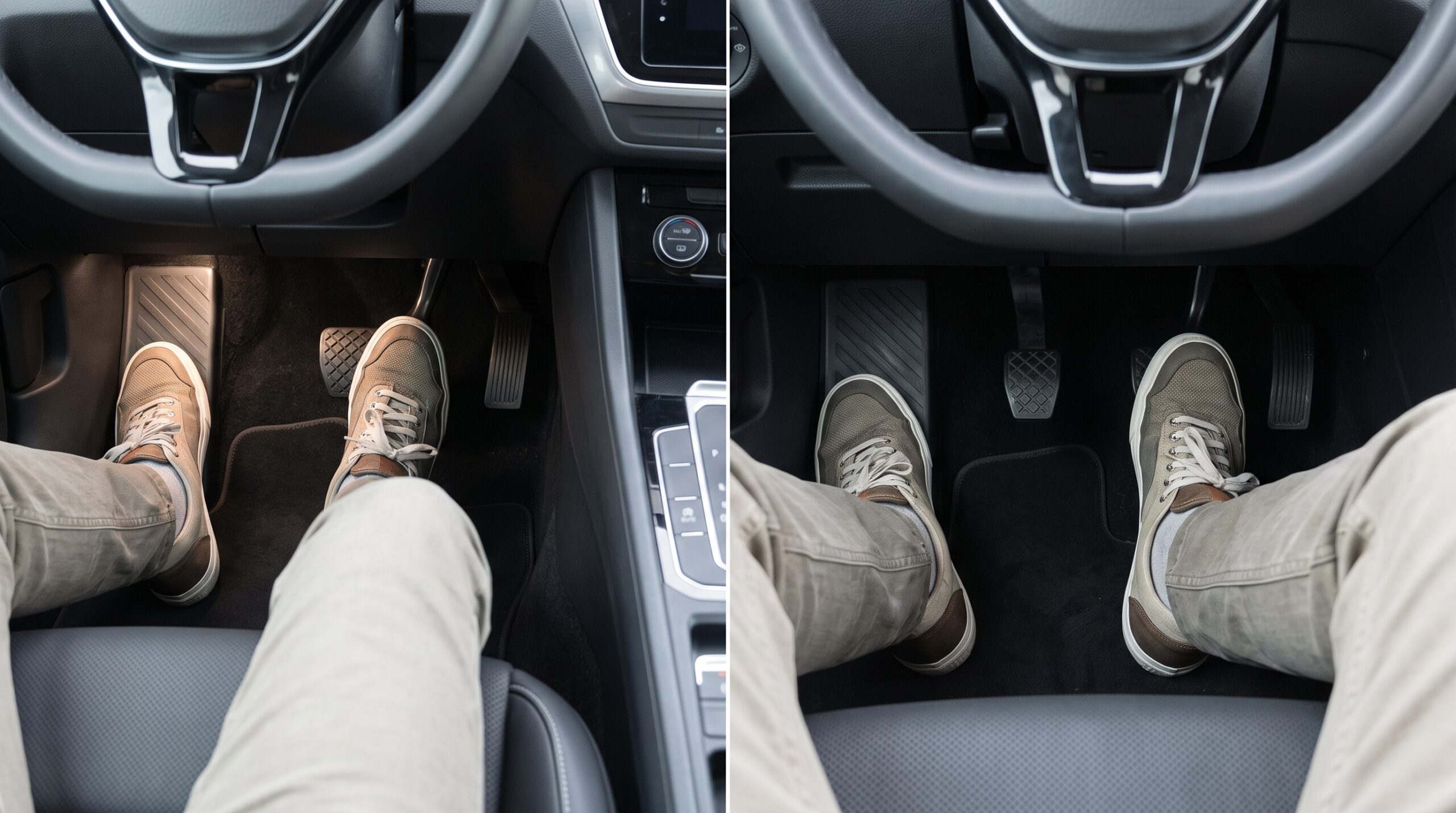
Which Pedal Is the Brake in a Car? Easy Guide for Drivers
If you are a new driver, learning the pedals can feel confusing at first. The good news is that the layout is simple once you know what...
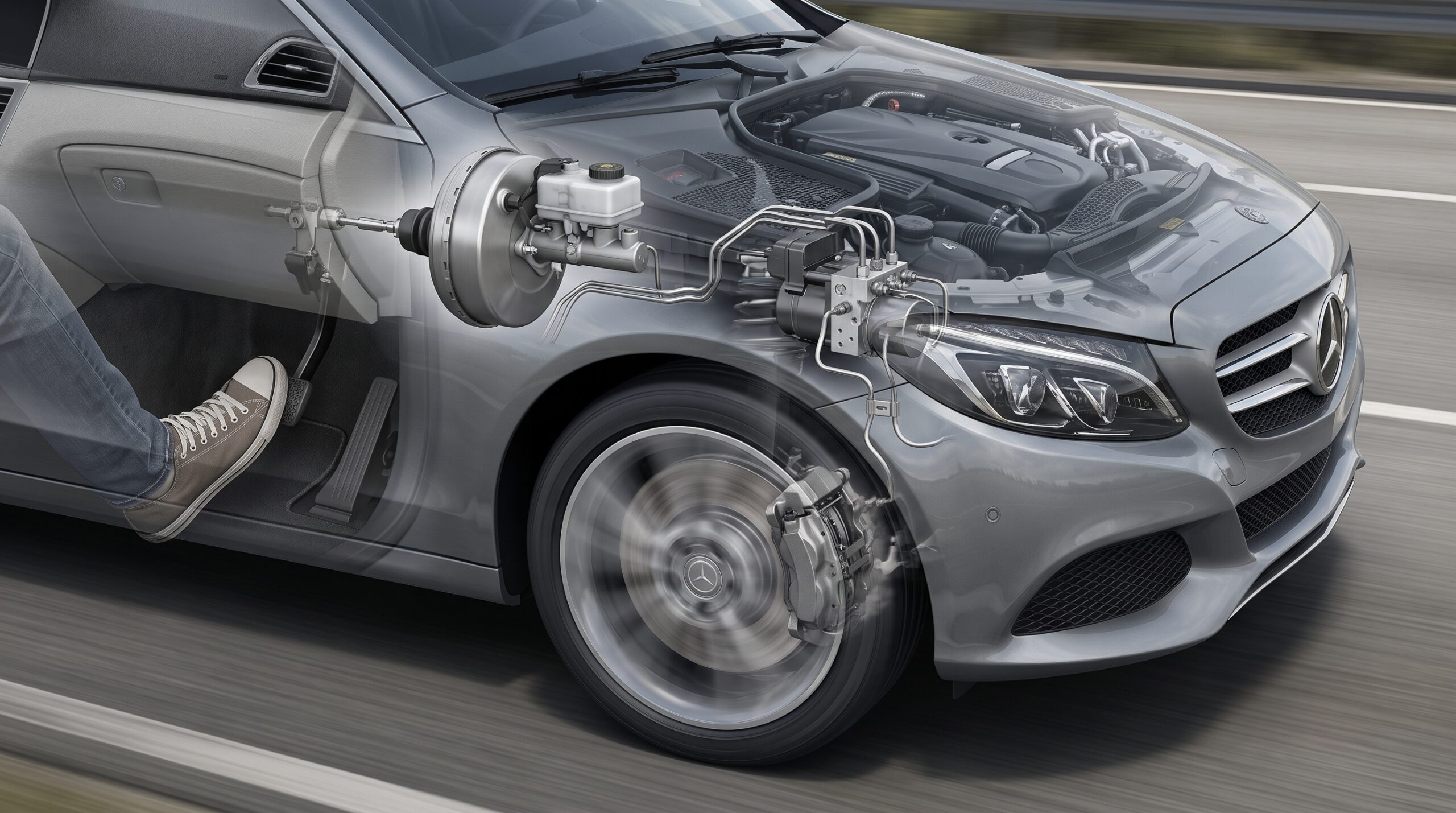
What Is a Brake Assist System? A Simple Guide for Drivers
If you've ever wondered what a brake assist system is, it's a safety feature in the car which will help the driver to apply suffic...
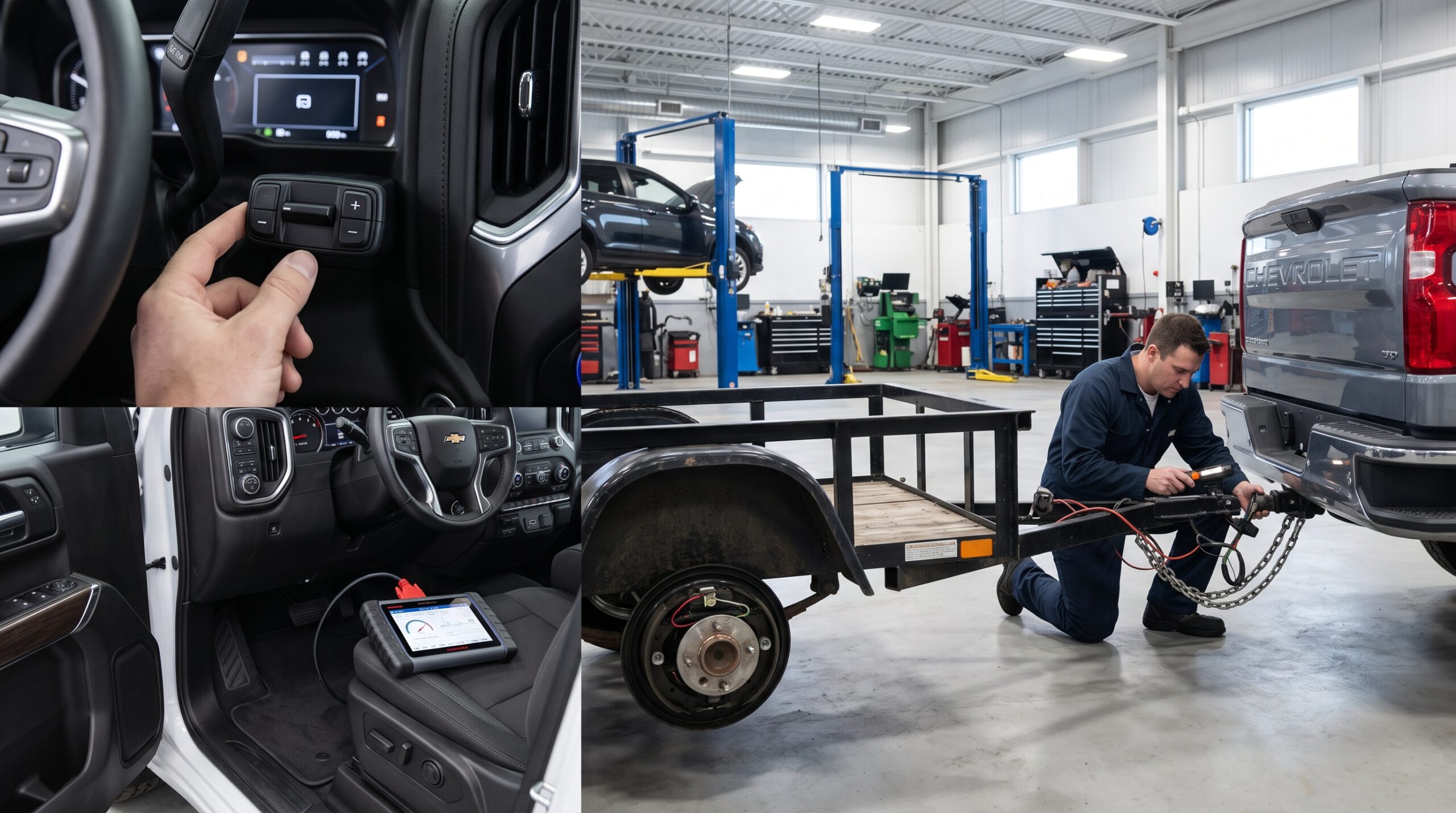
How to Reset Service Trailer Brake System: Easy Guide
If your vehicle has a 'Service Trailer Brake System' warning, then absolutely do not ignore it. That message is almost always the ...
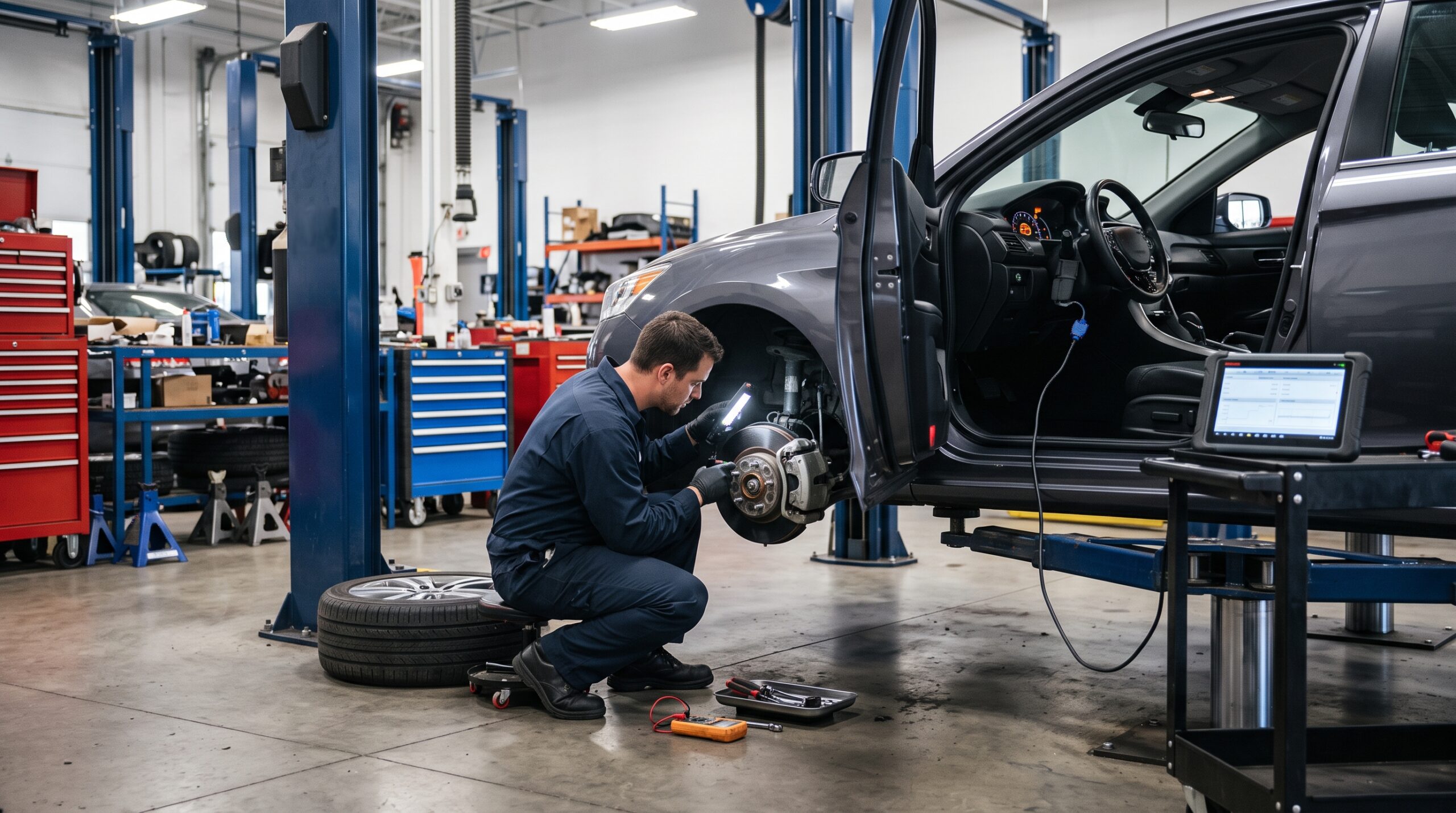
How to Fix Anti Lock Brake System: Easy DIY Guide
If the ABS warning light has come on then you'll probably be wondering what you can do to fix your anti-lock brake system problems...
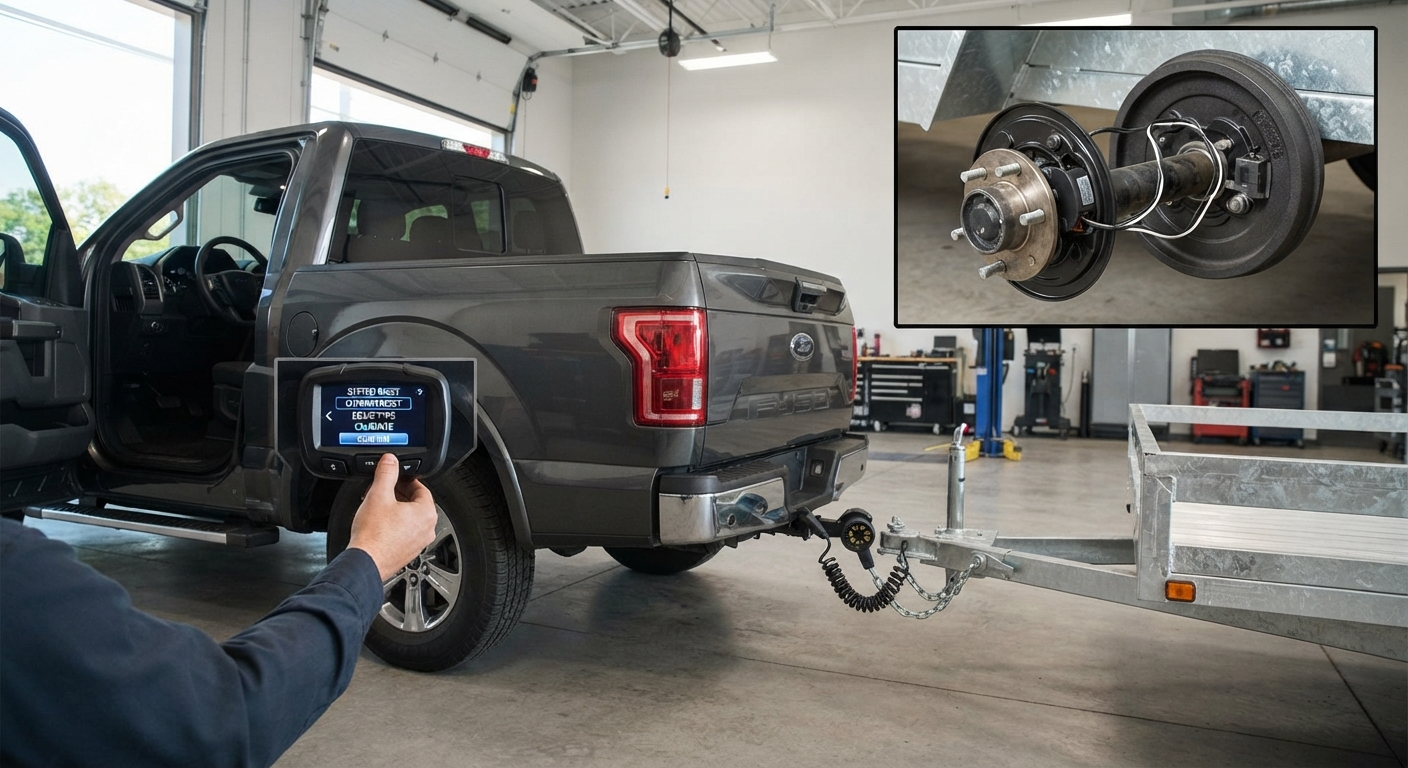
How to Reset Trailer Brake System: A Simple Guide
If your trailer brake controller is showing an error, the brakes feel weak or the trailer brakes just stop working altogether then...
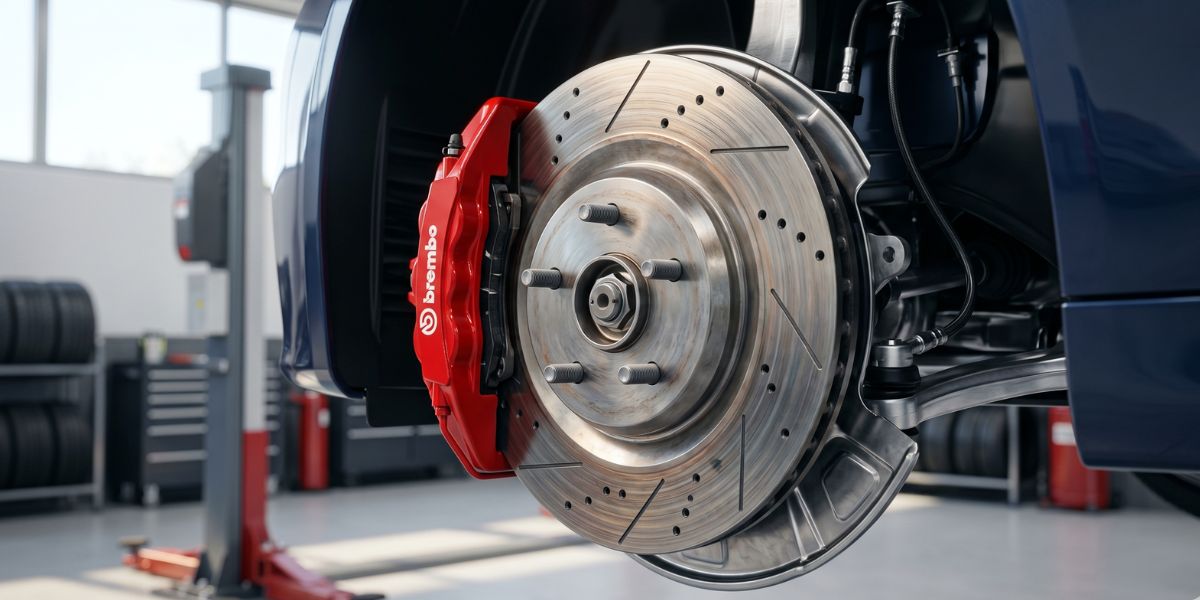
What Does the Brake Look Like in a Car? A Simple Guide to Brake Parts and How to Identify Them
If you have ever looked at your car and wondered, what does the brake look like in a car, you are not alone. A lot of people use the br...
Where Are Brakes on a Car Located? Everything Drivers Should Know
If you have ever asked, where are brakes on a car, you are not alone. Many new drivers, car owners, and even people learning basic vehi...
How a Brake Servo Works: A Simple Guide to Vacuum Brake Assistance
If you have ever wondered how a brake servo works, you are not alone. It is one of those car parts many drivers have heard of, but few ...