



Our Blogs
How to Reset Service Trailer Brake System: Easy Guide

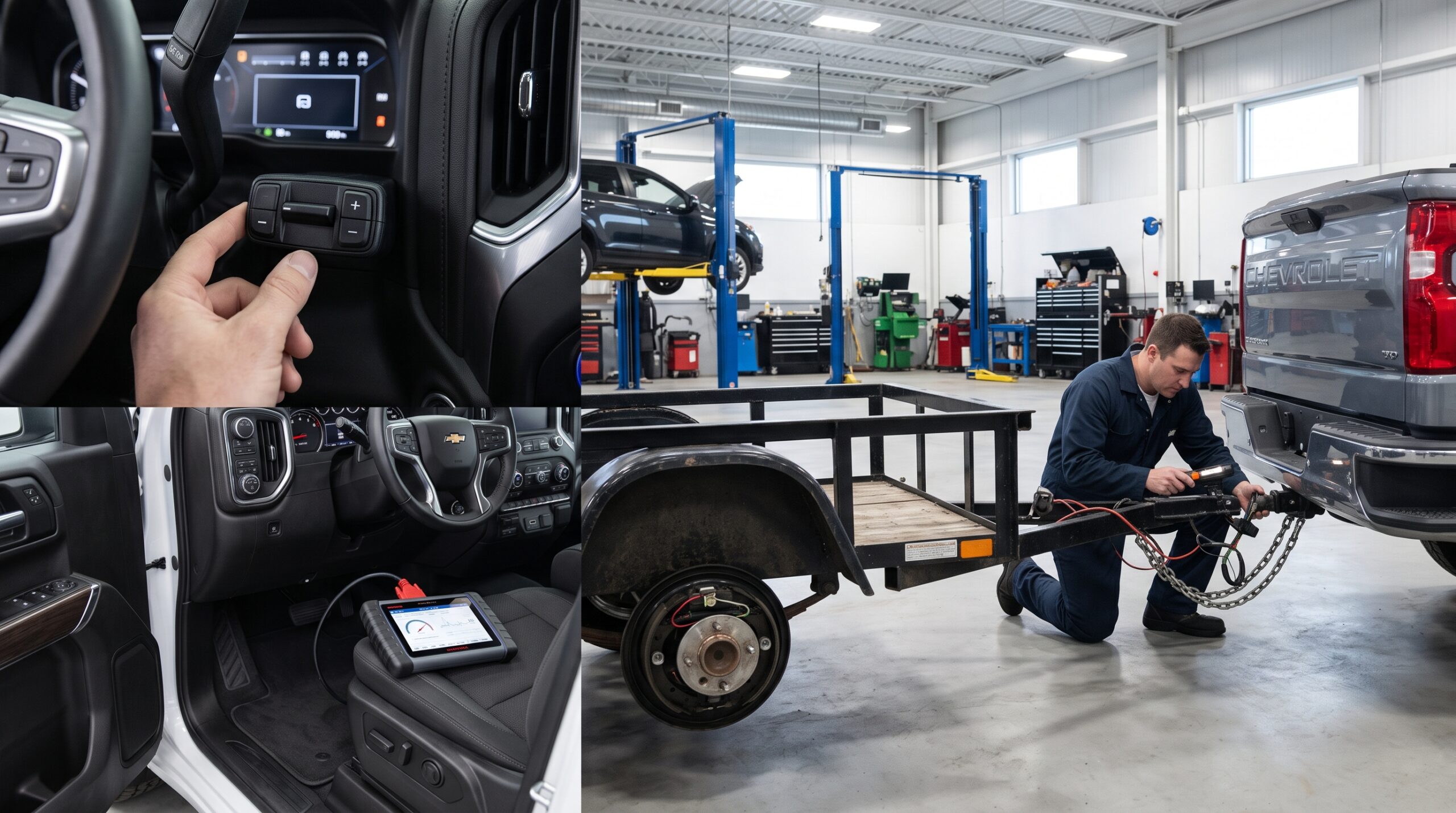
If your vehicle displays a “Service Trailer Brake System” warning, do not ignore it. The message usually means the vehicle has detected a problem with the trailer braking system, its electrical connection, or the electronic brake controller.
In some cases, the warning can be caused by something simple, such as a loose trailer connector, dirt, corrosion, or a poor ground. In other cases, the problem may involve damaged wiring, brake magnets, the brake controller, or the vehicle’s trailer brake control module.
The safest way to approach how to reset service trailer brake system warnings is to first find and correct the cause. A reset may remove a temporary warning, but it will not repair a damaged wire, faulty controller, worn brake component, or poor electrical connection.
Before troubleshooting, park the vehicle and trailer safely on level ground. Apply the parking brake, secure the trailer, and switch off the ignition before disconnecting electrical components. If the trailer brakes are not working correctly, avoid normal towing until the problem has been diagnosed.
This guide explains the system, common causes, reset steps, diagnostic checks, and situations where professional service is the better option.
What Is the Service Trailer Brake System?
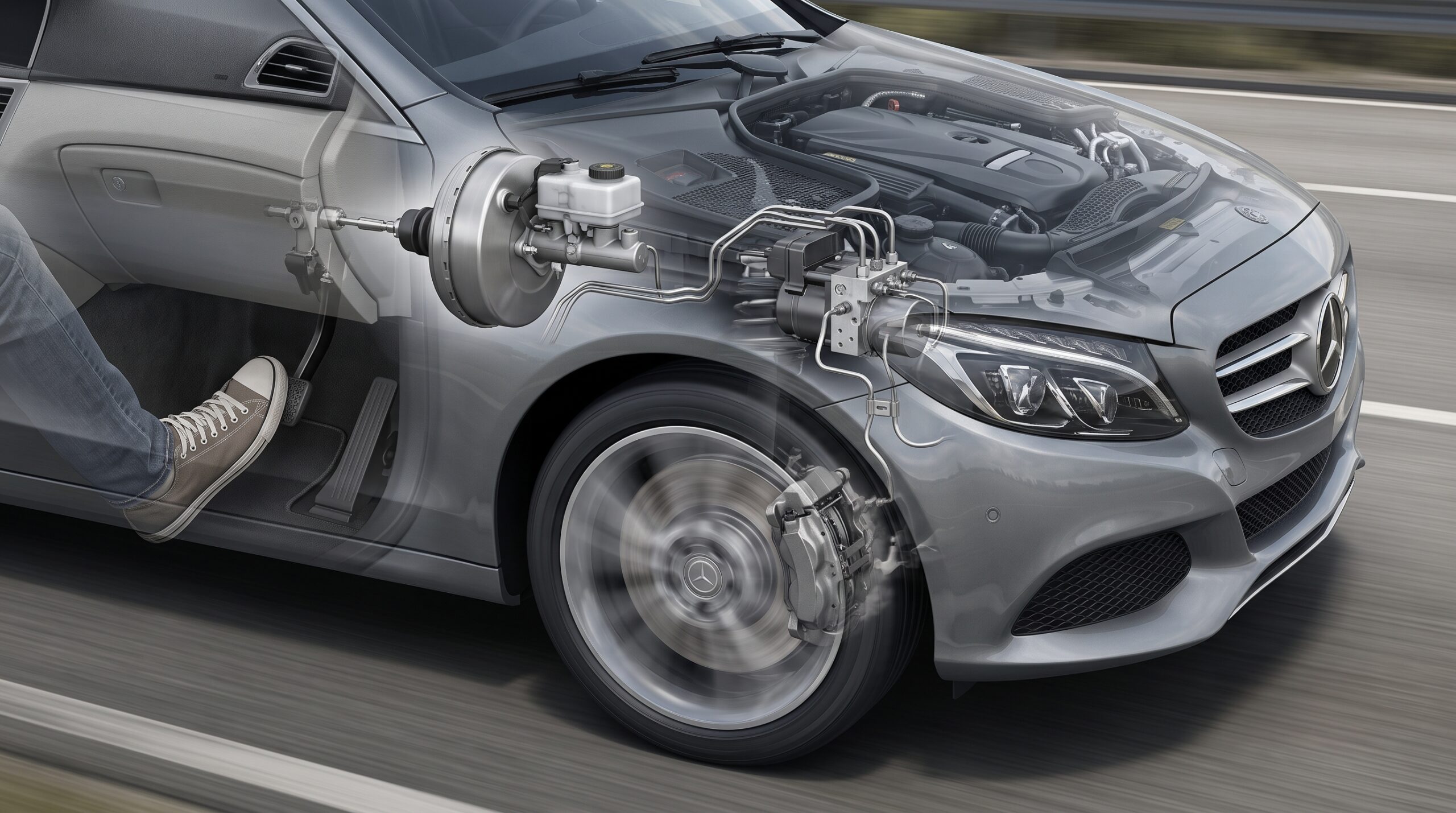
A trailer brake system allows the trailer to slow down along with the tow vehicle. Many modern trailers use electric brakes. These brakes receive an electrical signal from a brake controller when the driver applies the vehicle’s brakes.
The tow vehicle and trailer must communicate correctly for the system to work. A problem anywhere in that electrical path can trigger a service warning.
How a Trailer Brake System Works
An electric trailer brake system has several important parts.
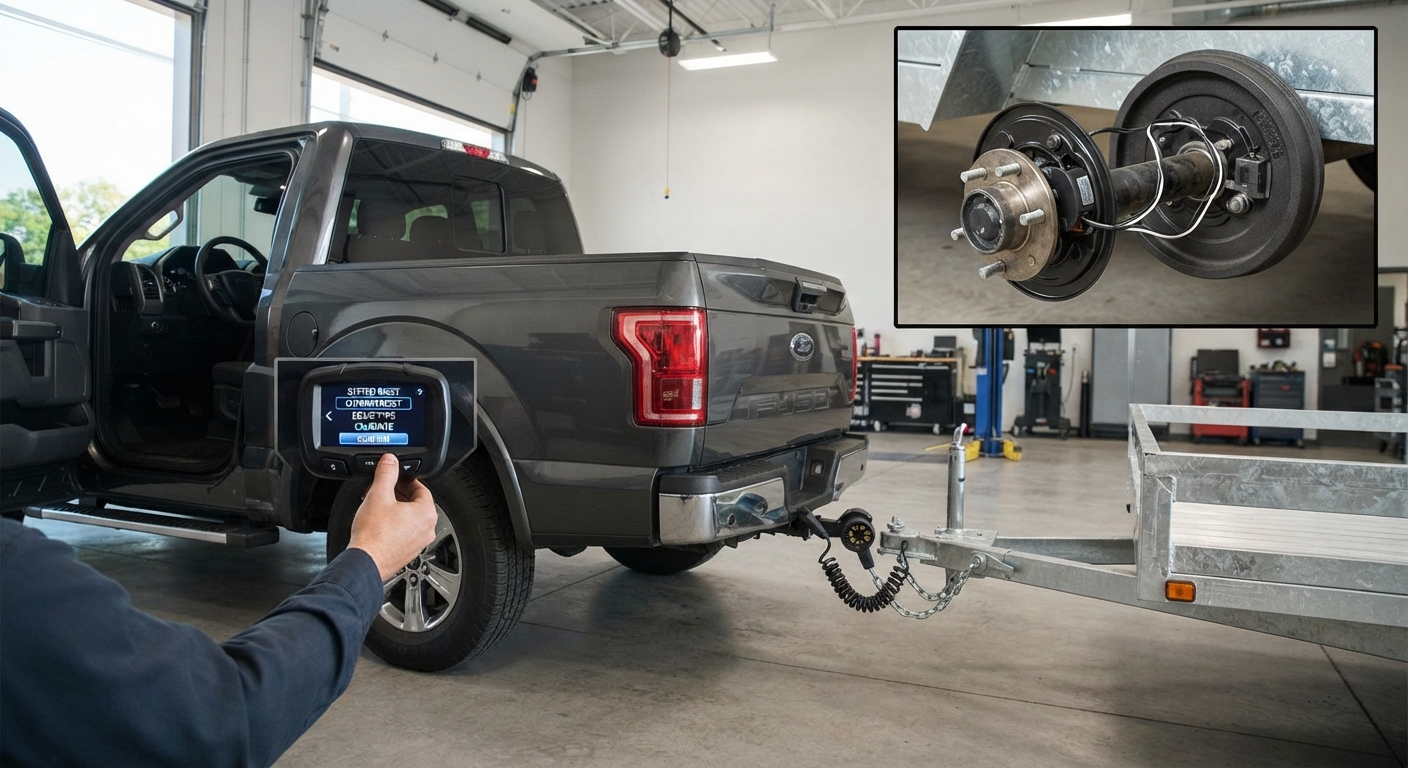
Electric trailer brakes are installed inside the trailer’s brake assemblies. When electrical current reaches the brake magnets, the magnets interact with the rotating drum and activate the braking mechanism.
The brake controller manages the braking signal sent to the trailer. Depending on the vehicle, the controller may be a factory-installed module or a separate aftermarket unit.
Trailer wiring carries power and control signals between the tow vehicle and trailer. The trailer connector provides the electrical connection between the two.
Brake magnets and drums are key mechanical parts of many electric drum brake systems. The magnets help activate the brake shoes when current is supplied.
Because several components work together, a warning does not automatically mean the brake controller itself is bad.
What Does the Service Trailer Brake Warning Mean?
A service trailer brake warning means the vehicle has detected a condition that may affect trailer brake operation.
Possible causes include:
- An electrical connection problem
- A loose trailer plug
- Corrosion inside the connector
- A poor ground
- Damaged trailer wiring
- A faulty brake controller
- A problem with the trailer brake magnets
- Low electrical voltage
- A vehicle trailer brake module fault
- A stored diagnostic trouble code
The exact meaning depends on the vehicle. Different manufacturers use different systems and warning messages, so the owner’s manual should always be treated as the primary reference for the vehicle-specific reset procedure.
Common Causes of a Service Trailer Brake Warning
Understanding the cause makes troubleshooting much easier. Many trailer brake warnings are related to electrical connections rather than major mechanical failures.
Loose Trailer Wiring
Trailer wiring can become loose from vibration, repeated towing, weather exposure, or previous repairs.
A wire may still look connected but have a weak electrical connection. Movement while driving can then cause the system to lose contact for a moment.
Check wiring around the trailer connector, frame, junction box, axle area, and brake assemblies.
Look for:
- Loose wires
- Broken insulation
- Pinched cables
- Exposed copper
- Damaged connectors
- Poorly secured wiring
Do not simply tape over badly damaged wiring and assume the problem is fixed. Damaged sections may need proper repair or replacement.
Dirty or Corroded Trailer Connector
The trailer connector is exposed to rain, dirt, road salt, moisture, and other contaminants.
Over time, corrosion can develop on the electrical contacts. Even a small amount of corrosion can increase electrical resistance or interfere with communication.
Disconnect the trailer and inspect both the vehicle socket and trailer plug.
Look for:
- Green or white corrosion
- Dirt
- Moisture
- Bent contacts
- Loose terminals
- Cracked connector housing
A connector that looks dirty may be the simple reason the warning appeared.
Poor Ground Connection
Electrical systems need a reliable ground. A poor trailer ground can cause strange or intermittent brake problems.
The trailer ground connection should be secure and free from excessive corrosion. A ground wire that is loose or attached to a poor contact point can interrupt current flow.
Ground problems can sometimes cause warnings that appear and disappear as the trailer moves.
Faulty Brake Controller
The brake controller is responsible for controlling the trailer braking signal.
A controller can develop problems because of electrical faults, damaged wiring, internal failure, or communication problems with the vehicle.
Possible signs include:
- An error message on the controller
- No trailer brake response
- Intermittent braking
- Incorrect brake output
- A warning that appears whenever a trailer is connected
Do not replace the controller immediately. Test the wiring, connector, power supply, and trailer first.
Damaged Brake Wiring
Brake wiring runs underneath the trailer and can be exposed to road debris, water, heat, and movement.
A wire can become damaged near an axle, frame, brake assembly, or connector.
If the insulation is damaged, moisture can reach the conductor. A wire may also break internally while appearing normal from the outside.
Low Trailer Battery Voltage
Some trailer systems depend on stable electrical power. Low voltage can affect electronic components and braking performance.
A weak battery, poor charging connection, loose terminal, or electrical drain may contribute to voltage-related problems.
If your trailer uses a battery, check its condition according to the manufacturer’s instructions.
Worn or Damaged Trailer Brake Components
The warning may sometimes be related to the actual brake assemblies.
Brake shoes, magnets, drums, bearings, wiring, and other components can wear or become damaged.
Mechanical brake problems should not be treated as a simple electronic warning. If the brakes are worn or damaged, the components need proper inspection and repair.
How to Reset Service Trailer Brake System
If you want to know how to reset service trailer brake system warnings, start with the basic electrical checks before attempting a full diagnostic reset.
A warning that disappears after reconnecting the trailer does not necessarily mean the original problem is gone. Always confirm that the trailer brakes work correctly.
Step 1: Park the Vehicle and Trailer Safely
Park on a level, stable surface.
Apply the vehicle’s parking brake and secure the trailer according to the trailer manufacturer’s instructions.
If you need to inspect wiring underneath the trailer, use proper safety equipment and never rely on an unsafe jack or unstable support.
The goal is to prevent vehicle or trailer movement while you troubleshoot.
Step 2: Turn Off the Tow Vehicle
Switch off the ignition before disconnecting the trailer connector.
Allow the vehicle’s electrical systems to shut down normally.
This gives you a safer starting point for inspecting the connector and wiring.
Do not repeatedly plug and unplug electrical connections while the ignition is switched on unless the manufacturer specifically instructs you to do so.
Step 3: Disconnect the Trailer
Remove the trailer connector from the vehicle socket.
Do not pull the cable itself. Hold the connector body and disconnect it carefully.
Once disconnected, inspect both sides.
If the warning disappears after the trailer is disconnected, that can provide a useful clue that the problem may involve the trailer, connector, or trailer-related wiring.
However, it does not prove that the trailer is the only possible cause.
Step 4: Inspect the Trailer Connector
Examine the connector carefully.
Check for dirt, corrosion, water, damaged contacts, bent pins, or loose terminals.
If the connector is dirty, clean it using a suitable electrical-contact cleaning method recommended for the connector. Allow moisture or cleaner to evaporate as directed before reconnecting it.
Do not force a damaged connector into the vehicle socket.
If the plug is physically damaged, replacing it may be necessary.
Step 5: Check the Trailer Brake Wiring
Inspect visible wiring from the connector toward the trailer brake assemblies.
Look for:
- Broken insulation
- Loose wires
- Exposed conductors
- Crushed cables
- Melted insulation
- Corrosion
- Poorly repaired connections
Pay particular attention to areas near the wheels and axles.
Check the trailer ground as well. A loose ground can cause intermittent electrical problems.
If you find significant wiring damage, repair it correctly before towing.
Step 6: Reconnect the Trailer
After the connector and visible wiring have been checked, reconnect the trailer.
Make sure the plug is seated firmly.
Start the tow vehicle and allow the system to initialize.
Check the dashboard and brake controller for warning messages.
If the warning has disappeared, do not immediately assume the problem is completely solved. Continue with a controlled brake test.
Step 7: Reset or Reinitialize the Brake Controller
The exact reset procedure depends on the tow vehicle and brake controller.
Some systems may automatically reinitialize after the trailer is disconnected and reconnected. Others may require a specific ignition cycle or diagnostic procedure.
If your owner’s manual provides a reset sequence, follow it exactly.
Do not guess which wires should be connected, grounded, or bypassed. Incorrect electrical connections can damage components or create an unsafe braking condition.
For a factory-integrated system, the vehicle manufacturer’s service information is the safest source for the exact reset procedure.
Step 8: Test the Trailer Brakes
After reconnecting everything, perform a low-speed test in a safe, open area.
Apply the brakes gently.
Pay attention to:
- Smooth braking
- Trailer stability
- Brake controller response
- Warning messages
- Unusual noises
- Uneven braking
Do not test trailer brakes at high speed.
If braking feels weak, delayed, uneven, or unpredictable, stop testing and have the system inspected.
A successful reset is not enough. The brakes must actually work.
How to Troubleshoot the Warning If It Does Not Reset
If the basic reset does not work, the next step is diagnosis.
This is important because repeatedly clearing the warning without fixing the underlying fault can allow the problem to return.
Check the Brake Controller
Start with the controller.
Check whether it has power and whether its display shows an error.
Depending on the system, you may need to inspect:
- Controller power
- Ground
- Wiring connections
- Trailer detection
- Output signal
- Stored error messages
If the controller works normally without a trailer but produces an error when a trailer is connected, inspect the trailer connection and trailer-side wiring carefully.
Inspect the Trailer Brake Magnets
Electric drum brakes commonly use brake magnets.
A damaged or worn magnet can affect brake operation.
Look for signs such as:
- Damaged magnet wiring
- Excessive wear
- Physical damage
- Uneven brake performance
- Loose connections
Brake assembly inspection can involve removing components and should be performed according to the trailer manufacturer’s service instructions.
If you are not comfortable working on trailer brakes, have a qualified technician inspect them.
Check Trailer Brake Voltage
Electrical voltage is important because the brake system needs an appropriate electrical supply.
A basic electrical inspection can help identify problems with the power circuit.
However, measuring trailer brake voltage correctly requires understanding the particular system and test points.
If the voltage is incorrect, the problem could be in the tow vehicle, connector, wiring, controller, or trailer.
This is one reason professional electrical diagnosis can save time when basic checks do not identify the problem.
Check the Tow Vehicle’s Trailer Brake Module
Modern vehicles may use a dedicated trailer brake control module.
If the vehicle detects a problem inside this system, the dashboard may display a service warning.
A diagnostic scanner capable of accessing the relevant vehicle module may be required.
A generic engine-code reader may not communicate with every body, chassis, or trailer-related module.
If the warning remains after the trailer has been checked, vehicle-side diagnostics may be necessary.
How to Clear a Trailer Brake Warning Code
Clearing a warning code should normally happen after diagnosing the problem.
Simply deleting a code does not repair the system.
Use a Compatible Diagnostic Scanner
A suitable diagnostic scanner can read stored trouble codes from supported vehicle modules.
The scanner must be compatible with the vehicle and able to access the relevant trailer brake or chassis system.
Record the code before clearing it.
The code can provide useful information about the area where the vehicle detected a problem.
Repair the Underlying Problem First
This is one of the most important parts of troubleshooting.
Suppose the vehicle reports a trailer brake electrical fault and you simply erase the code.
If the damaged wire is still present, the warning may return as soon as the trailer is connected again.
The better process is:
- Read the code.
- Identify the affected circuit or system.
- Inspect the related components.
- Repair the actual fault.
- Clear the stored code if appropriate.
- Test the system again.
This approach is much more reliable than repeatedly resetting the warning.
Confirm the Warning Has Cleared
After repairs, restart the vehicle.
Reconnect the trailer and allow the system to recognize it.
Check the brake controller and dashboard.
Then perform a careful low-speed brake test.
If the warning returns, further diagnosis is needed.
Common Mistakes to Avoid
Several mistakes can make trailer brake troubleshooting harder.
Replacing the Brake Controller Without Testing It
A controller may appear to be the likely problem, but a bad connector, ground, fuse, wire, or trailer component can create similar symptoms.
Test before replacing expensive parts.
Ignoring Corrosion on the Trailer Connector
Corrosion can cause intermittent electrical faults.
If the connector is visibly corroded, do not overlook it simply because the trailer lights still work.
Different circuits can be affected differently.
Using the Wrong Fuse
Never replace a fuse with one that has a higher rating just to prevent it from blowing.
Use the fuse specification provided by the vehicle manufacturer.
If the correct fuse continues to fail, investigate the electrical fault.
Driving With an Unresolved Brake Warning
A warning related to trailer braking should be taken seriously.
Even if the vehicle continues to drive normally, trailer braking may not be working correctly.
Do not assume that the warning is harmless.
Testing Trailer Brakes at High Speed
High-speed testing can create unnecessary risk.
A controlled, low-speed test in a suitable area is safer.
If braking behavior is abnormal, stop testing.
Assuming Every Warning Is Caused by the Trailer
The tow vehicle can also have a problem.
Possible vehicle-side causes include:
- Brake controller faults
- Module communication problems
- Wiring problems
- Fuse issues
- Software-related faults
- Stored diagnostic codes
Good troubleshooting checks both sides of the connection.
Can You Drive With a Service Trailer Brake Warning?
Whether you can continue towing depends on what caused the warning and whether the trailer brakes are operating correctly.
A service warning should not automatically be treated as something that can be ignored.
When You Should Not Tow
Do not continue normal towing if:
- Trailer brakes are not responding
- The warning remains active and the braking system has not been verified
- Wiring is visibly damaged
- The trailer brakes behave abnormally
- The trailer pulls strongly during braking
- Braking feels weak or inconsistent
- You notice electrical burning smells or damaged electrical components
A trailer adds weight to the combination, so reliable braking is especially important.
If you are unsure whether the brakes are working, have the system inspected before towing.
When Professional Inspection Is Needed
Professional diagnosis is a good choice when:
- The warning keeps returning
- You find damaged electrical wiring
- The controller reports an unknown fault
- The trailer brake module may be faulty
- A diagnostic code cannot be interpreted
- Brake components require disassembly
- Electrical testing is beyond your tools or experience
A qualified technician can test circuits, inspect brake components, scan vehicle modules, and verify the system under controlled conditions.
How to Prevent Future Trailer Brake Problems
Preventive maintenance can reduce the chance of unexpected trailer brake warnings.
Inspect the Trailer Connector Regularly
Check the connector before towing, especially before a long trip.
Look for:
- Corrosion
- Dirt
- Damaged contacts
- Loose wiring
- Cracks
- Moisture
Keep the connector protected when it is not in use.
Keep Wiring Protected
Trailer wiring should be secured away from areas where it can rub against sharp metal, moving parts, or hot components.
Avoid loose wiring hanging near wheels or axles.
Repair damaged insulation before it becomes a larger problem.
Check Trailer Brake Components
Inspect the brake assemblies according to the trailer manufacturer’s maintenance schedule.
Brake shoes, drums, magnets, bearings, and wiring can wear over time.
Regular inspection helps identify problems before they affect braking performance.
Test the Brake Controller Before Long Trips
Before a long towing trip, connect the trailer and verify that the controller recognizes it.
Perform a low-speed brake test in a safe location.
Do not wait until you are on a busy road to discover that the trailer brakes are not responding correctly.
Follow the Vehicle Manufacturer’s Maintenance Schedule
Your vehicle’s owner’s manual and service information should be the main references for vehicle-specific maintenance.
Factory-integrated trailer brake systems can vary significantly between vehicle models.
Following the recommended service procedures can help prevent incorrect repairs and unnecessary part replacement.
Frequently Asked Questions
How do I reset the service trailer brake system?
To reset a service trailer brake system warning, park safely, switch off the tow vehicle, disconnect the trailer, inspect the connector and wiring, reconnect the trailer, and follow the vehicle manufacturer’s specific reset or reinitialization procedure.
If the warning returns, the underlying problem should be diagnosed rather than repeatedly reset.
Why does my service trailer brake system warning keep coming back?
A recurring warning can be caused by a loose connector, corrosion, poor ground, damaged wiring, brake magnet problems, a faulty controller, low voltage, or a problem with the vehicle’s trailer brake module.
If the warning returns after a reset, look for the underlying fault.
Can a bad trailer connection cause a brake warning?
Yes. A poor trailer connection can interfere with electrical communication between the tow vehicle and trailer.
Corrosion, loose contacts, damaged pins, moisture, or a poor ground can all contribute to trailer brake problems.
How do I reset a trailer brake controller?
The reset process depends on the controller and vehicle.
Some systems automatically reinitialize when the trailer is disconnected and reconnected. Others may require a particular ignition cycle or diagnostic procedure.
Always follow the instructions for your specific controller and vehicle rather than guessing at the electrical connections.
Can low voltage cause trailer brake problems?
Yes. Insufficient or unstable voltage can affect trailer electrical systems.
Possible causes include a weak battery, poor ground, damaged wiring, loose connections, or a charging problem.
If voltage is suspected, proper electrical testing can help locate the cause.
Is it safe to tow with a service trailer brake warning?
It is not advisable to continue normal towing when a trailer brake warning remains unresolved and the braking system has not been verified.
If the trailer brakes are not responding, braking feels abnormal, or wiring is damaged, stop towing and have the system inspected.
Conclusion
Learning how to reset service trailer brake system warnings starts with safety and diagnosis, not simply clearing a dashboard message.
Park the vehicle and trailer safely, switch off the ignition, disconnect the trailer, and inspect the connector. Check for corrosion, damaged pins, loose wiring, and poor grounding. Then inspect the trailer brake wiring and reconnect the trailer securely.
If the warning disappears, perform a careful low-speed brake test before returning to normal towing.
If the warning remains or comes back, investigate the brake controller, trailer wiring, brake magnets, voltage supply, and vehicle-side trailer brake module. A compatible diagnostic scanner may be needed to identify stored fault codes.
Most importantly, do not assume that a reset means the problem is repaired. The goal is to restore reliable trailer braking, not simply make the warning disappear.
If the brakes are not responding correctly, the warning repeatedly returns, or you cannot identify the fault, professional diagnosis is the safest choice.

One thought on “How to Reset Service Trailer Brake System: Easy Guide”