Our Blogs
What Is a Brake Assist System? A Simple Guide for Drivers

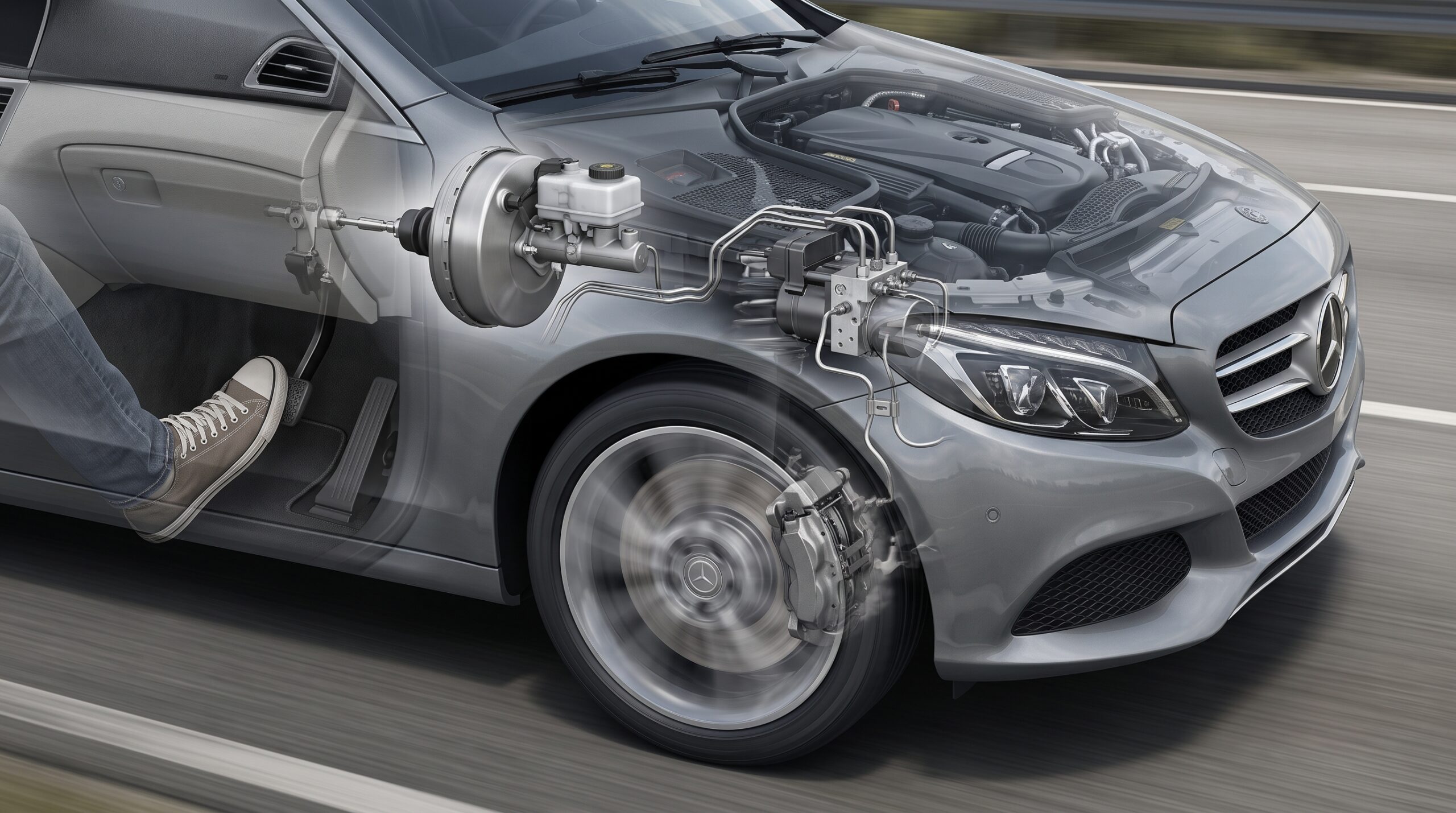
If you have ever wondered what is a brake assist system, it is a vehicle safety feature designed to help the driver apply enough braking force during sudden or emergency braking.
In a normal stop, most drivers have enough time to press the brake pedal smoothly. During an emergency, however, a driver may react quickly but fail to press the pedal hard enough. Brake assist can detect this type of rapid braking action and help increase the braking force.
The goal is simple: help the vehicle slow down as effectively as possible when a sudden stop is needed.
Understanding what is a brake assist system is useful because it is often confused with the anti-lock braking system, or ABS. These systems work together, but they do different jobs. Brake assist helps provide stronger braking pressure when emergency braking is detected, while ABS helps prevent the wheels from locking during hard braking.
Depending on the vehicle, brake assist may be controlled through hydraulic, vacuum, electronic, or electro-hydraulic components. The exact design varies by manufacturer and model.
For example, imagine a car traveling on a busy road when another vehicle suddenly stops ahead. The driver quickly moves their foot to the brake pedal. If the system detects a rapid emergency braking action, brake assist can help deliver additional braking pressure.
This does not mean the system can overcome every road condition or guarantee a shorter stop. Tires, road surface, vehicle speed, brake condition, weather, vehicle load, and driver reaction all affect stopping performance.
So, what is a brake assist system in the simplest possible terms? It is a safety system that can help a driver achieve stronger braking during an emergency stop.
What Is a Brake Assist System?
Simple Definition of Brake Assist
To understand what is a brake assist system, start with its basic purpose.
Brake assist is a driver-support technology that helps increase braking force when the vehicle detects that the driver is attempting an emergency stop.
In traditional braking, the amount of braking force depends largely on how the driver operates the brake pedal. A gentle pedal application produces a normal braking response. A stronger application produces greater braking force.
During a panic stop, however, people do not always apply the brake pedal as strongly as they could. They may react quickly but hesitate when pushing the pedal. Brake assist is designed to help in this situation.
The system monitors braking behavior and looks for patterns associated with emergency braking. If the vehicle detects a rapid pedal application that suggests an emergency, it can increase brake pressure according to the vehicle’s design.
The system does not replace the driver. It supports the driver’s braking action.
The exact activation method varies between vehicles. Some systems monitor brake pedal speed and pressure. Others use electronic brake control systems to identify emergency braking.
This is why understanding what is a brake assist system requires looking at both the driver and the vehicle’s braking hardware.
How Brake Assist Helps During Emergency Braking
Emergency braking can happen in many situations.
A pedestrian may enter the road unexpectedly. Traffic may stop suddenly. An object may appear in front of the vehicle. Another driver may make an unexpected maneuver.
In these situations, every part of the braking system needs to respond correctly.
Brake assist can detect a rapid brake-pedal application and help provide additional braking force. This can help the driver make better use of the vehicle’s available braking capability.
The system does not create unlimited braking power. The tires still need enough grip on the road. If the road is wet, icy, loose, or slippery, the available traction may limit how quickly the vehicle can stop.
The key point is that brake assist supports the driver’s braking effort.
When asking what is a brake assist system, one important detail is that it is not simply a stronger brake pedal. It is an electronic or mechanical support function integrated into the vehicle’s braking system.
How Does a Brake Assist System Work?
The answer to what is a brake assist system becomes clearer when you understand the main components involved.
Although designs differ, many modern systems use sensors, electronic controls, brake boosters, hydraulic components, and ABS-related controls.
Brake Pedal Sensors
Modern vehicles can use sensors to monitor brake pedal movement.
The system may look at how quickly the pedal is pressed, how much pressure is applied, and other information from the braking system.
A fast pedal movement can indicate that the driver is reacting to an emergency.
For example, suppose a driver normally takes one or two seconds to press the brake pedal during a regular stop. Suddenly, the driver presses the pedal very quickly. The vehicle may recognize this as emergency braking behavior.
The exact sensor arrangement depends on the vehicle.
Some vehicles use a brake pedal position sensor. Others may use pressure sensors or additional information from the electronic braking system.
Electronic Control Unit
The electronic control unit, often called an ECU or brake control module, processes information from different sensors.
When the system detects a braking event, the control unit can determine whether additional braking assistance is appropriate.
Modern vehicles often combine braking information with data from systems such as ABS and electronic stability control.
This allows the vehicle to manage braking more precisely.
The ECU is important because brake assist is not simply a mechanical switch that turns on whenever the brake pedal moves.
Brake Booster and Hydraulic System
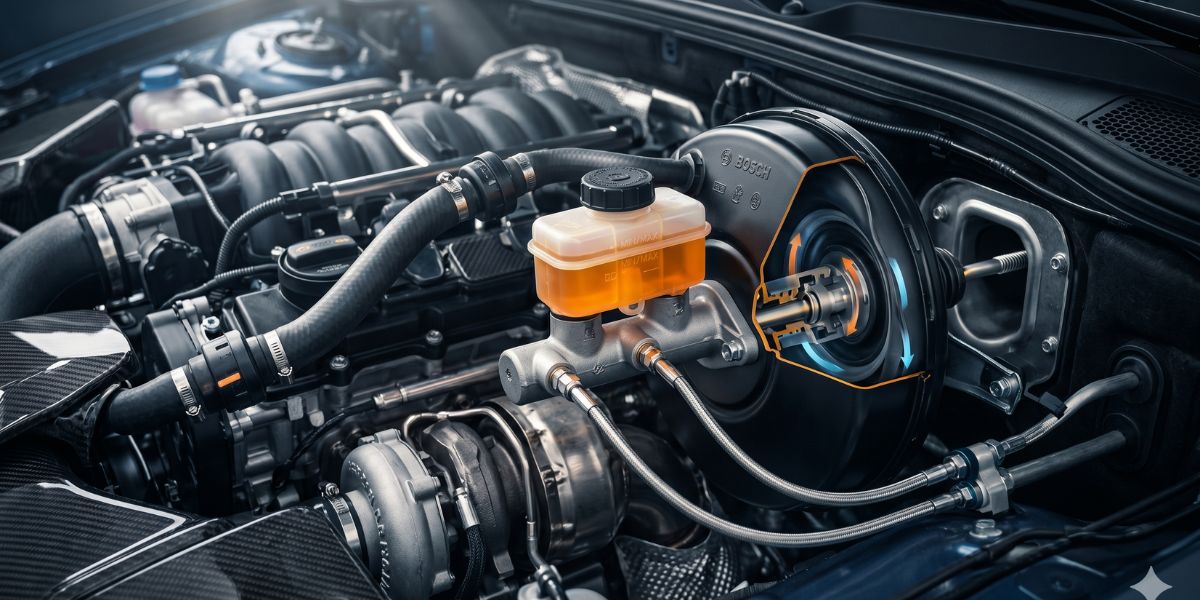
The brake booster helps reduce the physical effort required to apply the brakes.
In some vehicles, a vacuum brake booster uses engine vacuum or another vacuum source to help multiply the driver’s pedal force. Other vehicles use electric or electro-hydraulic brake assistance.
When the driver presses the brake pedal, the braking system creates hydraulic pressure. That pressure travels through the brake system to the calipers or wheel cylinders.
The brake pads or shoes then apply friction to the rotating components at the wheels.
In systems with brake assist, additional pressure may be generated when emergency braking is detected.
This is one reason why knowing what is a brake assist system involves understanding the entire braking process rather than one individual part.
ABS Integration
Brake assist and ABS often work together.
Brake assist focuses on helping provide sufficient braking force during emergency braking.
ABS focuses on preventing the wheels from locking under hard braking.
If a driver makes a sudden stop, brake assist may help apply strong braking pressure. If the system detects that one or more wheels are close to locking, ABS can rapidly adjust brake pressure to maintain wheel rotation and steering control.
The two systems therefore have different responsibilities.
What Happens When Brake Assist Activates?
Knowing what is a brake assist system is easier when you understand what happens during an emergency stop.
Detecting an Emergency Stop
The process starts when the driver quickly applies the brake pedal.
Sensors monitor the pedal movement and other braking information. If the pattern matches an emergency braking event, the system can activate its assistance function.
The exact activation threshold varies between vehicles.
Increasing Brake Pressure
Once emergency braking is detected, the system can help increase brake pressure.
The goal is to help the driver reach strong braking force quickly.
This can be particularly useful when the driver reacts quickly but does not initially push the pedal hard enough.
ABS Managing Wheel Lock
Once high braking force is applied, the wheels may approach a point where they could lock.
ABS monitors wheel speed through sensors.
If a wheel is slowing too quickly compared with the others, the ABS controller can adjust hydraulic pressure to that wheel.
This process can occur rapidly and repeatedly.
The purpose is to help maintain tire rotation and steering control during hard braking.
Returning to Normal Braking
After the emergency braking event ends, the system returns to normal operation.
The driver remains responsible for controlling the vehicle and releasing the brake pedal when appropriate.
Brake assist is not designed to keep maximum braking force applied indefinitely.
What Are the Benefits of Brake Assist?
The main reason to understand what is a brake assist system is to recognize how this technology can support safer braking.
Helps Reduce Stopping Distance
Brake assist may help reduce stopping distance in certain emergency braking situations by helping the driver achieve strong braking force more quickly.
However, it is important not to assume that every vehicle will stop in the same distance.
Stopping distance depends on:
- Vehicle speed
- Tire condition
- Road surface
- Weather
- Brake condition
- Vehicle weight
- Tire grip
- Driver reaction time
Brake assist can support braking, but it cannot change the laws of physics.
Supports Emergency Braking
A major advantage is emergency braking support.
When a driver encounters an unexpected hazard, there may be very little time to react.
A system that helps apply strong braking force can be useful during this type of event.
Helps Drivers Who Do Not Press the Brake Hard Enough
Some drivers may press the brake pedal quickly but not use enough force during a panic stop.
Brake assist is designed to address this situation.
The system can recognize the rapid pedal action and provide additional braking assistance.
This is one of the clearest answers to the question what is a brake assist system: it helps the driver use the braking system more effectively during an emergency.
Works With Other Vehicle Safety Systems
Brake assist can work alongside other safety technologies.
Depending on the vehicle, these may include:
- ABS
- Electronic stability control
- Traction control
- Electronic brake-force distribution
- Automatic emergency braking
- Collision warning systems
Each system has a different purpose.
Together, these technologies can provide a more coordinated response to dangerous driving situations.
Brake Assist vs. ABS
One of the most common misunderstandings about what is a brake assist system is confusing it with ABS.
They are related, but they are not the same system.
What ABS Does
ABS stands for Anti-lock Braking System.
Its main job is to help prevent the wheels from locking during hard braking.
Wheel-speed sensors continuously monitor wheel rotation. If the system detects that a wheel is about to lock, ABS can reduce and restore hydraulic pressure as needed.
This helps the driver maintain steering control during heavy braking.
What Brake Assist Does
Brake assist focuses on the amount and speed of braking force applied during an emergency.
If the driver quickly presses the brake pedal, the system can help increase braking pressure.
So, if someone asks what is a brake assist system, the short answer is that it helps increase braking force during emergency braking.
How ABS and Brake Assist Work Together
Imagine a driver suddenly sees an obstacle.
The driver quickly presses the brake pedal.
Brake assist can help increase braking pressure.
ABS then monitors the wheels and adjusts pressure if wheel lock is likely.
This cooperation can make emergency braking more effective.
| Feature | Brake Assist | ABS |
|---|---|---|
| Main purpose | Helps increase braking force | Helps prevent wheel lock |
| Activated during | Emergency braking | Hard braking when wheels may lock |
| Main focus | Brake pressure | Wheel rotation |
| Works with | Brake system and safety controls | Wheel speed sensors and brake controls |
The easiest way to remember the difference is:
Brake assist helps apply strong braking. ABS helps manage that braking.
Brake Assist vs. Automatic Emergency Braking
Another system that is sometimes confused with brake assist is Automatic Emergency Braking, or AEB.
Although they can work together, their functions are different.
Brake Assist
Brake assist generally works when the driver has already applied the brake.
The system detects the driver’s braking action and can provide additional assistance during an emergency.
This means driver input is normally an important part of the process.
Automatic Emergency Braking
Automatic Emergency Braking can apply the vehicle’s brakes when its sensors detect a potential collision and certain conditions are met.
Depending on the vehicle, AEB can use cameras, radar, or other sensors to identify objects or vehicles ahead.
The exact capabilities vary by manufacturer.
Key Differences
The main differences include:
Driver input: Brake assist responds to braking by the driver. AEB can initiate braking when the system determines that a collision may be imminent.
Sensors: Brake assist focuses on braking behavior and brake-system information. AEB may use forward-facing cameras, radar, or other sensing systems.
Activation: Brake assist typically activates during an emergency braking action by the driver. AEB can activate even when the driver has not applied enough braking force.
Safety purpose: Brake assist supports emergency braking. AEB is designed to help avoid or reduce the severity of certain potential collisions.
Understanding these differences makes the concept of what is a brake assist system much easier.
What Are the Signs of a Brake Assist Problem?
A brake assist problem should not be ignored.
The symptoms can vary depending on the vehicle and the part that has failed.
Brake Assist Warning Light
Some vehicles have a dedicated brake assist warning or a message that indicates a brake-system problem.
Other vehicles may use a general brake warning, ABS warning, or stability-control warning.
Always check the owner’s manual to understand what a specific warning means.
Hard Brake Pedal
A brake pedal that suddenly feels much harder than normal can indicate a problem with the brake booster or another part of the braking system.
A hard pedal does not always mean brake assist itself has failed, so proper diagnosis is important.
Increased Stopping Distance
If the vehicle takes longer than normal to stop, do not ignore the problem.
Possible causes include worn brake pads, poor tire grip, brake fluid problems, a brake-system fault, or other mechanical issues.
Unusual Brake Response
Pay attention if the brakes feel different.
Examples include:
- A soft or spongy pedal
- A pedal that sinks unusually far
- A very hard pedal
- Unusual vibration
- Delayed brake response
- Pulling to one side
These symptoms need attention because braking is a critical safety system.
Other Dashboard Warning Lights
A brake assist issue may be associated with other warning lights.
For example, an ABS or stability-control warning may appear if the vehicle detects a problem with related sensors or control systems.
The exact warning depends on the vehicle.
Common Causes of Brake Assist Problems
There are several possible causes of brake assist problems.
Faulty Brake Booster
A worn or damaged brake booster can make the brake pedal harder to press.
The booster is responsible for helping multiply the driver’s braking force.
If it does not work correctly, the driver may need to use more physical effort.
Damaged Brake Pedal Sensor
Modern vehicles can use sensors to monitor pedal position and movement.
If a sensor becomes damaged or gives incorrect information, the vehicle may not correctly detect braking behavior.
A diagnostic scan may be needed to identify the problem.
Low Brake Fluid
Low brake fluid can affect braking performance.
It may occur because of brake-pad wear, a leak, or another problem.
Brake fluid should not simply be topped up without considering why the level is low.
If the fluid level drops significantly, the vehicle should be inspected.
Electrical or Wiring Problems
Brake assist and related systems can depend on electrical connections.
Damaged wiring, poor connections, sensor failures, or control-module problems can cause warning lights or system faults.
ABS or Stability Control Faults
Because brake assist may communicate with ABS and stability-control systems, a fault in one system can sometimes affect related functions.
This is why a diagnostic scan can be useful.
Vacuum System Problems in Some Vehicles
Some vehicles use vacuum-assisted brake boosters.
A vacuum leak, damaged hose, faulty check valve, or another vacuum problem can affect brake-assist performance.
Not every vehicle uses a vacuum brake booster, so the correct diagnosis depends on the vehicle’s design.
How to Troubleshoot a Brake Assist System
If you are trying to understand what is a brake assist system because your vehicle has displayed a warning, start with basic checks.
Do not attempt repairs that require specialist brake knowledge unless you are properly trained.
Check the Dashboard Warning Lights
Look for brake, ABS, stability-control, or other warning lights.
Check the owner’s manual for the exact meaning.
Do not assume that every brake-related warning indicates the same problem.
Check the Brake Fluid Level
If the vehicle has a brake-fluid reservoir that is accessible for inspection, check the level according to the manufacturer’s instructions.
The fluid should normally be within the marked range.
If the level is low, investigate the reason rather than treating the low level as a normal condition.
Inspect for Visible Leaks
Look around the vehicle for signs of brake-fluid leakage.
Brake fluid may appear around brake components or underneath the vehicle.
If you see a suspected brake-fluid leak, avoid driving the vehicle until it has been properly inspected.
Check the Brake Pedal Feel
Pay attention to how the pedal feels.
A sudden change can be important.
A pedal that is unusually hard, unusually soft, or behaves differently from normal should be inspected.
Do not repeatedly test the brakes at speed to see whether the problem gets worse.
Scan for Diagnostic Trouble Codes
A professional scan tool can check for diagnostic trouble codes stored by the vehicle’s control modules.
These codes can help identify sensor, ABS, electronic braking, or communication problems.
A code does not always identify the failed part by itself. Further testing may still be required.
Have the System Professionally Inspected
Brake systems are safety-critical.
If you are unsure about a brake assist warning or unusual brake behavior, have the vehicle inspected by a qualified technician.
Professional diagnosis is especially important when electronic brake controls are involved.
Can You Drive With a Brake Assist Warning?
Whether you can safely continue driving depends on the warning, brake performance, and vehicle-specific instructions.
A warning should never be ignored simply because the vehicle still appears to stop.
When the Vehicle May Need Immediate Inspection
Immediate inspection is appropriate if you notice:
- A brake warning light
- A hard or soft brake pedal
- Increased stopping distance
- Brake fluid leakage
- Grinding or severe brake noise
- Significant vibration
- Loss of braking assistance
- Multiple brake-system warning lights
These signs may indicate a serious braking problem.
Why Reduced Brake Assistance Can Be Dangerous
If brake assist is unavailable, the basic brakes may still work on some vehicles.
However, the driver may need more pedal force to achieve the same braking response.
This can be particularly important during emergency braking.
A driver may not expect the change and may not apply enough force quickly.
When to Stop Driving and Get Professional Help
Stop driving and arrange professional assistance if braking performance is significantly reduced or the pedal feels abnormal.
If the brake pedal suddenly goes very low, the vehicle does not stop normally, or brake fluid is leaking, do not continue driving simply to reach a repair shop.
Safety should come first.
How to Maintain a Brake Assist System
Knowing what is a brake assist system is only part of safe vehicle ownership. Maintenance also matters.
Follow the Manufacturer’s Service Schedule
Use the vehicle manufacturer’s recommended maintenance schedule.
Different vehicles have different inspection and service requirements.
The owner’s manual is the best source for vehicle-specific maintenance information.
Check Brake Fluid Regularly
Brake fluid should be checked according to the manufacturer’s recommendations.
Some vehicles also specify a brake-fluid replacement interval.
Brake fluid can absorb moisture over time, which is one reason manufacturers may recommend changing it periodically.
Maintain the Brake System
Brake pads, rotors, calipers, brake lines, tires, and related components all affect braking performance.
A brake assist system cannot compensate for severely worn or damaged mechanical components.
Regular brake inspections can help identify problems before they become more serious.
Respond to Warning Lights Promptly
Warning lights are there for a reason.
If a brake, ABS, or stability-control warning appears, investigate it promptly.
Even if the vehicle seems to drive normally, a warning may indicate that one of its safety systems is unavailable.
Frequently Asked Questions
What is a brake assist system?
What is a brake assist system? It is a vehicle safety feature that helps increase braking force when the system detects emergency braking. It supports the driver by helping apply strong braking pressure quickly.
What does brake assist do?
Brake assist detects braking behavior that may indicate an emergency stop and can provide additional braking assistance. It is designed to help the driver achieve stronger braking more quickly.
Is brake assist the same as ABS?
No. Brake assist and ABS have different jobs. Brake assist helps increase braking force during emergency braking, while ABS helps prevent the wheels from locking during hard braking.
A useful way to remember what is a brake assist system is that brake assist focuses on the driver’s braking effort, while ABS focuses on wheel rotation.
Does brake assist reduce stopping distance?
Brake assist can help reduce stopping distance in some emergency braking situations because it can help the vehicle reach strong braking force quickly.
However, it cannot guarantee a specific stopping distance. Road conditions, tires, speed, vehicle weight, brakes, and driver reaction all affect how far a vehicle needs to stop.
Can you drive with a brake assist warning light?
It depends on the vehicle and the exact warning.
If the brake pedal feels normal and the vehicle’s manual says the vehicle can be driven temporarily, you may be able to drive carefully to a repair facility.
However, if braking performance is reduced, the pedal feels abnormal, brake fluid is leaking, or multiple brake warnings appear, stop driving and seek professional assistance.
What causes brake assist to stop working?
Possible causes include a faulty brake booster, damaged pedal sensor, low brake fluid, electrical faults, ABS problems, wiring issues, control-module faults, or vacuum-system problems in vehicles that use vacuum-assisted braking.
A diagnostic inspection is needed to identify the actual cause.
Is brake assist available in all cars?
No. Brake-assist technology is not identical across all vehicles, and some older vehicles may not have the same type of electronic brake assistance found in newer vehicles.
The best way to determine whether a specific vehicle has brake assist is to check the owner’s manual or manufacturer’s specifications.
How is brake assist different from normal braking?
Normal braking depends on the driver’s pedal input and the vehicle’s braking system.
Brake assist adds support when the vehicle identifies emergency braking behavior.
In simple terms, normal braking handles everyday stops, while brake assist can provide additional support when a sudden, hard stop is detected.
Can brake assist work without ABS?
The relationship depends on the vehicle’s design.
Some brake-assist systems can be implemented separately from ABS, while modern vehicles often integrate several electronic braking functions.
A specific vehicle’s service information is the best source for determining how its systems are connected.
Does brake assist work every time I press the brake quickly?
Not necessarily.
The system is designed to distinguish emergency braking behavior from ordinary braking. The activation criteria vary by manufacturer and vehicle.
A quick pedal movement alone does not mean the system will always operate in exactly the same way.
Does brake assist replace the driver?
No.
Brake assist is a driver-support feature. The driver still needs to watch the road, react to hazards, operate the brake pedal, and maintain control of the vehicle.
No braking assistance system can eliminate the need for safe driving.
What should I do if brake assist stops working?
If a warning appears, first check the vehicle’s owner’s manual for the recommended procedure.
If the brake pedal feels abnormal or braking performance is reduced, have the vehicle inspected as soon as possible.
Do not assume that a brake assist warning is harmless.
So, what is a brake assist system?
It is a vehicle safety system designed to support the driver during emergency braking by helping provide strong braking force quickly.
The system can detect rapid braking behavior and, depending on the vehicle, increase brake pressure to help the driver use the available braking capability. It is especially useful when a driver reacts quickly but does not initially apply enough force to the brake pedal.
Brake assist is not the same as ABS. Brake assist focuses on helping provide sufficient braking force, while ABS helps prevent the wheels from locking during hard braking. The two systems can work together during an emergency stop.
Brake assist is also different from Automatic Emergency Braking. Brake assist generally supports braking after the driver applies the brakes, while AEB can apply the brakes when the vehicle detects a potential collision under certain conditions.
If your vehicle displays a brake assist, ABS, or brake-system warning, pay attention to it. A hard pedal, soft pedal, increased stopping distance, fluid leak, or unusual brake response should be checked promptly.
The most important thing to remember about what is a brake assist system is that it is a support technology, not a replacement for careful driving or proper brake maintenance. Keeping the entire braking system in good condition helps ensure that these safety features can work as intended when they are needed most.