



Our Blogs
What Is a Dual Air Brake System? A Simple Guide

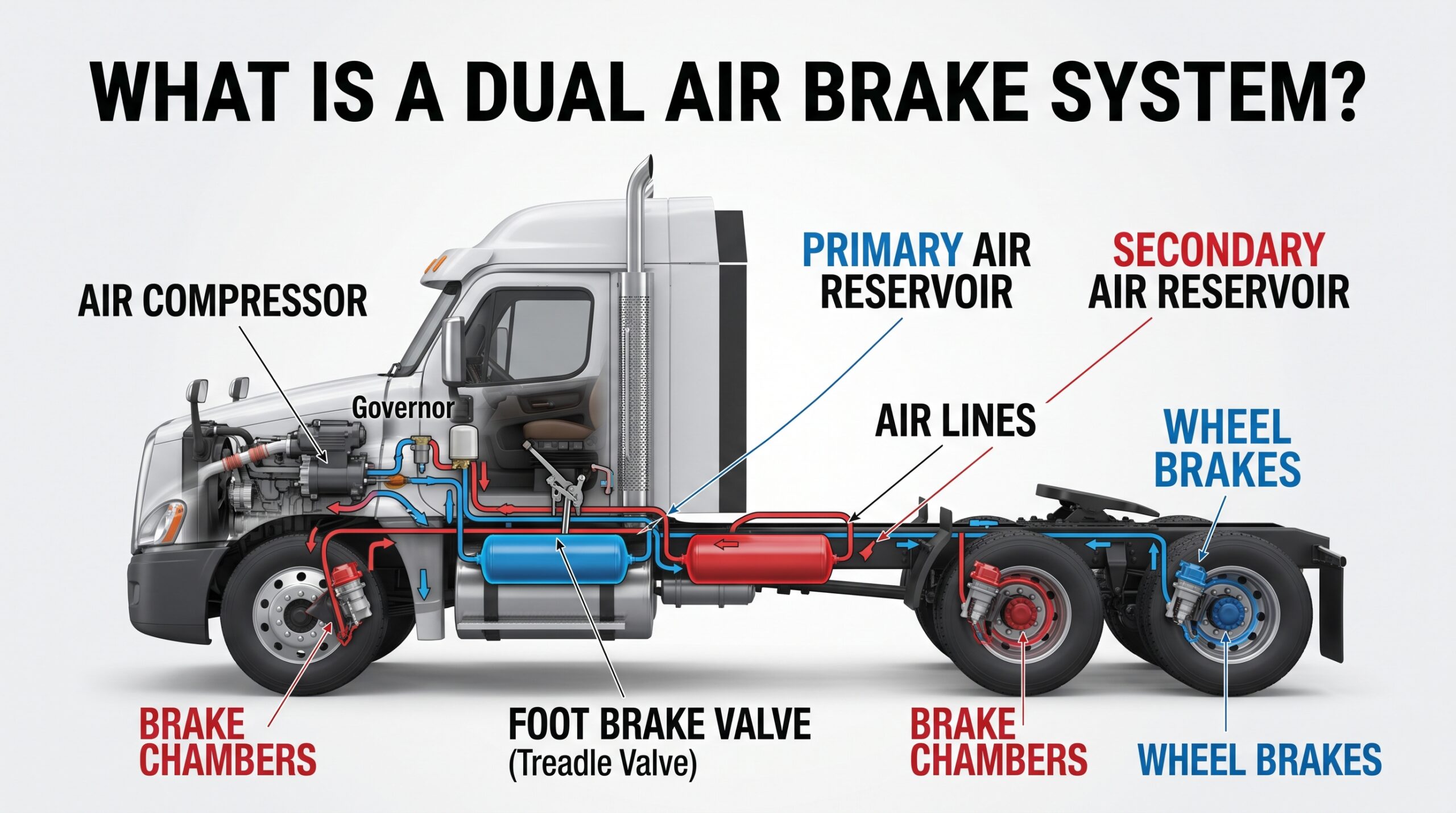
If you drive or work around trucks, buses, or other heavy commercial vehicles, you may have heard the term dual air brake system. But what does it actually mean?
A dual air brake system is a braking system that uses two separate air circuits to control the vehicle’s brakes. Instead of relying on one air circuit, the system divides the braking system into two independent sections. This design provides an important level of backup if one circuit develops a fault.
So, what is a dual air brake system in simple terms? It is an air-powered braking system with two separate circuits that work together to provide reliable braking. Depending on the vehicle design, one circuit may operate certain brakes while the other operates the remaining brakes. The exact arrangement varies by vehicle.
Dual air brakes are widely used on heavy vehicles because trucks and buses can carry large loads and require strong, dependable braking systems. A failure in one part of the braking system can be serious, so having separate circuits helps reduce the risk of losing all braking capability from a single fault.
In this guide, we will explain how the system works, its main parts, the difference between primary and secondary circuits, common problems, maintenance, and why this design is important for vehicle safety.
What Is a Dual Air Brake System?
A dual air brake system is a compressed-air braking system with two separate air circuits. Both circuits receive compressed air and can control different parts of the vehicle’s braking system.
The system is designed so that a problem in one circuit does not necessarily remove all braking capability. The remaining circuit can generally continue to provide some braking, depending on the vehicle’s design and the type of failure.
To understand what is a dual air brake system, it helps to first understand a basic air brake system.
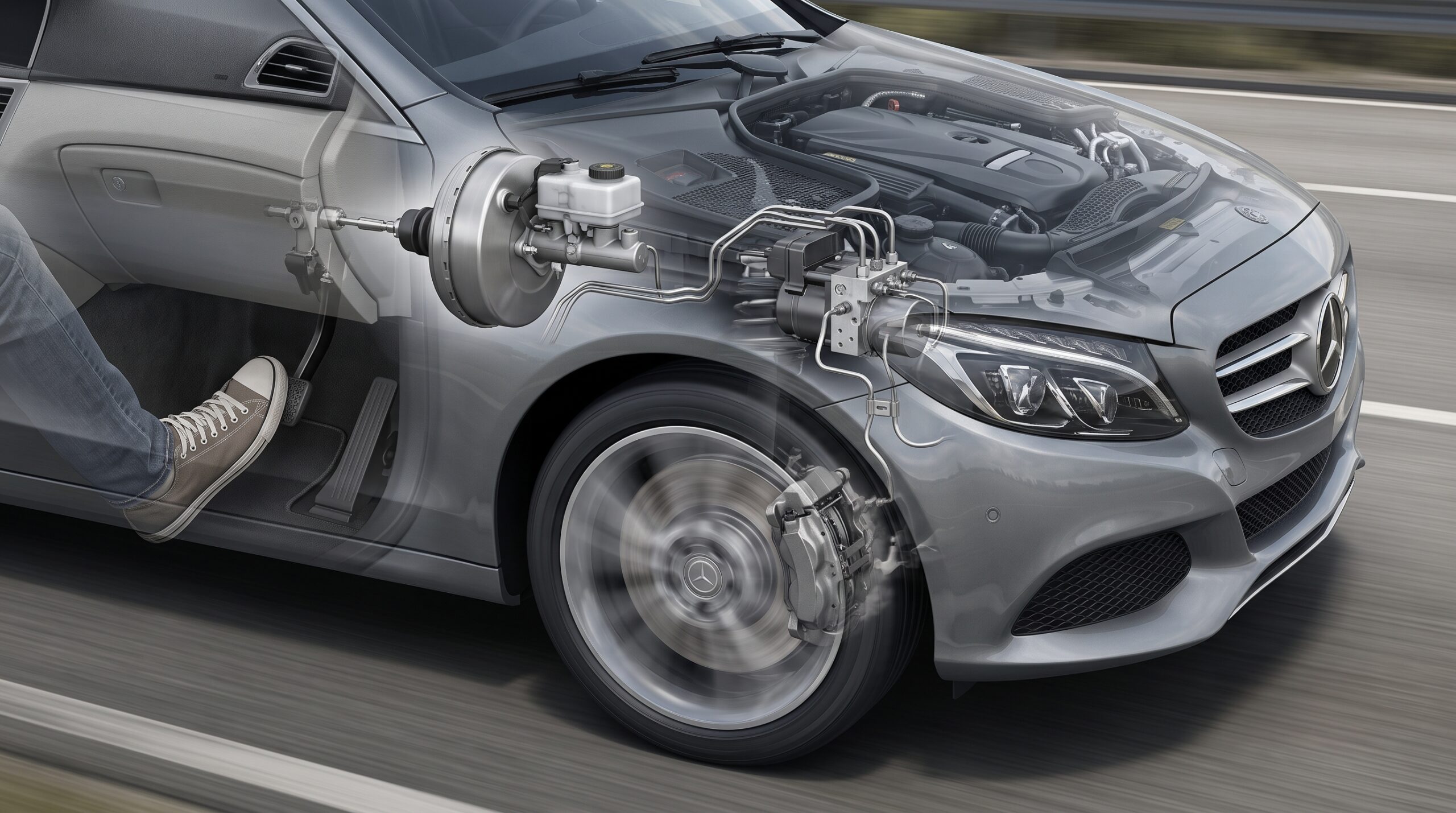
In an air brake system, an engine-driven compressor produces compressed air. The air is stored in reservoirs, sometimes called air tanks. When the driver presses the brake pedal, valves control the flow of compressed air to brake chambers.
The brake chambers use that air pressure to create mechanical movement. That movement operates the vehicle’s service brakes.
A dual system separates this process into two circuits. The circuits are normally supplied from separate sections of the air storage system and are controlled so that each circuit can operate its assigned brakes.
Why Are Dual Air Brake Systems Used?
The main reason for using a dual air brake system is redundancy.
Redundancy means that there is another system available if the first one develops a problem. In a heavy vehicle, this is especially important because the vehicle has a large amount of mass and may need significant braking force.
Key benefits include:
- Better braking-system reliability
- A backup circuit if one circuit develops a fault
- Improved safety for heavy commercial vehicles
- Continued partial braking in certain failure conditions
- Better separation of braking functions
- More dependable operation when properly maintained
For example, imagine that one air circuit develops a major leak. A properly designed dual system can isolate or limit the effect of that failure so that the second circuit may still provide braking.
However, this does not mean the driver can safely continue driving as if nothing happened. A brake-system fault should always be taken seriously.
How Does a Dual Air Brake System Work?
Understanding what is a dual air brake system becomes easier when you follow the path of air through the system.
The process generally works like this:
- The engine drives the air compressor.
- The compressor produces compressed air.
- Compressed air moves into the air reservoirs.
- The reservoirs store air until it is needed.
- The braking system maintains pressure within its operating range.
- The driver presses the brake pedal.
- The foot brake valve controls air delivery.
- Air pressure travels through the appropriate circuit.
- The brake chambers receive the air pressure.
- The chambers convert air pressure into mechanical movement.
- The mechanical brake components apply friction to slow the wheels.
The exact components and layout can differ between vehicle manufacturers and models.
What Happens When You Press the Brake Pedal?
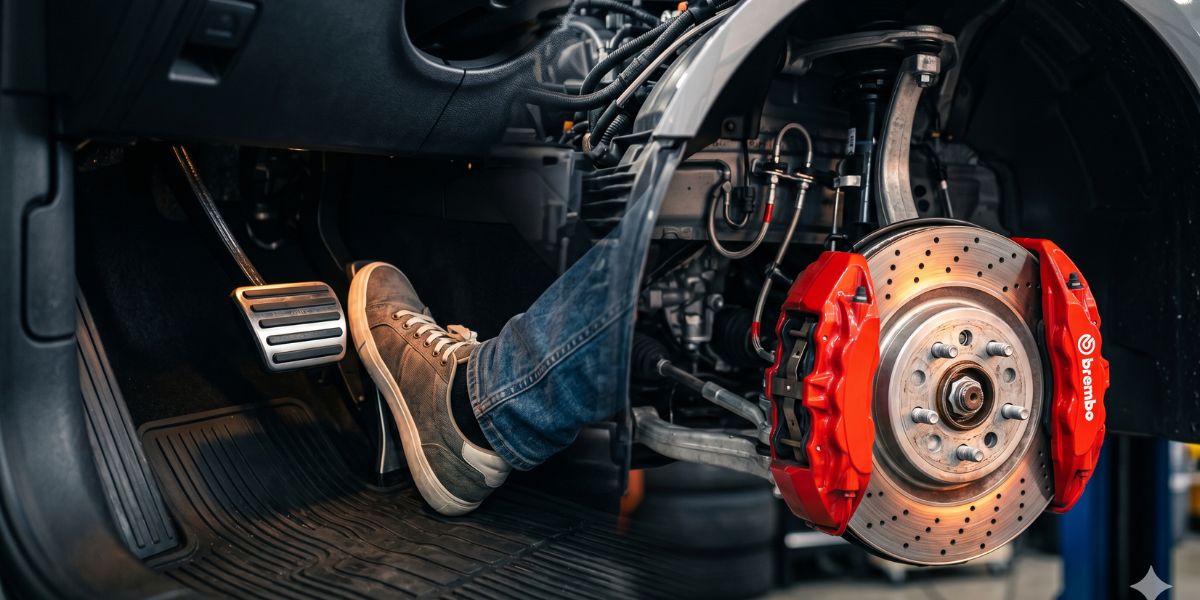
When the driver presses the brake pedal, the foot brake valve responds to the pedal movement.
The valve controls how much compressed air is delivered to the brake circuits. More pedal application generally results in greater air pressure being delivered to the brake chambers, within the limits of the system.
The brake chambers then respond to the air pressure.
A typical service brake chamber contains a flexible diaphragm. When compressed air enters the chamber, it pushes against the diaphragm. This creates mechanical movement that operates the brake mechanism.
On many heavy vehicles, this movement is transferred through components such as a pushrod and slack adjuster to apply the foundation brakes.
The result is friction at the brakes, which slows the wheels and reduces vehicle speed.
This is one reason air pressure is so important. If the system cannot maintain the required pressure, braking performance can be affected.
What Happens If One Circuit Fails?
One of the most important features of a dual air brake system is that the two circuits are separated.
If one circuit develops a problem, the other circuit may still provide braking. The amount and distribution of remaining braking depends on the vehicle’s design and the type of failure.
For example, a leak in one circuit may cause pressure to fall in that circuit while the other circuit remains pressurized.
The driver may experience reduced braking performance, warning lights, an air-pressure warning, or other changes.
The vehicle should not be treated as fully operational after such a failure.
A partially functioning brake system can behave differently from normal. Stopping distances may increase, and the vehicle may not respond in the same way under braking.
If a brake-system warning occurs, the driver should follow the vehicle manufacturer’s instructions and applicable safety procedures. A qualified technician should inspect the vehicle before normal operation resumes.
Main Parts of a Dual Air Brake System
A dual air brake system contains several components that work together. Understanding these parts makes it easier to understand how the entire system operates.
Air Compressor
The air compressor produces compressed air for the braking system.
It is normally driven by the vehicle’s engine. As the engine runs, the compressor supplies air to the reservoirs.
The compressor must produce enough air to maintain the required operating pressure. If it cannot keep up with demand, the system may experience slow pressure buildup or low air pressure.
A compressor problem can therefore affect the overall operation of the air brake system.
Air Reservoirs
Air reservoirs, also called air tanks, store compressed air.
A dual system normally has separate storage for its two circuits. The exact design can vary by vehicle.
The stored air provides a supply that can be used when the driver applies the brakes.
Reservoirs also help provide a stable supply of compressed air instead of requiring the compressor to produce every bit of air at the exact moment the brakes are applied.
Moisture and contaminants can collect in air tanks. For this reason, the reservoirs and their associated components need proper maintenance according to the vehicle manufacturer’s instructions.
Foot Brake Valve
The foot brake valve is the main control valve used by the driver for service braking.
When the driver presses the brake pedal, the valve controls compressed-air delivery to the braking circuits.
The amount of pedal application influences the air pressure sent toward the brake chambers.
Because this valve plays such an important role, a problem with it can affect braking performance.
Brake Chambers
Brake chambers convert air pressure into mechanical movement.
Compressed air enters the chamber and acts against a diaphragm. The resulting movement pushes a rod that operates the mechanical brake components.
In a typical service brake arrangement, the pushrod movement is transferred through the brake linkage to apply the brake.
Some heavy vehicles also use spring brake chambers. These combine service-brake and parking/emergency-brake functions in one assembly, although the exact design varies.
Brake Lines and Valves
Brake lines carry compressed air between different components.
Valves control where air goes and help the system respond correctly to different operating conditions.
Examples can include relay valves, check valves, protection valves, and other control components.
A problem in a line, fitting, or valve can cause air loss or incorrect brake operation.
Because air lines run throughout a heavy vehicle, regular inspection is important.
Air Pressure Gauges
Air pressure gauges allow the driver to monitor the system’s air pressure.
Many heavy vehicles have separate gauges for the primary and secondary systems or display both pressures in another approved format.
These gauges help the driver identify abnormal pressure conditions.
A sudden pressure drop, slow pressure buildup, or an unusually low reading should not be ignored.
Primary and Secondary Air Brake Circuits
A major part of understanding what is a dual air brake system is knowing how the primary and secondary circuits work.
The two circuits are designed to operate separately while working together during normal braking.
The exact brake distribution depends on the vehicle. Therefore, you should not assume that the primary circuit always controls the front brakes or that the secondary circuit always controls the rear brakes.
The vehicle manufacturer’s specifications determine the actual arrangement.
Primary Circuit
The primary circuit is one half of the dual braking system.
It has its own supply path and associated components. Depending on the vehicle, it may provide air pressure to a particular group of brake chambers.
The primary circuit normally includes components such as:
- An air reservoir
- Air lines
- Control valves
- Brake chambers
- Related fittings and controls
During normal operation, the primary circuit works together with the secondary circuit.
Secondary Circuit
The secondary circuit is the other half of the system.
Like the primary circuit, it has its own air supply and controls. It operates its assigned brakes and provides redundancy.
If a fault affects the primary circuit, the secondary circuit may still provide braking for the brakes it controls.
This separation is a key reason that dual systems are used in heavy vehicles.
The two circuits are not simply two identical systems added for convenience. Their separation is an important part of the vehicle’s braking safety design.
What Are the Benefits of a Dual Air Brake System?
There are several reasons a dual air brake system is valuable for heavy vehicles.
Better Safety
The most important benefit is redundancy.
If one circuit develops a fault, the other circuit may continue to provide braking. This can reduce the risk of a complete loss of service braking from a single circuit failure.
Redundancy
A dual system provides two braking circuits instead of one.
This means the vehicle has an additional layer of protection against certain failures.
However, redundancy is not a replacement for maintenance. A vehicle with a known brake problem should be repaired rather than relying on the second circuit.
Suitable for Heavy Loads
Trucks and buses can carry substantial weight.
Heavy vehicles need braking systems designed to provide controlled braking under demanding conditions.
Air brakes are well suited to many commercial vehicles because compressed air can be generated and stored for use throughout the braking system.
Reliable Braking Performance
When maintained correctly, the system can provide consistent braking control.
The compressor, reservoirs, valves, brake chambers, and mechanical brakes all work as one system.
Good maintenance helps keep these components working within their intended conditions.
Better Control on Commercial Vehicles
A dual air brake system allows braking functions to be divided into separate circuits.
This makes the system more resilient and provides the vehicle with a structured braking design suitable for commercial applications.
Dual Air Brake System vs. Single Air Brake System
A single air brake system uses one main air circuit for its service braking functions.
A dual system separates the service brake system into two circuits.
| Feature | Single Air Brake System | Dual Air Brake System |
|---|---|---|
| Air circuits | One | Two |
| Redundancy | Limited | Greater |
| Failure protection | Lower | Higher |
| System design | Simpler | More complex |
| Common use | Older or specialized applications | Modern heavy vehicles |
| Partial braking after one circuit failure | Depends on design | Designed to provide some remaining braking |
The main difference is not simply the number of tanks or pipes.
The key difference is that the dual system separates the braking system into two independent circuits.
This means that one circuit can potentially remain functional when the other experiences a problem.
A single circuit does not offer the same level of circuit redundancy.
Modern commercial vehicles commonly use dual air brake arrangements because reliable braking is critical for heavy vehicles.
Common Problems With Dual Air Brake Systems
Even a well-designed dual air brake system can develop problems.
Many issues are related to air leaks, pressure, valves, compressors, or mechanical brake components.
Low Air Pressure
Low air pressure can have several causes.
Possible causes include:
- Air leaks
- Compressor problems
- Damaged air lines
- Faulty valves
- Excessive air consumption
- Problems with the pressure-control system
Low pressure can reduce the effectiveness of the braking system.
Heavy vehicles are normally equipped with low-air warnings to alert the driver when pressure becomes too low.
Never ignore a low-air warning.
Air Leaks
Air leaks are a common concern in compressed-air systems.
Leaks can occur at:
- Air lines
- Fittings
- Hoses
- Valves
- Reservoir connections
- Brake chambers
- Other seals and connections
A small leak may cause the compressor to run more often. A larger leak can cause pressure to fall quickly.
One common warning sign is a hissing sound when the vehicle is parked or the system is pressurized.
However, not every leak is easy to hear. Proper inspection is important.
Faulty Brake Valves
Brake valves control the movement and pressure of air.
If a valve becomes damaged, contaminated, or worn, it may not control air correctly.
Possible symptoms include unusual brake response, pressure problems, or air loss.
Because valves are important safety components, suspected valve problems should be inspected by a qualified technician.
Compressor Problems
The compressor is responsible for producing compressed air.
If the compressor does not produce enough air, the system may take too long to build pressure.
Possible warning signs include:
- Slow pressure buildup
- Low operating pressure
- Excessive compressor operation
- Air pressure that drops faster than expected
A compressor problem should be diagnosed rather than ignored.
Brake Chamber Problems
Brake chambers are exposed to mechanical and environmental stress.
A damaged diaphragm, air leak, or mechanical problem can affect the chamber’s ability to apply the brake.
Problems with brake chambers can cause reduced or uneven braking performance.
Brake chambers are safety-critical components and should be inspected when a problem is suspected.
Signs of a Dual Air Brake System Problem
Knowing the warning signs can help a driver identify a potential problem early.
Important signs include:
- Low-air warning activation
- Slow air-pressure buildup
- Frequent pressure loss
- Unusual air sounds
- Visible damage to air lines
- Brake warning lights
- Unusual brake response
- Increased stopping distance
- Uneven braking
- Abnormal pressure readings
- Compressor running more than expected
For example, suppose a truck normally builds air pressure quickly after starting, but suddenly takes much longer.
That could indicate an air leak, compressor problem, valve issue, or another fault.
Similarly, if the pressure gauge drops unusually fast, the vehicle should be checked.
Drivers should never attempt to diagnose a serious brake problem while continuing normal operation. Brake systems require proper inspection and repair.
How to Maintain a Dual Air Brake System
Proper maintenance is essential for safe air-brake operation.
The exact maintenance schedule depends on the vehicle, operating conditions, manufacturer requirements, and applicable regulations.
Check Air Pressure Regularly
Monitor the air-pressure gauges before and during operation.
Know the normal pressure range for the vehicle.
If pressure does not build normally or drops unexpectedly, investigate the problem before continuing.
Inspect Air Lines and Fittings
Air lines should be checked for:
- Cracks
- Cuts
- Abrasion
- Loose fittings
- Corrosion
- Physical damage
Lines should be routed and supported correctly so they do not rub against moving or hot components.
Check for Air Leaks
Air leaks can reduce system pressure and force the compressor to work harder.
Listen for unusual hissing sounds and follow the manufacturer’s inspection procedure.
A qualified technician may use approved leak-detection methods to locate smaller leaks.
Drain Moisture From Air Reservoirs When Required
Compressed air can contain moisture.
Water and other contaminants can collect in reservoirs and may affect air-system components.
Many vehicles use automatic or manual drain arrangements.
Follow the manufacturer’s maintenance instructions for draining and servicing the air tanks.
Inspect Brake Components
Air pressure is only one part of the braking system.
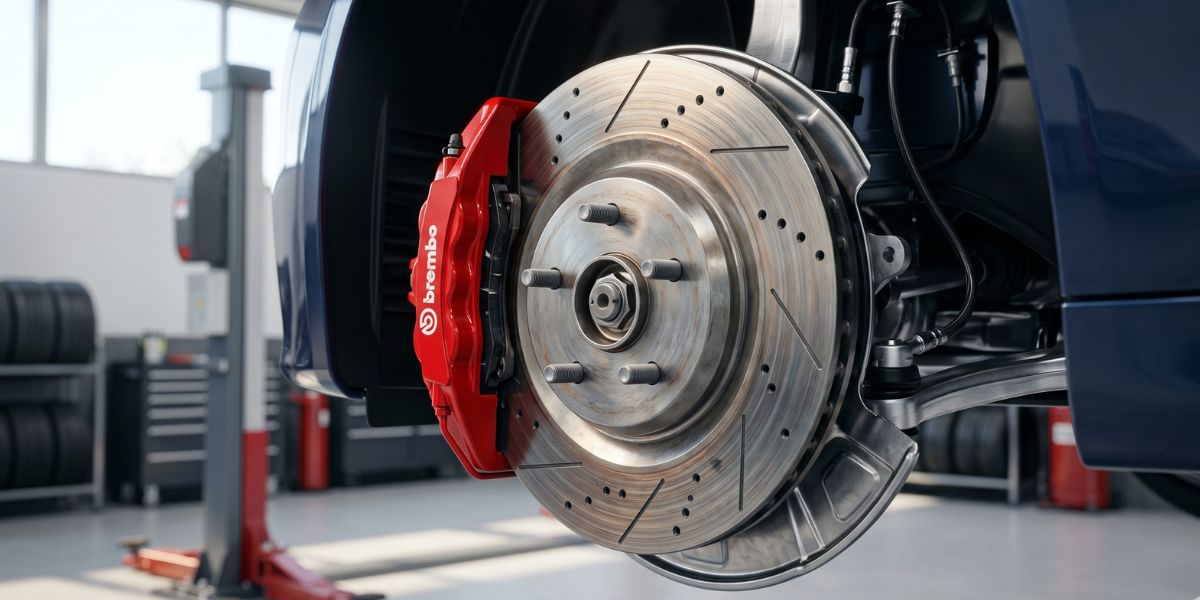
Mechanical components such as brake drums, discs, linings, pads, slack adjusters, and other parts must also be maintained.
A healthy air supply cannot compensate for worn or damaged foundation brakes.
Follow the Vehicle Manufacturer’s Maintenance Schedule
Always follow the maintenance information provided for the specific vehicle.
Different trucks and buses can have different system designs and service requirements.
The manufacturer’s instructions should take priority over general advice.
Have Serious Problems Inspected by a Qualified Technician
Brake repairs are safety-critical work.
If you notice low pressure, major air loss, unusual braking, warning lights, or other serious symptoms, have the vehicle inspected by a qualified technician.
Do not assume that the second circuit makes it safe to keep driving with a known fault.
Is a Dual Air Brake System Safer?
Yes, the design of a dual air brake system provides an important safety advantage because it separates the service braking system into two circuits.
If one circuit fails, the other may still provide some braking capability.
This reduces the risk that a single circuit failure will result in a complete loss of service braking.
However, it is important to understand the limits of this protection.
A dual system does not make a vehicle safe to drive when the braking system has a serious fault.
For example, if the driver receives a low-air warning or notices a major change in braking performance, the vehicle should be handled according to proper safety procedures.
The remaining circuit is a backup feature, not a reason to ignore a failure.
Regular inspection is just as important as the dual-circuit design itself.
Drivers should monitor air pressure, respond to warning systems, inspect the vehicle as required, and report brake problems immediately.
How Does a Dual Air Brake System Handle a Circuit Failure?
One of the most useful features of this design is its ability to retain some braking when one circuit has a problem.
Imagine a vehicle has two separate service brake circuits.
During normal operation, both circuits are pressurized. The driver presses the brake pedal, and both circuits respond.
Now imagine one circuit develops a significant leak.
The affected circuit may lose pressure. Depending on the vehicle design, the other circuit can remain available for braking.
The vehicle may therefore still have some braking capability.
However, the braking system is no longer operating normally.
The driver may have reduced braking performance, different brake balance, warning signals, or other symptoms.
The exact result depends on which circuit failed and how the vehicle’s brakes are arranged.
This is why it is important to know the manufacturer’s recommended procedures for air-brake failures.
Why Is Air Pressure Important?
Air pressure is the energy source used to operate the service brakes in an air brake system.
The compressor produces the air, and the reservoirs store it.
When the driver applies the brake, the stored compressed air is directed through valves and lines toward the brake chambers.
If pressure is too low, the system may not operate as intended.
This is why heavy vehicles use air-pressure gauges and warning systems.
Drivers should become familiar with normal pressure behavior for their vehicle.
For example, after starting the engine, the air pressure should build according to the vehicle’s normal operating characteristics.
If pressure builds unusually slowly, that may indicate a problem.
Likewise, if pressure falls rapidly during operation, the vehicle should be checked.
Dual Air Brakes and Heavy Vehicles
Heavy vehicles place special demands on braking systems.
A loaded truck has much more mass than a passenger car. A bus may carry many passengers. Commercial vehicles may also operate for long periods and in difficult traffic or road conditions.
For these reasons, dependable braking is essential.
Air brakes are common on many heavy vehicles because they use compressed air to operate the brakes.
The dual-circuit arrangement adds another layer of protection.
Instead of depending on one service circuit, the vehicle has two.
This does not eliminate all brake failures, but it helps reduce the consequences of certain single-circuit failures.
Are Dual Air Brakes Used on Trailers?
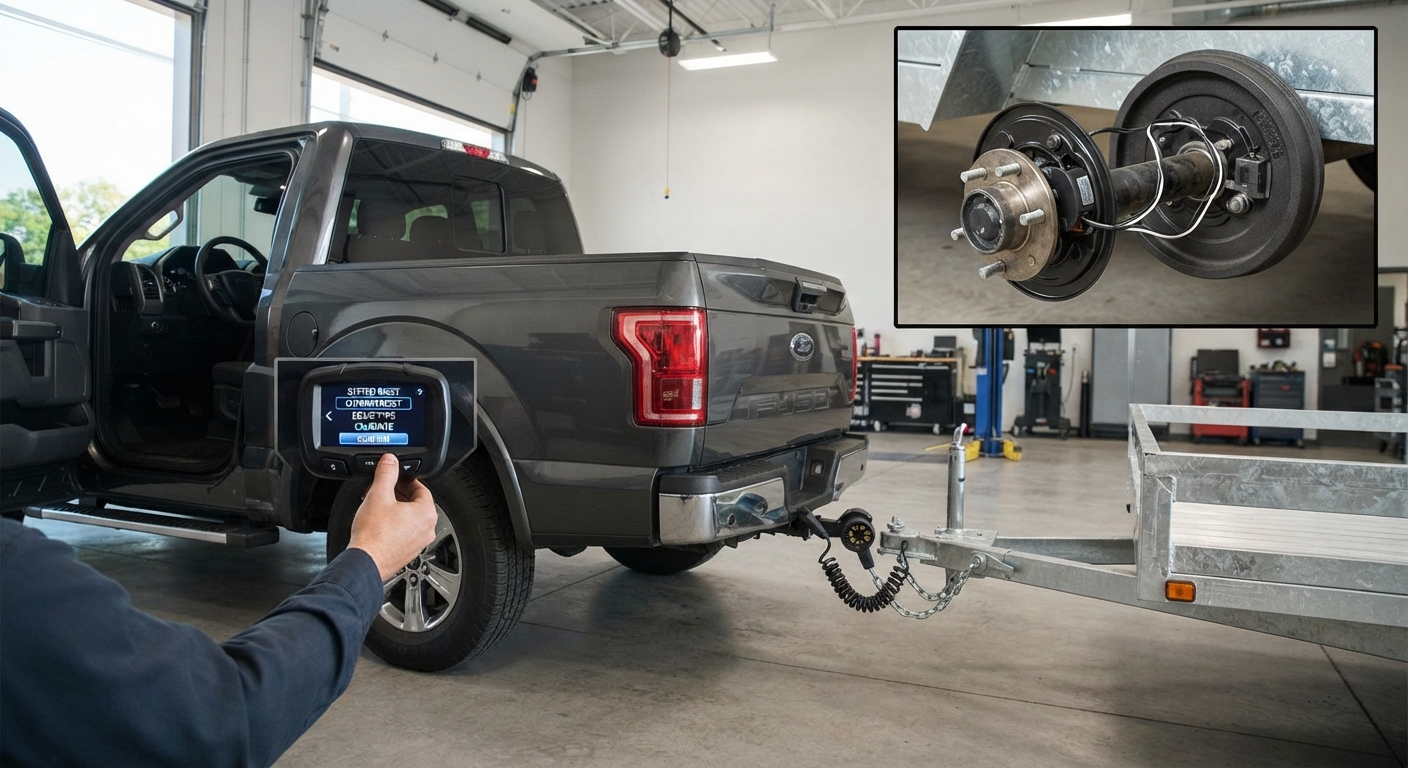
Many heavy trailers use air brake systems connected to the towing vehicle.
A trailer’s braking system can include its own brake chambers, valves, air lines, and other components.
The tractor and trailer braking systems work together through the vehicle’s air connections and control systems.
The exact configuration varies by vehicle type and regulatory requirements.
Because trailer brakes are part of the overall combination vehicle braking system, problems with trailer air lines, couplings, valves, or chambers can affect braking performance.
Drivers should inspect the complete combination rather than checking only the tractor.
What Should a Driver Do When an Air Brake Warning Appears?
An air-brake warning should never be ignored.
If an air-pressure warning activates, the driver should follow the vehicle manufacturer’s recommended emergency or safety procedure.
The appropriate response depends on the situation, location, traffic conditions, and severity of the warning.
The important principle is simple: do not continue normal driving with a serious brake-system warning.
If the vehicle has lost normal braking performance, it needs proper attention before returning to service.
FAQ
What is a dual air brake system?
A dual air brake system is a compressed-air braking system that uses two separate air circuits. The two circuits work together during normal braking and provide a level of backup if one circuit develops a fault.
How many air circuits does a dual air brake system have?
It has two separate service-brake air circuits, commonly referred to as the primary and secondary circuits. The exact components and brake distribution depend on the vehicle’s design.
What happens if one air brake circuit fails?
If one circuit fails, the other circuit may continue to provide partial braking, depending on the vehicle’s design and the type of failure. Braking performance may be reduced, so the vehicle should not be operated normally until the problem is properly addressed.
What vehicles use dual air brake systems?
Dual air brake systems are commonly found on heavy commercial vehicles such as trucks, buses, and many tractor-trailer combinations. The exact braking configuration depends on the vehicle.
Why do trucks use dual air brake systems?
Trucks use dual air brake systems because heavy vehicles require dependable braking. Two separate circuits provide redundancy and can help maintain some braking capability if one circuit develops a fault.
How do you know if an air brake system has a problem?
Warning signs can include low air pressure, a low-air warning, slow pressure buildup, rapid pressure loss, unusual air sounds, warning lights, unusual braking behavior, and increased stopping distance.
Can a truck drive with one air brake circuit failed?
A vehicle may retain some braking through the remaining circuit, but that does not mean it is safe to continue normal operation. A brake-system failure should be addressed according to the manufacturer’s procedures and applicable safety requirements.
What is the difference between primary and secondary air brake circuits?
They are two separate sections of the service braking system. Each has its own air supply and related components. Their exact brake assignments vary by vehicle.
Why are air reservoirs important?
Air reservoirs store compressed air produced by the compressor. They provide a supply of pressurized air for braking and help the system maintain the required operating pressure.
What does the air compressor do?
The air compressor produces compressed air for the braking system. It supplies air to the reservoirs so that sufficient pressure is available for brake operation.
What does a brake chamber do?
A brake chamber converts compressed-air pressure into mechanical movement. That movement operates the mechanical brake components that apply the brakes.
Why should air leaks be repaired quickly?
An air leak can reduce system pressure and make the compressor work harder. A large leak can also reduce braking capability. Any significant air leak should be properly diagnosed and repaired.
How often should an air brake system be inspected?
Inspection frequency depends on the vehicle, manufacturer instructions, operating conditions, and applicable regulations. Drivers and operators should follow the required inspection and maintenance schedule for the specific vehicle.
Final Thoughts
So, what is a dual air brake system?
It is a compressed-air braking system that uses two separate service-brake air circuits. The circuits normally work together to control the vehicle’s brakes, while their separation provides redundancy if one circuit develops a fault.
This design is especially important for trucks, buses, and other heavy commercial vehicles because dependable braking is critical when moving large amounts of weight.
The main components include the air compressor, reservoirs, foot brake valve, brake chambers, air lines, valves, and pressure gauges. All of these parts must work correctly for the braking system to perform as intended.
The biggest advantage of a dual air brake system is that a failure in one circuit does not necessarily mean a complete loss of service braking. However, the remaining circuit should never be viewed as permission to ignore a brake-system failure.
Regular inspections, proper maintenance, correct air pressure, leak checks, and timely professional repairs are essential.
In short, a dual air brake system improves braking-system reliability by using two independent air circuits. Understanding how those circuits work can help drivers recognize warning signs and respond appropriately when a problem occurs.


One thought on “What Is a Dual Air Brake System? A Simple Guide”