Our Blogs
What Side Is the Brake On in a Car? Easy Driver Guide

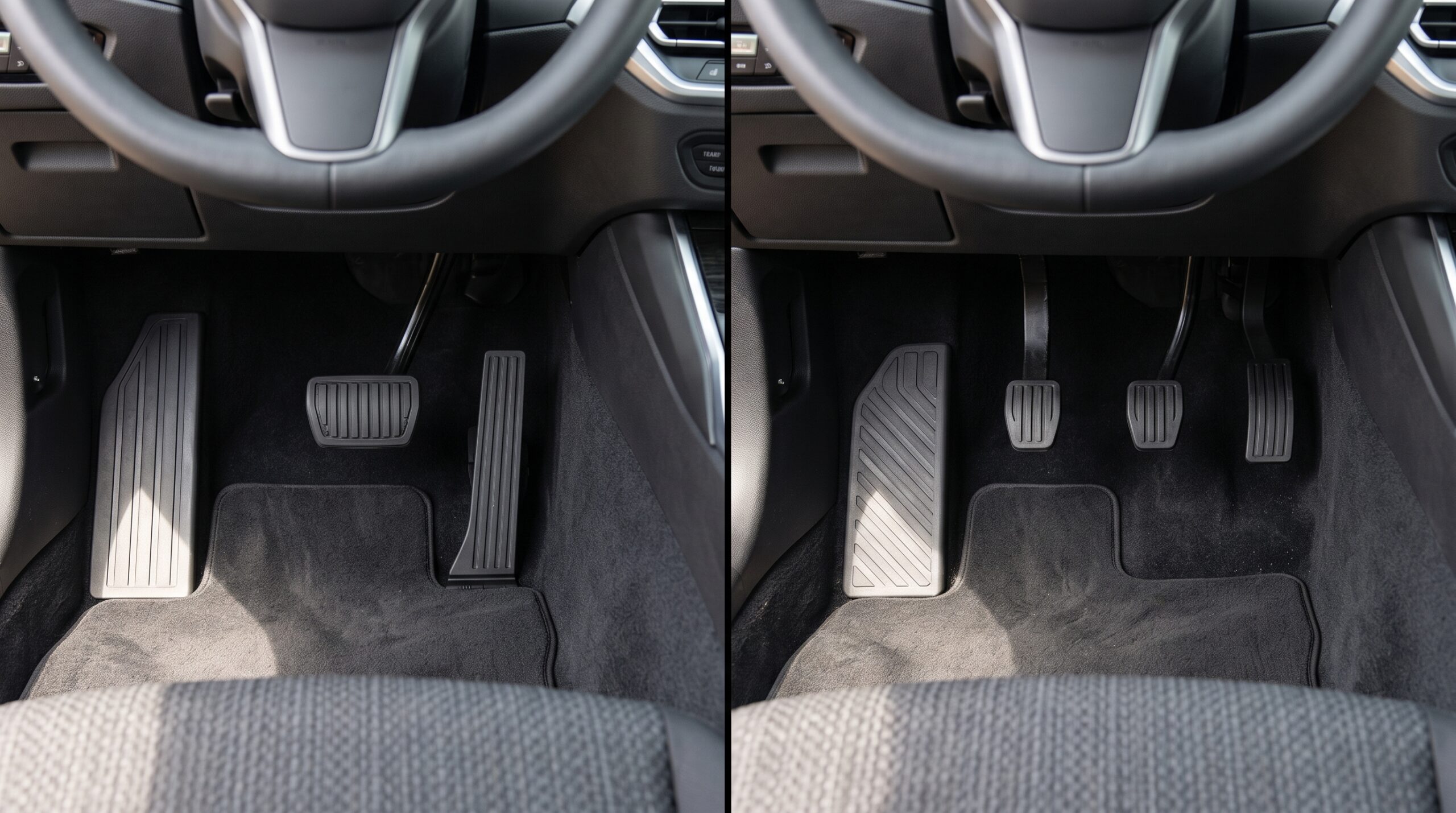
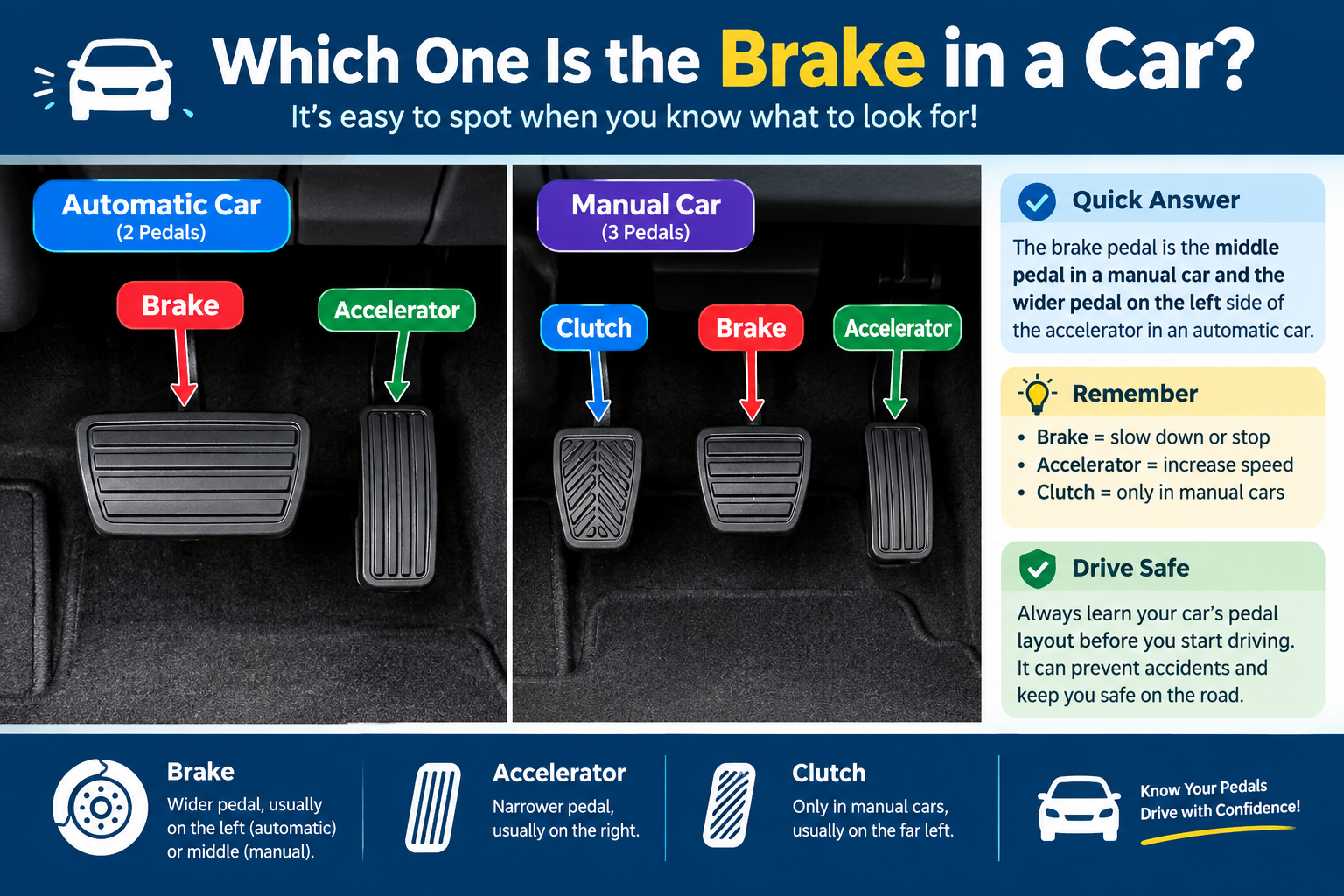
If you are learning to drive, one of the first things you need to know is what side is the brake on in a car. In most cars, the brake pedal is located to the left of the accelerator pedal. In an automatic car, you will normally see two pedals: the brake on the left and the accelerator on the right.
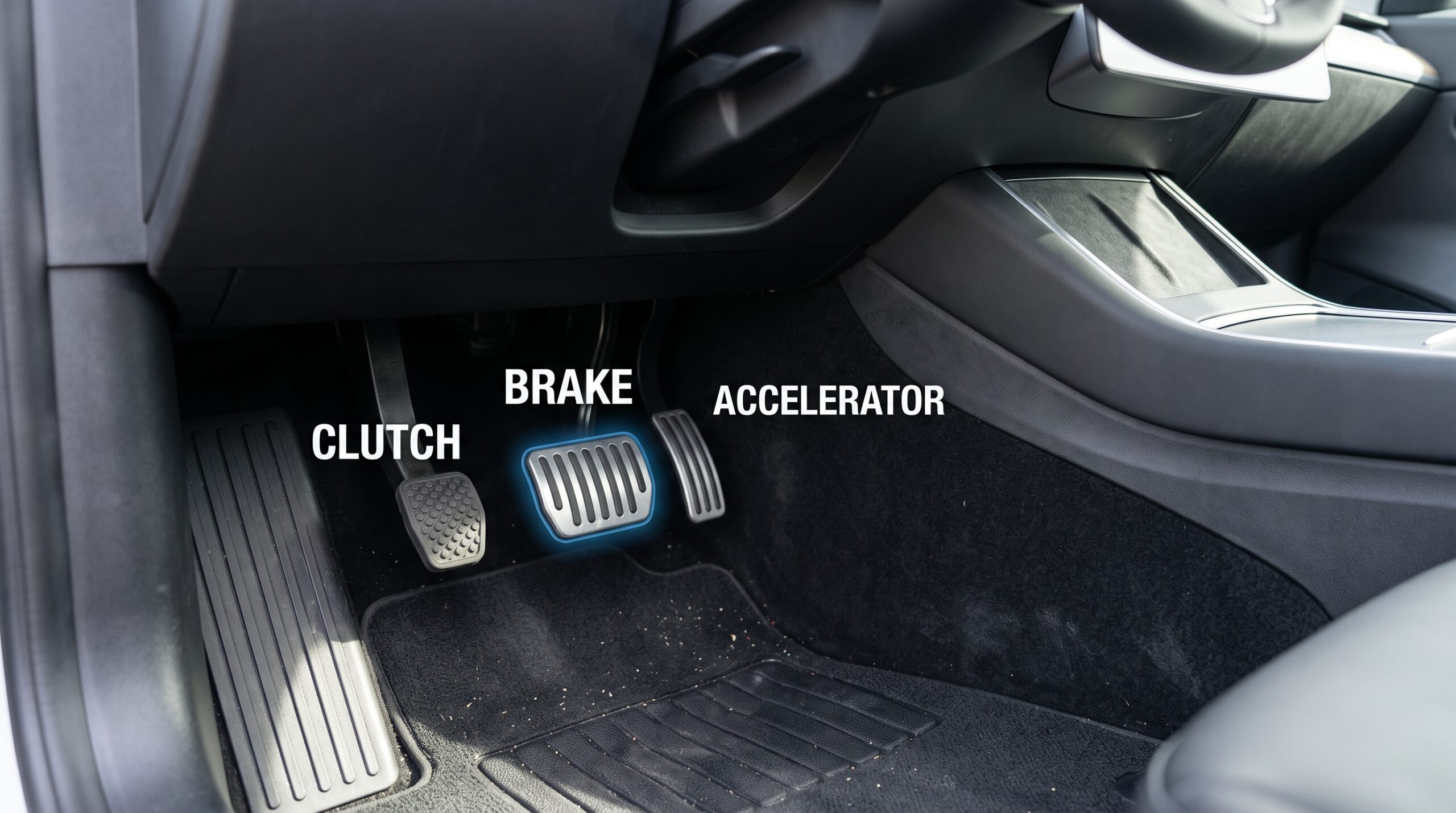
In a manual car, there are three pedals. From left to right, they are usually the clutch, brake, and accelerator.
The position can seem confusing when you are new to driving, especially because the steering wheel can be on either side of the vehicle. However, the pedal arrangement generally stays the same. The accelerator remains on the right, while the brake remains to its left.
Knowing the correct pedal before moving a vehicle is essential. A driver should be able to identify the brake without hesitation and use it smoothly when slowing or stopping.
This guide explains what side is the brake on in a car, how the pedal layout works in automatic and manual vehicles, how to identify each pedal, and how to use the brake safely.
What Side Is the Brake On in a Car?
The brake pedal is normally to the left of the accelerator pedal.
In an automatic car, the basic arrangement is:
Brake → Accelerator
In a manual car, the arrangement is:
Clutch → Brake → Accelerator
The brake is therefore not normally the pedal on the far right. The far-right pedal is usually the accelerator.
Brake Pedal in an Automatic Car
An automatic car normally has two main foot pedals:
- Brake pedal
- Accelerator pedal
The brake is positioned on the left, while the accelerator is on the right.
Both pedals are normally operated with the right foot. This allows the driver to move the right foot between the accelerator and brake as needed.
For example, when you want to accelerate, your right foot moves toward the accelerator. When you need to slow down, you move the same foot to the brake.
This arrangement also makes it easier to keep the other foot relaxed instead of using both feet for normal driving.
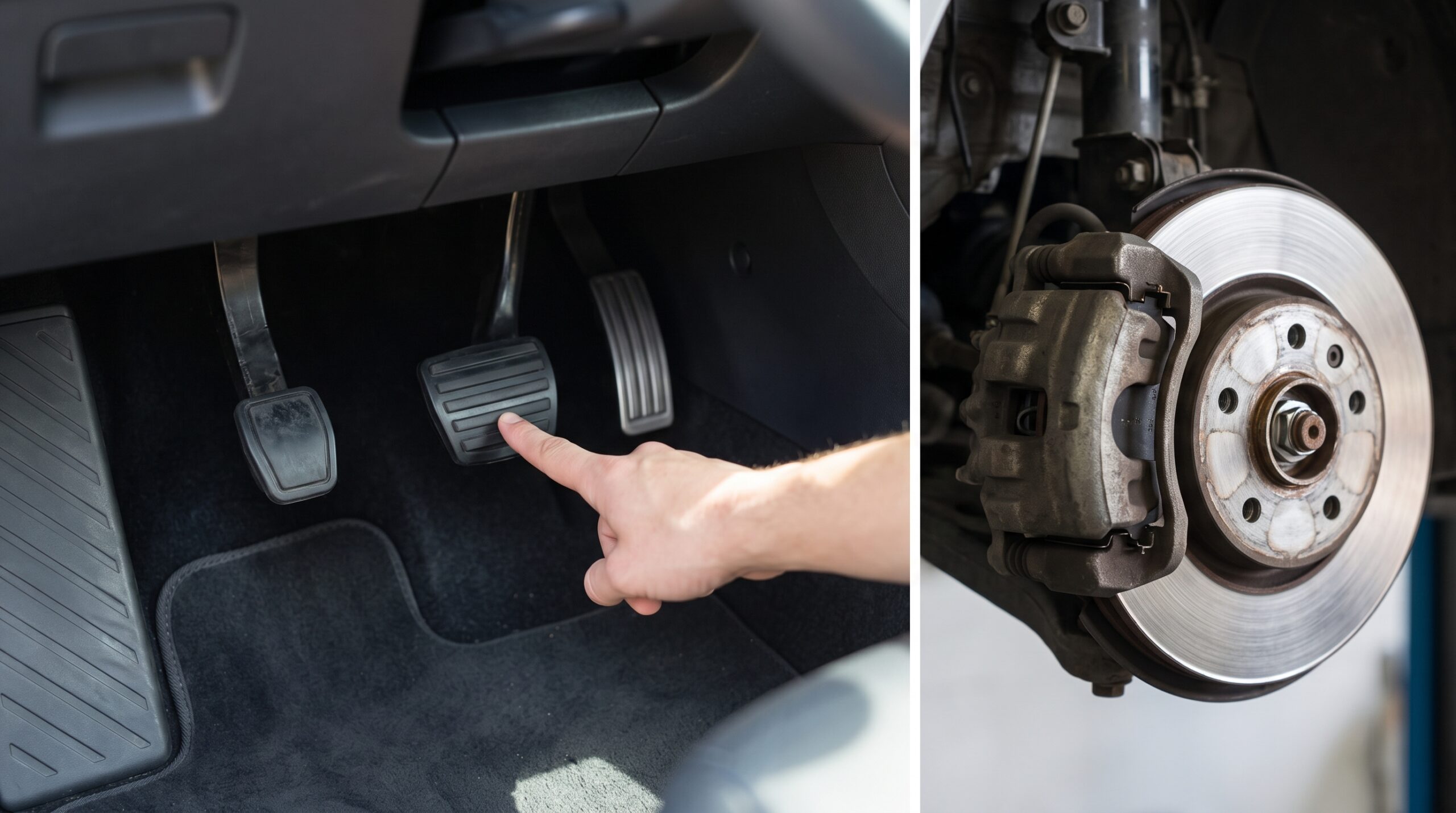
To identify the brake pedal, look at the two pedals together. The pedal that is farther toward the left is normally the brake. It is also often wider than the accelerator.
If you are still unsure, do not guess. Check the owner’s manual and become familiar with the pedal layout before moving the vehicle.
Brake Pedal in a Manual Car
A manual car usually has three pedals.
From left to right, the pedals are:
Clutch → Brake → Accelerator
The clutch is on the far left. The brake is in the middle. The accelerator is on the far right.
This means the answer to what side is the brake on in a car changes slightly depending on whether you are looking at an automatic or manual vehicle.
In a manual car, the brake is normally the middle pedal.
The left foot is normally used for the clutch. The right foot operates the brake and accelerator.
For example, when starting from a stop, you may use the clutch while selecting a gear. Once driving, you generally use the right foot to control the brake and accelerator.
Is the Brake on the Left or Right?
The brake is normally on the left side of the accelerator.
However, its exact position depends on the number of pedals.
In an automatic vehicle:
Brake | Accelerator
In a manual vehicle:
Clutch | Brake | Accelerator
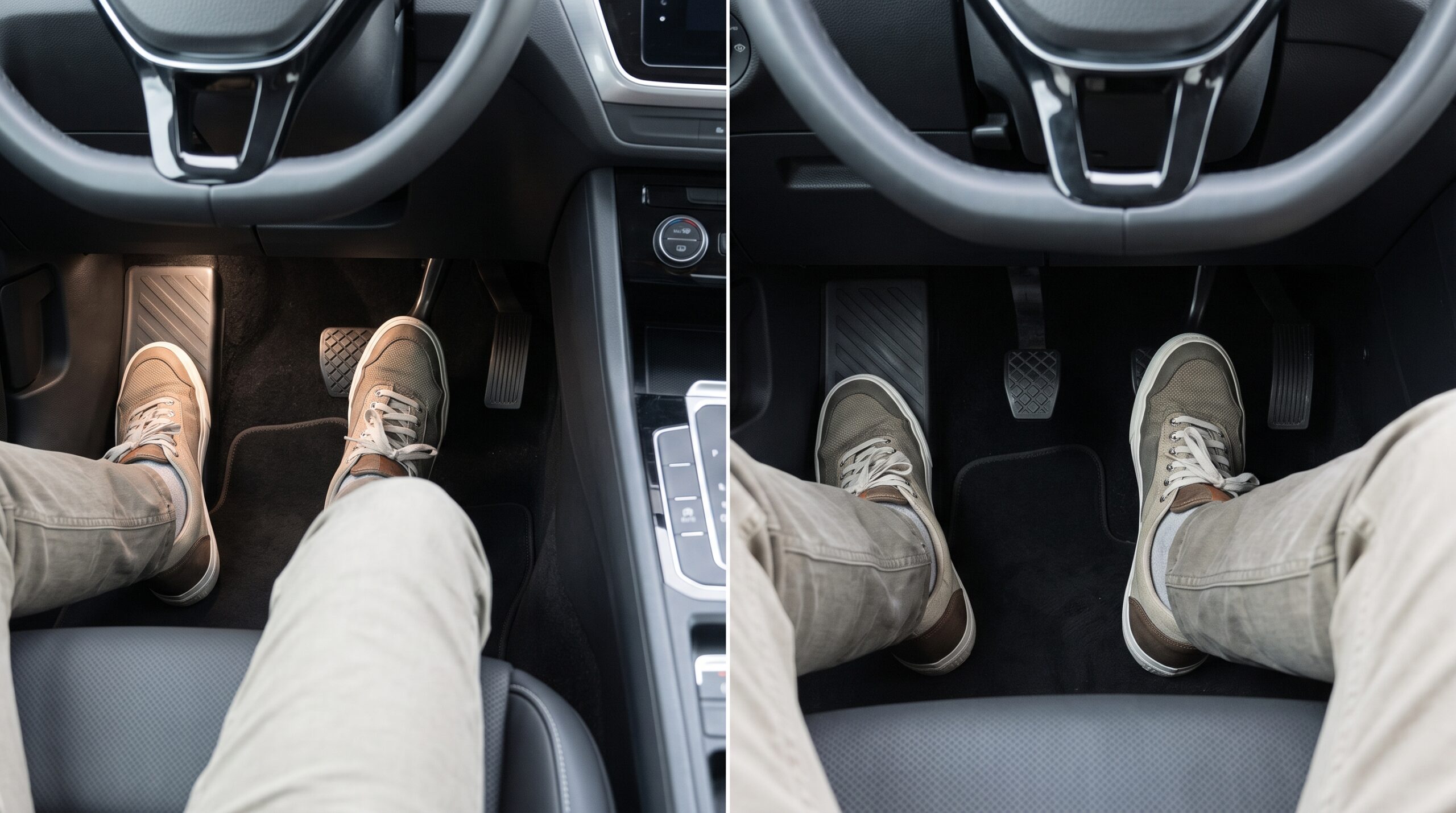
The steering wheel may be located on either side of the vehicle, but that does not normally change the order of the foot pedals.
In Left-Hand-Drive Cars
In a left-hand-drive car, the steering wheel is on the left side of the cabin.
This is common in countries where vehicles drive on the right side of the road.
Even though the steering wheel is on the left, the pedals usually follow the familiar arrangement.
For an automatic car:
Brake → Accelerator
For a manual car:
Clutch → Brake → Accelerator
So the brake remains to the left of the accelerator.
The driver’s position changes, but the pedal sequence is designed to remain familiar.
In Right-Hand-Drive Cars
In a right-hand-drive vehicle, the steering wheel is on the right side of the cabin.
This is common in countries where vehicles drive on the left side of the road.
A right-hand-drive car can look different from a left-hand-drive car from the driver’s seat. However, the pedals generally remain in the same order.
An automatic car normally has:
Brake → Accelerator
A manual car normally has:
Clutch → Brake → Accelerator
Therefore, moving the steering wheel to the opposite side does not normally mean moving the accelerator or brake to opposite sides.
This is an important point for anyone asking what side is the brake on in a car.
Where Is the Brake Pedal Located?
The brake pedal is located in the driver’s footwell.
Its position is designed so that the driver can reach it easily with the right foot.
The exact pedal shape, height, width, and spacing can vary between vehicles. However, the basic layout is usually predictable.
Automatic Car Pedal Layout
Most automatic cars have two pedals:
Left: Brake
Right: Accelerator
The brake is often wider than the accelerator. The accelerator is usually narrower and positioned farther to the right.
A simple way to remember the layout is:
Brake first, accelerator second.
The right foot normally moves between these two pedals.
When your foot is not accelerating, you should generally be prepared to use the brake when traffic or road conditions require it.
Manual Car Pedal Layout
A manual car usually has three pedals:
| Position | Pedal | Main Function |
|---|---|---|
| Left | Clutch | Helps connect and disconnect engine power from the transmission |
| Middle | Brake | Slows or stops the vehicle |
| Right | Accelerator | Controls engine power and speed |
This makes the manual layout easy to remember.
Clutch = Left
Brake = Middle
Accelerator = Right
If you are learning manual driving, practice identifying these pedals while the vehicle is stationary.
How to Identify the Brake Pedal
Before driving a new car, take a moment to identify every pedal.
This is especially important if you have just started driving or are using a vehicle that is different from the one you normally drive.
Look at the Pedal Layout
Start by looking at the complete pedal arrangement.
If the car is automatic, you will normally see two pedals. The brake is the pedal on the left.
If the car is manual, you will normally see three pedals. The brake is the middle pedal.
Never rely only on memory if the vehicle has an unfamiliar design.
Check the Pedal Size and Position
The brake pedal is often wider than the accelerator.
In many vehicles, this makes it easier to identify.
However, pedal dimensions can vary. Do not use size as your only method of identification.
Look at the position as well.
For an automatic car, the brake should normally be immediately to the left of the accelerator.
Check the Vehicle Owner’s Manual
The owner’s manual is one of the best sources of information about a specific vehicle.
It can explain the vehicle’s controls, pedals, parking brake, braking system, and warning lights.
If you have any doubt about a particular vehicle, check the manual rather than guessing.
This is particularly useful when you are driving an unfamiliar model.
Familiarize Yourself Before Moving the Car
Before starting to drive, sit in the driver’s seat and identify:
- Brake pedal
- Accelerator pedal
- Clutch pedal, if present
- Parking brake
- Gear selector or gear lever
Make sure you know which control does what.
If you are a new driver, practice while the vehicle is safely stationary and turned off. This gives you time to become familiar with the controls without the pressure of moving traffic.
Brake Pedal vs. Accelerator Pedal
The brake and accelerator pedals perform completely different jobs.
Understanding the difference is essential for safe driving.
What the Brake Pedal Does
The brake pedal is used to slow or stop the vehicle.
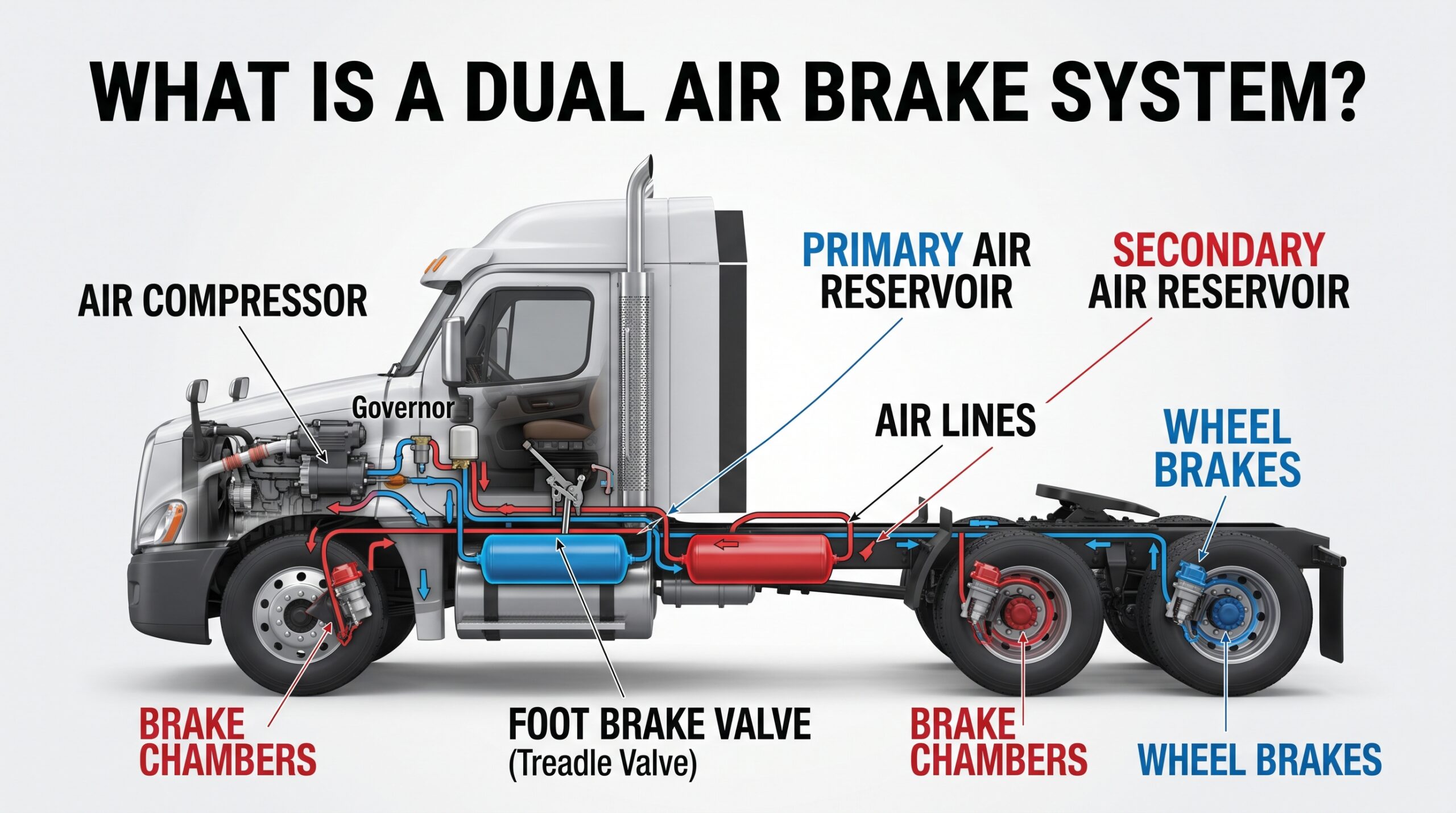
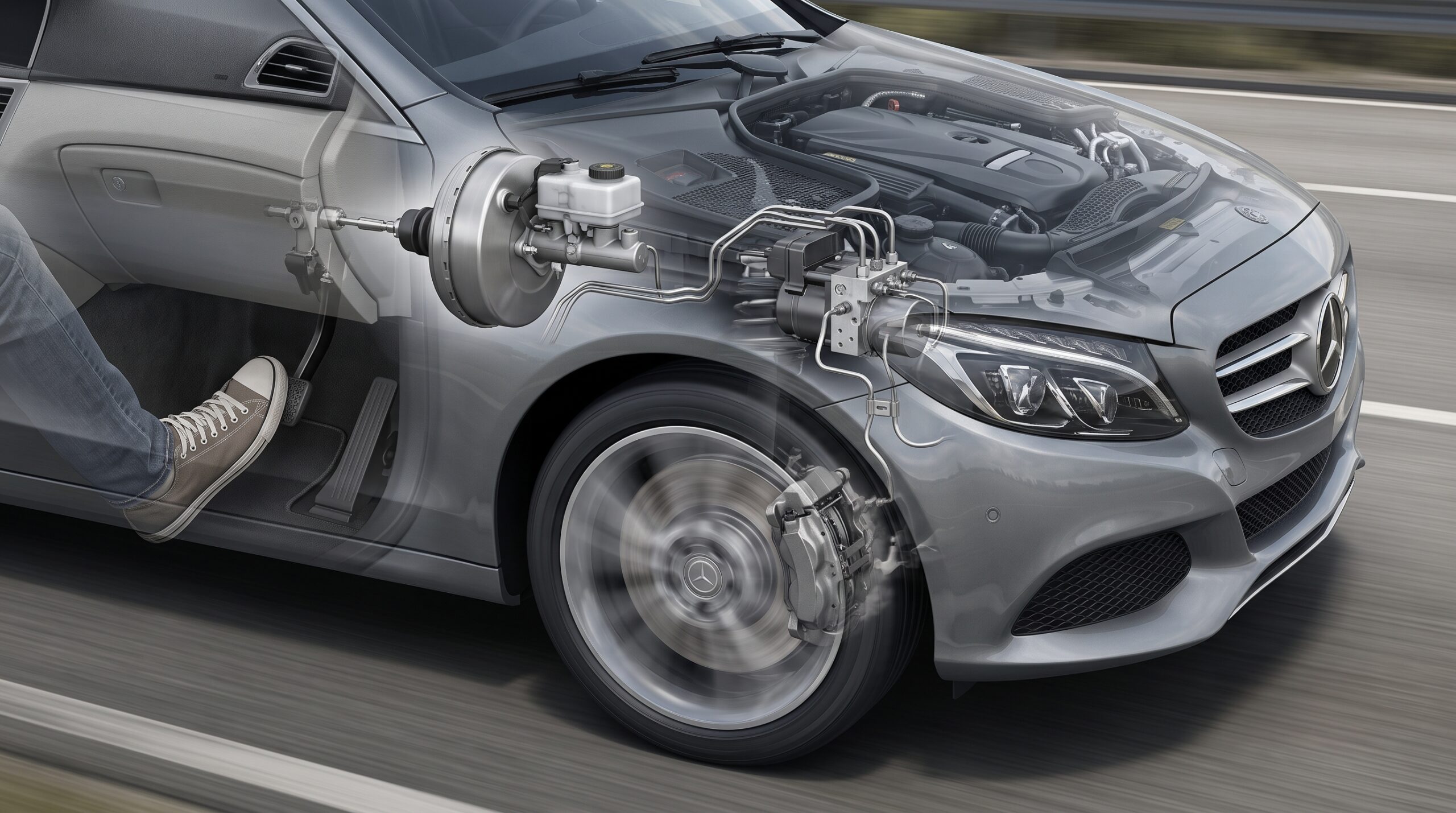
When you press it, the vehicle’s braking system creates braking force at the wheels.
Depending on the vehicle, the braking system may include hydraulic components, brake pads, rotors, electronic controls, and anti-lock braking technology.
The amount of pedal pressure affects how strongly the vehicle slows, although the exact response varies between vehicles.
What the Accelerator Pedal Does
The accelerator controls engine power or, in an electric vehicle, requests more drive power from the electric motor.
Pressing it generally causes the vehicle to increase speed if conditions allow.
The accelerator is normally the pedal on the far right.
A useful memory rule is:
Right pedal = go faster.
Pedal to its left = slow down or stop.
Why You Should Not Confuse Them
Confusing the brake and accelerator can cause an unintended change in vehicle speed.
New drivers should take extra time to learn the pedal positions before driving.
When changing vehicles, avoid assuming every pedal will feel exactly the same. Become familiar with the new vehicle first.
If you are uncertain, stop and identify the controls before continuing.
Brake Pedal vs. Clutch Pedal
The clutch and brake are both important in a manual vehicle, but they perform very different functions.
What the Clutch Does
The clutch allows the engine and transmission to be connected or temporarily separated.
This helps the driver change gears and control the connection between engine power and the transmission.
The clutch pedal is normally the leftmost pedal in a manual car.
It is operated with the left foot.
What the Brake Does
The brake pedal slows or stops the vehicle.
In a manual car, it is normally located between the clutch and accelerator.
The right foot is generally used for the brake.
When Each Pedal Is Used
The clutch is mainly involved when starting, stopping, and changing gears in a manual vehicle.
The brake is used whenever the vehicle needs to slow or stop.
For example, when approaching a red traffic light, you may use the brake to reduce speed. In a manual vehicle, you may also use the clutch as the vehicle slows to a point where the gear needs to be disengaged.
The exact technique depends on the vehicle and driving situation.
How Does the Brake Pedal Work?
Understanding the basic braking process can make the pedal less mysterious.
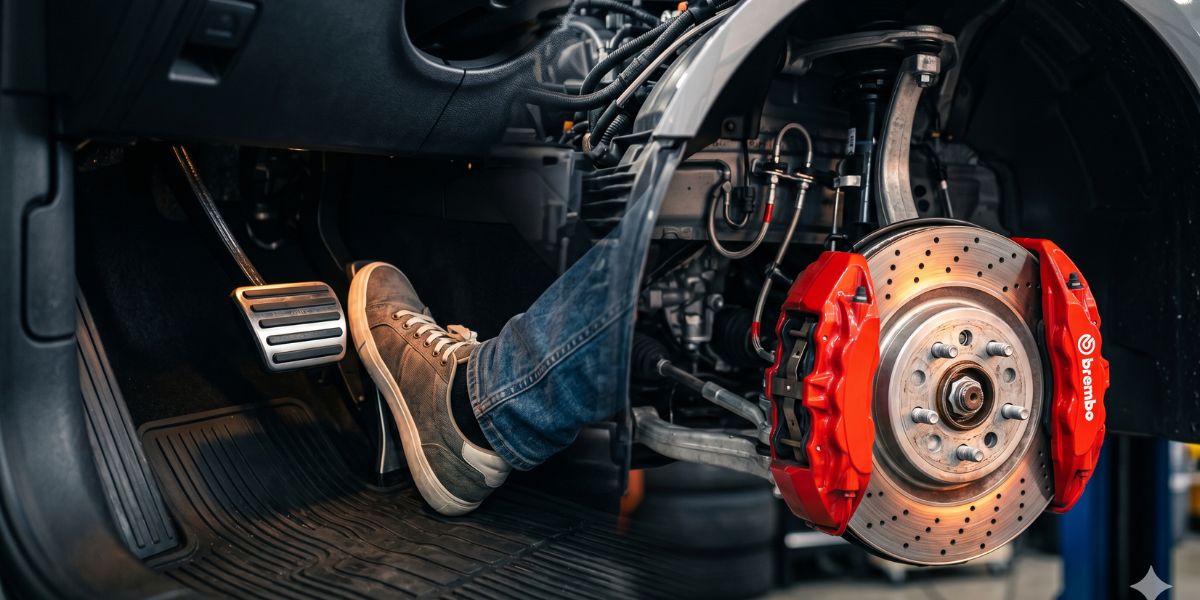
When you press the brake pedal, your input is transferred through the vehicle’s braking system to create braking force.
Brake Pedal Input
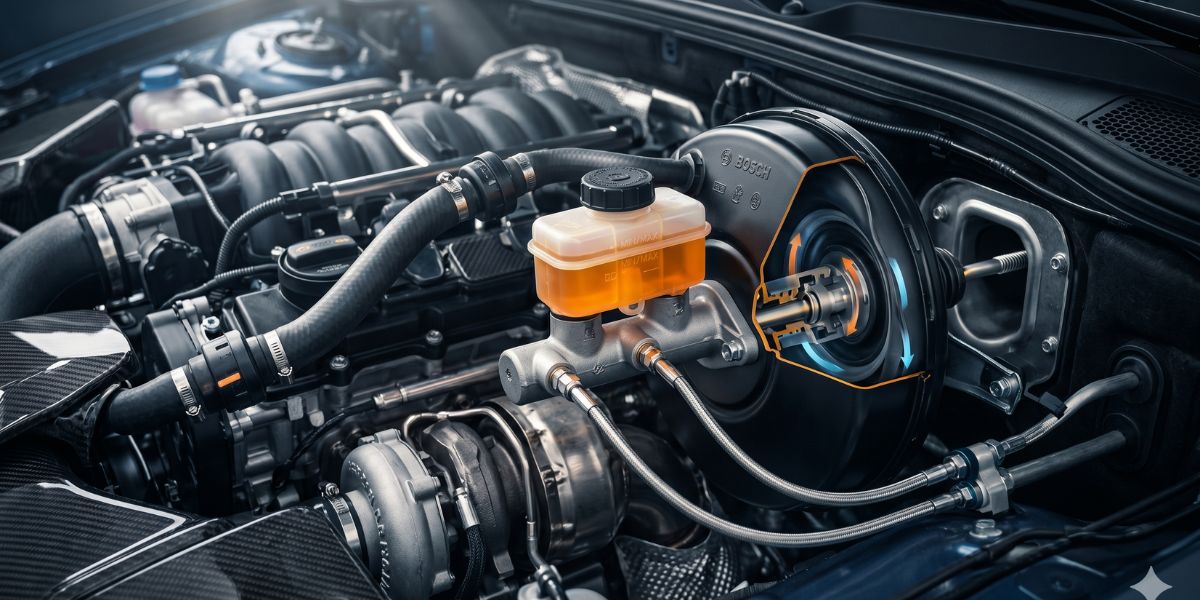
When you press the brake pedal, your foot applies force to the .
Modern vehicles use brake assistance systems to help amplify the driver’s input.
The exact design depends on the vehicle.
Some vehicles use vacuum-based brake assistance, while others use different technologies.
Brake Fluid and Hydraulic Pressure
Many conventional braking systems use hydraulic brake fluid.
When the brake pedal is pressed, the master cylinder helps create hydraulic pressure in the brake system.
That pressure travels through brake lines toward the wheel brakes.
The hydraulic system allows relatively small pedal movement to control strong braking force.
Brake fluid must remain in good condition and at the correct level. A warning light, visible leak, or unusual pedal behavior should not be ignored.
Brake Pads and Rotors
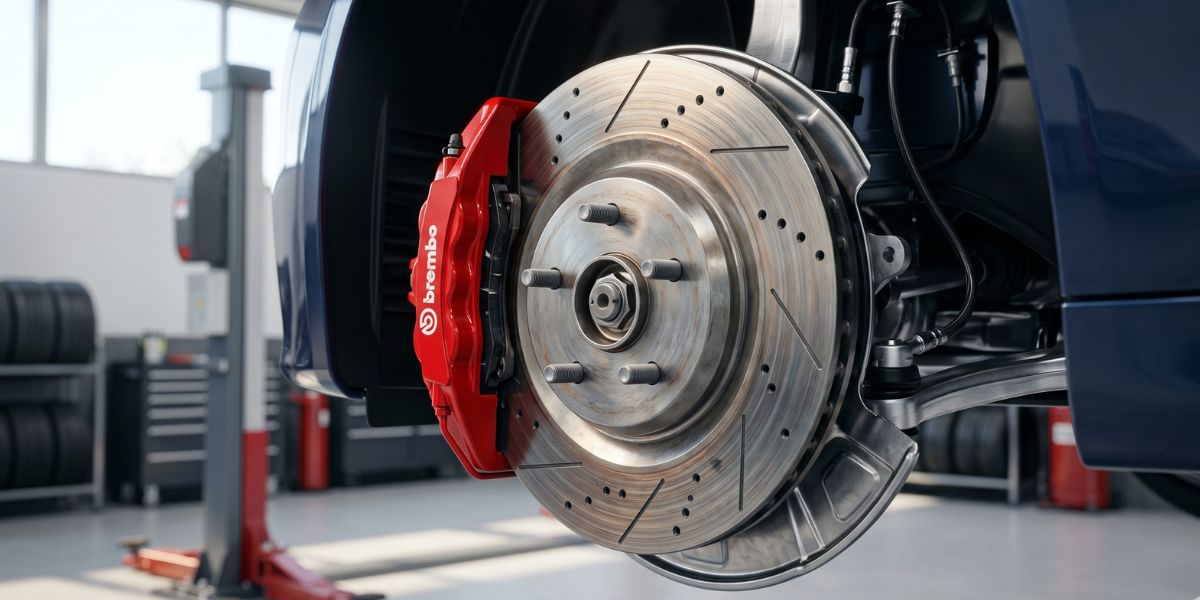
Many cars use disc brakes.
In a disc brake system, brake pads press against a rotating brake rotor. Friction between these components helps slow the wheel.
The friction also creates heat.
Brake pads are wear items and eventually need replacement.
Other vehicles may use drum brakes at some wheels instead of disc brakes.
ABS and Electronic Brake Systems
Many modern cars are equipped with anti-lock braking systems, commonly called ABS.
ABS can help prevent the wheels from locking during hard braking when the system is functioning and road conditions allow.
Modern vehicles may also include electronic systems that monitor wheel speed and braking behavior.
If an ABS warning light appears, the vehicle may still have basic braking ability, but the anti-lock function may not be available. The appropriate response depends on the vehicle and the warning.
For any serious brake warning, consult the owner’s manual and have the vehicle inspected when needed.
How to Use the Brake Pedal Safely
Knowing what side is the brake on in a car is only the first step. You also need to develop safe braking habits.
Use Your Right Foot
For normal driving, drivers generally use the right foot for both the brake and accelerator.
This is especially important in automatic vehicles.
Using one foot helps reduce the chance of pressing both pedals at the same time.
In a manual car, the left foot is used for the clutch.
Apply Pressure Smoothly
Normal braking should usually be smooth and controlled.
Look ahead so you can anticipate traffic lights, stopped vehicles, turns, and changes in traffic.
Gradually reducing speed can make the ride more comfortable and gives you more time to respond.
For an emergency, however, stronger braking may be necessary.
If your vehicle has ABS, follow the vehicle manufacturer’s instructions for emergency braking. In many ABS-equipped vehicles, firm brake pressure is maintained while steering around the hazard if necessary.
Keep a Safe Following Distance
Do not rely on the brake pedal to compensate for following another vehicle too closely.
Leave enough space to respond if traffic suddenly slows.
A larger gap is especially useful when:
- Traffic is heavy
- Visibility is poor
- The road is wet
- You are driving downhill
- The vehicle ahead is large
- Road conditions are unpredictable
The correct following distance depends on speed, traffic, weather, and road conditions.
Brake Earlier in Poor Weather
Wet, icy, muddy, or otherwise slippery roads can reduce tire grip.
This can increase the distance required to slow or stop.
When conditions are poor, reduce speed and increase your following distance.
Do not make sudden movements unless necessary.
Practice in a Safe Location
New drivers should learn pedal control in a safe, legal practice area with a qualified instructor or experienced supervising driver as required by local rules.
Practice identifying the brake and accelerator.
Learn how much pedal movement produces a gentle slowdown.
The goal is to develop controlled and predictable foot movements.
Common Brake Pedal Problems
A change in how the brake pedal feels can indicate a problem.
Do not ignore significant changes in braking performance.
Soft or Spongy Brake Pedal
A soft or spongy pedal may feel different from normal.
Possible causes can include air or moisture in the hydraulic system, a fluid issue, or another braking-system problem.
If the brake pedal suddenly feels soft, braking performance may be affected.
Have the vehicle inspected promptly.
Hard Brake Pedal
A brake pedal that becomes unusually hard can indicate a problem with brake assistance or another component.
For example, a problem with the brake booster or related system may make the pedal require much more effort than usual.
If braking feels significantly different, have the vehicle checked.
Vibrations When Braking
A vibration through the brake pedal or steering wheel during braking can have several causes.
Brake components, wheel issues, tires, or suspension parts may be involved.
The exact cause cannot be determined from the vibration alone.
If the vibration is new or severe, arrange an inspection.
Brake Pedal Sinking
A pedal that slowly moves toward the floor while you maintain pressure can be a serious warning sign.
Possible causes can include a hydraulic leak or a master-cylinder problem.
If this happens, treat it as a potential safety issue and avoid continuing to drive the vehicle until it has been properly assessed.
Unusual Brake Noise
Some brake noise can occur under certain conditions, but persistent or unusual sounds should not be ignored.
Possible sounds include:
- Squealing
- Grinding
- Scraping
- Clicking
- Squeaking
The cause can range from normal temporary conditions to worn or damaged components.
Grinding sounds are particularly concerning because they can indicate severe brake wear or another mechanical issue.
What Is the Parking Brake?
The parking brake is separate from the main brake pedal.
It is designed primarily to help keep a parked vehicle stationary.
It may be called a parking brake, handbrake, or emergency brake, depending on the country and vehicle.
How the Parking Brake Differs From the Brake Pedal
The normal brake pedal is used while driving to slow or stop the vehicle.
The parking brake is mainly used when the vehicle is parked.
Modern electronic parking brakes may operate differently from traditional mechanical handbrakes.
Do not confuse the parking brake control with the main brake pedal.
Types of Parking Brakes
There are several common types.
Handbrake:
A lever, often positioned between the front seats, that the driver operates by hand.
Foot-operated parking brake:
A separate pedal located in the driver’s footwell.
Electronic parking brake:
A switch or button that activates an electronic parking-brake system.
The exact design varies by vehicle.
When to Use the Parking Brake
Use the parking brake according to the vehicle manufacturer’s instructions and local driving practices.
It is commonly used when parking.
On slopes, using the parking brake can provide an additional way to help keep the vehicle stationary.
Always follow the vehicle owner’s manual for the correct parking procedure.
Frequently Asked Questions
What side is the brake on in a car?
In most cars, the brake is to the left of the accelerator. In an automatic car, the brake is normally the left pedal and the accelerator is the right pedal. In a manual car, the brake is normally the middle pedal between the clutch and accelerator.
Is the brake pedal on the left or right?
The brake pedal is normally on the left side of the accelerator. In an automatic car, it is the left pedal of the two main pedals. In a manual car, it is usually the middle pedal.
Which pedal is the brake in an automatic car?
The brake is normally the left pedal in an automatic car.
The basic arrangement is:
Brake | Accelerator
The right foot is normally used to operate both pedals.
Which pedal is the brake in a manual car?
In a manual car, the brake is normally the middle pedal.
The arrangement from left to right is:
Clutch | Brake | Accelerator
The clutch is operated with the left foot, while the brake and accelerator are normally controlled with the right foot.
Is the brake always in the middle?
No. The brake is not always the middle pedal.
In a manual car, the brake is normally in the middle because there are three pedals.
In an automatic car, there are usually two pedals, so the brake is normally the left pedal.
Do right-hand-drive cars have the brake on the other side?
No. A right-hand-drive car does not normally move the brake to the opposite side.
The steering wheel may be on the right, but the pedal arrangement generally remains:
Brake → Accelerator
for an automatic vehicle, and:
Clutch → Brake → Accelerator
for a manual vehicle.
Should you use your left or right foot to brake?
For normal driving, the brake is generally operated with the right foot.
In an automatic car, the right foot moves between the accelerator and brake.
In a manual car, the left foot operates the clutch while the right foot operates the brake and accelerator.
This setup helps keep pedal control consistent.
Conclusion
So, what side is the brake on in a car? In most cars, the brake pedal is to the left of the accelerator.
In an automatic car, the pedal arrangement is normally:
Brake → Accelerator
In a manual car, it is normally:
Clutch → Brake → Accelerator
The position of the steering wheel does not usually change this pedal order. Therefore, both left-hand-drive and right-hand-drive cars generally keep the brake to the left of the accelerator.
If you are a new driver, take a moment to identify the pedals before moving the vehicle. Learn the difference between the brake, accelerator, and clutch, and practice smooth pedal control in a safe setting.
Knowing what side is the brake on in a car is a basic driving skill, but using the brake correctly and calmly is just as important. Always pay attention to traffic, road conditions, and changes in how the brake pedal feels.