



Our Blogs
Which Pedal Is the Brake in a Car? Easy Guide for Drivers

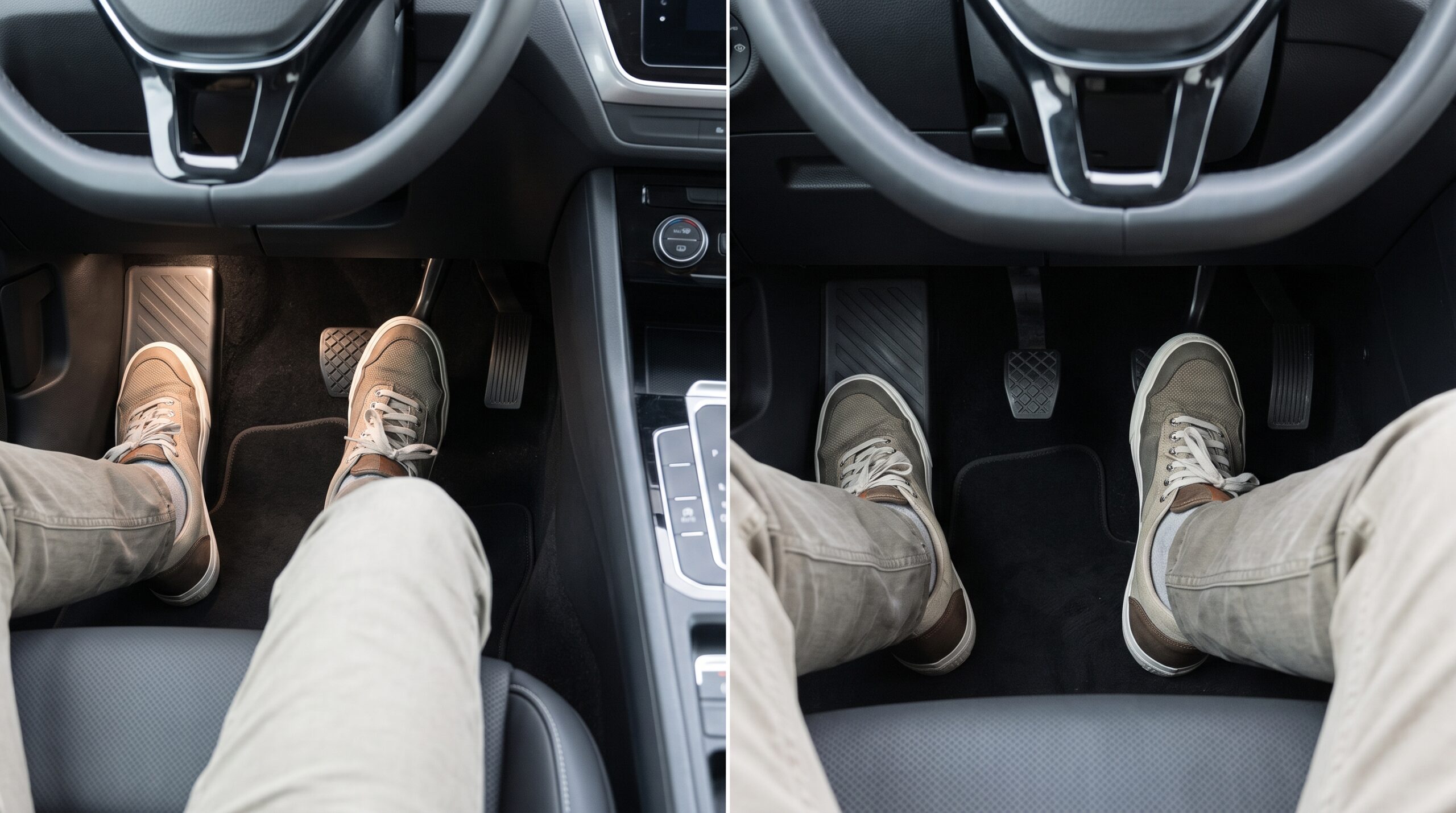
If you are a new driver, learning the pedals can feel confusing at first. The good news is that the layout is simple once you know what to look for.
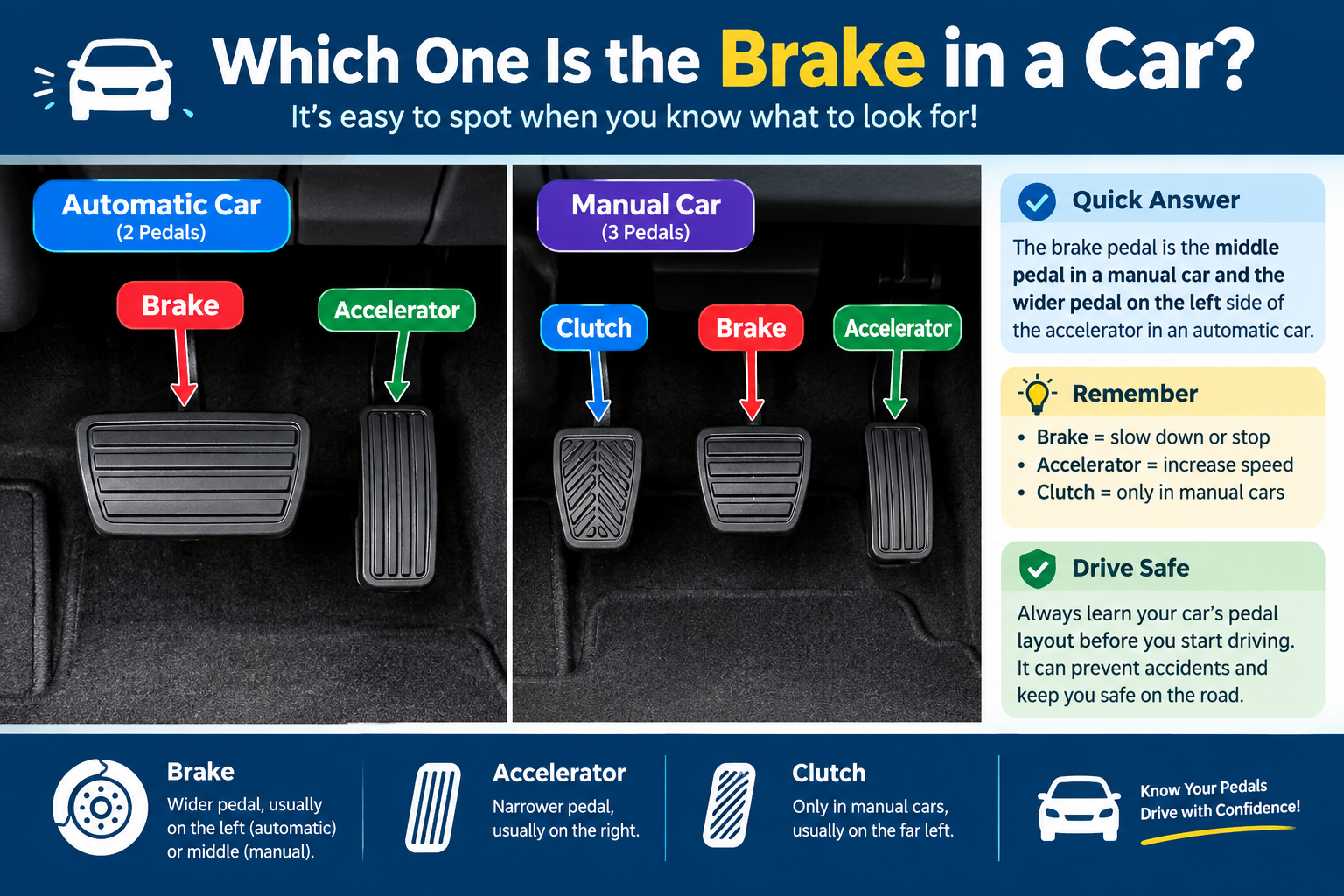
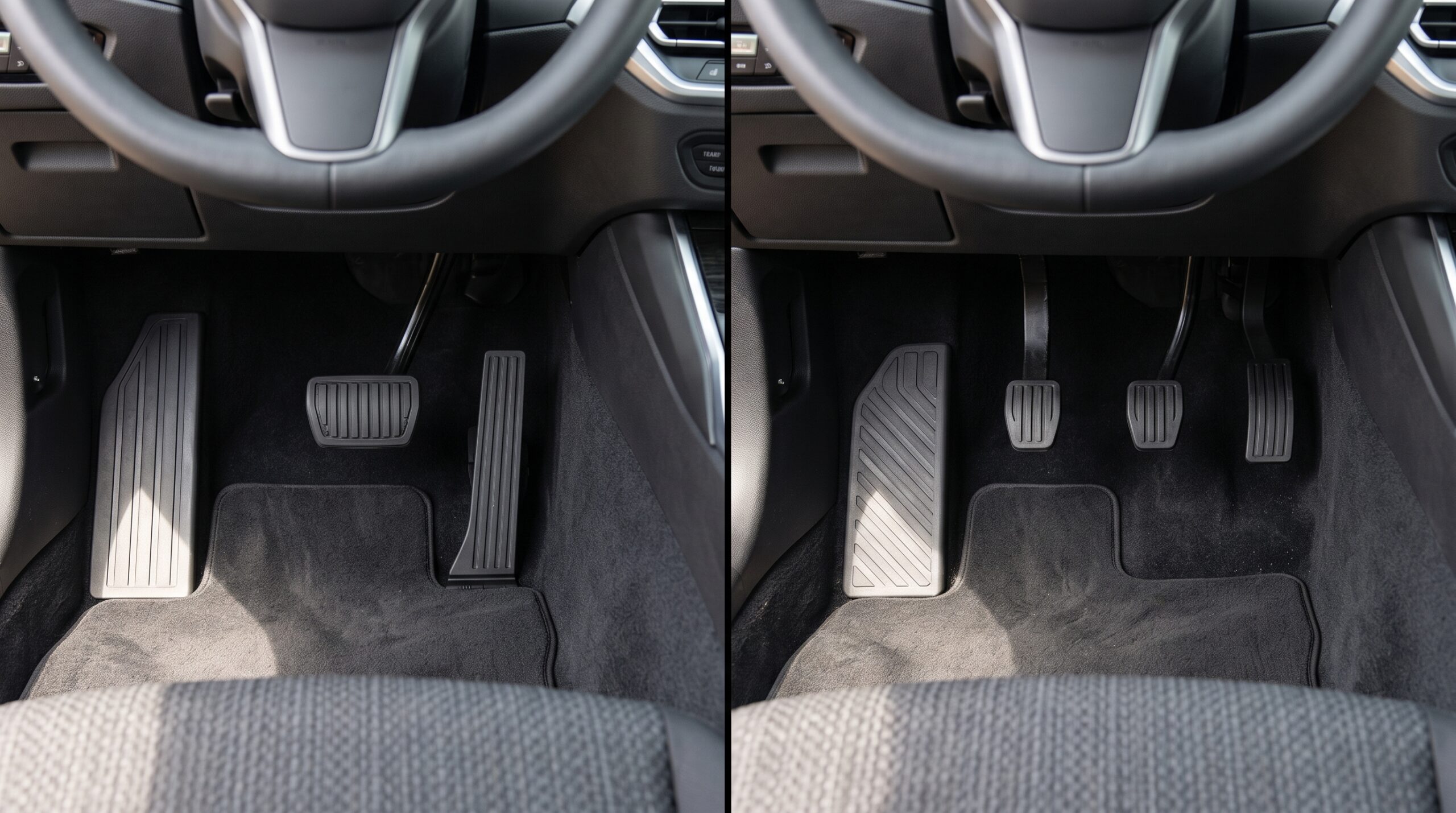
So, which pedal is the brake in a car? In an automatic car, the brake pedal is usually the wider pedal on the left of the accelerator. In a manual car, the brake is normally the middle pedal, between the clutch and accelerator.
The brake pedal is used to slow down or stop the vehicle. The accelerator increases engine power and vehicle speed. A manual car also has a clutch pedal, which helps connect and disconnect the engine from the transmission.
Understanding these pedals before driving is one of the most important steps for a new driver. Always become familiar with your specific vehicle’s pedal layout before moving the car.
Which Pedal Is the Brake in a Car?
The answer depends slightly on whether the car has an automatic or manual transmission.
In most vehicles:
- Automatic: Accelerator on the right, brake on the left of the accelerator.
- Manual: Clutch on the left, brake in the middle, accelerator on the right.
The brake pedal is usually wider than the accelerator pedal. However, pedal shapes can vary between vehicles, so you should not rely on pedal width alone.
When asking which pedal is the brake in a car, remember this simple rule:
Automatic = brake left, accelerator right.
Manual = clutch left, brake middle, accelerator right.
The Brake Pedal in an Automatic Car
An automatic car normally has two main pedals:
- Brake
- Accelerator
The accelerator is on the right. The brake is directly to its left.
The brake pedal is commonly wider and easier to distinguish from the narrow accelerator. In many automatic cars, both pedals are designed to be operated with the right foot.
This means you move your right foot between the accelerator and brake when driving. You normally do not need to use your left foot for either pedal.
Before driving an unfamiliar automatic car, sit in the driver’s seat and look carefully at the pedals. Check their position before starting the engine.
The Brake Pedal in a Manual Car
A manual car normally has three pedals:
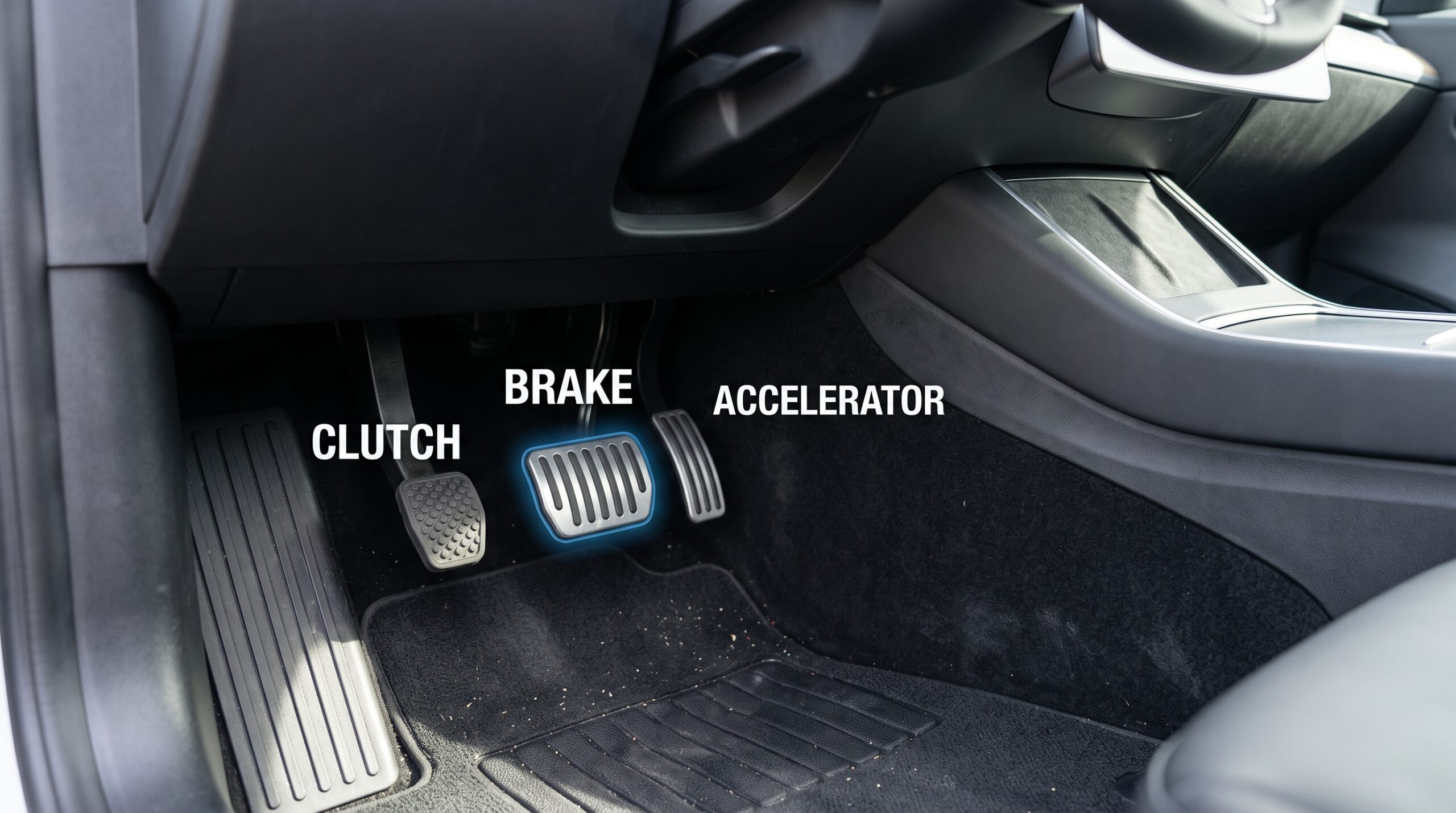
Clutch — Brake — Accelerator
The clutch is on the far left. The brake is in the middle. The accelerator is on the far right.
The clutch is operated with the left foot. The brake and accelerator are normally operated with the right foot.
This arrangement makes it easier to control the clutch separately while using the right foot for speed and braking.
If you are learning to drive a manual vehicle, take time to understand what each pedal does before practicing on a public road.
Where Is the Brake Pedal Located?
The location of the brake pedal is fairly consistent in conventional left-hand-drive and right-hand-drive vehicles, but individual vehicles can vary.
When trying to determine which pedal is the brake in a car, first identify the accelerator. The brake is normally immediately beside it on the left.
Automatic Car Pedal Layout
An automatic car usually has two pedals.
From left to right, they are generally:
Brake | Accelerator
The accelerator is usually narrower. The brake is often wider.
The brake may also have a textured surface designed to provide good contact with your shoe.
Do not assume that every vehicle will look exactly the same. Some vehicles have different pedal shapes, spacing, or electronic controls.
The safest approach is to inspect the pedals before driving.
Manual Car Pedal Layout
A conventional manual car has three pedals.
From left to right:
Clutch | Brake | Accelerator
The clutch is the pedal farthest to the left. The brake is in the middle. The accelerator is on the right.
This is one of the easiest ways to remember which pedal is the brake in a car when you are learning to drive a manual vehicle.
The middle pedal is normally the brake in a traditional three-pedal layout. However, you should still confirm the layout in the owner’s manual if you are unfamiliar with the vehicle.
What Does the Brake Pedal Do?
The brake pedal controls the vehicle’s service braking system. Pressing it tells the braking system to reduce the vehicle’s speed or bring it to a stop.
Slows the Vehicle
The most common use of the brake is slowing down.
For example, if you see traffic slowing ahead, you can release the accelerator and apply the brake as needed.
The amount of pressure required depends on the vehicle, speed, road conditions, and braking system.
Brings the Vehicle to a Stop
The brake pedal can bring the vehicle to a complete stop.
You may use it when:
- Stopping at a traffic light
- Stopping at a stop sign
- Stopping in traffic
- Parking
- Avoiding a hazard
The correct braking technique depends on the situation. New drivers should practice controlled braking in a safe, appropriate area under proper supervision.
Activates the Vehicle’s Braking System
Pressing the pedal sends the driver’s braking request into the vehicle’s braking system.
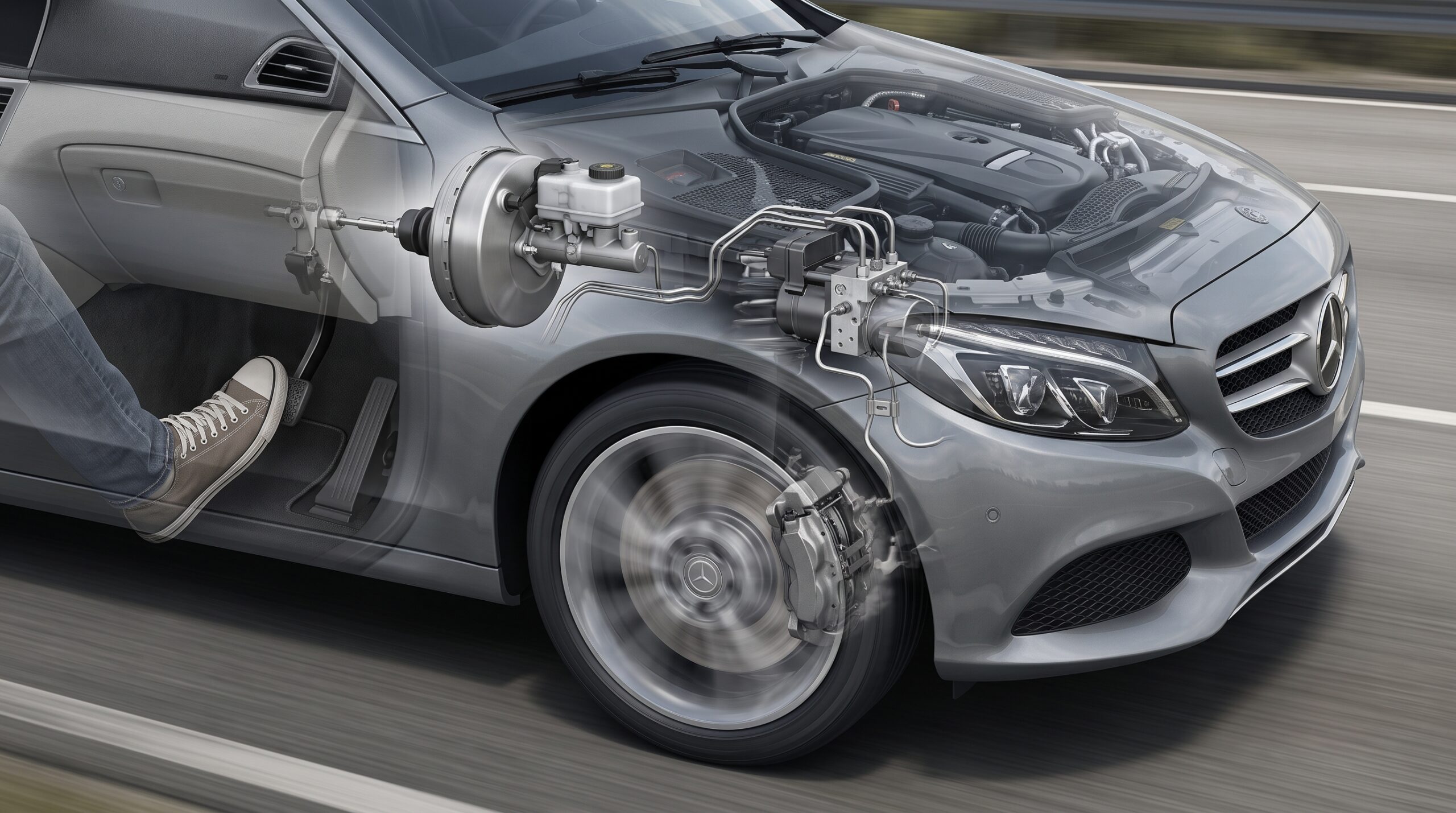
In conventional hydraulic systems, pedal force creates hydraulic pressure that operates components at the wheels. Modern vehicles may also use electronic systems to control or assist braking.
This is why the brake pedal is an important part of vehicle safety.
Brake Pedal vs. Accelerator Pedal
The brake and accelerator have opposite purposes.
The accelerator is used to increase engine power and help the vehicle move faster. The brake is used to reduce speed or stop the vehicle.
Understanding the difference is essential when learning which pedal is the brake in a car.
How to Identify the Brake Pedal
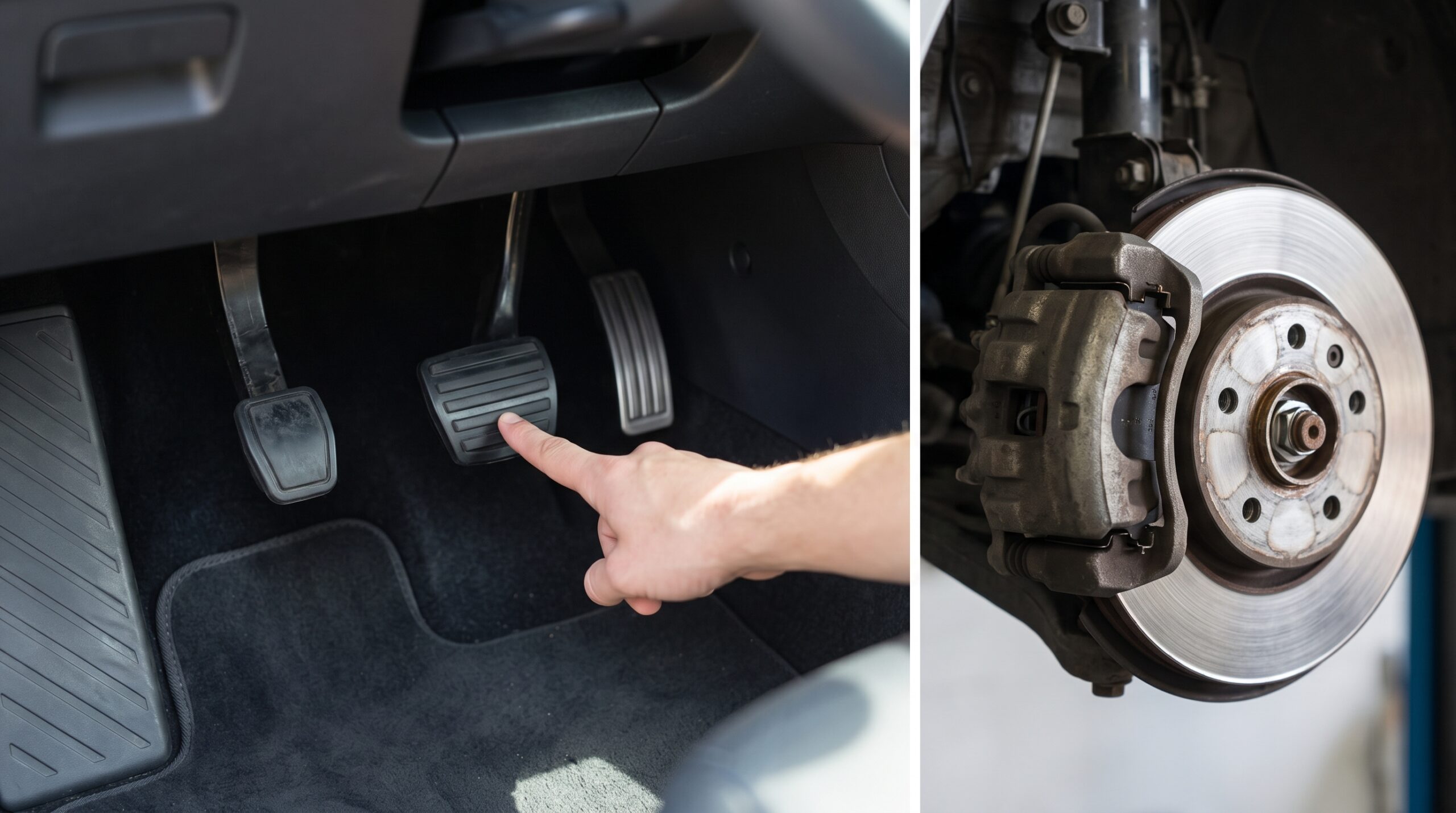
Look for the pedal positioned to the left of the accelerator.
In an automatic vehicle, it is normally the wider of the two pedals.
In a manual vehicle, it is normally the middle pedal.
You should identify the pedal by its location and the vehicle’s owner’s manual rather than relying only on its appearance.
How to Identify the Accelerator Pedal
The accelerator is normally the pedal farthest to the right.
It is usually narrower than the brake pedal.
Pressing it tells the vehicle to produce more driving force. Releasing it generally reduces the driver’s demand for acceleration, although the exact effect varies between vehicles.
Why Confusing the Pedals Is Dangerous
Confusing the brake and accelerator can cause unintended acceleration or braking.
This is especially risky in crowded areas, parking lots, driveways, and near pedestrians.
New drivers should develop a consistent foot position and avoid rushing between pedals.
Before moving the vehicle, confirm which pedal is which.
Brake Pedal vs. Clutch Pedal
The clutch is found only in vehicles with a conventional manual transmission.
Understanding the difference between the clutch and brake helps answer which pedal is the brake in a car.
What the Clutch Does
The clutch temporarily disconnects the engine from the transmission.
This allows the driver to change gears smoothly and helps prevent the engine from stalling when stopping or moving away.
The clutch is normally operated using the left foot.
What the Brake Does
The brake reduces vehicle speed or brings the vehicle to a stop.
Unlike the clutch, the brake is a safety system designed to control the vehicle’s movement.
The brake is normally operated with the right foot.
When to Use Each Pedal
Use the clutch when changing gears or performing other actions that require clutch control in a manual vehicle.
Use the brake when you need to slow or stop.
For example, when approaching a red traffic light in a manual car, you may use the brake to slow down and then use the clutch as needed to prevent the engine from stalling.
The exact sequence depends on the vehicle and driving situation.
How Does the Brake Pedal Work?
Knowing which pedal is the brake in a car is only the first step. It is also useful to understand what happens when you press it.
Pressing the Pedal
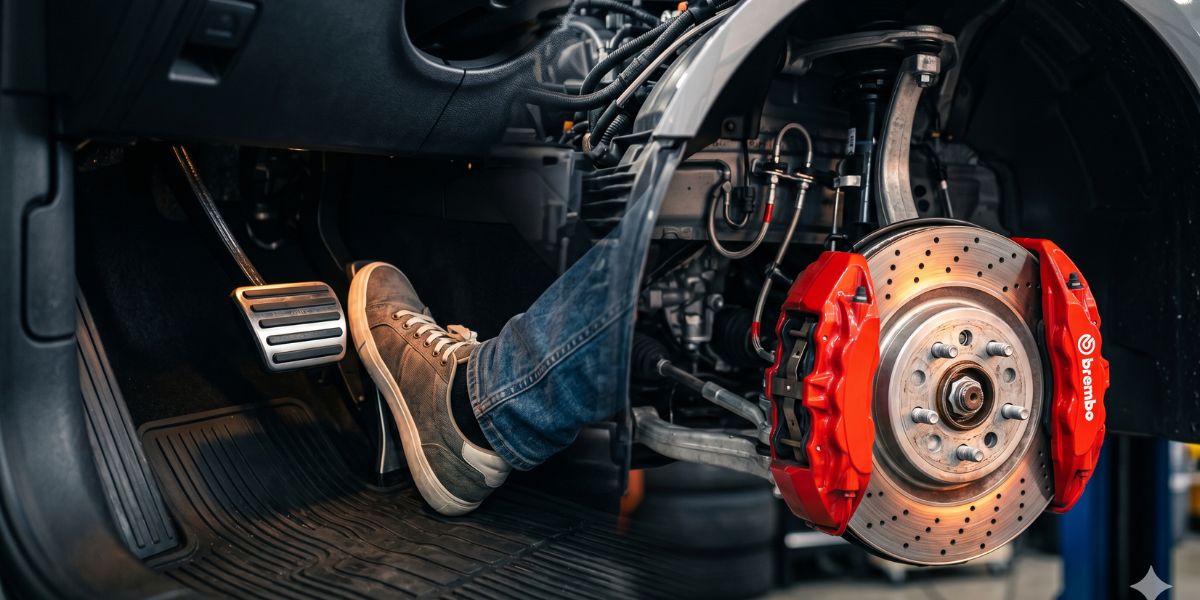
When you press the brake pedal, you provide input to the braking system.
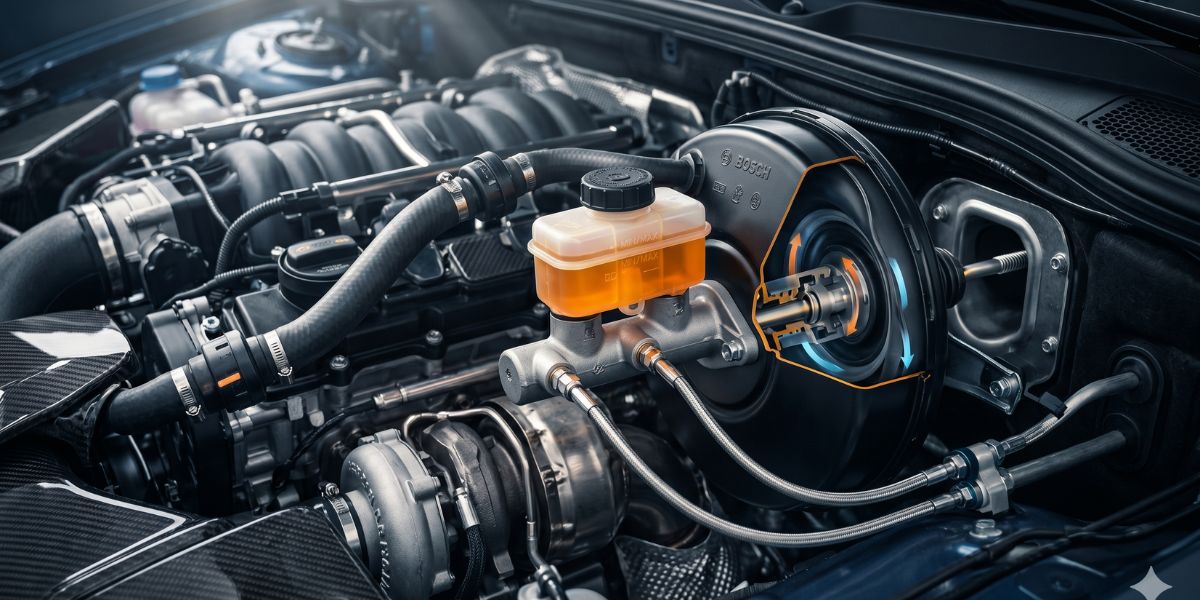
In a conventional hydraulic brake system, the pedal moves a mechanism connected to the brake master cylinder. This creates hydraulic pressure that travels through brake lines to the wheel brakes.
Modern vehicles may include electronic controls and brake assistance systems that influence how braking is applied.
Brake Fluid and Hydraulic Pressure
Most conventional hydraulic braking systems use brake fluid.
When the brake pedal is pressed, hydraulic pressure transfers the driver’s input through the brake system.
The brake fluid must be in good condition and at the correct level for the system to work properly.
A low fluid level or leak can indicate a serious problem. If you notice a brake warning light, a sudden change in pedal feel, or other braking problems, have the vehicle checked by a qualified professional.
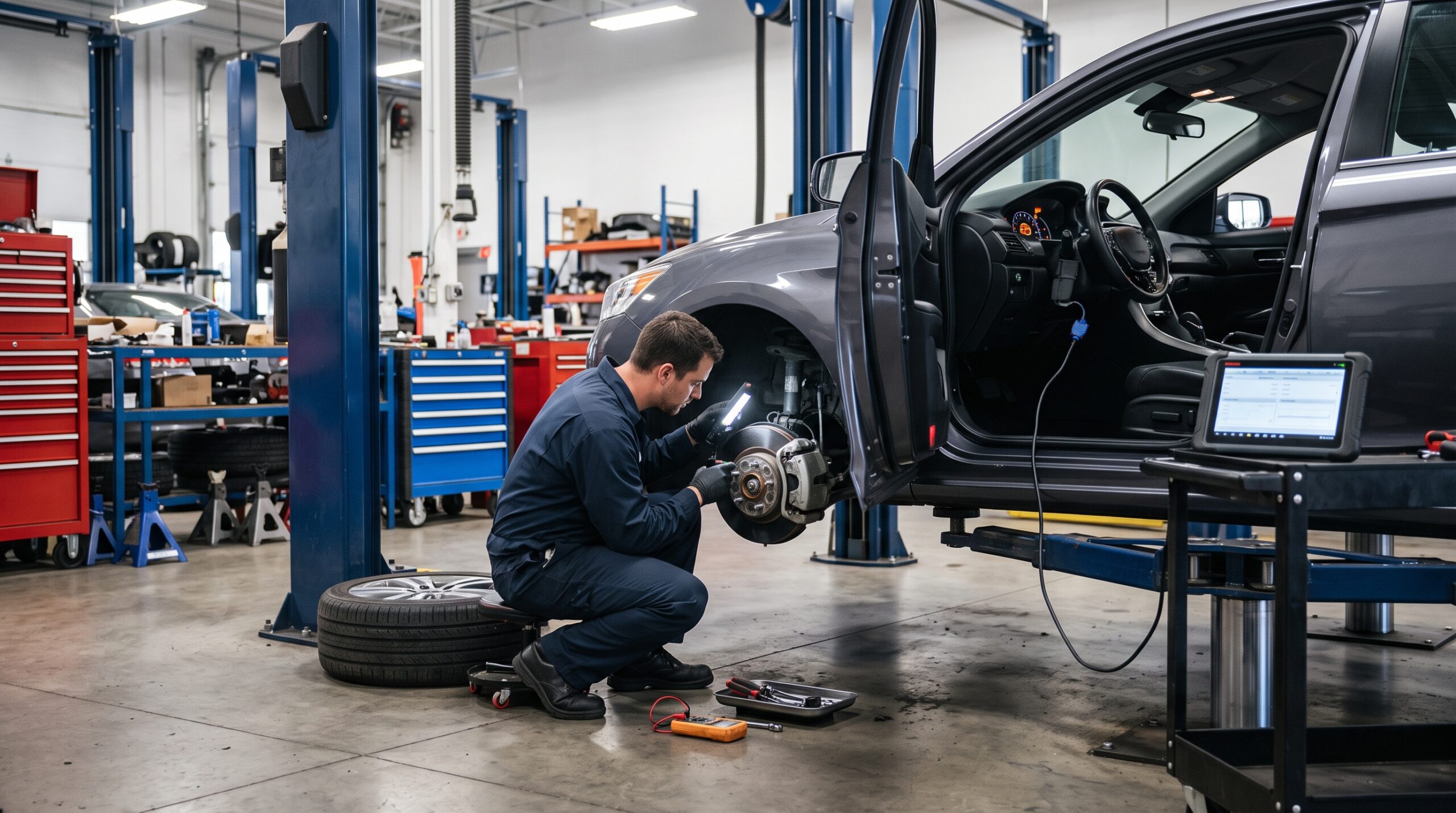
Brake Pads, Rotors, and Calipers
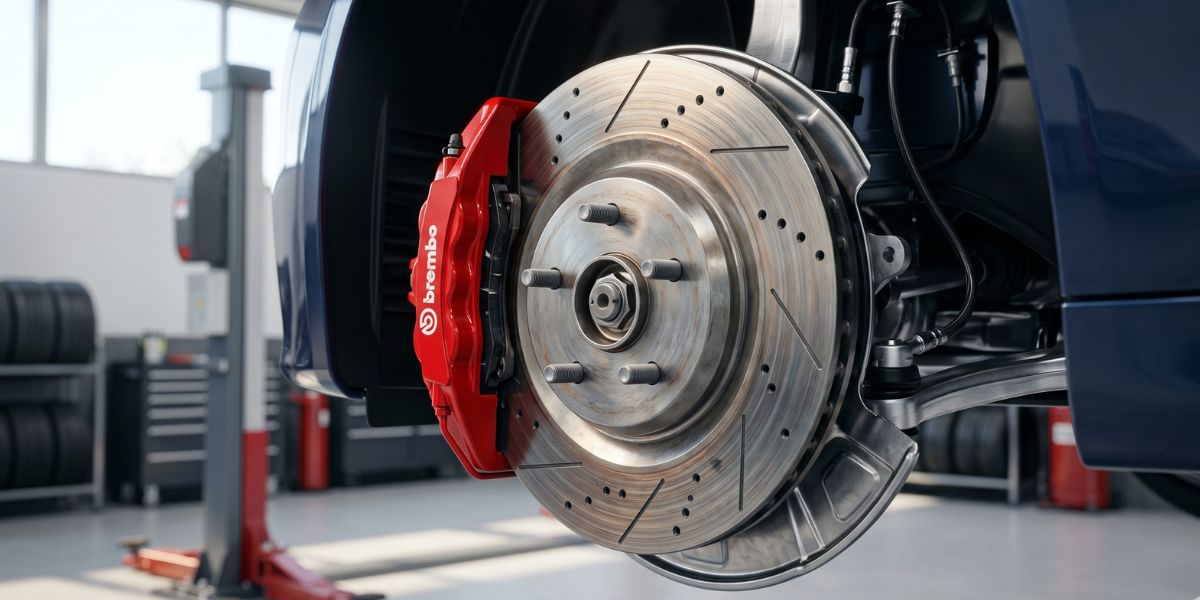
Many cars use disc brakes.
A disc brake system commonly includes:
- Brake pads
- Brake rotor
- Brake caliper
When you press the brake, the caliper applies the pads against the rotor. Friction between these components helps slow the wheel.
Some vehicles also use drum brakes, particularly on certain rear wheels.
Brake components gradually wear and need inspection and replacement according to their condition and the manufacturer’s recommendations.
How ABS Works With the Brake System
ABS stands for Anti-lock Braking System.
ABS is designed to help prevent the wheels from locking during hard braking. It can help the driver maintain steering control while braking hard, depending on road and vehicle conditions.
If ABS activates, you may feel pulsing or vibration through the brake pedal. This can be normal during ABS operation.
In an emergency, follow your vehicle manufacturer’s instructions. Do not repeatedly pump an ABS-equipped brake pedal unless the vehicle manufacturer specifically instructs you to do so.
How to Use the Brake Pedal Correctly
Knowing which pedal is the brake in a car is important, but good braking technique is equally important.
Applying the Brakes Smoothly
For normal driving, apply the brake smoothly and progressively.
Look ahead so you have enough time to slow down without unnecessary hard braking.
For example, if traffic ahead is slowing, begin reducing speed early rather than waiting until the last moment.
Smooth braking can make driving more comfortable and predictable.
Braking in an Emergency
Emergency braking requires quick action.
If you suddenly encounter a serious hazard, apply firm braking while keeping control of the vehicle.
If your vehicle has ABS, maintain firm pressure on the brake pedal and allow the system to operate.
Try to keep the vehicle pointed in a safe direction and follow your vehicle’s emergency-braking guidance.
Braking on Wet or Slippery Roads
Wet, icy, snowy, or loose surfaces can reduce tire grip.
Increase your following distance and reduce speed when conditions require it.
Brake smoothly during normal conditions and avoid unnecessary sudden inputs.
Remember that ABS does not eliminate the need for safe speed and adequate stopping distance.
Avoiding Sudden or Unnecessary Braking
Sudden braking without a clear reason can surprise drivers behind you.
Watch traffic well ahead and anticipate changes.
However, safety comes first. If you need to stop quickly to avoid a hazard, brake as necessary rather than worrying about whether the braking feels smooth.
Common Brake Pedal Problems
The answer to which pedal is the brake in a car is simple, but the pedal’s feel can tell you something about the braking system.
A change in brake pedal behavior should not be ignored.
Soft or Spongy Brake Pedal
A soft or spongy pedal can have several causes.
Possible causes include:
- Air in the hydraulic system
- Brake fluid problems
- Hydraulic system faults
- Worn or damaged components
A sudden change in pedal feel can affect braking performance.
Have the vehicle inspected promptly, especially if the pedal feels significantly different from normal.
Hard Brake Pedal
A brake pedal that suddenly becomes unusually hard may be related to a problem with brake assist or another component.
If the vehicle requires much more effort than usual to stop, treat it as a safety concern.
Do not continue normal driving until the cause has been properly checked if braking performance is affected.
Brake Pedal Vibrations
Brake pedal vibration can have different causes.
It may occur during ABS activation, especially during hard braking.
If vibration happens repeatedly during normal braking, the braking system and related components should be inspected.
Do not assume that every vibration has the same cause.
Brake Pedal Sinking
If the brake pedal slowly moves downward while you maintain pressure, it can indicate a hydraulic or other braking-system problem.
This should be inspected by a qualified technician.
A brake pedal that feels different from normal deserves attention because reliable braking is essential for safe vehicle control.
Unusual Noises When Braking
Some brake noises can occur for harmless reasons, while persistent grinding, scraping, squealing, or other unusual sounds can indicate worn or contaminated components.
If a new noise appears, especially along with reduced braking performance, have the brakes inspected.
What Is the Parking Brake?
The parking brake is a separate part of the vehicle’s braking system.
It is sometimes called the handbrake or emergency brake, although it is primarily intended to secure a parked vehicle.
Parking Brake vs. Main Brake
The main brake pedal is used while driving to slow or stop the vehicle.
The parking brake is primarily used to keep a parked vehicle from moving.
Do not confuse the parking brake with the regular brake pedal.
Manual Handbrake
Traditional vehicles may have a hand-operated parking brake lever.
You pull the lever to apply the parking brake and release it using the vehicle’s release mechanism.
The exact operation varies by vehicle.
Electronic Parking Brake
Many newer vehicles use an electronic parking brake.
It may be controlled by a small switch or button.
Some vehicles automatically apply or release the parking brake under certain conditions.
Always follow the instructions in the owner’s manual.
When to Use the Parking Brake
Use the parking brake when parking, following the vehicle manufacturer’s recommendations.
It can provide additional security while the vehicle is parked.
On slopes, proper parking procedures are especially important. The transmission position, parking brake, and wheel position should be used according to the vehicle manufacturer’s guidance and local driving rules.
Brake Pedal Safety Tips for New Drivers
Learning which pedal is the brake in a car should happen before you begin moving the vehicle.
Learn the Pedal Layout Before Driving
Sit in the driver’s seat and identify every pedal.
For an automatic:
Brake | Accelerator
For a manual:
Clutch | Brake | Accelerator
Do this before starting to drive.
Use the Right Foot for Brake and Accelerator
In normal driving, automatic-car drivers should use the right foot for both the brake and accelerator.
This creates a consistent foot position and reduces the chance of pressing both pedals unintentionally.
Manual drivers also normally use the right foot for the brake and accelerator, while the left foot operates the clutch.
Keep Your Foot Position Consistent
When you are not accelerating, keep your right foot positioned so you can quickly reach the brake when necessary.
Avoid resting your foot on the accelerator while trying to locate the brake.
Consistency is especially useful for new drivers.
Practice Braking in a Safe Area
Before driving in busy traffic, practice basic pedal control in an appropriate safe area with a qualified instructor or experienced supervising driver where legally permitted.
Practice:
- Locating the brake
- Moving your foot from accelerator to brake
- Smooth stopping
- Controlled starts
- Understanding pedal pressure
The goal is to make basic pedal movements familiar without distractions.
Follow the Vehicle Manufacturer’s Instructions
Every vehicle has its own operating instructions.
Read the owner’s manual for information about:
- Brake operation
- ABS
- Parking brake
- Brake warning lights
- Recommended maintenance
- Emergency procedures
If the vehicle behaves differently from what you expect, stop in a safe location and investigate the issue.
Frequently Asked Questions
Which pedal is the brake in a car?
In most cars, the brake pedal is located immediately to the left of the accelerator. In a manual car, it is normally the middle pedal between the clutch and accelerator.
So, which pedal is the brake in a car? The answer is generally the left pedal of the two-pedal automatic layout or the middle pedal in a traditional three-pedal manual layout.
Is the brake pedal on the left or right?
The brake pedal is generally to the left of the accelerator.
In an automatic car, this means the brake is the left pedal and the accelerator is the right pedal.
In a manual car, the brake is between the clutch and accelerator.
Which pedal is the brake in an automatic car?
In an automatic car, the brake is normally the wider pedal on the left, while the accelerator is on the right.
Both pedals are normally operated with the right foot.
Always check the specific vehicle before driving because pedal design can vary.
Which pedal is the brake in a manual car?
In a conventional manual car, the brake is the middle pedal.
The layout from left to right is:
Clutch | Brake | Accelerator
The left foot normally operates the clutch, while the right foot operates the brake and accelerator.
Is the middle pedal always the brake?
In a traditional three-pedal manual car, the middle pedal is normally the brake.
However, not every vehicle uses the same physical arrangement. Special vehicles and unusual controls can differ.
If you are unsure, check the owner’s manual before driving.
Can you use your left foot to brake?
Most drivers are taught to use the right foot for the brake in conventional cars.
Using the right foot for both brake and accelerator creates a consistent control pattern and helps reduce the chance of pressing the wrong pedal.
Left-foot braking may be used in certain specialized driving situations, but it is not the normal technique taught to new road drivers.
What is the difference between the brake and accelerator?
The brake reduces vehicle speed or stops the vehicle.
The accelerator increases the driver’s demand for engine power and helps the vehicle accelerate.
A simple way to remember them is:
Brake = slow or stop.
Accelerator = accelerate.
If you are still unsure about which pedal is the brake in a car, remember that the brake is normally positioned immediately to the left of the accelerator.
Conclusion
So, which pedal is the brake in a car? In most automatic cars, it is the wider pedal on the left of the accelerator. In a traditional manual car, it is the middle pedal, between the clutch and accelerator.
The basic layouts are:
Automatic: Brake | Accelerator
Manual: Clutch | Brake | Accelerator
The brake slows or stops the vehicle, while the accelerator increases acceleration. In a manual car, the clutch helps control the connection between the engine and transmission.
Before driving an unfamiliar vehicle, always identify the pedals and understand their functions. Use the right foot for the brake and accelerator during normal driving, follow the vehicle manufacturer’s instructions, and practice in a safe setting with proper supervision.
Knowing which pedal is the brake in a car may seem like a small detail, but it is a fundamental part of learning to drive safely.

One thought on “Which Pedal Is the Brake in a Car? Easy Guide for Drivers”