



Our Blogs
How to Reset Trailer Brake System: A Simple Guide

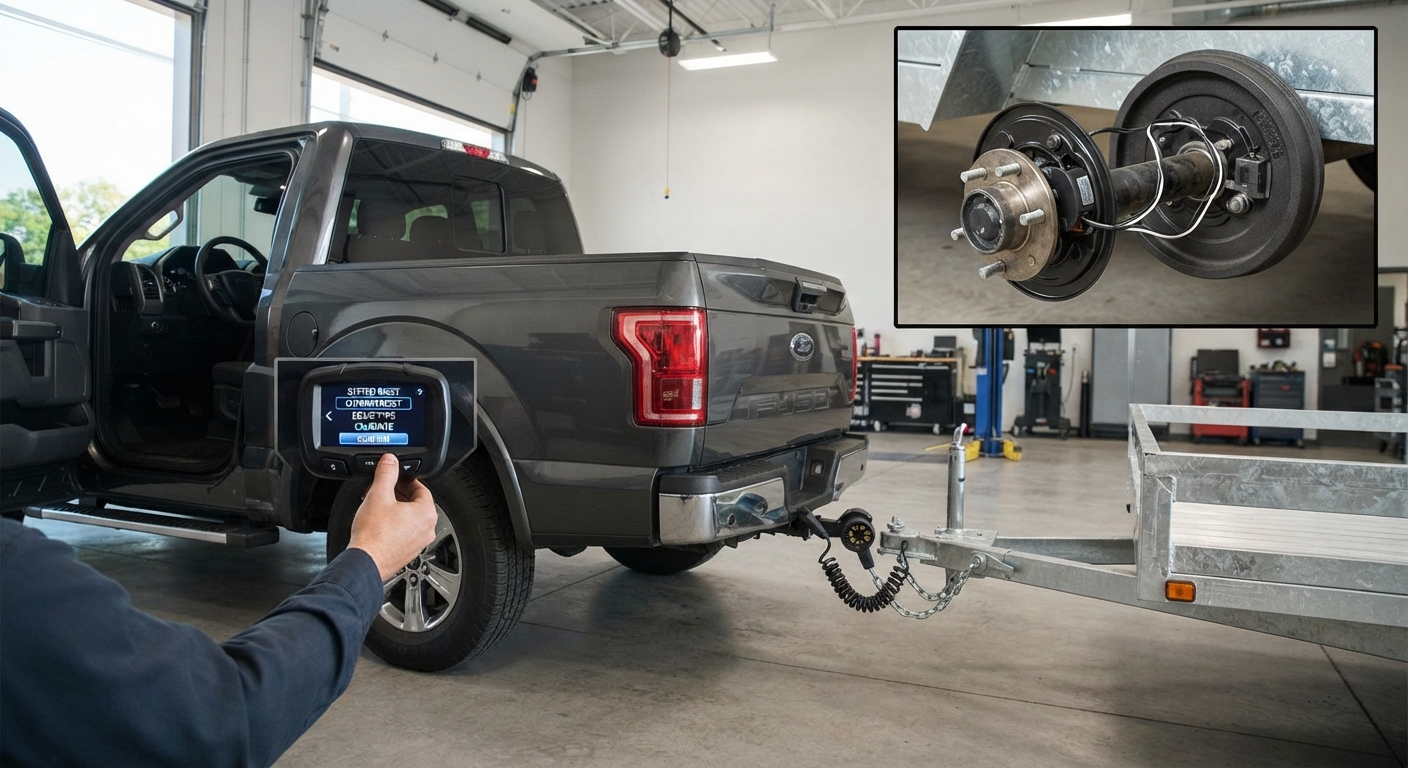
If your trailer brake controller shows an error, the brakes feel weak, or the trailer brakes stop responding, you may need to reset the system. Learning how to reset trailer brake system components can help you identify simple electrical or controller issues before seeking professional service.
A trailer brake system is an important safety system. It helps the trailer slow down with the tow vehicle and reduces the amount of braking work placed on the vehicle’s brakes. A reset can sometimes clear a temporary controller fault, but it does not repair damaged wiring, worn brake components, bad magnets, or other mechanical problems.
Before working on the system, park the trailer on a level surface, secure it against movement, and follow the instructions for your specific brake controller and trailer. Never test questionable brakes at normal road speed.
This guide explains how to reset trailer brake system components, how to adjust the controller afterward, and what to check if the problem does not disappear.
What Is a Trailer Brake System?
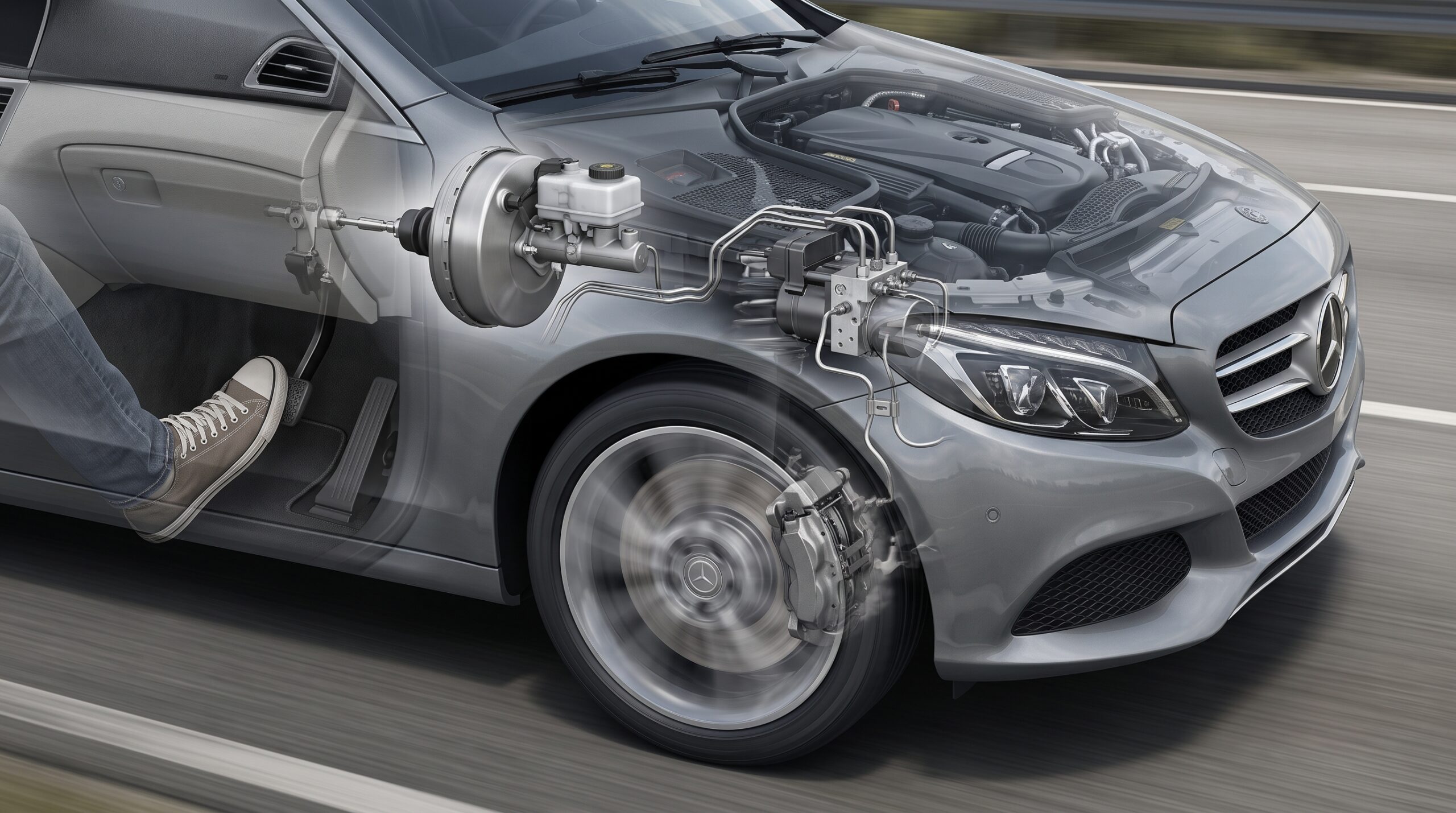
A trailer brake system allows the trailer to apply its own brakes when the tow vehicle slows down. This is especially important on heavier trailers because the trailer’s weight can increase stopping distance and place extra demand on the tow vehicle.
There are several trailer braking designs. The most common systems include electric trailer brakes and hydraulic trailer brakes.
Electric Trailer Brakes vs. Hydraulic Systems
Electric trailer brakes use an electrical signal from the tow vehicle or brake controller. When the tow vehicle brakes, the controller sends power through the trailer wiring to the electric brake assemblies.
Inside an electric drum brake assembly, an electric magnet is energized. The magnet interacts with the brake drum and causes the brake mechanism to apply the brake shoes.
Hydraulic trailer brakes use fluid pressure rather than an electric brake magnet as the main method of applying the brakes. Some hydraulic trailer systems use an electric-over-hydraulic controller or actuator.
The reset procedure therefore depends on the type of system installed. A procedure that works for an electric brake controller may not apply to a hydraulic system.
The Role of the Brake Controller
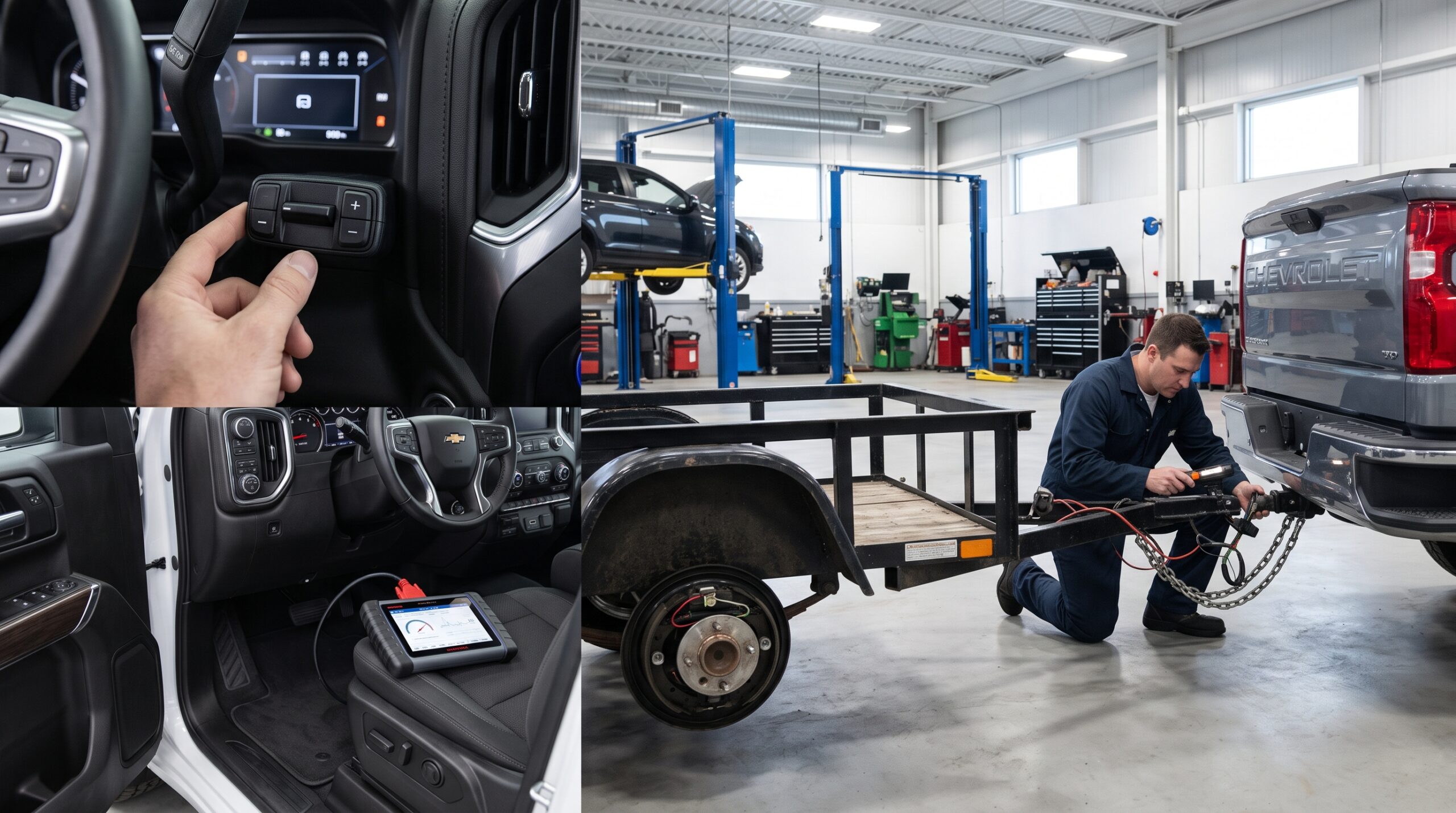
A brake controller manages the braking signal sent to compatible trailer brakes. Many modern controllers monitor the trailer connection and can display information about braking activity or faults.
Depending on the model, a controller may show messages for:
- Trailer disconnected
- Wiring faults
- Output problems
- Short circuits
- Battery or power issues
- Sensor-related problems
Some controllers have a manual override lever or button. This allows the driver to apply the trailer brakes independently for testing or control in appropriate situations.
If the controller reports a fault, resetting it may clear a temporary electronic issue. However, the error can return if the underlying problem remains.
Why Proper Adjustment Matters
A trailer brake system must provide enough braking force without causing the trailer wheels to lock up.
If the controller gain is too low, the trailer may not contribute enough braking force. If the setting is too high, the trailer brakes may engage too aggressively.
After learning how to reset trailer brake system components, you should always test and adjust the controller according to the manufacturer’s instructions.
Why Would You Need to Reset a Trailer Brake System?
A reset can be useful after a temporary electrical problem, connector issue, controller fault, or power interruption. It may also be recommended by the controller manufacturer as part of troubleshooting.
However, resetting the system should not be treated as a substitute for finding the cause of a brake problemhttps://universalengineparts.com/marine-heat-exchanger-problems/.
Common Warning Signs
Several symptoms may indicate that the trailer brake system needs attention.
Brake Controller Error Messages
A controller may display an error when it detects a problem with the trailer connection, wiring, brake circuit, or controller itself.
The exact message depends on the brand and model.
If an error returns immediately after resetting, investigate the electrical system rather than repeatedly resetting the controller.
Weak or Uneven Braking
If the trailer does not slow down properly, the problem may involve controller settings, brake adjustment, wiring, magnets, or mechanical components.
Uneven braking can also indicate that one side of the trailer is working differently from the other.
Trailer Brakes Locking Up
If the trailer brakes lock during normal braking, the controller may be set too aggressively. Mechanical or electrical problems can also contribute to abnormal brake application.
Do not simply lower the controller setting and assume the problem is solved. The system should be inspected if the behavior is unusual.
Brakes Not Responding
A complete lack of trailer braking is more serious.
Possible causes include:
- No power reaching the brake circuit
- Damaged wiring
- Poor ground
- Faulty connector
- Controller failure
- Damaged brake magnets
- Mechanical brake problems
If the trailer has no reliable braking ability, avoid normal towing until the problem is corrected.
Battery or Wiring Problems
Electrical problems are common sources of trailer brake faults. Loose terminals, damaged wires, corrosion, and poor grounds can interrupt the braking circuit.
A weak trailer battery may also affect systems that depend on battery power, depending on the trailer design.
Common Causes of Brake System Errors
Understanding the cause is more useful than repeatedly performing a reset.
Loose or damaged wiring: Trailer wiring can be exposed to road debris, moisture, vibration, and movement.
Poor ground connection: A weak ground can create intermittent or unreliable electrical behavior.
Faulty brake controller: The controller itself may have an internal problem or an incorrect power connection.
Brake magnet problems: Worn or damaged magnets can reduce braking performance.
Corrosion: Corrosion around the trailer plug or electrical terminals can increase resistance and interrupt the circuit.
Damaged connectors: Bent, loose, or contaminated connector pins may prevent the tow vehicle and trailer from communicating correctly.
How to Reset Trailer Brake System
The exact reset procedure varies by trailer, brake controller, and tow vehicle. Always give the manufacturer’s instructions priority.
The following process provides a general troubleshooting approach for many electrically controlled trailer brake systems.
Step 1: Park and Secure the Trailer
Park the tow vehicle and trailer on a firm, level surface away from traffic.
Put the tow vehicle in park or the appropriate transmission position and engage its parking brake.
Use wheel chocks when appropriate to prevent unexpected trailer movement.
Before you begin how to reset trailer brake system troubleshooting, make sure the trailer cannot roll.
Never work underneath a trailer that is supported only by a jack. If you need to work underneath the trailer, use properly rated support equipment and follow safe lifting procedures.
Step 2: Turn Off the Tow Vehicle
Switch off the ignition and remove the key if applicable.
Allow the vehicle’s electronic systems to shut down before disconnecting or reconnecting electrical components.
Some brake controllers are integrated into the vehicle and may follow a vehicle-specific reset procedure. For those systems, the vehicle manufacturer’s instructions should be followed.
Do not disconnect random vehicle wiring simply to force a reset.
Step 3: Disconnect and Inspect the Trailer Connector
Locate the trailer’s electrical connector. Many conventional trailers use a 7-pin connector.
Disconnect it carefully.
Inspect the connector for:
- Dirt
- Moisture
- Corrosion
- Bent pins
- Loose terminals
- Cracked housing
- Damaged wiring
A dirty or corroded connector can create intermittent faults.
If the connector is damaged, cleaning alone may not solve the problem. The connector or wiring may need repair or replacement.
This inspection is an important part of how to reset trailer brake system faults because a controller error can return if the connection remains defective.
Step 4: Check the Trailer Battery and Ground
If the trailer has a battery, inspect its terminals and cables.
Look for loose connections, corrosion, damaged cables, or signs of overheating.
Next, inspect the main trailer ground connection. The ground should be secure and free from significant corrosion.
A poor ground can cause strange electrical symptoms and make troubleshooting difficult.
Do not assume the battery is the only source of a brake problem. The tow vehicle, trailer connector, brake wiring, controller, and brake assemblies may all need inspection.
Step 5: Reset the Brake Controller
Now follow the reset procedure specified by your brake controller manufacturer.
Some controllers can be restarted by turning the vehicle off and back on. Others may have a specific power cycle or reset process.
If the manufacturer permits disconnecting controller power, follow the specified procedure rather than randomly removing wires.
After the required power interruption, reconnect the system and restart the tow vehicle.
This is the central part of how to reset trailer brake system troubleshooting, but the exact button sequence or power procedure is controller-specific.
Do not assume that every controller resets in the same way.
Step 6: Reconnect the Trailer
With the tow vehicle and trailer ready, reconnect the trailer plug securely.
Make sure the connector is fully seated and locked if it has a locking mechanism.
Start the tow vehicle and allow the brake controller to recognize the trailer.
Check the controller display.
If the warning message has disappeared, that is a positive sign, but it does not prove that the brakes are functioning correctly.
Step 7: Test the Trailer Brakes
Testing should be done in a safe, controlled location.
Start at low speed.
Apply the tow vehicle brakes gently and observe how the trailer responds. If your controller has a manual braking control, use it only according to the controller’s instructions.
Look for smooth braking rather than sudden grabbing.
If the trailer pulls strongly to one side, the brakes behave unpredictably, or the controller reports another fault, stop testing and investigate the problem.
A successful reset is not the same as a successful brake repair. The purpose of how to reset trailer brake system troubleshooting is to restore normal operation only when the underlying system is healthy.
How to Adjust a Trailer Brake Controller After Resetting
After resetting the system, you may need to adjust the brake controller.
Controller settings are not universal. Trailer weight, brake type, road conditions, load distribution, and the controller design can all affect the correct setting.
Set the Initial Gain
Start with the setting recommended by the controller manufacturer.
If the manufacturer provides a baseline procedure, use it rather than copying a setting from another trailer.
The goal is controlled braking.
Too little braking force can make the trailer contribute too little to stopping. Too much force can cause aggressive braking or wheel lockup.
Test and Fine-Tune the Controller
Perform controlled low-speed tests in a safe area.
Make small adjustments rather than changing the gain dramatically.
You are looking for a smooth response where the trailer contributes to braking without pushing the tow vehicle or grabbing excessively.
If the controller requires a specific calibration process, follow that procedure.
When learning how to reset trailer brake system components, remember that resetting and adjusting are two separate steps. A reset addresses an electronic state or fault condition; adjustment controls braking behavior.
How to Troubleshoot a Trailer Brake System That Will Not Reset
Sometimes a reset does not solve the problem. This usually means the system is detecting a continuing fault or there is a physical problem that a reset cannot repair.
Check the Wiring
Inspect the wiring from the trailer connector toward the brake assemblies.
Look for:
- Cuts
- Crushed sections
- Exposed conductors
- Loose connections
- Broken wires
- Melted insulation
- Corroded terminals
Pay special attention to areas where wires pass near the frame, suspension, wheels, and moving parts.
A wiring problem can produce intermittent faults that disappear temporarily and then return.
Inspect the Brake Magnets
Electric trailer brake assemblies use magnets as part of the braking mechanism.
Worn magnets may have visible wear or other signs of damage. The exact inspection procedure depends on the brake assembly.
If you are not comfortable removing a drum or inspecting brake components, have a qualified technician perform the inspection.
Do not replace parts based only on a controller error message. Confirm the fault before replacing components.
Check the Brake Controller
Look at the controller display and note the exact error message.
Check whether the controller receives power correctly and whether its connections are secure.
A controller may fail internally, but it is important to rule out wiring and connection problems first.
If the controller continues to report an error after the trailer connector, wiring, ground, and brake circuit have been checked, professional diagnosis may be appropriate.
Inspect the Trailer Brakes
The electrical system is only one part of the braking system.
Mechanical components such as brake shoes, drums, springs, and adjusters can wear or become damaged.
Possible warning signs include:
- Reduced braking performance
- Uneven braking
- Unusual noises
- Excessive heat
- Visible component damage
- Repeated adjustment problems
Proper mechanical adjustment is also important. Electric drum brakes generally need the correct clearance between the brake shoes and drum.
If the mechanical brake assembly is damaged, learning how to reset trailer brake system electronics will not fix it.
Common Trailer Brake Reset Mistakes to Avoid
Resetting a trailer brake system is simple in some cases, but several mistakes can make troubleshooting harder.
Resetting Without Finding the Underlying Problem
A reset can clear a temporary fault, but it does not repair broken wires or worn brake components.
If the same error returns, investigate why.
Ignoring Damaged Wiring
Trailer wiring operates in a harsh environment.
Do not ignore cracked insulation, loose wires, corroded connectors, or damaged plugs.
A small electrical fault can become a larger problem if it is left unresolved.
Testing Brakes at High Speed
Never use a high-speed road test to determine whether a questionable trailer brake system works.
Use a safe, low-speed testing area first.
If the brakes behave unpredictably, stop testing.
Incorrect Controller Settings
Do not copy another driver’s gain setting without considering the trailer and controller involved.
Different trailers can require different settings.
Follow the manufacturer’s instructions and make gradual adjustments.
Continuing to Tow With Unreliable Brakes
If the trailer brakes are not functioning correctly, do not treat a temporary reset as a permanent repair.
A trailer with unreliable braking can increase stopping difficulty and create a serious safety risk.
If you cannot confirm that the brakes are operating correctly, have the system inspected before normal towing.
When Should You Take Your Trailer to a Professional?
You should consider professional inspection when troubleshooting does not identify a simple issue or when the braking system is not reliable.
Professional service is especially appropriate for:
- Persistent brake controller errors
- Complete loss of trailer braking
- Electrical faults that cannot be located
- Damaged brake assemblies
- Severely worn brake components
- Repeated wiring failures
- Unusual brake noises
- Excessive heat around a brake or wheel
- Brake grabbing or uneven braking
- Problems that return after a reset
If you are unsure how to safely access or test a brake component, professional help is the safer choice.
A technician can inspect the electrical circuit and mechanical brake components together instead of treating the controller error as an isolated problem.
Frequently Asked Questions
How do I reset my trailer brake controller?
The exact method depends on the controller. A common troubleshooting approach is to park safely, switch off the tow vehicle, disconnect the trailer connector, inspect the wiring and ground, follow the controller manufacturer’s power-cycle or reset procedure, reconnect the trailer, and test the brakes at low speed.
If you are researching how to reset trailer brake system components, the most important point is that there is no universal reset sequence for every controller.
Why are my trailer brakes not working after a reset?
A reset does not repair physical problems.
If the brakes still do not work, check the trailer connector, wiring, ground, controller power, brake magnets, and mechanical brake assemblies.
A weak or missing braking signal can also result from incorrect controller settings.
If you have complete loss of braking, avoid normal towing until the cause has been identified.
How do I reset an electric trailer brake system?
For an electric trailer brake system, start by securing the trailer and switching off the tow vehicle.
Inspect the 7-pin connector, trailer wiring, ground, and battery connections where applicable. Then follow the specific controller manufacturer’s reset or power-cycle instructions.
Reconnect the trailer and perform a controlled low-speed brake test.
Because different controllers and vehicles use different designs, the manufacturer’s instructions should take priority over a generic procedure for how to reset trailer brake system electronics.
Why does my trailer brake controller keep showing an error?
A recurring error usually means the controller continues to detect a problem.
Possible causes include:
- Corroded trailer connector
- Loose wiring
- Poor ground
- Shorted or damaged brake wiring
- Brake magnet problems
- Controller faults
- Vehicle-side electrical problems
Repeatedly resetting the controller without investigating the fault is unlikely to provide a lasting solution.
How often should trailer brakes be inspected?
Inspection frequency depends on trailer use, mileage, brake type, load, operating conditions, and the manufacturer’s maintenance schedule.
Heavy use, frequent towing, dusty roads, water exposure, and high loads may increase maintenance needs.
You should also inspect the brakes whenever you notice changes in braking performance, unusual sounds, heat, or controller warnings.
Follow the trailer and brake manufacturer’s recommended inspection and maintenance intervals.
Can a weak trailer battery affect the brakes?
It can affect some trailer electrical systems, depending on the trailer design and how its brake-related equipment is powered.
However, a trailer brake problem should not automatically be blamed on the battery.
Check the entire electrical system, including the tow vehicle, connector, ground, wiring, controller, and brake assemblies.
Can I drive if the trailer brake controller shows an error?
It depends on the error and whether the trailer brakes are actually functioning, but a brake controller warning should not be ignored.
If you cannot confirm that the trailer braking system is working correctly, avoid normal towing until the problem is diagnosed.
Does resetting the controller fix trailer brakes?
Not necessarily.
A reset can clear a temporary electronic condition, but it cannot repair damaged wiring, worn magnets, mechanical brake problems, or a failed controller.
Think of a reset as one troubleshooting step, not a complete repair.
Why do trailer brakes work sometimes and fail at other times?
Intermittent operation often points toward an electrical connection problem.
Possible causes include loose terminals, corrosion, damaged wiring, poor grounding, or a connector that does not maintain a reliable connection.
Movement and vibration during towing can make an intermittent fault appear and disappear.
Should I replace the brake controller if resetting does not work?
Not immediately.
First inspect the connector, wiring, ground, brake circuit, and other relevant components. A controller may be blamed for a problem that actually comes from the trailer wiring.
If the rest of the system checks out and the controller still fails its manufacturer’s tests, replacement or professional diagnosis may be appropriate.
Conclusion
Knowing how to reset trailer brake system components can help you deal with some controller errors and temporary electrical problems.
The basic process is straightforward: park and secure the trailer, turn off the tow vehicle, inspect the trailer connector, check the battery and ground, follow the controller manufacturer’s reset procedure, reconnect the trailer, and perform a careful low-speed brake test.
However, a reset should never be considered a complete repair by itself. If the error returns, inspect the wiring, connector, ground, brake magnets, controller, and mechanical brake components.
The safest approach to how to reset trailer brake system problems is to identify the cause, correct the fault, and then confirm that the trailer brakes operate smoothly before returning to normal towing.
If the trailer has unreliable braking, complete brake failure, repeated controller errors, damaged components, or a problem you cannot safely diagnose, have a qualified trailer or brake technician inspect it before towing.

One thought on “How to Reset Trailer Brake System: A Simple Guide”