Our Blogs
Which One Is the Brake in a Car? Easy Guide for Drivers

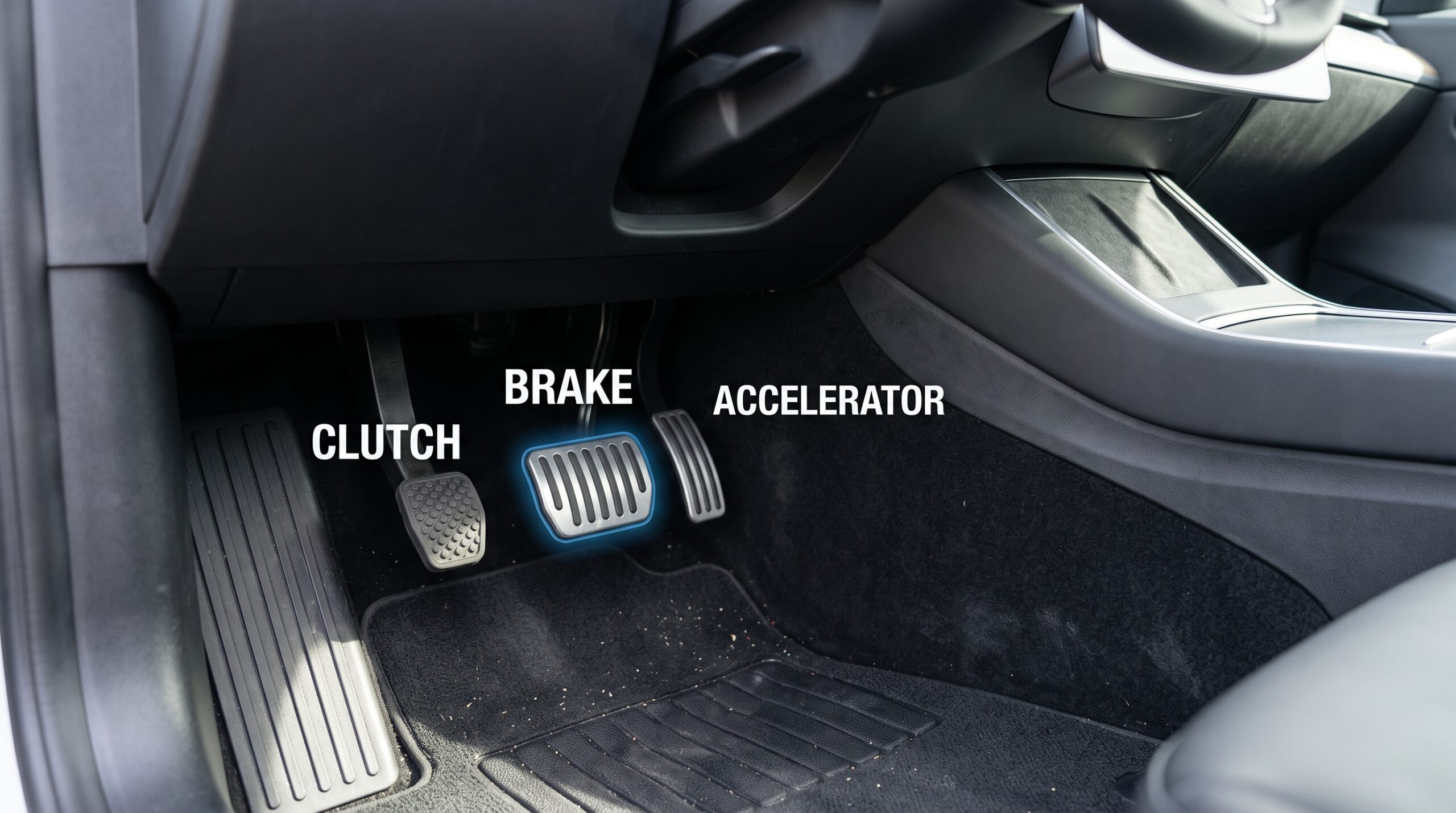
If you are learning to drive, one of the first things you need to understand is the pedal layout. Many new drivers ask, which ones the brake in a car because the pedals can look similar at first.
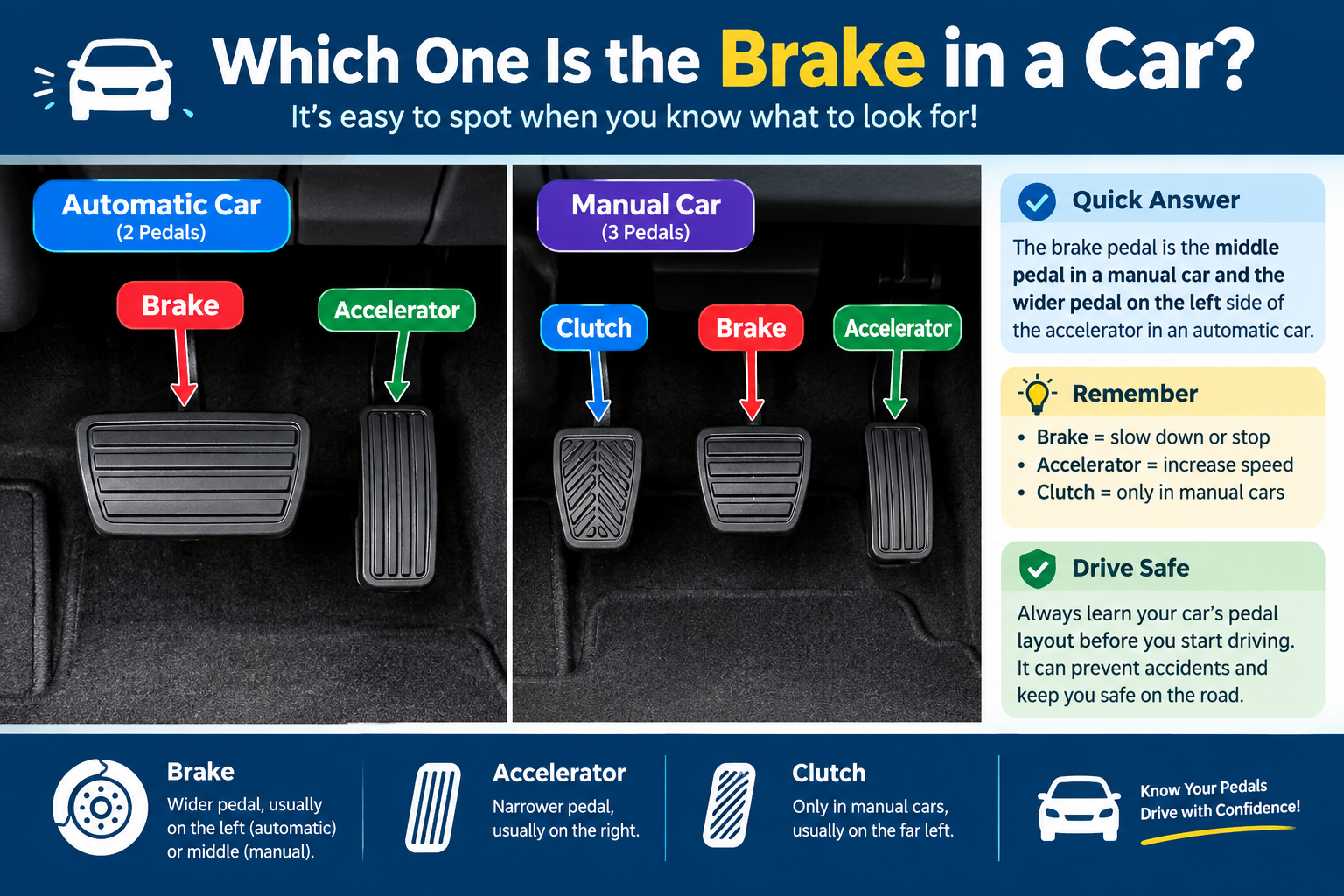
The quick answer is simple: in most automatic cars, the brake pedal is the wider pedal on the left, while the accelerator is the narrower pedal on the right. In a manual car, the brake is usually the middle pedal. The clutch is on the left, the brake is in the middle, and the accelerator is on the right.
Knowing which ones the brake in a car is important before you move the vehicle. Pressing the wrong pedal can cause the car to speed up or slow down unexpectedly.
This guide explains which ones the brake in a car, how to identify the pedal, which foot to use, how the brake system works, and what brake problems you should take seriously.
Which One Is the Brake in a Car?
So, which ones the brake in a car?
The answer depends on whether the car has an automatic or manual transmission.
In a typical automatic car, there are two main pedals:
- Brake pedal on the left
- Accelerator pedal on the right
The brake pedal is usually wider than the accelerator. You press it to slow down or stop the vehicle.
In a typical manual car, there are three pedals:
- Clutch on the left
- Brake in the middle
- Accelerator on the right
Therefore, when someone asks which ones the brake in a car, remember this basic rule:
Automatic: brake on the left, accelerator on the right.
Manual: clutch on the left, brake in the middle, accelerator on the right.
Pedal layouts can vary slightly between vehicles, so always check the vehicle before driving it.
Why Is Knowing the Brake Important?
The brake is one of the most important controls in a vehicle. You use it when approaching traffic lights, slowing for a turn, stopping in traffic, parking, or responding to an unexpected situation.
A new driver should be able to identify the brake without looking down for a long time.
Before driving an unfamiliar car, sit in the driver’s seat and locate each pedal while the vehicle is stationary.
Where Is the Brake Pedal Located?
Understanding pedal location makes it easier to remember which ones the brake in a car.
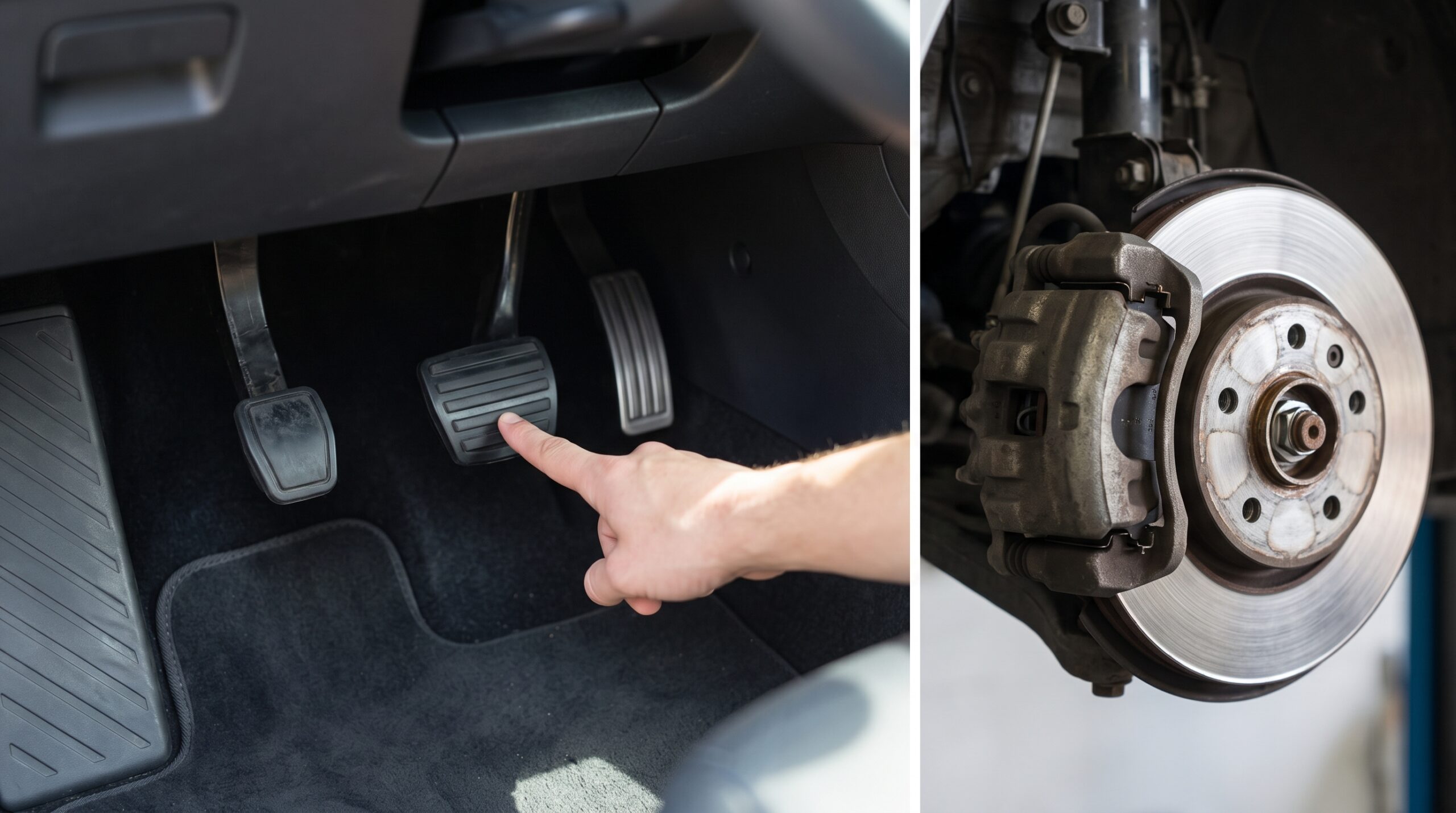
The brake pedal is positioned so the driver can operate it quickly with the right foot. Its exact size and shape depend on the vehicle.
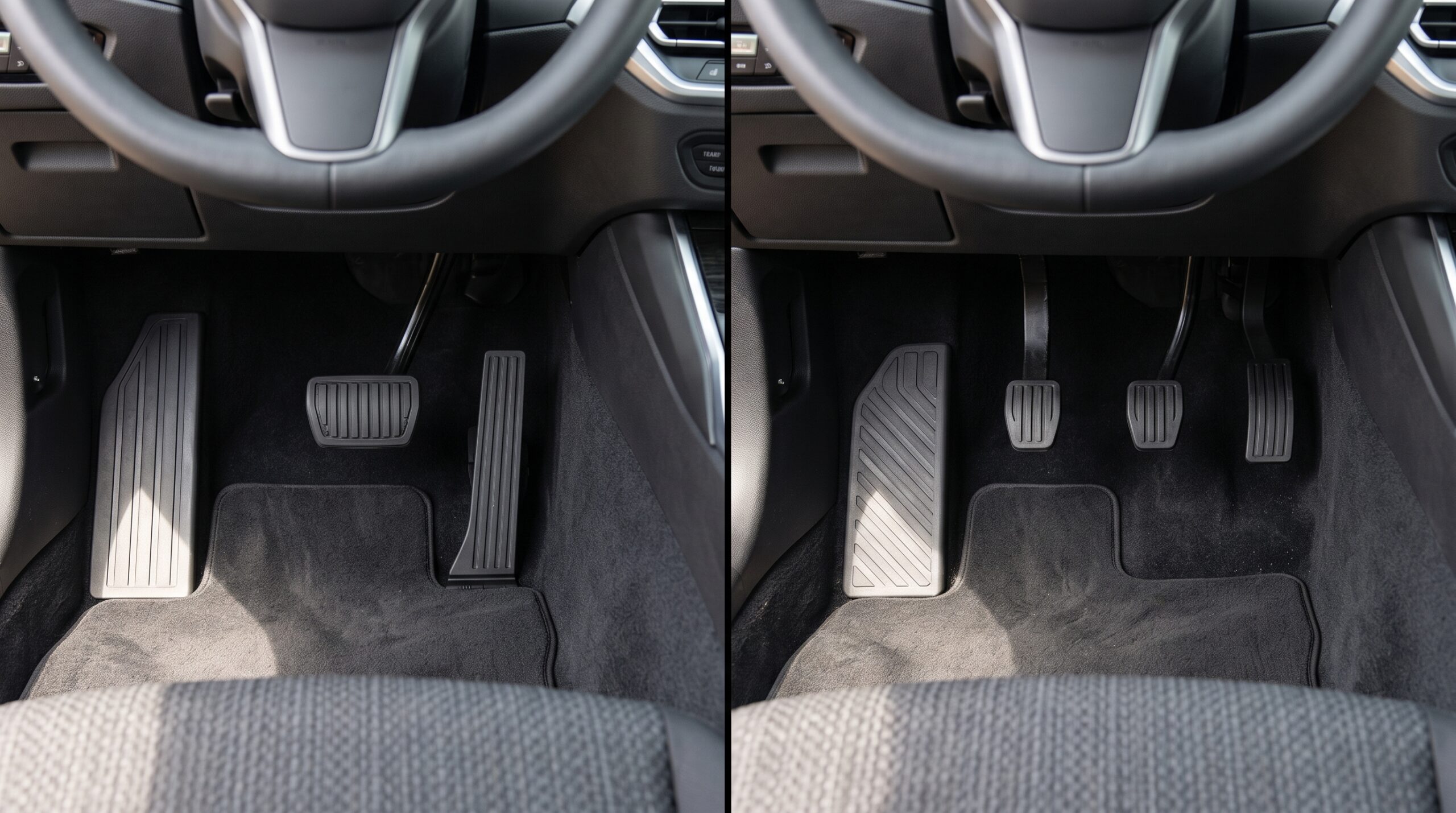
Brake Pedal in an Automatic Car
Most automatic cars have two pedals.
From left to right, they are normally:
Brake → Accelerator
The brake is usually the wider pedal. The accelerator is normally narrower and sits farther to the right.
In an automatic car, there is no clutch pedal for the driver to operate. The transmission changes gears automatically.
For basic driving, drivers normally use the right foot for both the brake and accelerator.
For example, when approaching a red light, you release pressure from the accelerator and move your right foot to the brake. You then apply smooth pressure to slow or stop the car.
This layout is one of the easiest ways to remember which ones the brake in a car when driving an automatic vehicle.
Brake Pedal in a Manual Car
A manual car normally has three pedals.
From left to right:
Clutch → Brake → Accelerator
The brake is therefore the middle pedal.
The clutch allows the driver to connect and disconnect engine power from the transmission during gear changes. The brake has a completely different job: it slows or stops the vehicle.
If you are learning manual driving, remembering the order of the pedals is important.
A simple memory trick is:
C-B-A = Clutch, Brake, Accelerator.
This helps you remember which ones the brake in a car when looking at a manual transmission.
How to Identify the Brake Pedal
If you are still wondering which ones the brake in a car, there are several ways to identify it.
1. Check the Pedal Position
In an automatic car, the brake is normally on the left and the accelerator is on the right.
In a manual car, the brake is normally between the clutch and accelerator.
This is the first thing to check.
2. Look at the Pedal Size
The brake pedal is often wider than the accelerator. This design gives the driver a larger surface for applying the brakes.
However, do not depend only on pedal size. Different vehicles can have different pedal shapes.
3. Look for Markings
Some vehicles have labels or symbols around the driver’s footwell. These can help identify the controls.
Do not assume that every car will have the same markings.
4. Check the Owner’s Manual
The owner’s manual is the best source for vehicle-specific information.
If you are driving a car that you have never used before, check the manual or ask an experienced driver to show you the pedals while the vehicle is safely parked.
5. Identify the Pedals Before Starting
Before turning the vehicle on, sit comfortably and locate the pedals.
This is especially useful when you switch between an automatic and manual vehicle.
Understanding which ones the brake in a car before moving can help reduce confusion.
Brake Pedal vs. Accelerator Pedal
Knowing the difference between the brake and accelerator is essential for every driver.
What Does the Brake Pedal Do?
The brake pedal controls the vehicle’s braking system.
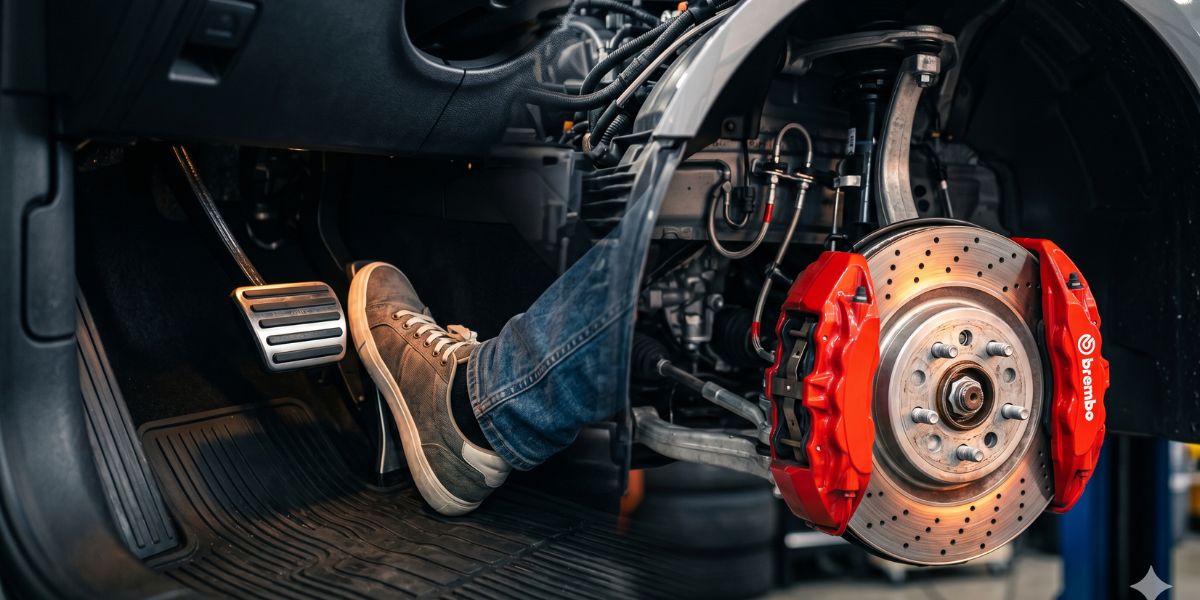
When you press the brake pedal, the braking system creates force at the wheels. This force slows the rotation of the wheels and can bring the vehicle to a stop.
You may use the brake when:
- Approaching a stop sign
- Stopping at a traffic light
- Slowing in traffic
- Reducing speed before a turn
- Parking
- Stopping because of a hazard
Brake application should normally be smooth and controlled.
If you are learning which ones the brake in a car, remember that pressing the brake reduces vehicle speed.
What Does the Accelerator Pedal Do?
The accelerator controls how much power the engine or electric motor delivers to move the vehicle.
In a conventional gasoline or diesel car, pressing the accelerator usually increases engine output. In an electric vehicle, it controls motor power.
The accelerator is normally located to the right of the brake.
When you release the accelerator, the car may begin to slow because you are no longer asking for driving power. However, releasing the accelerator is not the same as applying the brake.
If you need to stop, use the brake pedal.
What Is the Clutch Pedal?
The clutch is found in many manual-transmission vehicles.
It is normally the pedal on the far left.
The clutch helps the driver change gears by temporarily separating the engine from the transmission.
For example, when changing gears in a manual car, the driver may press the clutch, select another gear, and then release the clutch smoothly.
The clutch and brake have different purposes.
Brake: slows or stops the vehicle.
Clutch: helps control the connection between the engine and transmission.
Most automatic cars do not have a clutch pedal that the driver operates with the foot. Automatic transmissions manage gear changes without requiring the driver to use a clutch pedal.
If you are trying to remember which ones the brake in a car, the manual-car layout is simple:
Left = clutch
Middle = brake
Right = accelerator
Which Foot Should You Use for the Brake?
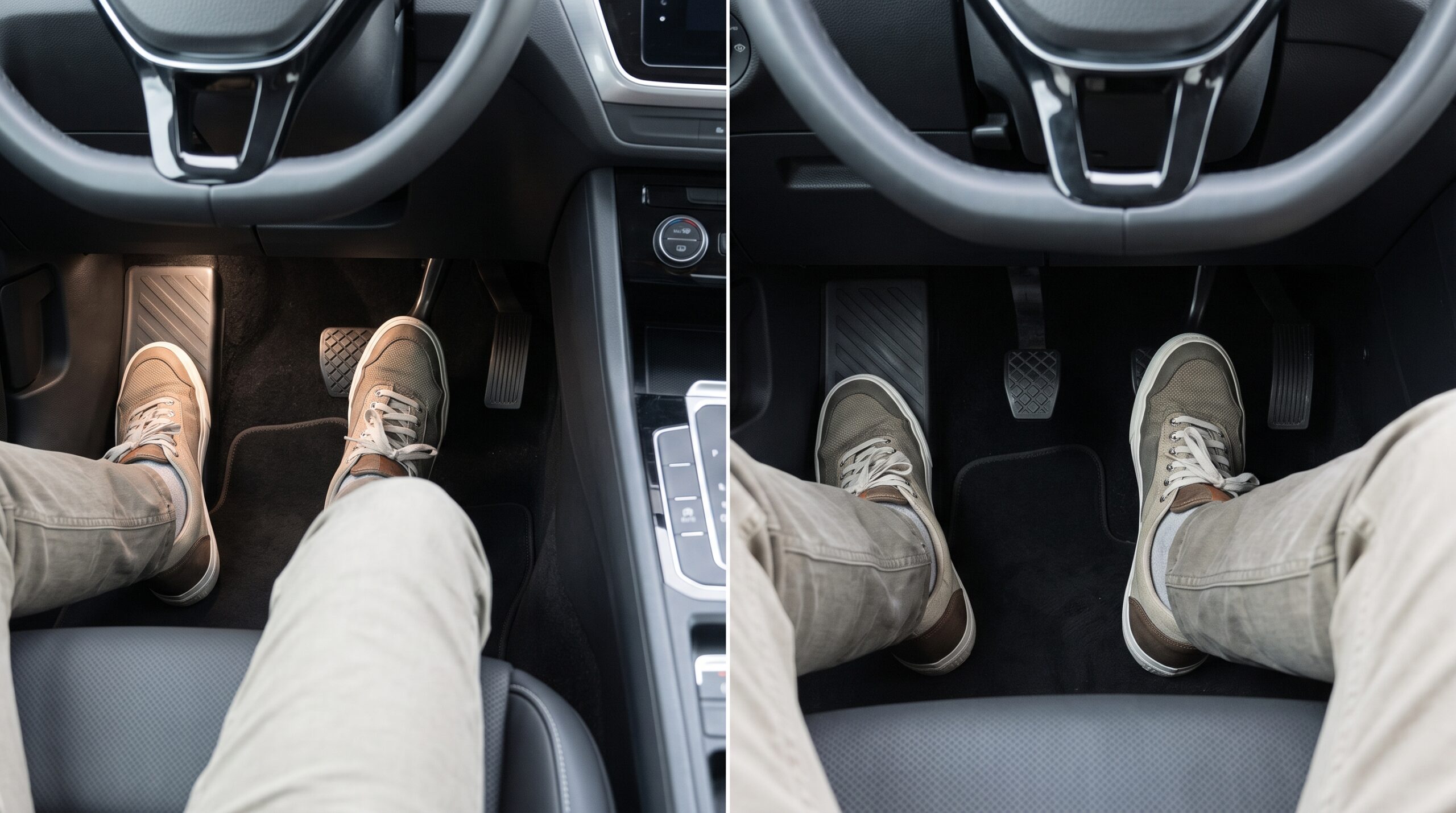
For normal driving, most drivers use the right foot to operate both the brake and accelerator.
This is the standard technique taught for many passenger vehicles.
In an automatic car, the right foot moves between the two pedals.
For example:
- Your right foot is on or near the accelerator.
- You need to slow down.
- You release the accelerator.
- Move your right foot to the brake.
- Apply appropriate pressure.
- Release the brake when it is safe to continue.
Using the same foot for both pedals can help reduce the chance of pressing both pedals at the same time.
Should You Use Your Left Foot?
For ordinary driving in a standard automatic car, drivers are generally taught to use the right foot for the brake.
Left-foot braking has specialized uses in some forms of driving, but it is not necessary for ordinary beginner driving.
If you are learning to drive, follow your instructor’s guidance and the driving rules that apply in your area.
Avoid Pressing Both Pedals Together
Do not deliberately press the brake and accelerator at the same time during normal driving.
Using one foot for both controls helps make pedal operation more consistent.
If you are still learning which ones the brake in a car, practice identifying the pedals while the vehicle is parked and turned off.
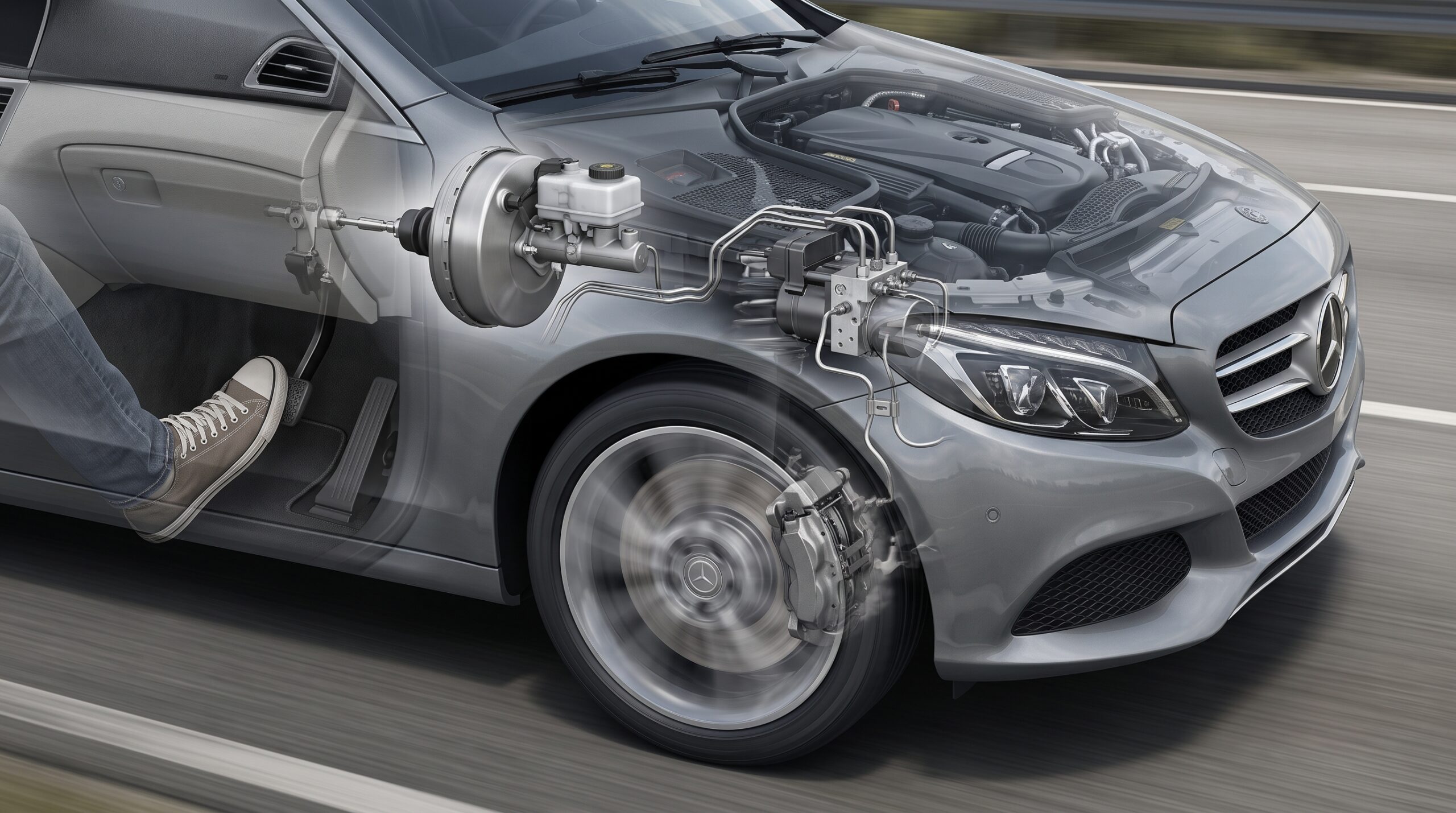
How Does a Car Brake System Work?
Knowing how the brake system works can make it easier to understand why the brake pedal is important.
When you press the brake pedal, the force from your foot is transferred through the braking system.
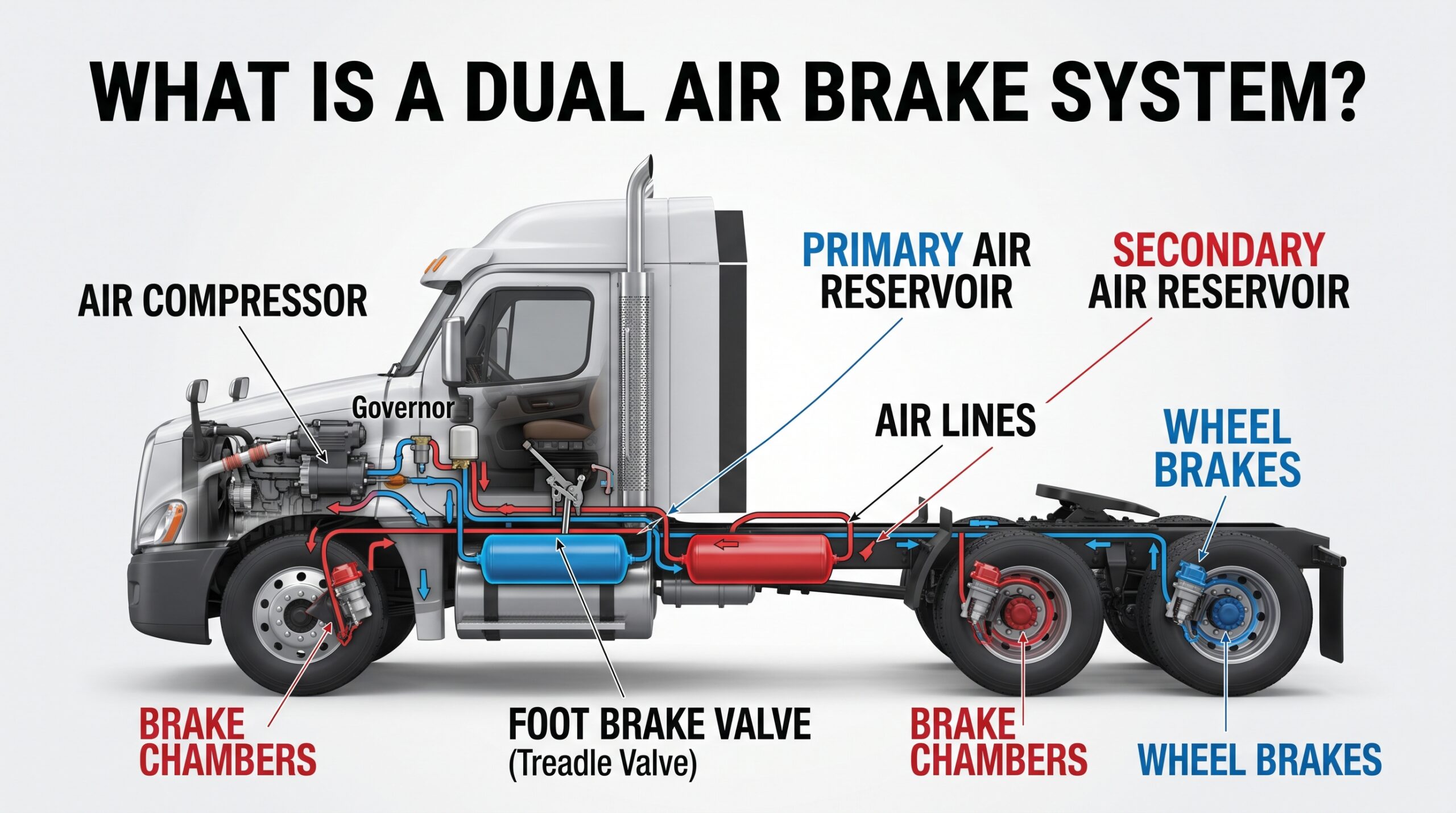
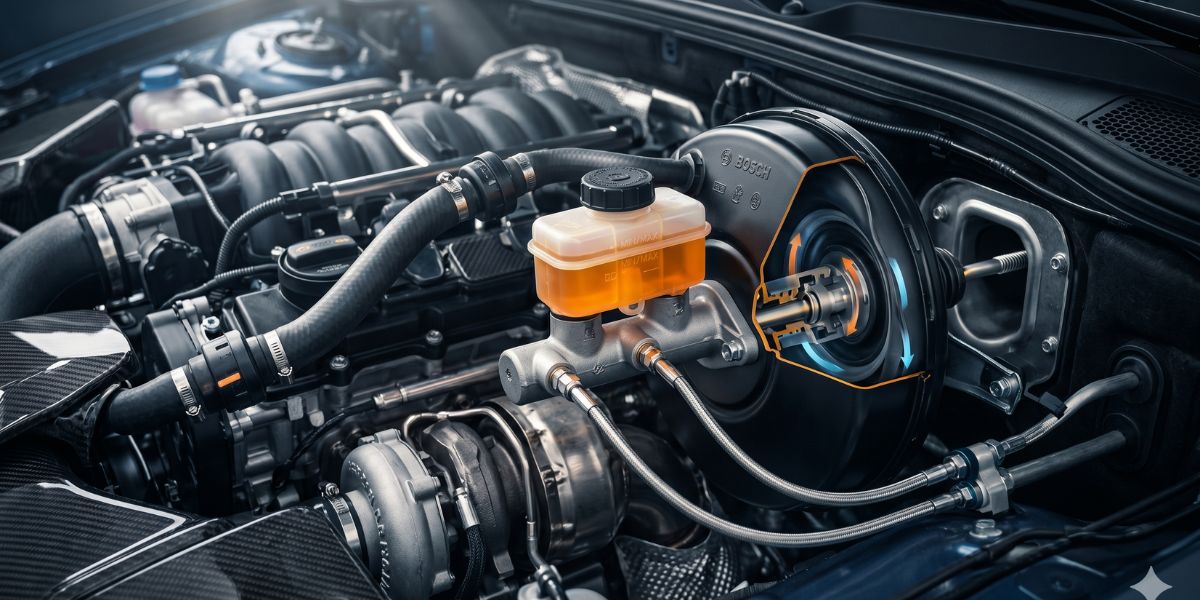
In many conventional vehicles, hydraulic brake fluid carries pressure from the master cylinder toward the wheel brakes.
Step 1: You Press the Brake Pedal
Your foot applies force to the brake pedal.
The pedal transfers that force into the brake system.
Step 2: Hydraulic Pressure Is Created
In a hydraulic braking system, the master cylinder uses the pedal input to create hydraulic pressure in the brake fluid.
The fluid travels through brake lines toward the wheel brakes.
Step 3: The Brake Caliper Applies Pressure
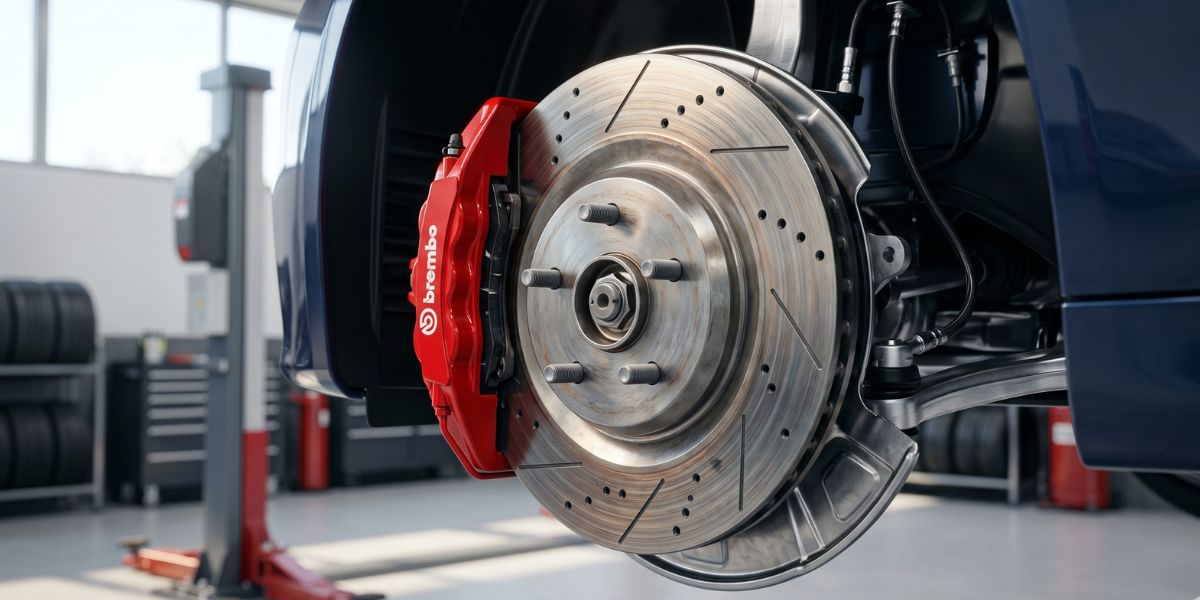
In a disc brake system, hydraulic pressure moves pistons inside the brake caliper.
The caliper presses brake pads against a rotating brake rotor.
Step 4: Friction Slows the Wheel
The brake pads press against the rotor.
Friction slows the rotation of the rotor and wheel.
As the wheels slow, the vehicle slows.
Disc Brakes and Drum Brakes
Many modern vehicles use disc brakes, especially on the front wheels.
A disc brake has components such as:
- Rotor
- Brake caliper
- Brake pads
- Hydraulic components
Some vehicles also use drum brakes.
A drum brake uses brake shoes inside a rotating drum. When the brake is applied, the shoes press outward against the drum’s inner surface.
Both systems use friction to slow the vehicle.
What About ABS?
Many modern vehicles have an anti-lock braking system, commonly called ABS.
ABS can help prevent the wheels from locking during hard braking when road conditions allow it to operate as designed.
If ABS activates during heavy braking, you may feel pulsing or vibration through the brake pedal.
The correct response depends on the situation and vehicle. Follow the vehicle manufacturer’s instructions and your local driving guidance.
Common Brake Pedal Mistakes
New drivers can make mistakes when learning which ones the brake in a car.
Most mistakes happen because the driver is nervous, unfamiliar with the vehicle, or switches between different pedal layouts.
Confusing the Brake With the Accelerator
The brake and accelerator are close together, especially in automatic vehicles.
A driver who is unfamiliar with the car may become confused.
To reduce this risk, learn the pedal positions before moving.
Keep your right foot positioned so you can move smoothly between the accelerator and brake.
Do not rush when starting a new vehicle.
Pressing the Wrong Pedal
If you are not sure which ones the brake in a car, do not guess.
Keep the vehicle stationary and identify the pedals first.
When learning, practice in a safe area with a qualified instructor or experienced supervising driver, according to local licensing rules.
Before moving, make sure you know:
- Where the brake is
- Where the accelerator is
- Where the clutch is, if applicable
- Which gear or driving mode is selected
Using Both Feet
Using both feet for the brake and accelerator during normal automatic-car driving can make pedal control less consistent.
For basic driving, using the right foot for both pedals is the standard technique taught to many drivers.
If you have a medical or physical reason that affects pedal operation, seek advice from a qualified driving instructor and follow the vehicle’s requirements.
Brake Pedal Problems to Watch For
Knowing which ones the brake in a car is only the first step. You should also know what normal brake operation feels like.
A brake pedal should not suddenly feel very different without a reason.
Soft or Spongy Brake Pedal
A brake pedal that feels unusually soft or spongy can indicate a problem in the braking system.
Possible causes can include air or moisture in the brake system or another hydraulic issue.
Do not ignore a significant change in pedal feel.
Hard Brake Pedal
A brake pedal that suddenly becomes unusually hard may indicate a problem with brake assist or another component.
If braking performance changes significantly, have the vehicle inspected by a qualified professional.
Brake Pedal Goes Too Close to the Floor
If the pedal travels much farther than normal, this can be a serious warning sign.
Possible causes can include hydraulic problems, worn components, or other brake-system faults.
Do not continue normal driving if the vehicle does not brake properly.
Unusual Noises
Some brake noises can be caused by normal conditions, but persistent grinding, scraping, or other unusual sounds should not be ignored.
Have the braking system checked if you notice a new or worsening noise.
Brake Warning Lights
A brake warning light on the dashboard can indicate a problem that requires attention.
Different vehicles use different warning systems, so check the owner’s manual.
If a warning light appears together with poor braking performance, stop driving when it is safe to do so and seek professional assistance.
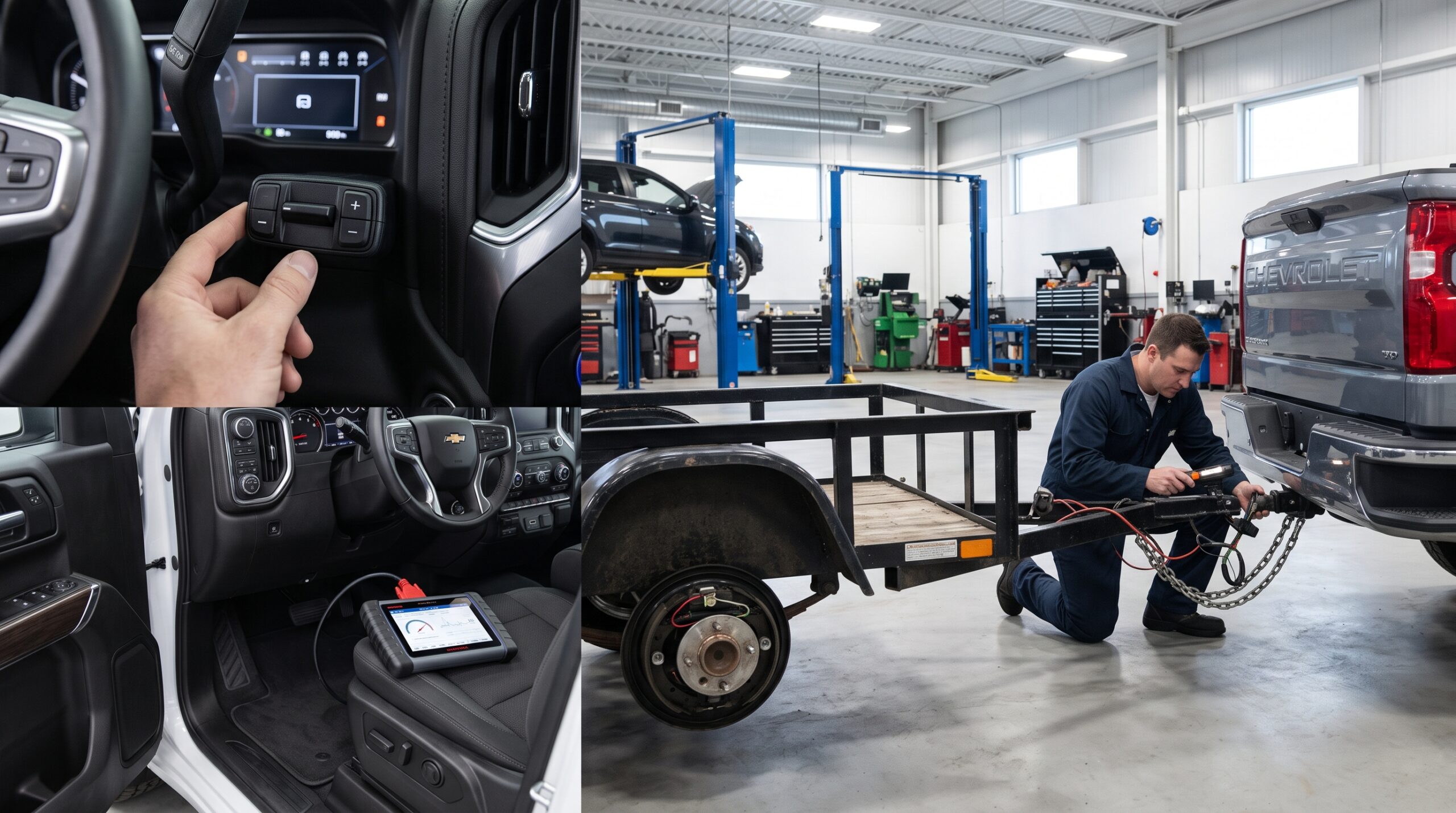
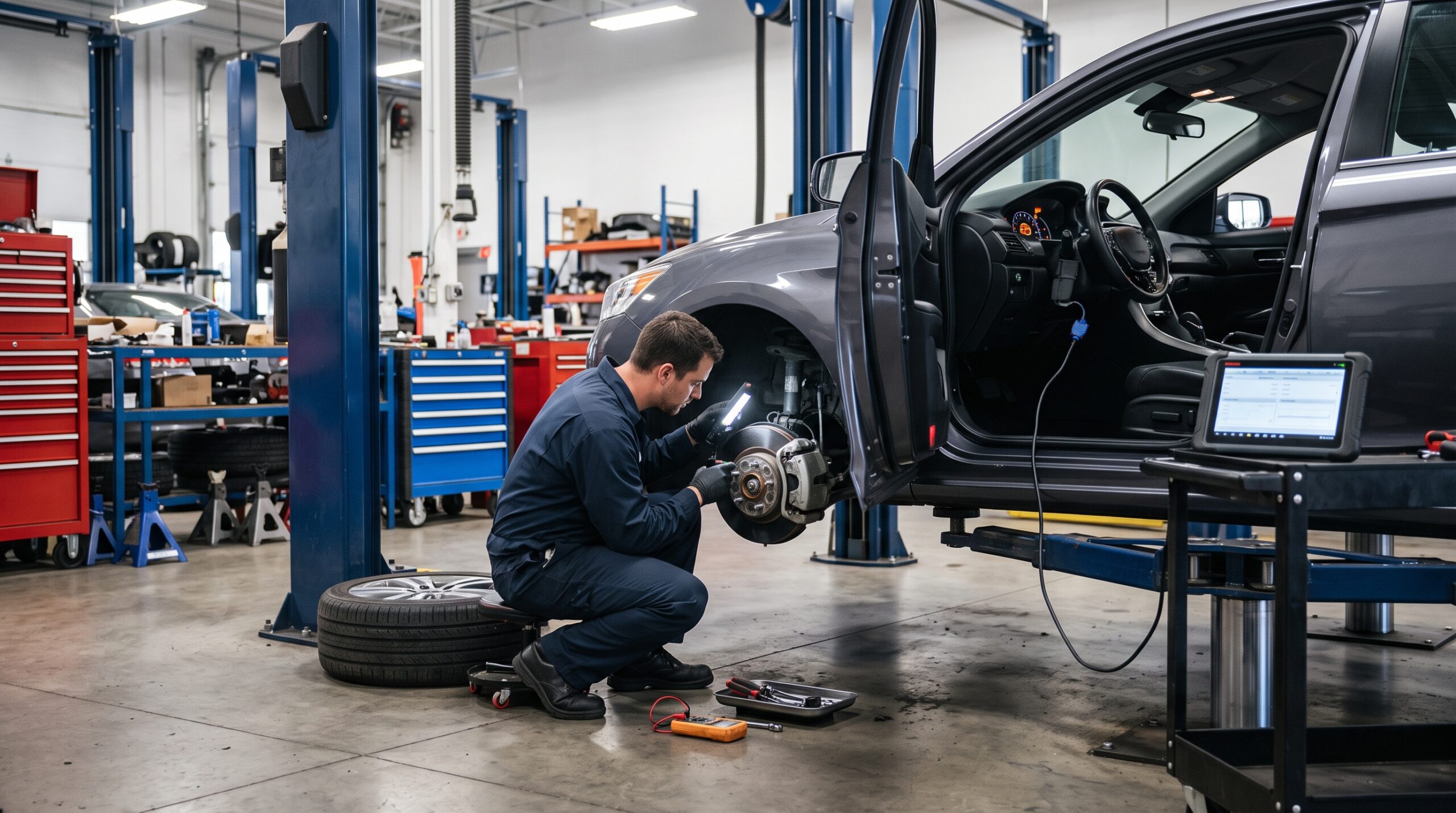
When Should You Get Professional Help?
Get the brakes inspected if:
- The pedal suddenly feels different.
- The vehicle takes longer to stop.
- The vehicle pulls to one side during braking.
- You hear persistent grinding or scraping.
- The brake warning light stays on.
- The brake pedal sinks unusually far.
- You smell something unusual after braking.
- You are unsure whether the braking system is working correctly.
Brakes are safety-critical equipment. If you are unsure, it is better to have the vehicle checked by a qualified technician.
Tips for New Drivers
If you are still learning which ones the brake in a car, use these simple habits.
Learn the Pedal Layout
Before driving, identify the pedals.
For an automatic:
Brake → Accelerator
For a manual:
Clutch → Brake → Accelerator
Adjust Your Seat
Make sure you can comfortably reach the pedals without stretching.
Your seat should allow you to control the pedals smoothly while maintaining a proper driving position.
Practice Before Road Driving
A beginner should learn pedal control in an appropriate, safe environment under qualified supervision.
Practice smooth braking rather than sudden pedal movements.
Do Not Look Down While Moving
Learn the pedal positions while the vehicle is stopped.
Once you begin driving, keep your attention on the road and surroundings.
Drive a Familiar Vehicle
Different cars can feel different.
The pedal spacing, pedal resistance, seating position, and braking response may vary.
Take a moment to become familiar with an unfamiliar vehicle before driving in busy traffic.
Frequently Asked Questions
Which pedal is the brake in an automatic car?
In most automatic cars, the brake pedal is the left pedal of the two main pedals. The accelerator is on the right. The driver normally uses the right foot to operate both.
Is the brake pedal on the left or right?
In an automatic car, the brake is normally on the left of the accelerator. In a manual car, the brake is normally the middle pedal.
So, if you are asking which ones the brake in a car, look at the transmission type first.
Which pedal is the brake in a manual car?
In a manual car, the brake is normally the middle pedal.
The order from left to right is:
Clutch → Brake → Accelerator
This is an important layout for new manual drivers to remember.
Can I use my left foot to brake?
For normal driving, drivers are generally taught to use the right foot for braking and acceleration.
Left-foot braking has specialized applications, but beginners generally should follow standard driving instruction and local requirements.
How can I tell the brake and accelerator apart?
In an automatic car, the brake is normally the wider pedal on the left, while the accelerator is narrower and on the right.
However, pedal designs vary. If you are unfamiliar with the vehicle, check the owner’s manual and identify the controls while the vehicle is parked.
What happens when you press the brake pedal?
Pressing the brake pedal activates the vehicle’s braking system.
In a hydraulic system, the pedal creates pressure in the brake fluid. This pressure operates the wheel brakes, where friction slows the wheels.
Is the brake always the middle pedal?
No.
The brake is usually the middle pedal in a manual car because there are three pedals.
In an automatic car, there are usually two pedals, so the brake is the left pedal and the accelerator is the right pedal.
Is the bigger pedal always the brake?
The brake pedal is often wider than the accelerator, but pedal design can vary.
Do not rely only on size. Check the pedal position, vehicle controls, and owner’s manual when necessary.
Do automatic cars have a clutch pedal?
Most automatic passenger cars do not have a clutch pedal that the driver operates.
The transmission handles gear changes automatically.
Why do drivers usually use the right foot?
Using the right foot for both brake and accelerator gives the driver one consistent foot position for the two main pedals.
It can also reduce the chance of pressing both pedals at once during ordinary driving.
What should I do if the brake pedal feels different?
Take a change in brake-pedal feel seriously.
If the pedal becomes unusually soft, hard, or low, or if braking performance changes, have the vehicle inspected by a qualified technician.
If the vehicle cannot be controlled safely, stop in a safe location and seek appropriate assistance.
Why is it important to know which ones the brake in a car?
Knowing which ones the brake in a car is essential because the brake is the primary control used to slow and stop the vehicle.
A new driver should know the pedal positions before starting the vehicle.
Conclusion
So, which ones the brake in a car?
The answer is simple once you know the transmission type.
In a typical automatic car, the brake is the left pedal, and the accelerator is the right pedal.
In a typical manual car, the brake is the middle pedal, with the clutch on the left and accelerator on the right.
Remember:
Automatic: Brake → Accelerator
Manual: Clutch → Brake → Accelerator
Use your right foot for normal braking and acceleration, and avoid pressing both pedals at the same time during ordinary driving.
If you are a new driver, take a few moments to identify the pedals before moving the car. When driving an unfamiliar vehicle, check the owner’s manual and become familiar with its controls while parked.
Understanding which ones the brake in a car is a basic driving skill, but it is an important one. Once you can identify the brake pedal confidently, you can focus more attention on safe, controlled driving.