



Our Blogs
Honda 2 HP Outboard Engine: Best Features & Buying Guide

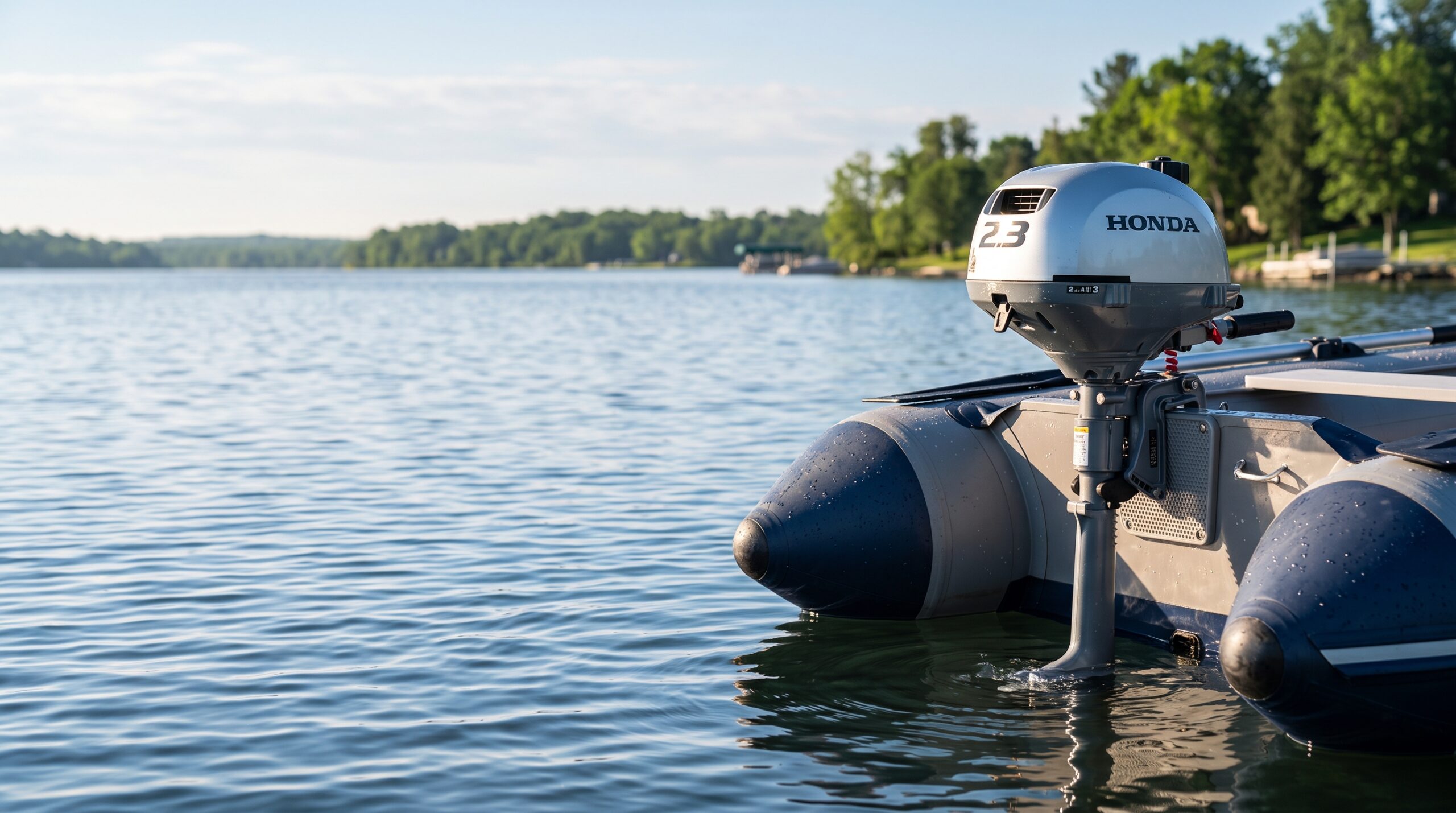
Choosing the right outboard motor is an important decision for anyone who owns a small boat. A suitable engine can make boating more convenient, improve maneuverability, and help you travel across calm waterways with greater confidence. For boat owners who value portability, simple operation, and dependable engineering, a small Honda outboard engine is worth considering. The Honda 2 HP outboard engine is a popular search term among people looking for a compact motor for recreational boating, fishing, and small watercraft.
One important detail should be understood before purchasing. Honda’s widely marketed entry-level portable outboard is the Honda BF2.3, which produces 2.3 horsepower rather than exactly 2 horsepower. Specifications, availability, and model designations can vary by country and model year, so buyers should confirm the exact product with an authorized Honda Marine dealer. The BF2.3 is designed around a lightweight, single-cylinder, four-stroke engine intended for suitable small boats.
The main attraction of a small outboard motor is its convenience. Large marine engines can be powerful, but they are often unnecessary for lightweight boats used on sheltered lakes, calm rivers, and other appropriate waterways. A compact engine is easier to transport, store, and install, making it an appealing option for boaters who do not need high speeds or the ability to carry heavy loads.
In this guide, you will learn about the Honda 2 HP outboard engine, its main features, specifications, fuel consumption, maintenance requirements, advantages, limitations, and important buying considerations. Understanding these factors can help you determine whether a small Honda outboard is suitable for your boat and intended use.
What Is a Honda 2 HP Outboard Engine?
A Honda 2 HP outboard engine is a search term commonly used for a small motor designed to propel lightweight boats. An outboard engine combines the engine, drive system, and propeller into a compact unit that attaches to the boat’s transom. This arrangement allows the motor to provide propulsion and steering without requiring a permanently installed inboard engine.
Honda’s BF2.3 is particularly relevant to buyers researching this category. It is a compact four-stroke outboard with a single-cylinder engine and a displacement of approximately 57 cubic centimeters. Its lightweight construction makes it suitable for boaters who need portable propulsion rather than the power of a larger marine engine.
The engine operates by burning gasoline to produce mechanical power. That power turns the propeller, which pushes water backward and moves the boat forward. The operator controls the motor through its tiller handle, allowing the boat to change direction while moving through the water.
Small outboard motors are generally selected for convenience rather than speed. Their suitability depends on the boat’s dimensions, weight, hull design, passenger load, and operating environment. A motor that works well with a lightweight tender may be insufficient for a heavier fishing boat or a vessel carrying several passengers and equipment.
Before choosing a Honda outboard, check the boat manufacturer’s recommended horsepower range. The engine must be appropriate for the boat’s transom, weight capacity, and intended operating conditions. Selecting a motor based only on its low weight or purchase price can lead to disappointing performance and unnecessary safety risks.
Best Features of the Honda 2 HP Outboard Engine
Compact and Lightweight Design
Portability is one of the most attractive qualities of the Honda BF2.3. Honda’s published specifications for this model list a dry weight of approximately 13 kilograms for certain configurations, although the precise weight depends on shaft length and market specification. This relatively low weight makes the engine easier to transport than many larger outboard motors.
The compact design can be particularly useful for owners who remove their motor after each boating session. Instead of leaving the engine permanently attached to the boat, they can carry it to a suitable storage area and protect it from unnecessary exposure to weather or unauthorized handling.
An integrated carrying handle also helps make transportation more convenient. Proper lifting technique remains important, particularly when carrying the engine over uneven ground or handling it near a slippery boat ramp. Owners should follow the manufacturer’s instructions for lifting, carrying, and positioning the motor.
Lightweight construction is valuable for inflatable boats and small tenders because additional engine weight can affect balance and handling. However, the engine’s weight is only one part of the decision. The boat must still have an appropriate transom, sufficient stability, and a safe carrying capacity.
Four-Stroke Engine Technology
The Honda BF2.3 uses a four-stroke engine design. Unlike conventional premixed-fuel two-stroke engines, a four-stroke engine of this type uses separate engine oil for lubrication and gasoline for combustion. This eliminates the need to mix lubricating oil into the gasoline in the manner required by many traditional two-stroke motors.
Separate lubrication can simplify fuel preparation for owners who prefer to purchase and store ordinary gasoline. Nevertheless, the engine still requires the correct oil, regular maintenance, and proper checks before operation. Owners should never assume that a four-stroke engine can run without checking its lubrication system.
Four-stroke technology is also associated with controlled combustion and can provide favorable fuel efficiency and emissions characteristics in suitable operating conditions. Actual fuel consumption depends on engine load, throttle position, water conditions, boat design, and maintenance.
For buyers who value straightforward ownership, this engine design offers a practical combination of small size and conventional gasoline-powered operation. The exact benefits should be assessed against the purchase price, service requirements, and the needs of the boat.
Easy Starting and Operation
The Honda BF2.3 uses a recoil starting system. The operator starts the engine by pulling a starter cord according to the instructions in the owner’s manual. A recoil starter avoids the need for an electric starting battery, helping keep the overall package relatively simple and portable.
Correct starting procedures are essential. The operator should check the fuel supply, engine oil, control positions, and other required safety items before attempting to start the motor. The engine must be secured correctly to the boat or placed in an approved test arrangement before it is operated.
Starting performance can be influenced by fuel quality, storage conditions, temperature, maintenance, and the condition of the ignition and fuel systems. If the engine becomes difficult to start, repeatedly pulling the starter cord without checking the cause may not solve the problem.
New owners should read the official operating instructions and become familiar with the controls before entering the water. Learning the starting and stopping procedures on a suitable, calm training area can make regular operation more comfortable and predictable.
Tiller Handle and Steering Control
The tiller handle allows the operator to control the engine directly. This arrangement is common on small outboard motors because it avoids the complexity of remote steering equipment and makes the motor relatively easy to operate.
Honda’s BF2.3 includes a twist-grip throttle for adjusting engine speed. The tiller and steering arrangement are designed to help the operator maneuver a suitable small boat at low speeds. Honda also specifies 360-degree pivot steering for the model, with the exact maneuvering procedure explained in its operating documentation.
Simple controls are especially useful when moving around confined spaces, approaching a landing area, or repositioning a small boat. However, an operator should always remain aware of nearby boats, people, underwater obstacles, wind, and current.
The engine’s small size does not remove the need for boating skills. Steering response changes with boat design, loading, speed, and water conditions. Owners should become familiar with their particular boat and motor combination before relying on it for unfamiliar journeys.
Centrifugal Clutch System
A notable feature of the Honda BF2.3 is its centrifugal clutch. This mechanism allows the engine to idle without continuously driving the propeller in the same way as a permanently engaged drive system. As engine speed increases, the clutch engages to transmit power to the propeller.
This design can make low-speed operation more convenient because the operator does not have to manage a conventional forward-neutral-reverse gear arrangement. It also helps distinguish this particular small motor from some larger outboards that use a different transmission layout.
The clutch does not replace careful throttle control. The operator must understand how the propeller engages, how the boat responds to acceleration, and how to stop the engine safely. Hands, feet, clothing, ropes, and other objects must be kept clear of the propeller whenever the engine is running.
Air-Cooled Engine Design
The Honda BF2.3 uses forced-air cooling. This is an important design distinction because many larger outboard motors use water-cooling systems with water pumps and associated passages.
An air-cooled design avoids certain water-pump and cooling-water intake concerns associated with water-cooled outboards. It can also simplify some aspects of routine ownership. However, the engine still requires correct operation, unobstructed cooling airflow, and regular inspection.
Air-cooled does not mean maintenance-free. Owners must follow the prescribed service schedule and keep the engine clean. Operating the motor outside the manufacturer’s permitted conditions can cause overheating or other damage.
Because cooling systems differ across outboard models, it is important to consult the manual for the exact engine rather than applying service instructions intended for a different Honda motor.
Honda 2 HP Outboard Engine Specifications
Understanding technical specifications helps buyers determine whether an engine is compatible with their boat. Specifications can differ between versions, so the following details refer to the Honda BF2.3 configuration described in Honda’s published product information.
The BF2.3 has a rated output of 2.3 horsepower, equivalent to approximately 1.7 kilowatts. It uses a single-cylinder, four-stroke, overhead-valve engine with a displacement of approximately 57.2 cubic centimeters. These characteristics reflect its purpose as a compact portable motor rather than a high-output engine for large boats.
Honda lists a full-throttle operating range of approximately 5,000 to 6,000 revolutions per minute for the referenced configuration. This range should be interpreted according to the official specifications and operating instructions for the specific model. Owners should not attempt to exceed recommended engine speeds or change propeller specifications without suitable technical guidance.
The engine uses a recoil starter and a transistorized ignition system. Its published fuel specification for the referenced North American version is unleaded gasoline with an octane rating of 86 or higher. Fuel grades and labeling differ between countries, so buyers should follow the requirements in the manual supplied for their market.
The integrated fuel tank has a capacity of approximately 1.1 liters in the referenced specification. Honda states that the engine can operate for around 60 minutes at wide-open throttle on a full tank under its stated conditions. This is a manufacturer-published reference, not a guarantee of operating time in every situation.
The motor is available in different shaft configurations. Choosing the correct shaft length is important because the propeller must sit at the appropriate depth in the water when the engine is installed. The dry weight is approximately 13 kilograms for certain versions, with other shaft configurations weighing more.
Other relevant specifications include the propeller design, trim adjustment, steering range, mounting arrangement, and lubrication requirements. Before purchasing, compare the official specification sheet with the dimensions and recommendations provided by the boat manufacturer.
Honda 2 HP Outboard Engine Price
The price of a Honda 2 HP outboard engine depends on the exact model, country, dealer, import costs, taxes, availability, and warranty conditions. Since Honda’s relevant small portable model is commonly sold as the BF2.3, buyers should compare listings for that model rather than assuming every advertisement using the term 2 HP refers to an identical product.
New engines generally cost more initially but may include manufacturer-backed warranty coverage and dealer support. A new purchase can also make it easier to confirm the engine’s history and obtain the correct documentation. The value of those benefits depends on the local dealer network and the terms of the warranty.
Used engines may have a lower purchase price, but their condition requires careful evaluation. Poor storage, contaminated fuel, corrosion, neglected lubrication, or previous overheating can affect reliability. A low advertised price may not represent good value if the motor needs substantial repairs.
Buyers should request the full model number, serial number, proof of purchase where available, service records, and information about the warranty. They should also ask whether the quoted price includes the standard propeller, required mounting components, owner’s manual, and other included equipment.
In Bangladesh and other markets where small imported marine engines may be less widely stocked, availability and after-sales support can influence the total cost. Import duties, transportation, exchange rates, and dealer margins may affect the final selling price. For that reason, a price quoted in another country should not be treated as the local market price.
The most reliable approach is to obtain a current written quotation from an authorized Honda Marine dealer or a reputable supplier. Compare the final price, warranty coverage, service access, and availability of replacement parts before deciding which engine offers the best overall value.
New vs. Used Honda Outboard Engines
A new Honda outboard can be an attractive choice for buyers who prioritize a known ownership history and clear warranty terms. Purchasing through an authorized dealer can also help establish that the engine is a genuine model intended for the relevant market.
A used engine may suit buyers with a limited budget, provided its condition can be verified. A careful inspection should include the external housing, mounting clamps, tiller handle, starter cord, propeller, fuel system, and signs of impact or corrosion. The engine should also be inspected by a qualified marine technician when its mechanical history is uncertain.
Ask about the engine’s age, operating hours if known, service history, storage conditions, and any previous repairs. Missing documentation does not automatically prove that an engine is defective, but it increases the uncertainty involved in the purchase.
A proper mechanical assessment should follow the manufacturer’s guidance. Depending on the engine’s condition, a technician may check compression, ignition, fuel delivery, lubrication, and operation under appropriate test conditions. Buyers should not run an outboard in an unsafe dry setup or allow the propeller to endanger nearby people.
Before paying, confirm that the engine’s identification details match the seller’s documents and that the mounting arrangement suits the boat. A used engine is most appealing when its price reflects its condition and the buyer can obtain appropriate maintenance support.
What Boats Can Use a Honda 2 HP Outboard Engine?
A small portable outboard is generally intended for lightweight watercraft that require modest propulsion. The Honda BF2.3 may be suitable for certain small inflatable boats, dinghies, tenders, and other compatible vessels, provided the boat manufacturer permits that horsepower and the transom can support the engine securely.
Boat weight is a major consideration. A lightly loaded boat may respond differently from the same vessel carrying several passengers, fishing equipment, supplies, and other cargo. As total weight increases, acceleration and speed may decrease, and maneuverability can change.
Hull design also affects performance. Inflatable hulls, flat-bottom boats, and other small craft respond differently to engine power and water conditions. There is no single performance expectation that applies to every boat fitted with a 2.3 HP motor.
The engine should not be selected for a boat that requires more power than it can safely provide. A small motor may be unable to maintain useful progress against a strong current, heavy wind, or challenging waves. The possibility of being unable to return safely under changing conditions must be considered before departure.
Always follow the boat manufacturer’s horsepower rating, maximum loading capacity, transom requirements, and safety recommendations. If the boat requires a higher minimum or recommended horsepower, choosing an undersized engine simply to save money may compromise practical performance.
Honda 2 HP Outboard Engine Fuel Consumption
Fuel consumption is an important consideration for anyone operating a small gasoline outboard. The Honda BF2.3 has an integrated fuel tank of approximately 1.1 liters in the referenced specification, allowing the engine to carry its fuel with the motor rather than requiring a separate large tank.
Honda’s published information indicates around 60 minutes of operation at wide-open throttle on a full tank under the stated conditions. Actual running time can differ because the engine may operate at varying throttle settings and loads. Boat design, water conditions, maintenance, and engine condition can also affect fuel use.
Wide-open-throttle operation is not necessary for every boating activity. Slower operation may reduce fuel use, but the amount of savings depends on the engine’s operating characteristics and the conditions on the water. Owners should avoid assuming that fuel consumption changes in a perfectly proportional way with throttle position.
Planning a trip requires more than estimating how long a tank might last. The operator should account for the planned route, the possibility of delays, changing wind and current, and the need to return safely. A small built-in tank may be sufficient for short outings but may not suit longer journeys without an appropriate, safely stored fuel plan.
Fuel should always be handled and stored according to the manufacturer’s instructions and local safety regulations. Keep gasoline away from ignition sources, avoid spills, and inspect the fuel system for leaks before operating the engine.
How to Maintain a Honda 2 HP Outboard Engine
Check Engine Oil Regularly
Correct lubrication is essential to the life of a four-stroke engine. The Honda BF2.3 uses an engine lubrication system that must be maintained according to the manufacturer’s specifications. Check the oil level using the exact procedure described in the owner’s manual, with the engine positioned as instructed.
Use only the recommended oil type and quantity. Overfilling or running the engine with insufficient oil can cause damage. Oil should be changed at the specified service intervals, taking account of both operating time and storage conditions.
If the oil appears contaminated or the engine develops unusual noises, leaks, or warning signs, stop operating it and arrange an appropriate inspection. Do not assume that a small engine can tolerate neglected maintenance because it produces relatively little power.
Inspect the Propeller
The propeller converts engine power into thrust, so its condition affects performance and safety. Inspect it for cracks, bends, impact damage, and fishing line or debris that could interfere with operation. A damaged propeller should be assessed and replaced as necessary using a compatible component.
Always stop the engine and follow the manufacturer’s safety procedure before inspecting or working near the propeller. The ignition must be secured against accidental starting, and the engine should never be handled in a way that places fingers near moving parts.
The propeller must match the engine’s requirements. Installing an unsuitable propeller can affect engine speed, performance, and mechanical reliability. Consult a qualified dealer before changing the standard setup.
Keep the Fuel System Clean
Gasoline quality and storage practices influence starting and reliability. Use fuel that meets the requirements specified for the exact engine and market. Contaminated fuel, water intrusion, and fuel left in the system for unsuitable periods can contribute to starting problems and poor operation.
Check the fuel tank, cap, fuel passages, and surrounding components for dirt, deterioration, or leaks. Any fuel leak should be addressed before the engine is started. Avoid performing repairs in areas where gasoline vapors could accumulate near flames, sparks, or other ignition sources.
If the motor will be stored for an extended period, follow Honda’s official storage procedure. The correct steps depend on the model and the expected storage conditions. Do not rely on generic instructions that may not apply to the specific engine.
Clean and Inspect the Engine After Use
After boating, remove surface dirt and inspect the housing, mounting hardware, tiller, and propeller area. Keep cooling-air openings clear and ensure that the engine can receive the airflow required by its design.
Saltwater use deserves particular attention because salt deposits can contribute to corrosion. Follow the cleaning and freshwater-rinsing instructions provided for the model, taking care not to direct water into areas that should remain dry. The BF2.3’s air-cooled design means owners should not automatically apply flushing procedures intended for water-cooled outboards.
Check for loose hardware, damage, and unusual signs of wear. Regular inspections help identify developing problems before they interrupt a trip or cause more expensive repairs.
Store the Engine Properly
Proper storage protects the motor when it is not in use. Follow the manufacturer’s instructions for fuel management, engine positioning, and transportation. Certain engines must be stored in specific orientations to prevent oil or fuel from entering inappropriate areas.
Keep the engine in a dry, secure, and well-ventilated location away from children and ignition sources. Protect it from unnecessary moisture, impact, and prolonged exposure to harsh weather.
If the engine will remain unused for an extended period, consult the official manual or a qualified service provider about preparation and periodic inspection. Appropriate storage can help preserve performance and reduce avoidable maintenance problems.
Advantages of the Honda 2 HP Outboard Engine
One of the main advantages of the Honda BF2.3 is its portability. Its relatively low weight makes it practical for many owners who need to transport the motor between storage and the boat. The integrated carrying handle and compact design support this purpose.
The four-stroke engine also eliminates the need for premixing gasoline and lubricating oil in the manner required by many traditional two-stroke outboards. This can simplify fuel preparation, although routine engine oil checks and servicing remain necessary.
Its recoil starter avoids dependence on a starting battery, and its tiller-operated controls keep the operating arrangement relatively straightforward. The centrifugal clutch and steering system provide features intended to support maneuverability on compatible small boats.
The air-cooled design removes certain water-pump-related maintenance concerns. However, it does not eliminate the need for regular inspections or correct operating practices.
Another advantage is the engine’s suitability for owners who do not need the speed or thrust of a larger motor. For the right lightweight vessel and operating environment, a compact outboard can provide practical propulsion without adding unnecessary engine size or complexity.
Disadvantages to Consider Before Buying
The most obvious limitation is power. An engine producing approximately 2.3 horsepower cannot provide the same thrust or performance as a larger outboard. Its suitability decreases as boat size, passenger load, cargo, and environmental demands increase.
The small integrated fuel tank can also limit operating range. Although it can be convenient for short trips, users planning longer outings must consider fuel requirements and the safe transportation of any additional fuel permitted by the manufacturer’s guidance and local regulations.
A compact outboard may be poorly suited to strong currents, substantial wind, rough water, or situations requiring rapid maneuvering. A boat that moves comfortably in sheltered conditions may become difficult to control when the weather or current changes.
The lack of a conventional forward-neutral-reverse gear selector may also require an adjustment in operating technique for people familiar with larger outboards. Operators must understand the clutch, throttle, and steering arrangements before using the engine.
Finally, the price of a genuine Honda engine may be higher than some alternative small motors. Buyers should weigh the purchase price against build quality, local parts availability, dealer support, warranty coverage, and expected use rather than comparing horsepower alone.
Honda 2 HP Outboard Engine vs. Other Small Outboard Motors
When comparing the Honda BF2.3 with other small outboard motors, buyers should consider engine design, weight, starting method, fuel capacity, service requirements, and the boat’s intended use. Horsepower is important, but it does not describe every aspect of a motor’s performance.
Four-stroke gasoline outboards generally use a separate engine lubrication system, while many conventional two-stroke models require gasoline and oil to be mixed according to specific instructions. Differences in emissions, noise, weight, maintenance, and performance depend on the individual engines and their technology.
Electric outboards offer a different ownership experience. They may provide quiet operation and avoid gasoline storage, but their usefulness depends on battery capacity, charging access, thrust, and the total weight of the system. Battery-powered alternatives should be evaluated as complete propulsion systems rather than compared solely by advertised power figures.
Price is another important factor. A less expensive motor may be attractive, but the availability of service centers, spare parts, and technical support can influence the long-term cost of ownership. These considerations are especially important in markets where particular imported models are difficult to service.
The Honda BF2.3 may be a strong candidate for buyers who prioritize a portable four-stroke gasoline motor with straightforward controls. Nevertheless, the best choice depends on the boat, the water conditions, the owner’s budget, and the availability of local support.
Where to Buy a Honda 2 HP Outboard Engine
Buyers should begin with an authorized Honda Marine dealer or a reputable marine equipment supplier. An authorized dealer can help confirm the correct model, identify compatible shaft configurations, explain the warranty, and advise on service requirements.
Before ordering, verify that the product is a Honda BF2.3 or another clearly identified model. Listings that use broad descriptions such as Honda 2 HP outboard engine may omit important details about horsepower, model year, shaft length, or regional specifications.
Request a written quotation that clearly states the product’s model number, condition, included accessories, price, taxes, delivery charges, and warranty terms. For an imported engine, ask who will provide warranty support and whether genuine spare parts can be obtained locally.
Buyers should also check the seller’s reputation and inspect the engine’s identification details. Be cautious about unusually low prices, incomplete paperwork, unclear product photographs, and sellers who cannot explain the engine’s service history or warranty status.
After purchase, keep the invoice, serial number, warranty documentation, and owner’s manual in a safe place. These records can help with future servicing, replacement parts, and warranty claims.
Is the Honda 2 HP Outboard Engine Worth Buying?
The Honda BF2.3 may be worth considering if you need a compact motor for a compatible lightweight boat and prioritize portability, simple controls, and four-stroke operation. Its design is intended for modest propulsion rather than high speed or heavy-duty boating.
For short recreational outings and appropriate sheltered-water use, a small motor can be convenient because it is easier to transport and store than many larger alternatives. Its value depends on whether its limited power meets the real requirements of the boat and its passengers.
Buyers should be realistic about operating conditions. A motor that performs adequately in calm water may struggle when faced with wind, current, additional weight, or challenging waves. Choosing sufficient power and following the boat manufacturer’s recommendations are essential for safe operation.
The purchase decision should also include the availability of authorized servicing, the cost of replacement parts, and the warranty offered in the buyer’s country. A genuine engine with appropriate support may provide better long-term value than a cheaper product with uncertain service access.
Before purchasing, confirm the exact horsepower, shaft length, dry weight, fuel requirements, and compatibility with the intended boat. When these details align with your needs, the Honda BF2.3 can be a practical option in the small portable outboard category.
FAQ
How much horsepower does the Honda 2 HP outboard engine produce?
Honda’s commonly marketed small portable outboard in this category is the BF2.3, which produces 2.3 horsepower. It is important to check the exact model designation because an advertisement using the phrase Honda 2 HP outboard engine may not identify the product accurately. Confirm the rated output using the official specifications for the engine being sold.
Is the Honda BF2.3 suitable for small boats?
The BF2.3 may be suitable for compatible lightweight boats, including certain inflatable boats, dinghies, and tenders. Suitability depends on the boat manufacturer’s recommended horsepower, transom design, total weight, and operating environment. Always check the boat’s specifications before choosing an engine.
How much fuel does a Honda BF2.3 use?
Fuel consumption varies with throttle position, boat load, hull design, maintenance, and water conditions. Honda’s published information for the referenced BF2.3 configuration indicates approximately 60 minutes of operation at wide-open throttle on its integrated 1.1-liter tank under the stated conditions. Actual operating time may be shorter or longer.
Does the Honda 2 HP outboard engine require fuel mixing?
The Honda BF2.3 is a four-stroke engine, so it does not require gasoline to be premixed with lubricating oil in the manner used by many conventional two-stroke outboards. The engine still needs the correct crankcase oil and regular maintenance. Always follow the instructions for the exact model.
Is the Honda BF2.3 easy to carry?
The BF2.3 is designed as a lightweight portable outboard and includes a carrying handle. Its published dry weight is approximately 13 kilograms for certain configurations. Actual weight varies with the shaft version, so buyers should confirm the precise specification before purchasing.
How long can a Honda 2 HP outboard engine last?
Service life depends on maintenance, operating conditions, fuel quality, storage, and the way the engine is used. Regular servicing and correct storage can help preserve reliability, but no fixed lifespan can be guaranteed. Following the owner’s manual and arranging professional inspections when needed are important for long-term ownership.
Can a Honda BF2.3 be used in saltwater?
Saltwater suitability and operating precautions should be confirmed in the manufacturer’s documentation for the exact model. Saltwater can increase corrosion risk, so careful cleaning, inspection, and storage are particularly important after use. Owners should follow Honda’s prescribed maintenance procedures.
Does the Honda BF2.3 have electric starting?
The referenced Honda BF2.3 configuration uses a recoil starter rather than an electric starter. Buyers should confirm the starting system of the precise model being offered and should not assume that features from a larger Honda outboard also apply to this portable engine.
Is a Honda 2 HP outboard engine suitable for strong currents?
A motor in this power category has limited thrust and may be unsuitable for strong currents, heavy winds, or challenging water conditions. The engine must be selected for the boat and the environment in which it will operate. Operators should avoid journeys that exceed the motor’s practical capability or compromise safe return.
What should I check before buying a used Honda outboard?
Check the model and serial number, service history, external condition, mounting clamps, propeller, fuel system, starter, and evidence of corrosion or damage. A qualified marine technician can assess the engine’s mechanical condition. Confirm the warranty status and the availability of replacement parts before completing the purchase.
Conclusion
The Honda 2 HP outboard engine is a useful search term for people exploring compact marine propulsion, but buyers should understand that Honda’s relevant portable model is commonly identified as the BF2.3. This four-stroke outboard produces 2.3 horsepower and is designed for suitable small boats where portability and straightforward operation are important.
Its lightweight construction, recoil starting system, tiller controls, centrifugal clutch, and air-cooled engine design make it an interesting option for boat owners who need modest propulsion. At the same time, its limited horsepower and small integrated fuel tank mean that it is not suitable for every boat or every water condition.
Before purchasing, check the boat’s recommended horsepower, shaft requirements, maximum loading capacity, and intended operating environment. Compare current local prices, verify the model’s specifications, and make sure genuine parts and appropriate service support are available.
With the right boat, realistic expectations, and regular maintenance, a small Honda outboard can be a practical choice for appropriate recreational boating. Careful research before buying will help you decide whether the Honda BF2.3 meets your needs and offers good value for your budget.













One thought on “Honda 2 HP Outboard Engine: Best Features & Buying Guide”