Our Blogs
60 HP Outboard Engine: Price, Features & Buying Guide


A 60 hp outboard engine is a popular choice for boat owners who need a balance of power, fuel efficiency, and reliable performance. It offers enough horsepower for many recreational boats, fishing boats, and small commercial vessels, depending on the boat’s design and weight. Compared with smaller outboard motors, a 60-horsepower engine can provide more power for carrying passengers, moving equipment, and operating in different water conditions. However, the right engine depends on more than horsepower alone. Buyers should also consider engine weight, fuel consumption, steering options, maintenance requirements, and the manufacturer’s specifications.
Choosing a suitable outboard motor can make boating more comfortable and dependable. A well-matched engine can provide smooth acceleration, consistent performance, and reasonable operating costs. An engine that is too powerful or too heavy for a boat can create handling and safety problems, while an undersized motor may struggle to deliver the required performance. Understanding the main features of a 60 hp outboard engine helps boat owners make an informed purchasing decision.
This guide explains how 60-horsepower outboard motors work, what features to compare, how prices vary, which manufacturers offer engines in this power range, and how to maintain a motor over time. It also covers fuel efficiency, boat compatibility, common engine problems, and the factors that determine whether a 60 hp outboard engine is the right choice.
What Is a 60 HP Outboard Engine?
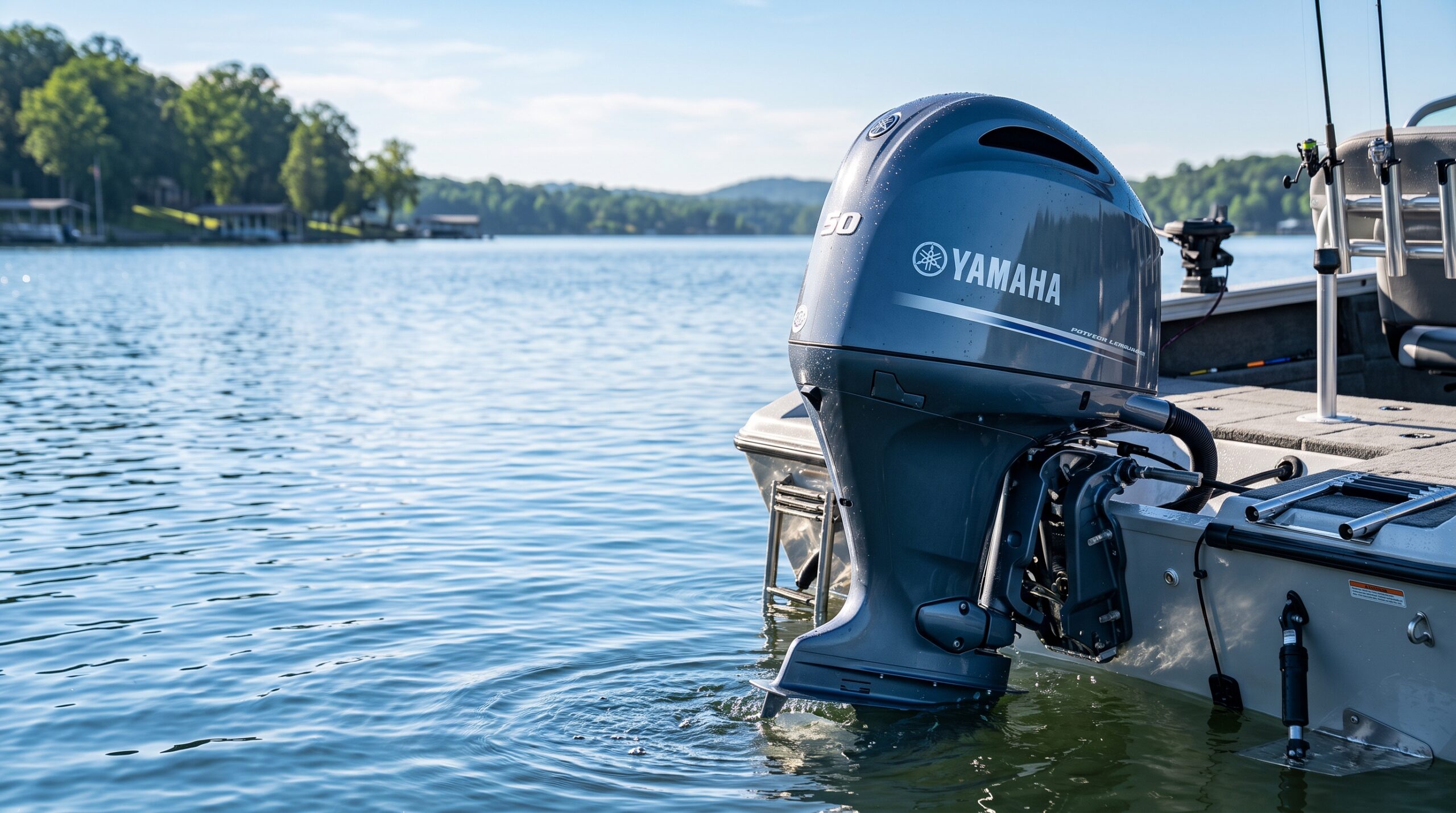
A 60 hp outboard engine is a marine propulsion system rated at 60 horsepower. It is mounted on the outside of a boat’s transom, which is the rear section of the hull. The engine combines the powerhead, transmission components, driveshaft, lower unit, and propeller into a single assembly. This arrangement allows the motor to propel the boat through the water while making steering and servicing relatively convenient.
The term horsepower describes the engine’s power output. A 60-horsepower rating places the motor in the middle of the outboard engine range, between smaller motors designed for lightweight boats and larger engines intended for heavier or faster vessels. Actual performance depends on the boat’s hull design, total load, propeller selection, engine condition, and water conditions.
Outboard engines are available in different configurations. Modern 60 hp models commonly use four-stroke technology, although older two-stroke engines are also available in the used market. Some motors feature electric starting, electronic fuel injection, remote controls, and power trim and tilt. Other configurations may offer simpler controls or different steering arrangements.
A 60 hp outboard engine can be suitable for many fishing boats, aluminum boats, recreational runabouts, and certain utility vessels. Nevertheless, horsepower alone cannot determine whether a motor is appropriate for a particular boat. Buyers must check the boat manufacturer’s maximum horsepower rating, recommended engine weight, transom specifications, and other installation requirements before selecting an engine.
Understanding 60 Horsepower in an Outboard Motor
Horsepower measures an engine’s ability to perform work over time. In boating, available power helps determine how effectively a motor can accelerate a vessel, maintain speed, and move a load through the water. A 60 hp outboard engine provides a specific power rating, but this rating does not guarantee a particular top speed or carrying capacity.
A boat’s speed depends on several connected factors. Hull shape affects how the vessel moves through the water, while total weight influences acceleration and resistance. Propeller diameter, pitch, and design also affect how engine power is converted into thrust. Wind, waves, current, and the distribution of passengers or equipment can change the boat’s performance.
The engine must operate within its recommended wide-open-throttle RPM range. If the propeller is poorly matched to the boat, the engine may not reach the appropriate operating range under normal load. This can reduce performance or place unnecessary stress on engine components. Selecting the correct propeller is therefore an important part of setting up a 60 hp outboard engine.
How an Outboard Engine Powers a Boat
An outboard engine converts the energy of fuel into mechanical power, which ultimately turns the propeller. In a typical four-stroke gasoline engine, fuel and air enter the cylinders, combustion creates pressure, and moving pistons transfer energy through the crankshaft. The resulting rotation is transmitted through the driveshaft and lower unit to the propeller.
As the propeller rotates, its blades accelerate water backward and produce forward thrust. The force generated by this movement pushes the boat through the water. The engine’s gear system allows the operator to select forward, neutral, and reverse, depending on the model and control arrangement.
Steering is usually achieved by turning the outboard motor or directing its thrust. Tiller-controlled engines use a handle attached to the motor, while remote-steering configurations use a steering wheel and associated control system. Some models also include power trim and tilt, which allows the operator to adjust the motor’s angle during operation and raise it when necessary.
The complete system must work together correctly. Proper fuel delivery, cooling, lubrication, ignition, propeller condition, and gear operation are all essential to dependable performance.
Common Uses for a 60 HP Outboard Engine
A 60 hp outboard engine can support a wide range of boating activities when matched to the vessel’s design. Fishing boats often benefit from the combination of usable power and manageable engine size. Recreational boat owners may also choose this power range for cruising, exploring waterways, and transporting passengers.
Certain small commercial vessels can use a 60-horsepower motor if their operating conditions and load requirements fall within the engine’s capabilities. However, commercial use may involve extended operating hours, heavier loads, and more demanding conditions. These factors can affect maintenance schedules and the expected operating costs.
The suitability of a 60 hp motor also depends on whether the boat is designed for planing or displacement operation. Hulls designed to rise onto the water at speed may perform differently from hulls intended to move steadily through the water. Buyers should evaluate the complete vessel rather than choosing an engine based only on its advertised horsepower.
Key Features of a 60 HP Outboard Engine
A modern 60 hp outboard engine may include several features designed to improve operation, convenience, efficiency, and reliability. The available equipment varies by manufacturer, model year, market, and configuration. Buyers should review the official specification sheet for the exact model they intend to purchase.
Important features include the engine’s combustion technology, fuel-delivery system, starting mechanism, steering arrangement, trim system, and monitoring equipment. Engine weight and mounting dimensions are also important because they influence installation and boat handling.
Some models are designed around straightforward mechanical systems, while others use electronic controls and additional monitoring functions. Neither approach is automatically best for every boat owner. The right choice depends on the intended use, service availability, budget, and level of equipment required.
Engine Design and Performance
Engine design affects how a 60 hp outboard motor delivers power and responds to operating demands. Cylinder configuration, displacement, fuel delivery, cooling design, and electronic management can all influence performance. Manufacturers develop their engines to meet particular requirements for power output, durability, and operating convenience.
Electronic fuel injection is common on many modern outboard engines. It controls the delivery of fuel more precisely than older carbureted systems under changing operating conditions. This can support easier starting, smoother running, and improved fuel management when the engine is properly maintained.
Engine weight is another important specification. Two engines with the same horsepower rating can differ in weight because of their construction, technology, and equipment. A heavier motor may affect the boat’s balance, transom loading, and overall handling. Before purchasing, buyers should confirm that the boat can safely support the engine’s weight and mounting requirements.
Performance should always be considered alongside durability and serviceability. An engine with advanced features may be attractive, but accessible replacement parts and qualified technicians can be equally important over the motor’s service life.
Four-Stroke vs. Two-Stroke Outboard Motors
Four-stroke and two-stroke engines use different combustion cycles and lubrication arrangements. Each design has characteristics that can influence fuel consumption, maintenance, noise, emissions, and overall ownership costs.
A four-stroke outboard engine completes its operating cycle through intake, compression, power, and exhaust strokes. It generally uses a separate engine lubrication system with oil stored in the crankcase. Many modern four-stroke models are valued for their relatively quiet operation, convenient fuel handling, and lower exhaust emissions compared with older conventional two-stroke designs.
A traditional two-stroke engine completes its power cycle in fewer piston strokes. Older carbureted two-stroke models may be lighter and mechanically simpler than some four-stroke alternatives, but they can consume more fuel and produce more exhaust emissions. Their lubrication systems also differ, often requiring oil to be mixed with fuel or supplied through a separate injection system, depending on the design.
Modern direct-injection two-stroke engines can differ considerably from older conventional models. Buyers should avoid assuming that every two-stroke engine has the same performance or emissions characteristics.
For many boat owners buying a new 60 hp outboard engine, a four-stroke model is a practical starting point for comparison. Used two-stroke engines may still be suitable when they are legal for the intended use, well maintained, and available at an appropriate price. The final decision should account for condition, operating costs, local emissions requirements, and access to servicing.
Electric Start and Manual Start Options
The starting system affects how conveniently an engine can be started. Electric-start models use a starter motor powered by a suitable battery. When the battery and electrical system are functioning correctly, this arrangement allows the operator to start the engine using a key or control switch.
Electric starting is useful for boats that use remote controls or require frequent engine starts. However, it introduces additional components that need attention, including the battery, cables, starter motor, charging system, and electrical connections.
Manual-start systems use a pull cord to turn the engine during starting. Depending on the particular engine, manual starting may be available as a primary system or as a backup. It can reduce reliance on electrical starting equipment, but it requires the operator to follow the manufacturer’s starting procedure.
Some 60 hp outboard configurations may provide both electric starting and a manual backup, while others may not. Buyers should confirm the available options rather than assuming that all engines in this horsepower class offer the same equipment.
Tiller Steering vs. Remote Steering
Tiller steering places the steering handle directly on the outboard motor. The operator controls direction and, depending on the engine, throttle through the tiller assembly. This configuration can be convenient for certain smaller boats and applications where direct control is preferred.
Remote steering uses a separate steering position, commonly with a steering wheel and control lever. It allows the operator to manage the boat from a console or helm rather than standing beside the engine. This arrangement can be more practical for boats with a central driving position, passenger seating, or a layout that requires the operator to remain forward.
The choice depends on the boat’s design and intended use. A tiller configuration may require less additional steering equipment, while remote steering can provide a more suitable operating position for some vessels. Conversion between configurations may involve significant parts and installation work.
Buyers should check whether the quoted price includes the required controls, steering hardware, cables, gauges, and installation components. These items can add substantially to the total cost of purchasing a 60 hp outboard engine.
How Much Does a 60 HP Outboard Engine Cost?
The price of a 60 hp outboard engine depends on its manufacturer, model year, technology, condition, and included equipment. New motors generally cost more than used ones, while engines with advanced controls or additional features may have higher purchase prices than basic configurations.
Prices also vary by country and seller. Import duties, taxes, exchange rates, transportation, dealer margins, and local demand can affect the final amount paid. As a result, a price advertised in one country may not reflect the amount required to purchase and install the same engine elsewhere.
Buyers should request a complete written quotation rather than comparing advertised engine prices alone. The total cost may include the motor, propeller, controls, steering system, battery, mounting hardware, installation, and applicable taxes. Warranty coverage and initial servicing arrangements can also affect the overall value.
New 60 HP Outboard Engine Prices
A new 60 hp outboard engine typically costs more than an older used motor because it comes with current manufacturing specifications and a manufacturer’s warranty, subject to the applicable terms. However, there is no single price that applies to every new engine in this horsepower range.
Brand positioning, electronic features, engine weight, steering configuration, and the dealer’s included services all influence the price. Regional availability is another important factor. In markets where a particular brand has a strong dealer network, buyers may find it easier to compare models and obtain service quotations.
When comparing new engines, buyers should request prices for equivalent configurations. A quotation for an engine-only package may not be directly comparable with a package that includes controls, propeller, gauges, and installation.
It is also important to confirm the model year and warranty start date. An engine that has remained in inventory may be new and unused, but its warranty conditions and included equipment should still be verified with the authorized dealer.
Used 60 HP Outboard Motor Prices
Used 60 hp outboard engines can offer a lower initial purchase cost, particularly for boat owners who have a limited budget. Nevertheless, the price of a used engine should reflect its actual condition rather than its age or appearance alone.
Service history, operating hours, corrosion, previous repairs, storage conditions, and the availability of replacement parts all influence value. An engine that has received regular maintenance may be a better purchase than a newer motor that has been neglected or operated under harsh conditions.
Before buying a used outboard motor, arrange for an inspection by a qualified marine technician. The inspection should cover compression or other manufacturer-approved engine health checks, the cooling system, fuel system, lower unit, propeller shaft, electrical components, and visible corrosion. A professional may also recommend a water test under appropriate conditions.
Buyers should confirm ownership documentation and check that the engine’s identification information is consistent with the seller’s records. If the motor needs substantial repairs, the total cost of bringing it into reliable service may reduce or eliminate the savings offered by the lower purchase price.
Factors That Affect Outboard Engine Prices
Brand reputation is one factor that influences outboard engine prices. Manufacturers with established dealer networks, widely available parts, and strong service support may command different prices from brands with more limited local coverage.
Technology also matters. Electronic fuel injection, digital controls, power trim and tilt, charging capability, and integrated monitoring systems can affect the initial purchase price. Some of these features can improve convenience, but buyers should consider whether they are necessary for the intended application.
Engine condition is especially important in the used market. Corrosion, overheating, neglected lubrication, poor storage, and previous improper repairs can lead to expensive problems. The presence of maintenance records provides useful information, although records should not replace an independent inspection.
Local taxes, import costs, transportation, and exchange-rate changes can further influence the final price. For imported engines, buyers should confirm the applicable duties and documentation requirements before making a purchase.
Additional Costs for Installation and Accessories
The engine’s advertised price is only one part of the ownership cost. Depending on the boat and the selected configuration, installation may require mounting hardware, control cables, steering equipment, fuel-system components, electrical wiring, and a suitable battery.
A compatible propeller is essential for efficient operation. The correct propeller depends on the boat, engine specifications, intended load, and operating requirements. Choosing the wrong propeller can reduce performance or prevent the engine from reaching its recommended operating RPM range.
Other possible costs include engine gauges, tachometers, fuel-water separation equipment, safety equipment, commissioning, and initial servicing. Some items may already be included in a dealer’s package, so buyers should check the quotation carefully.
Routine ownership costs should also be included in the budget. Fuel, engine oil, gear lubricant, filters, spark plugs where applicable, water-pump service parts, and periodic inspections can add up over time. Planning for these expenses helps prevent maintenance from being delayed because of unexpected costs.
Best Brands That Make 60 HP Outboard Engines
Several established marine manufacturers produce or have produced outboard engines in the 60 hp category. Availability depends on the country, model year, and current product range. Buyers should verify current specifications through the manufacturer or an authorized dealer because engine designs and regional offerings can change.
Brand comparisons should focus on more than horsepower. Important factors include engine weight, fuel system, controls, warranty, corrosion protection, service intervals, and parts availability. A motor that performs well on paper may be less practical if qualified servicing is difficult to obtain locally.
Yamaha 60 HP Outboard Motors
Yamaha is a well-known manufacturer of marine engines and outboard motors. Its outboard range has included 60 hp models with specifications that vary by model year and market. Buyers comparing a Yamaha 60 hp outboard engine should examine its weight, fuel-delivery system, starting arrangement, steering compatibility, and recommended maintenance schedule.
Service support is an important part of the ownership decision. Before purchasing, confirm whether authorized servicing and genuine replacement parts are available in the intended operating area. This can be particularly important for boat owners who rely on their engines regularly.
A direct comparison should use the exact model designation rather than the brand name alone. Two engines carrying the same horsepower rating may have different features and installation requirements.
Mercury 60 HP Outboard Motors
Mercury Marine manufactures outboard motors for a variety of recreational and commercial applications. Its 60 hp offerings can vary by generation, configuration, and market. Buyers should verify whether the model under consideration uses the expected fuel system, control arrangement, and starting equipment.
The installation package deserves close attention. Some quotations may include the outboard motor alone, while others may cover controls, propeller, gauges, and additional components. Comparing the complete packages makes it easier to understand the real cost difference between options.
Owners should also review the recommended service schedule and warranty conditions. Dealer support, replacement-part availability, and technician experience can be just as important as the engine’s initial price.
Suzuki 60 HP Outboard Motors
Suzuki is another established manufacturer of marine outboard engines. Depending on the market and model year, its 60 hp offerings may include four-stroke technology and different control configurations.
When evaluating a Suzuki 60 hp outboard engine, buyers should review the manufacturer’s published specifications for engine weight, fuel delivery, charging capacity, operating RPM range, and installation dimensions. These details help determine whether the motor is compatible with the boat and its intended use.
The availability of local servicing should also be confirmed. A suitable engine needs access to routine maintenance and appropriate diagnostic support throughout its working life.
Honda 60 HP Outboard Motors
Honda has a long history of manufacturing four-stroke outboard motors. Buyers considering a Honda engine in the 60 hp category should verify the exact model, current regional availability, and published technical specifications.
Four-stroke operation can be attractive to owners who prioritize convenient fuel handling and relatively quiet operation. Actual fuel consumption and noise levels depend on the specific engine, propeller, boat, and operating conditions, so published specifications and practical assessments should be considered together.
Before purchasing, review the recommended maintenance schedule, warranty terms, engine weight, and dealer coverage. The most suitable engine is one that fits the boat and can be maintained reliably in the owner’s operating area.
Tohatsu 60 HP Outboard Motors
Tohatsu manufactures outboard engines for different boating applications and markets. The availability and specifications of 60 hp models may differ by region and production year, so buyers should confirm the exact product offering before making a decision.
Important considerations include engine technology, steering options, control compatibility, propeller selection, and corrosion protection. A buyer should also check whether the local distributor can supply genuine parts and provide qualified service.
Comparing Tohatsu with other brands is most useful when the engines have similar specifications and equipment. Price, warranty, installation requirements, and long-term support should be evaluated together rather than treating horsepower as the only deciding factor.
Fuel Efficiency of a 60 HP Outboard Engine
Fuel efficiency is an important consideration because fuel can account for a significant portion of the total cost of operating a boat. A 60 hp outboard engine’s fuel consumption depends on engine design, throttle setting, load, propeller selection, hull condition, and water conditions.
The horsepower rating does not mean that the engine constantly consumes fuel at its maximum rate. Fuel use changes with operating conditions, and the amount consumed during low-speed cruising may differ substantially from consumption under heavy acceleration or sustained high-power operation.
Four-stroke engines with modern fuel-delivery systems can provide efficient operation when correctly maintained and matched to the boat. However, buyers should not assume that every engine with the same horsepower rating will use the same amount of fuel.
How Much Fuel Does a 60 HP Outboard Motor Use?
There is no single fuel-consumption figure that applies to every 60 hp outboard engine. Consumption depends on the engine model and the power demanded during operation. A boat moving at moderate cruising speed may use fuel differently from the same boat travelling at high throttle or carrying a heavier load.
Manufacturer fuel-consumption data can provide a useful starting point, especially when it includes engine speed and power output. However, actual results may vary because laboratory or controlled test conditions do not always match real-world boating.
Owners should also distinguish between fuel consumption per hour and fuel consumption per distance travelled. An engine that uses more fuel per hour may still travel farther per unit of fuel if the boat moves at a significantly higher speed. The most useful measure depends on the type of boating being performed.
For a realistic estimate, consider the boat’s expected operating speed, typical load, trip duration, and fuel capacity. Allowing a suitable reserve is essential because weather, current, and unexpected delays can increase fuel requirements.
Factors That Affect Fuel Consumption
Boat weight is a major influence on fuel use. Passengers, fishing equipment, supplies, and other cargo increase the load the engine must move. Excessive weight can affect acceleration and may prevent the boat from operating within its most efficient performance range.
Hull condition also matters. Marine growth, damage, or an unsuitable hull setup can increase resistance in the water. Keeping the hull clean and ensuring that the engine is mounted correctly can support more efficient operation.
Propeller selection influences how effectively engine power is converted into thrust. A propeller that is poorly matched to the boat may cause excessive engine RPM, sluggish acceleration, or operation outside the manufacturer’s recommended range. Propeller selection should be based on manufacturer guidance and appropriate testing.
Throttle use, weather, and maintenance can also change fuel consumption. Sustained high throttle generally demands more power than low-speed operation. Fouled spark plugs, restricted fuel filters, incorrect engine setup, or cooling problems can further affect performance and should be addressed according to the manufacturer’s service instructions.
Tips for Improving Fuel Efficiency
Maintaining a steady and suitable operating speed can help reduce unnecessary fuel use. Rapid acceleration and prolonged high-throttle operation can increase fuel demand, particularly when the boat is heavily loaded or operating in difficult water conditions.
Keeping the boat within its recommended loading limits also supports better performance. Distributing passengers and cargo correctly helps maintain balance and can improve handling. Removing unnecessary equipment reduces excess weight and may lower the power needed to move the vessel.
Regular maintenance is equally important. Follow the manufacturer’s schedule for oil changes, filters, spark plugs, fuel-system inspections, and other service requirements. Inspect the propeller for damage and confirm that the engine reaches its recommended operating RPM range under the appropriate load.
Fuel records can help owners understand real-world performance. Tracking the amount of fuel used, hours operated, and general operating conditions makes it easier to identify changes over time. A sudden increase in consumption may indicate a maintenance issue or a change in operating conditions that requires attention.
What Size Boat Can a 60 HP Outboard Engine Power?
A 60 hp outboard engine can power various boats, but there is no universal boat length that guarantees compatibility. Two boats of the same length can have different weights, hull shapes, transom designs, and maximum horsepower ratings. These differences affect how well a particular engine performs.
Some lightweight aluminum boats and recreational fishing boats may be designed for engines in this power range. Other boats may require less power, while heavier or more demanding vessels may need a different engine size. The boat manufacturer’s specifications should always guide the decision.
The intended use also matters. A boat used mainly for quiet cruising may have different power requirements from one carrying substantial equipment or operating in challenging conditions. Buyers should consider typical load, passenger capacity, expected cruising speed, and local water conditions.
Suitable Boat Types and Sizes
Certain aluminum fishing boats, small recreational runabouts, and utility boats may be compatible with a 60 hp outboard engine. Compatibility depends on the vessel’s approved horsepower range, transom strength, engine weight limit, and recommended setup.
Hull design influences how the boat responds to available power. A lightweight planing hull may behave differently from a heavier displacement hull. The same engine may provide satisfactory performance in one boat and insufficient performance in another.
Boat length alone should not be used to select an engine. A longer boat with a light construction and suitable hull may have different requirements from a shorter but heavier vessel. The correct decision comes from the boat’s technical specifications and intended operating conditions.
Before purchasing an engine, obtain the boat’s identification information and consult its manufacturer’s documentation. If the original specifications are unavailable, seek guidance from a qualified marine professional rather than estimating the safe horsepower rating.
Boat Weight and Passenger Capacity
Total operating weight includes the boat, engine, fuel, passengers, equipment, and other cargo. This combined load affects acceleration, stability, handling, and fuel consumption. As the load increases, the engine may need to produce more power to achieve the same performance.
Passenger and cargo distribution are also important. Concentrating too much weight in one area can affect the boat’s balance and handling. Follow the boat manufacturer’s loading guidance and keep all loads within the vessel’s rated capacity.
The engine’s own weight must be included in the compatibility assessment. Different 60 hp models may vary considerably in weight, and the transom must be capable of supporting the selected motor. An engine that exceeds the boat’s permitted weight can affect balance and structural safety even when its horsepower rating appears appropriate.
Why You Should Check the Boat’s Maximum Horsepower Rating
A boat’s maximum horsepower rating identifies an important limit set by the manufacturer or applicable regulatory requirements. Installing an engine above that rating can create serious handling and safety risks. It may also affect insurance, warranty coverage, registration, and legal compliance.
Buyers should check the capacity plate or official documentation before purchasing a 60 hp outboard engine. They should also confirm transom height, mounting specifications, steering compatibility, and the manufacturer’s guidance for engine weight.
An engine within the maximum horsepower limit is not automatically the correct choice. The boat may have a recommended engine range, a specific weight restriction, or other installation requirements. These details should be considered together.
When documentation is missing or unclear, consult the boat manufacturer, an authorized dealer, or a qualified marine technician. Never rely solely on visual estimates or assumptions based on the size of another boat.
How to Choose the Right 60 HP Outboard Engine
Choosing the right engine begins with understanding how the boat will be used. A motor for occasional recreational trips may have different priorities from one used frequently for fishing or commercial transportation. Buyers should identify their main needs before comparing specific brands and models.
The next step is to check technical compatibility. Confirm the permitted horsepower, engine weight, transom height, mounting arrangement, and steering requirements. The engine must be suitable for the boat before price and optional features become deciding factors.
After confirming compatibility, compare fuel systems, starting equipment, warranty coverage, service requirements, and local parts availability. A complete ownership assessment includes the initial purchase price and the expected cost of keeping the engine in reliable working condition.
Consider Your Boat Type and Intended Use
The boat’s design determines many of the engine requirements. A lightweight fishing boat may prioritize manageable weight and responsive control, while a recreational vessel with a console may require remote steering and integrated instruments.
Operating conditions should also influence the decision. Frequent use in saltwater places particular importance on corrosion protection and rinsing procedures. Regular commercial operation may require closer attention to service intervals and the availability of replacement parts.
Think about the usual number of passengers, typical cargo, expected travel distance, and normal water conditions. These factors help identify which engine characteristics matter most.
A 60 hp outboard engine should be selected because it fits the boat and its intended use, not simply because it is a common or appealing horsepower rating.
Compare Engine Weight and Performance
Engine weight affects how the motor sits on the transom and how the boat balances in the water. It can also influence transport, mounting, and servicing. Buyers should compare the manufacturer’s published weight for the exact engine configuration they intend to purchase.
Performance specifications should include the recommended operating RPM range, gear ratio, available propeller options, and control arrangements. Where available, manufacturer performance charts can help explain how the engine behaves on compatible boats under specified conditions.
Top speed should not be the only performance measure. Acceleration, low-speed control, cruising efficiency, and performance under normal load may be more important for many boat owners. Results will vary with hull design, weather, and loading.
The engine should be properly matched to the propeller and boat. A qualified installer can help confirm the appropriate setup and verify that the motor operates within its recommended parameters.
Check Warranty and Parts Availability
Warranty terms can differ by country, model, purchase channel, and intended use. Buyers should obtain the applicable warranty document and confirm what is covered, how long coverage lasts, and whether servicing must be performed by an authorized dealer.
It is also important to understand exclusions. Some warranties may have specific requirements relating to maintenance, commercial use, corrosion, or installation. Written confirmation is preferable to relying on general sales statements.
Parts availability affects how easily an engine can be maintained and repaired. Check whether routine service items and important replacement components are available locally. Also consider the availability of technicians who are familiar with the selected brand.
An engine with good local support can be a practical long-term choice, even if another model has a lower initial price. Reliable access to maintenance and repairs helps reduce avoidable downtime.
Evaluate New vs. Used Outboard Motors
A new engine generally offers current specifications and a new-product warranty under the applicable terms. It may also provide easier access to manufacturer documentation and approved accessories. However, the initial cost is usually higher than that of a comparable used engine.
A used motor may reduce the purchase cost, but its condition must be assessed carefully. Age alone does not reveal how well an engine has been maintained. Service records, inspection results, corrosion, cooling performance, and lower-unit condition provide more useful information.
Buyers should include likely repairs and immediate servicing in the cost calculation. A low-priced engine may require expensive work before it can be used reliably. Professional inspection and a proper water test can reduce uncertainty.
The decision should be based on the complete financial picture, including purchase price, repairs, maintenance, fuel use, warranty, and expected ownership period.
60 HP Outboard Engine Maintenance
Regular maintenance helps a 60 hp outboard engine operate safely and reliably. Marine engines work in a demanding environment where moisture, salt, vibration, temperature changes, and fuel quality can affect components. A consistent maintenance routine can help identify developing problems before they cause major damage.
Every engine has its own service requirements. Owners should follow the manufacturer’s maintenance schedule for the exact model rather than relying on a generic timetable. Maintenance intervals may depend on operating hours, calendar time, storage conditions, and the type of use.
A maintenance log is useful for recording service dates, operating hours, replacement parts, inspections, and repairs. It helps owners keep track of required work and provides useful information when the engine is sold or serviced by another technician.
Routine Engine Inspection
Before operating the boat, inspect the engine and its surroundings for visible damage, loose components, fuel leaks, and signs of corrosion. Check that the propeller is secure and that the controls and steering operate as intended.
Inspect fuel lines and connections according to the manufacturer’s guidance. Damaged hoses, loose connections, and deteriorated seals should be corrected before operation. Ensure that the battery and electrical connections are secure on models that use electric starting.
Cooling-water indicators and warning systems should be checked according to the operator’s manual. An engine that displays an overheating warning or fails to provide the expected cooling-water indication should not be operated until the cause is understood and addressed.
Regular inspection does not replace scheduled servicing. It is an additional step that helps owners identify obvious problems and determine when professional attention is needed.
Oil and Gear Lubricant Changes
Four-stroke outboard engines use engine oil to lubricate internal moving parts and help manage heat and wear. Oil should be checked and changed according to the manufacturer’s instructions, including the specified oil grade and service interval.
Using the correct lubricant is important. The wrong oil specification or an unsuitable quantity can affect engine protection. Owners should follow the manufacturer’s procedure for checking oil levels and identifying signs of contamination.
The lower unit also requires appropriate gear lubricant. During scheduled servicing, the lubricant should be checked for signs that may indicate water intrusion, abnormal wear, or other mechanical problems. Any unusual condition should be investigated by a qualified technician.
Traditional two-stroke engines may use a different lubrication arrangement. Owners should follow the exact manufacturer’s instructions for the relevant model rather than applying four-stroke maintenance procedures to every engine.
Cooling System and Propeller Maintenance
An outboard engine relies on a cooling system to maintain an appropriate operating temperature. Depending on the design, the system may include water passages, a water pump, an impeller, a thermostat, and related components.
Restricted water flow, damaged components, or debris can cause overheating. Follow the manufacturer’s instructions for flushing the engine after use, particularly after operating in saltwater or water containing sediment. Scheduled inspection and replacement of service components are also important.
The propeller should be checked for damage, corrosion, fishing line, and other material that could affect its operation. Damage can cause vibration, reduce efficiency, or place stress on drivetrain components. Work around the propeller should only be carried out with the engine switched off and secured according to the manufacturer’s safety instructions.
If the engine vibrates unusually, overheats, or loses power, stop using it when it is safe to do so and investigate the cause. Continuing to operate a damaged engine can make the problem worse.
Winterization and Long-Term Storage
Engines that will remain unused for extended periods require suitable storage preparation. The correct procedure depends on the engine model, climate, fuel system, and manufacturer’s recommendations.
Long-term storage may involve stabilizing or managing fuel, protecting internal components, inspecting the cooling system, and preparing the battery. Owners should use only approved products and procedures specified by the manufacturer.
In cold climates, proper preparation helps prevent damage from freezing water in engine passages. In humid or coastal environments, protection against corrosion and moisture becomes especially important. Storage should be arranged to keep the engine secure and protected from environmental damage.
Before returning an engine to service, carry out the required inspection and maintenance. If the motor has been stored improperly or has remained unused for a long period, a qualified technician should assess its condition before normal operation resumes.
Common Problems With a 60 HP Outboard Engine
A 60 hp outboard engine can develop problems because of fuel contamination, electrical faults, cooling-system issues, neglected maintenance, or normal component wear. Identifying the symptoms early can help prevent additional damage.
The same symptom can have several causes. For example, difficult starting may result from a weak battery, a fuel-delivery problem, an ignition fault, or an incorrect starting procedure. Replacing parts without diagnosing the cause can waste money and may not solve the problem.
Owners should use the manufacturer’s troubleshooting guidance and seek professional help when the cause is uncertain. Engine warning systems and diagnostic information should never be ignored.
Engine Starting Problems
Starting difficulties can affect both new and used outboard engines. Common causes include an insufficiently charged battery, poor electrical connections, contaminated fuel, a restricted fuel filter, or problems with the ignition system.
On electric-start models, the battery and starter circuit should be checked according to the manufacturer’s instructions. Fuel quality and the correct starting procedure should also be verified.
If the engine cranks but does not start, the cause may differ from a situation in which the starter does not turn the engine at all. Understanding the symptom helps a technician narrow down the possible causes.
Repeated starting attempts should be avoided if the engine is not responding normally. Consult the operator’s manual and arrange professional diagnosis when necessary.
Overheating and Cooling Issues
Overheating is a serious problem that can damage internal engine components. Possible causes include restricted cooling-water intake, a worn water-pump impeller, blocked passages, or a faulty thermostat, depending on the engine design.
If an overheating warning appears, follow the manufacturer’s emergency instructions and stop the engine when safe. Do not continue operating the motor in the hope that the warning will disappear.
The cooling system should be inspected before the engine returns to normal service. A qualified technician can determine whether the problem involves a simple obstruction or a component that requires replacement.
Regular flushing, proper storage, and scheduled cooling-system maintenance help reduce the risk of cooling problems.
Poor Fuel Efficiency
A sudden increase in fuel consumption can indicate a change in operating conditions or an engine-related problem. Excessive loading, rough water, unsuitable propeller selection, and sustained high throttle can all increase fuel demand.
Mechanical causes may include restricted filters, fuel-system faults, incorrect engine setup, or other maintenance issues. A damaged propeller or a fouled hull can also reduce efficiency.
Owners should compare fuel use under similar conditions before concluding that the engine has developed a fault. If consumption has increased significantly without an obvious explanation, arrange an inspection.
Keeping accurate fuel records can help identify changes that might otherwise go unnoticed.
Vibration and Loss of Power
Unusual vibration can result from a damaged propeller, debris around the propeller shaft, loose mounting hardware, or problems in the drivetrain. Engine misfiring and internal mechanical issues can also cause rough operation.
Loss of power may be linked to fuel delivery, ignition, overheating protection, incorrect propeller setup, or other mechanical faults. Warning lights and changes in engine sound should be taken seriously.
Stop operating the engine if vibration is severe, a warning system activates, or the motor behaves abnormally. A technician should inspect the propeller, mounting system, and engine before it is returned to service.
Regular servicing and prompt attention to unusual symptoms can help reduce the risk of more expensive repairs.
Is a 60 HP Outboard Engine Worth Buying?
A 60 hp outboard engine can be a practical investment for boat owners whose vessels are designed for this power range. It offers a useful level of power for many recreational and fishing applications without requiring the larger engine systems associated with higher horsepower categories.
However, value depends on the complete ownership experience. The purchase price is only one part of the decision. Fuel use, maintenance, warranty, engine weight, parts availability, and suitability for the boat all affect whether the motor represents a good long-term choice.
Buyers should compare the exact specifications of the engines under consideration and obtain a complete installation quotation. A well-matched motor with reliable local service support may offer better overall value than an engine chosen solely because it is inexpensive.
Main Advantages of a 60 HP Outboard Motor
One advantage of a 60 hp outboard motor is its versatility. Depending on the boat’s design, it can support fishing, recreational cruising, and certain utility applications. This makes the power category worth considering for owners who need more capability than a small portable motor can provide.
Many modern engines in this category use four-stroke technology and electronic fuel systems. These features can support smooth operation and convenient fuel management when the motor is correctly installed and maintained.
Outboard construction can also simplify some aspects of access and servicing because the propulsion system is mounted externally. The engine can often be tilted upward for certain maintenance and storage tasks, subject to the manufacturer’s instructions and the boat’s arrangement.
The main benefit is not that every 60 hp motor performs identically, but that the category provides several options for boats with compatible power and weight requirements.
Potential Disadvantages to Consider
A 60 hp outboard engine can be too powerful, too heavy, or too expensive for some boats. Compatibility must be confirmed before purchase, and installation may require additional steering, control, and electrical components.
Operating costs can also be higher than those of a smaller engine, depending on usage and fuel demand. Routine servicing, replacement parts, fuel, and repairs should be included in the budget.
Advanced features can increase the initial purchase price and may require specialized diagnostic equipment or trained technicians. If local service support is limited, maintenance and repairs could become less convenient.
Used engines introduce additional uncertainty because their condition and maintenance history may not be fully known. Independent inspection is especially important when purchasing a second-hand motor.
Who Should Choose a 60 HP Outboard Engine?
A 60 hp outboard engine may suit boat owners who have a compatible hull and need a moderate level of power for regular boating activities. It can be appropriate for certain fishing boats, recreational vessels, and utility boats within their approved specifications.
It may not be the right choice for every application. Lightweight boats designed for lower horsepower may not need this much power, while heavier vessels may require a different setup. The intended passenger load, cargo, operating environment, and expected performance should guide the decision.
Owners who value long-term reliability should prioritize correct installation, routine servicing, and access to qualified technicians. Choosing a reputable manufacturer is useful, but careful maintenance and proper engine matching remain essential.
Ultimately, a 60 hp outboard engine is worth considering when its technical specifications match the boat and its operating needs. A careful comparison of purchase price, fuel consumption, maintenance, warranty, and service support helps ensure a more informed decision.
FAQ
How Fast Can a 60 HP Outboard Engine Go?
The speed of a 60 hp outboard engine depends on the boat’s hull, weight, propeller, engine condition, and water conditions. Some compatible lightweight boats may reach planing speeds, while heavier boats may travel more slowly. There is no universal top-speed figure for every 60 hp installation.
How Much Does a 60 HP Outboard Engine Cost?
The cost varies by brand, model year, engine technology, configuration, and location. New engines generally cost more than used ones, and installation equipment can increase the total expense. Buyers should request a current quotation that clearly identifies what is included in the price.
Is a 60 HP Outboard Engine Fuel-Efficient?
A 60 hp outboard engine can provide reasonable fuel efficiency when it is correctly matched to the boat and maintained according to the manufacturer’s instructions. Actual consumption depends on engine design, throttle setting, load, propeller selection, and operating conditions. Comparing official fuel-consumption information is more useful than relying on horsepower alone.
How Long Does a 60 HP Outboard Motor Last?
Service life depends on maintenance, operating hours, storage, water conditions, and the quality of installation. An engine that receives proper servicing and is operated within its specifications may provide many years of use, but no fixed lifespan applies to every motor. Maintenance records and inspection results provide a better indication of condition than age alone.
Is a 60 HP Outboard Engine Suitable for a Fishing Boat?
A 60 hp outboard engine can be suitable for certain fishing boats if the boat’s approved horsepower rating, weight limits, and transom specifications permit it. The engine should also provide the required performance for the usual passenger load, fishing equipment, and operating conditions.
Which Brand Makes the Best 60 HP Outboard Engine?
There is no single best brand for every boat owner. Yamaha, Mercury, Suzuki, Honda, and Tohatsu are established marine-engine manufacturers, but the exact models available vary by market. Buyers should compare specifications, warranty terms, engine weight, fuel system, and local service support.
How Often Should a 60 HP Outboard Engine Be Serviced?
The required service interval depends on the exact engine model, operating hours, and manufacturer’s maintenance schedule. Owners should follow the operator’s manual and complete the required inspections and servicing on time. More demanding operating conditions may require additional attention.
Is a Four-Stroke 60 HP Outboard Engine Better Than a Two-Stroke Model?
The answer depends on the specific engines and intended use. Four-stroke models often offer convenient fuel handling and relatively quiet operation, while some two-stroke designs may have advantages in weight or mechanical simplicity. Buyers should compare fuel use, emissions requirements, maintenance, condition, and local parts availability.
Can a 60 HP Outboard Engine Be Used in Saltwater?
Many outboard engines are designed for use in saltwater, but suitable corrosion protection and proper maintenance are essential. Owners should follow the manufacturer’s rinsing, flushing, inspection, and storage instructions after saltwater operation. Local service support and the availability of appropriate corrosion-protection components should also be considered.
What Should I Check Before Buying a Used 60 HP Outboard Engine?
Check the engine’s service history, ownership documentation, visible corrosion, cooling system, fuel system, lower unit, propeller shaft, and electrical components. A qualified marine technician should perform an appropriate inspection and, where suitable, a water test. The total cost of any required repairs should be included in the purchase decision.
Conclusion
A 60 hp outboard engine can provide a useful combination of power, versatility, and manageable size for many compatible boats. Its suitability depends on the vessel’s design, weight, approved horsepower rating, intended use, and expected operating conditions. Understanding these factors helps buyers avoid choosing an engine that is unsuitable for their boat.
Before purchasing, compare available models from established manufacturers and review their official specifications. Consider fuel efficiency, engine weight, steering and starting options, warranty coverage, maintenance requirements, and local parts availability. For a used motor, an independent professional inspection is especially valuable.
The total ownership cost should include the engine, installation, controls, propeller, fuel, routine servicing, and potential repairs. A lower initial price does not always represent better value if the engine needs extensive maintenance or lacks reliable service support.
By carefully evaluating compatibility, performance, price, and long-term support, boat owners can make a more informed decision about whether a 60 hp outboard engine is the right investment for their boating needs.