Our Blogs
How Does an Outboard Boat Motor Work? A Simple Guide


An outboard boat motor is one of the most important parts of a powered boat. It provides the power needed to move the boat through the water, control its speed, and change direction. Outboard motors are widely used on fishing boats, recreational boats, small commercial vessels, and many other types of watercraft. They are popular because they combine the engine, transmission, propeller, and steering components into one compact unit mounted on the outside of the boat.
Understanding how an outboard boat motor works can help boat owners operate their engines safely, identify common problems, and maintain their equipment properly. Although an outboard motor may look complicated from the outside, its basic operating principle is straightforward. The engine creates mechanical power by burning fuel, the drive system transfers that power to the propeller, and the propeller pushes water backward to move the boat forward.
Different outboard motors use different technologies. Some have two-stroke engines, while others use four-stroke engines. Modern models may include electronic fuel injection, digital controls, advanced cooling systems, and electronic steering. Despite these differences, most traditional gasoline outboard motors rely on the same basic process of producing power and converting it into thrust.
This guide explains the main parts of an outboard boat motor, how its engine works, how fuel and cooling systems operate, how the propeller moves the boat, and how regular maintenance helps keep the motor reliable.
What Is an Outboard Boat Motor?
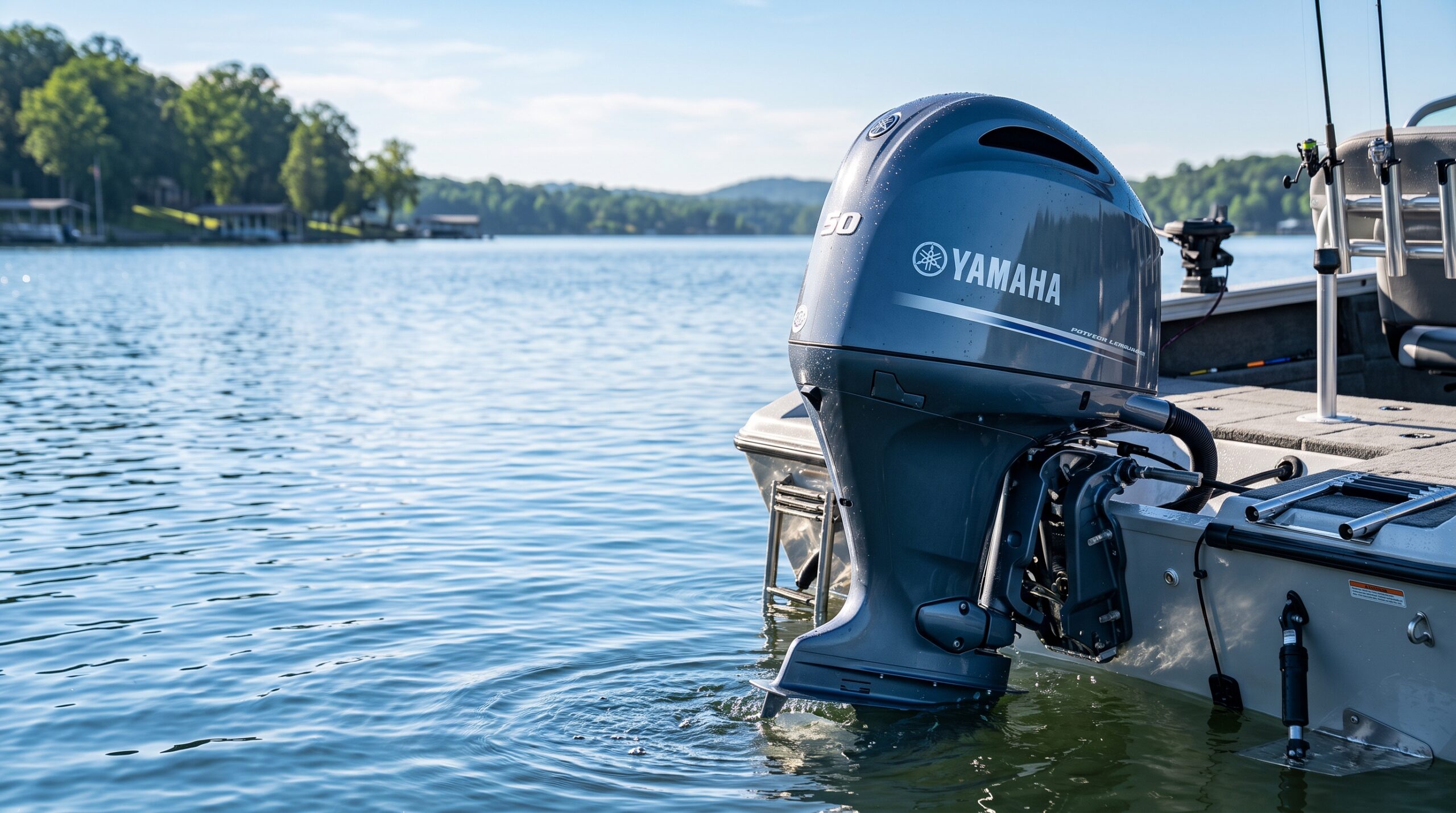
An outboard boat motor is a self-contained propulsion system attached to the transom, which is the rear structural section of a boat. Unlike an inboard engine, which is installed inside the hull, an outboard motor sits outside the boat. This design makes many maintenance tasks easier because important engine components remain accessible without entering a dedicated engine compartment.
A typical gasoline outboard motor includes an engine, fuel delivery system, ignition system, cooling system, exhaust system, transmission, drive shaft, gearcase, and propeller. These components work together to convert the chemical energy stored in gasoline into mechanical energy and then into movement through the water.
Outboard motors are available in many sizes and power ratings. Small models are designed for lightweight boats, while larger engines provide the power required by heavier vessels. The appropriate motor depends on the boat’s design, weight, intended use, and manufacturer specifications. Choosing a suitable engine is important because an undersized motor may not provide the required performance, while an oversized motor may exceed the boat’s rated capacity.
One major advantage of an outboard motor is that the entire propulsion unit can usually be tilted upward. This feature helps protect the lower unit when operating or storing a boat in shallow water. It can also reduce contact between the gearcase and underwater obstacles when the motor is raised appropriately.
Outboard motors are available with gasoline engines, electric propulsion systems, and other specialized technologies. This article focuses mainly on traditional gasoline-powered outboard motors because they demonstrate the main mechanical processes used in conventional marine propulsion.
How Does an Outboard Boat Motor Work?
To understand how does an outboard boat motor work, it is helpful to follow the flow of energy through the entire system. The process begins when fuel and air enter the engine. Inside the cylinders, the engine burns the fuel mixture and creates pressure that moves internal engine components. This movement turns the crankshaft, which transfers power through the drive shaft and gearcase to the propeller.
The propeller then accelerates water backward. According to the principle of action and reaction, this backward movement of water produces a forward force on the boat. The boat moves through the water as long as the propeller generates enough thrust to overcome the resistance created by the hull, water, and other operating conditions.
Several systems must work together for this process to continue. The fuel system supplies the engine with the correct amount of fuel. The ignition system starts combustion in gasoline engines that use spark ignition. The cooling system removes excess heat, while the lubrication system reduces friction between moving parts. The exhaust system carries combustion gases away from the engine.
The operator controls the process through the throttle, steering system, and gear selection. Increasing the throttle generally increases engine speed and available power, while reducing it lowers the engine’s output. Selecting forward or reverse changes the direction of propeller thrust on conventional geared outboards.
Modern outboard motors may manage several of these functions electronically. Sensors and control units can adjust fuel delivery and ignition timing to improve performance under changing conditions. However, the fundamental process remains the same: the engine produces power, the transmission transfers it, and the propeller converts it into thrust.
What Are the Main Components of an Outboard Motor?
An outboard motor contains several major components, each with a specific function. Understanding these parts makes it easier to follow the engine’s operation and recognize the systems that require regular inspection.
Engine Block and Cylinders
The engine block houses the cylinders and supports many of the engine’s internal components. Inside each cylinder, a piston moves up and down as combustion pressure acts on it. The pistons connect to the crankshaft through connecting rods, allowing their movement to become rotational motion.
The crankshaft is one of the engine’s most important moving parts. It converts the pistons’ reciprocating movement into rotation that can be transferred to the propeller. Bearings and other internal components support this movement and help reduce friction.
Depending on the design, an outboard engine may contain one or several cylinders. Engine displacement, cylinder arrangement, and operating speed influence how much power the motor can produce. The engine’s design also affects vibration, fuel consumption, weight, and maintenance requirements.
Fuel Delivery System
The fuel delivery system transports gasoline from the tank to the engine. It may include a fuel tank, fuel line, filter, primer bulb, fuel pump, injectors, or carburetor. The exact arrangement depends on the motor’s age and design.
Older gasoline outboards may use carburetors to mix fuel with incoming air. Many modern outboards use electronic fuel injection, which delivers a controlled amount of fuel to the engine. Proper fuel delivery is necessary for smooth starting, stable operation, and efficient combustion.
Contaminated fuel, clogged filters, damaged fuel lines, or restricted ventilation can affect engine performance. For this reason, fuel-system inspection is an important part of routine maintenance.
Ignition System
The ignition system produces the spark needed to ignite the compressed air-fuel mixture in a gasoline engine. Depending on the engine, the system may include an ignition coil, spark plugs, sensors, and electronic control components.
The spark must occur at the correct time in the engine cycle. If ignition timing is incorrect or a spark plug fails, the engine may run unevenly, lose power, or fail to start.
Many modern outboards use electronic systems to control ignition timing. These systems can adjust spark timing according to engine speed and operating conditions, helping the motor operate smoothly.
Drive Shaft and Gearcase
The drive shaft transfers rotational power from the engine to the gearcase near the bottom of the outboard motor. Inside the gearcase, a set of gears changes the direction and speed of rotation as required by the design.
The gearcase also contains the components that allow the operator to select forward, neutral, and reverse on conventional geared outboards. When forward gear is selected, power reaches the propeller in the direction needed for forward thrust. Reverse gear changes the direction of propeller rotation in many traditional designs.
Gearcase lubrication is essential because the gears and bearings operate under substantial loads. The lubricant helps reduce friction, carry away some heat, and protect metal surfaces from excessive wear.
Propeller and Propeller Shaft
The propeller is the rotating component that interacts directly with the water. It is attached to a propeller shaft and usually has two or more blades designed to accelerate water and produce thrust.
Propeller size, blade shape, pitch, and material influence how an outboard motor performs. A suitable propeller helps the engine operate within its recommended speed range while providing the desired balance of acceleration, load-carrying ability, and cruising performance.
The propeller must remain in good condition to work efficiently. Damaged or bent blades can create vibration, reduce performance, and place additional stress on the propulsion system.
Cooling System
The cooling system prevents the engine from becoming too hot. Many traditional gasoline outboards draw water from the surrounding environment and circulate it through cooling passages in the engine. The warmed water is then discharged through designated outlets.
A water pump, often driven mechanically by the engine, supplies cooling water. A thermostat may regulate circulation so the engine can reach and maintain an appropriate operating temperature.
Cooling-system problems can quickly damage an engine. Blocked water intakes, worn pump components, damaged hoses, or internal deposits may restrict water flow and cause overheating.
Exhaust System
The exhaust system carries combustion gases away from the engine. Many outboards route exhaust through passages in the midsection and discharge it through an underwater outlet near the propeller, although the exact arrangement varies by model.
Proper exhaust flow helps the engine operate as designed. Restricted passages or damaged components may affect performance and increase operating problems. Exhaust gases also present a safety concern, so a boat should never be operated in a way that allows dangerous concentrations of carbon monoxide to accumulate around people.
How Does an Outboard Motor’s Fuel System Work?
The fuel system supplies the gasoline required for combustion. Its main purpose is to deliver clean fuel at the correct rate and pressure for the engine’s operating conditions.
Fuel generally travels from a tank through a fuel line and filter before reaching the engine. Some portable-tank systems use a primer bulb to help move fuel through the line before starting. A fuel pump then supplies the fuel to the carburetor or injection system.
The engine also needs air. During operation, air enters through the intake system and combines with fuel in a controlled ratio. The engine must receive an appropriate mixture to start reliably, maintain power, and avoid running too rich or too lean.
How Carburetors Work
A carburetor mixes fuel with incoming air before the mixture enters the engine cylinders or crankcase, depending on the engine design. Air flowing through the carburetor creates pressure differences that draw fuel through small passages and jets.
The carburetor meters fuel according to the engine’s needs, although the accuracy of fuel delivery depends on the carburetor’s design and condition. Deposits from old gasoline can block small passages and interfere with the fuel supply.
Carburetor-equipped motors may require cleaning and adjustment according to the manufacturer’s service instructions. Poor fuel quality, incorrect settings, or clogged components can cause difficult starting, unstable idling, and reduced acceleration.
How Electronic Fuel Injection Works
Electronic fuel injection uses injectors to deliver measured amounts of fuel into the engine’s intake system or cylinders, depending on the design. An electronic control unit receives information from sensors and uses it to manage fuel delivery.
The system may consider engine speed, temperature, throttle position, and other operating conditions. This allows fuel delivery to respond more precisely to changes in engine demand.
Electronic fuel injection can improve starting, engine response, and fuel efficiency when properly designed and maintained. However, it also introduces electrical connections, sensors, and electronic components that may require specialized diagnostic equipment when problems occur.
Why Fuel Quality Matters
Gasoline can deteriorate during storage, especially when exposed to heat, air, or moisture. Some fuels may also contribute to deposits or phase separation under unsuitable storage conditions. These problems can affect starting and engine operation.
Boat owners should follow the engine manufacturer’s fuel recommendations and use suitable fuel containers. Fuel should be stored safely, and the fuel system should be inspected for leaks, damaged hoses, or loose connections.
Using the correct fuel and maintaining the delivery system helps protect the engine and supports dependable performance.
How Does a Two-Stroke Outboard Boat Motor Work?
A two-stroke outboard motor completes its basic operating cycle in two piston strokes, or one revolution of the crankshaft. This design can produce a power event during every crankshaft revolution for each cylinder, giving it a high power output relative to engine size in many applications.
In a conventional two-stroke engine, the piston moves upward and compresses the air-fuel charge inside the cylinder. Near the top of the stroke, the ignition system produces a spark that ignites the mixture. The expanding gases push the piston downward, generating power.
As the piston approaches the lower part of its movement, exhaust gases leave through an exhaust port. Fresh charge enters through transfer passages, helping replace the spent gases. The precise arrangement varies with the engine’s design.
Many traditional two-stroke outboards use oil mixed with gasoline or an oil-injection system to lubricate internal components. Some modern two-stroke engines use more advanced direct-injection systems, so fuel and lubrication arrangements are not identical across all models.
The Two-Stroke Combustion Cycle
The first part of the cycle involves compression and ignition. As the piston moves upward, the charge in the cylinder is compressed. When ignition occurs, combustion creates pressure that pushes the piston downward and rotates the crankshaft.
During the second part of the cycle, the engine releases exhaust gases and introduces a fresh charge. These events occur as the piston moves and uncovers the relevant ports. The new charge prepares the cylinder for the next compression and power cycle.
Because the cycle uses fewer strokes than a four-stroke design, a two-stroke engine can be compact and mechanically simple. However, traditional two-stroke designs may consume more fuel and release more emissions than comparable modern four-stroke engines.
Advantages and Limitations of Two-Stroke Motors
Two-stroke outboards are often valued for their relatively light weight and strong power output for their size. Their simpler mechanical arrangement can also reduce the number of moving parts compared with many four-stroke designs.
However, conventional two-stroke engines may burn lubricating oil as part of normal operation and can produce higher emissions. Fuel consumption and noise may also be greater, depending on the model and operating conditions.
Modern direct-injection two-stroke engines can differ significantly from older carbureted models. Buyers should compare the specifications, maintenance requirements, emissions characteristics, and operating costs of the exact engine models they are considering.
How Does a Four-Stroke Outboard Boat Motor Work?
A four-stroke outboard motor completes its operating cycle in four piston strokes: intake, compression, power, and exhaust. These four strokes require two revolutions of the crankshaft for each complete cycle in a cylinder.
During the intake stroke, the piston moves downward while the intake valve opens, allowing air or an air-fuel mixture to enter the cylinder. During the compression stroke, the valves close and the piston moves upward, compressing the charge.
Near the end of compression, the ignition system produces a spark. Combustion pushes the piston downward during the power stroke, rotating the crankshaft. Finally, the exhaust valve opens and the piston moves upward to push spent gases out of the cylinder.
The cycle then repeats. Multiple cylinders, where fitted, operate at different points in their cycles to provide more consistent power delivery.
How Four-Stroke Engines Use Engine Oil
Four-stroke outboards generally use a dedicated lubrication system that circulates engine oil through internal moving parts. The oil forms a protective film between surfaces, helping reduce friction and wear while carrying away some heat.
Depending on the model, the system may use an oil pump, an oil filter, and an oil sump or reservoir. Oil must remain at the recommended level and be replaced at the intervals specified by the manufacturer.
Operating with insufficient, contaminated, or unsuitable oil can cause serious engine damage. Owners should use the recommended oil grade and follow the correct procedure for checking the oil level.
Advantages and Limitations of Four-Stroke Motors
Four-stroke outboards are widely used because many models offer smooth operation, good fuel efficiency, and relatively low exhaust emissions. They generally keep engine oil separate from gasoline, which simplifies fuel preparation compared with traditional oil-mixed two-stroke engines.
However, four-stroke motors can be heavier and mechanically more complex than some two-stroke alternatives of similar power. They require proper engine-oil maintenance and may have additional valves and related components.
The best choice depends on the boat, intended use, engine size, service availability, and total ownership costs. Comparing the specifications of individual models is more useful than assuming all engines of one type perform identically.
How Does an Outboard Motor Cooling System Work?
An outboard engine produces a large amount of heat during combustion. If that heat is not removed, internal temperatures can rise beyond safe limits and damage engine components. The cooling system manages this heat so the engine can operate within its designed temperature range.
Many gasoline outboards use water from the surrounding environment as their primary coolant. Water enters through intake openings in the lower unit and is moved through cooling passages by a pump. As the water circulates around hot engine components, it absorbs heat and carries it away.
The heated water is discharged through the engine’s designed outlets. The amount and path of water circulation depend on the motor’s cooling-system design.
The Role of the Water Pump
The water pump provides the flow needed to circulate cooling water. Many outboards use a rubber impeller inside the pump housing. As the engine turns, the impeller moves water through the cooling passages.
The impeller can wear, crack, or become damaged over time. Sand, debris, and other contaminants may also interfere with the cooling system. For this reason, water-pump components should be inspected and replaced according to the manufacturer’s service schedule.
A weak cooling-water flow or an overheating warning should never be ignored. Continuing to operate an overheating motor can lead to expensive damage.
How the Thermostat Controls Temperature
Some outboard motors use a thermostat to regulate coolant circulation. When the engine is cold, the thermostat may restrict some flow so the engine can warm up efficiently. As the temperature rises, the thermostat opens to allow greater circulation.
This helps the engine maintain a suitable operating temperature under changing conditions. A thermostat that sticks closed may contribute to overheating, while a thermostat that remains open may prevent the engine from warming up properly.
Not every outboard uses an identical thermostat arrangement, so inspection and troubleshooting should follow the specific service manual.
Common Cooling System Problems
Cooling problems may result from blocked water intakes, worn impellers, damaged seals, faulty thermostats, or restricted internal passages. In some conditions, the water supply may be inadequate because the motor is not positioned or supplied with water as specified by the manufacturer.
If an overheating alarm sounds or the motor shows signs of excessive temperature, reduce risk by following the manufacturer’s shutdown procedure. Do not continue running the engine in the hope that the problem will disappear. Check the owner’s manual and seek qualified service if the cause is unclear.
How Does an Outboard Motor Move and Steer a Boat?
An outboard motor moves a boat by converting engine power into thrust. The engine turns the drive shaft, which transfers rotation through the gearcase to the propeller. The propeller then accelerates water, producing a force that moves the boat.
The amount of thrust depends on several factors, including engine power, propeller design, engine speed, boat weight, and water conditions. A boat also experiences resistance from the water and air, so the available thrust must overcome these forces for the boat to accelerate.
How the Propeller Creates Thrust
A propeller has curved blades designed to interact with water as they rotate. The blades apply force to the water and accelerate it, creating a reaction force on the propeller and the boat.
Propeller pitch describes the theoretical distance the propeller would advance in one revolution through a solid medium without slipping. Actual movement through water is affected by slip, hull resistance, and operating conditions.
A propeller with unsuitable pitch may prevent the engine from reaching its recommended full-throttle operating range or may reduce acceleration and load-carrying performance. Propeller selection should therefore follow the engine manufacturer’s guidance and take the boat’s intended use into account.
How Forward, Neutral, and Reverse Gears Work
On conventional geared outboards, the transmission allows the operator to select forward, neutral, or reverse. In forward gear, the engine’s rotation is transferred to the propeller in the direction required for forward movement.
Neutral disconnects the engine’s power from the propeller through the gear mechanism, although internal components may continue moving. Reverse gear changes the drive relationship so the propeller generates thrust in the opposite direction.
Some electric propulsion systems and specialized designs use different methods to provide forward and reverse movement. Operators should understand the controls fitted to their particular motor before using it.
How the Steering System Changes Direction
Many outboards steer by pivoting the entire motor around a vertical steering axis. Turning the motor changes the direction of the propeller’s thrust, helping the boat change course.
Smaller engines may use a tiller handle, while larger motors commonly use a steering wheel connected through mechanical, hydraulic, or electronic controls. Some advanced systems provide power-assisted or fully electronic steering.
Steering components must be maintained and checked for smooth, reliable movement. Loose connections, damaged cables, or hydraulic problems may make steering difficult or unsafe.
How the Throttle Controls Boat Speed
The throttle controls the engine’s power output. On many gasoline outboards, opening the throttle increases the amount of air and fuel available to the engine, allowing it to produce more power. Electronic systems manage this process through sensors and control units.
The operator may use a tiller-mounted control or a remote throttle lever. The throttle position influences engine speed, but boat speed also depends on hull design, propeller selection, load, and water conditions.
Increasing engine speed does not always produce a proportional increase in boat speed. Once a boat reaches its efficient operating range, additional power may have a different effect depending on the hull and its interaction with the water.
What Happens When You Start an Outboard Boat Motor?
Starting an outboard motor involves preparing the fuel and electrical systems, turning the engine, and establishing combustion. The exact procedure depends on whether the motor uses a manual starter, an electric starter, a carburetor, or electronic fuel injection.
Before starting, the operator should follow the owner’s manual, confirm that the motor has the required water supply, and check that the boat is in a safe operating position. Fuel leaks, unusual mechanical conditions, or visible damage should be addressed before the engine is started.
How the Starter System Turns the Engine
An electric starter uses a battery to power a starter motor. The starter engages the engine’s starting mechanism and rotates the crankshaft until the engine can begin running on its own.
Manual-start models use a pull-start mechanism to rotate the engine. The starting system must turn the crankshaft fast enough for the engine to draw in the required charge and begin combustion.
Battery condition, electrical connections, starter components, and safety switches can affect starting performance. If the engine does not turn over, repeated attempts may not solve the underlying problem.
How Fuel and Ignition Start Combustion
Once the engine turns, the fuel system supplies gasoline and the intake system provides air. The engine draws the charge into the appropriate chamber, compresses it as required by its design, and uses the ignition system to start combustion.
Combustion produces pressure that moves the pistons and rotates the crankshaft. When the engine begins running independently, the starter is disengaged and the engine continues its operating cycle.
Cold-start procedures vary by model. Some older carbureted engines require a choke or primer, while modern fuel-injected motors usually manage much of the starting process electronically. The manufacturer’s instructions should always take priority over general guidance.
Why the Correct Water Supply Matters
Many conventional outboards depend on an external water supply for cooling. Running them without the water supply specified by the manufacturer can damage the water pump and may cause overheating.
When operating an outboard on land for maintenance, use only the flushing or test procedure approved for that specific motor. Never assume that a brief run without cooling water is harmless.
Exhaust gases also create a carbon monoxide hazard. Engines should not be operated in enclosed or poorly ventilated spaces, and people should remain clear of exhaust outlets.
How to Maintain an Outboard Boat Motor
Regular maintenance helps an outboard motor remain reliable and reduces the likelihood of unexpected breakdowns. The exact maintenance schedule depends on the engine’s model, operating hours, age, and use. Saltwater operation, dusty storage conditions, and long periods without use may require additional attention.
The owner’s manual is the main reference for maintenance intervals, approved fluids, replacement parts, and service procedures. Keeping records of service dates and engine hours can help owners identify when routine work is due.
Check Engine Oil and Lubrication
Four-stroke outboards require regular engine-oil checks and oil changes. Owners should follow the specified procedure for checking the level because the correct method can vary by model and engine position.
The gearcase also requires suitable lubricant. Low oil levels, water contamination, or metal particles in the lubricant may indicate a problem that needs professional inspection.
Traditional two-stroke engines may use a different lubrication arrangement, including oil mixed with fuel or an oil-injection system. Owners should never assume that all outboards use the same oiling method.
Inspect the Propeller and Gearcase
The propeller should be checked for bent blades, cracks, fishing line, and other damage. Foreign material wrapped around the propeller shaft can damage seals and may lead to water entering the gearcase.
Before inspecting the propeller, switch off the engine, remove the key where applicable, and follow the manufacturer’s safety instructions to prevent accidental starting. Never work around a propeller while the engine is capable of starting.
The gearcase should also be checked for leaks, corrosion, and visible damage. Any significant impact with an underwater object should be followed by an appropriate inspection before the motor is returned to normal service.
Check Cooling Water Flow
Cooling-water intakes should remain clear of weeds, mud, and other debris. Operators should know the normal cooling-water indicators for their engine and understand what warnings require immediate attention.
Water-pump impellers and related components need replacement at the intervals specified by the manufacturer. Their service life depends on design, usage, and operating conditions.
If the engine repeatedly overheats, the cause should be diagnosed instead of simply replacing parts without inspection. A technician can check the pump, thermostat, internal passages, and other relevant components.
Maintain the Fuel System
Fuel lines, connectors, filters, and tanks should be inspected for leaks, deterioration, and contamination. Fuel should be stored in approved containers and handled according to the manufacturer’s recommendations.
Long-term storage requires special attention because gasoline can deteriorate and form deposits. Follow the correct storage procedure for the engine and fuel system, including any manufacturer-approved fuel treatment or draining instructions.
Fuel vapors are flammable, so inspections and maintenance should be performed away from ignition sources. Do not operate a motor when gasoline leaks or strong unexplained fuel odors are present.
Follow the Manufacturer’s Service Schedule
Routine servicing may include changing lubricants, replacing filters, inspecting spark plugs, checking the water pump, and examining electrical connections. The required tasks depend on the specific model and service interval.
Professional servicing is especially valuable when the engine shows repeated warning alarms, loss of power, unusual vibration, difficult starting, or unexplained fluid leaks. Correct diagnosis can prevent a minor problem from developing into a major repair.
Good maintenance also includes proper storage. Rinsing a saltwater-operated motor according to the manual, protecting exposed components from corrosion, and storing the engine correctly can help extend its service life.
Common Outboard Motor Problems and How They Work
Even a well-maintained outboard motor can develop problems. Understanding the main systems helps explain why symptoms occur, although a symptom alone does not always identify the exact cause.
Why an Outboard Motor Will Not Start
A motor may fail to start because of an empty fuel tank, stale gasoline, a blocked filter, a weak battery, a faulty starter, or an ignition problem. Safety switches and incorrect starting procedures can also prevent the engine from running.
Fuel-injected motors may store diagnostic information that helps a technician identify a fault. Carbureted motors may require inspection of the fuel passages, choke, or other mechanical components.
Begin with the basic checks allowed by the owner’s manual. If the problem continues, avoid changing multiple settings or replacing components without evidence. A qualified technician can test the fuel, ignition, and electrical systems in a systematic way.
Why an Outboard Motor Overheats
Overheating can result from a damaged water-pump impeller, blocked water intake, faulty thermostat, or restricted cooling passage. Inadequate water supply during testing can also contribute to cooling problems.
An overheating warning should be treated seriously. Follow the manufacturer’s instructions for reducing power or shutting down the engine. Do not continue operating the motor until the problem has been addressed.
If the warning returns after an apparent correction, the cooling system needs further inspection. Running an overheated engine can damage internal parts and increase repair costs.
Why an Outboard Motor Loses Power
Power loss may be associated with restricted fuel flow, contaminated fuel, ignition faults, overheating, propeller damage, or an engine protection system limiting output. Excessive boat load or an unsuitable propeller can also affect performance.
Modern engines may reduce available power when certain faults are detected. This protective mode can help limit damage while allowing the operator to recognize that servicing is required.
The correct approach is to inspect the symptoms and warning indicators, consult the owner’s manual, and arrange professional diagnosis when necessary. Avoid assuming that every power problem is caused by the fuel system.
Why the Propeller May Not Turn Properly
A propeller may fail to deliver normal thrust because of damaged blades, a loose connection, a damaged hub, or a problem within the gearcase. Fishing line around the propeller shaft may also damage seals and interfere with operation.
If the engine speed rises but the boat does not accelerate as expected, the cause may involve the propeller hub, propeller selection, or another part of the drive system. Unusual noises or vibration may point to mechanical damage.
Stop the engine before inspecting the propeller and follow the manufacturer’s safety procedure. If the problem appears to involve the gearcase or internal drive components, have the motor inspected by a qualified marine technician.
Frequently Asked Questions
How Does an Outboard Boat Motor Work?
An outboard boat motor burns fuel to produce mechanical power inside its engine. The crankshaft transfers this power through a drive shaft and gearcase to the propeller. The rotating propeller accelerates water backward, creating thrust that moves the boat forward. The fuel, ignition, cooling, and lubrication systems help the engine operate reliably.
Does an Outboard Motor Need Water to Run?
Many conventional gasoline outboards use surrounding water to cool the engine. They require the water supply specified by the manufacturer during operation and approved testing procedures. Running a water-cooled outboard without adequate water can damage its pump and other components. Some electric motors and specialized propulsion systems have different cooling arrangements.
How Does an Outboard Motor Propel a Boat?
The propeller converts rotational power into thrust by accelerating water. As the propeller pushes water in one direction, an opposing force moves the boat in the other direction. The actual movement depends on the thrust generated, the resistance of the hull, the boat’s load, and the conditions in which it operates.
What Is the Difference Between Two-Stroke and Four-Stroke Outboard Motors?
A two-stroke engine completes its basic cycle in one crankshaft revolution, while a four-stroke engine requires two revolutions. Traditional two-stroke outboards are often lighter for a given power output, while many four-stroke models offer good fuel efficiency and lower exhaust emissions. Exact performance and maintenance requirements depend on the engine design and model.
How Long Can an Outboard Boat Motor Last?
An outboard motor’s service life depends on its design, build quality, operating hours, maintenance, storage, and exposure to saltwater or other harsh conditions. Regular servicing, correct lubrication, proper cooling, and suitable fuel help reduce wear. Engine hours and maintenance records provide useful information, but no single lifespan applies to every motor.
How Often Should an Outboard Motor Be Serviced?
Service intervals vary by manufacturer and model. Many engines require periodic maintenance based on both operating hours and elapsed time, including checks of lubricants, filters, spark plugs, and cooling components. Owners should follow the exact schedule in the owner’s manual and arrange additional inspections when warning signs or unusual performance changes appear.
Conclusion
Understanding how does an outboard boat motor work makes it easier to appreciate the systems that move a boat through the water. The engine creates mechanical power through combustion, the crankshaft and drive system transfer that power, and the propeller converts it into thrust. The fuel, ignition, cooling, lubrication, and exhaust systems support this process and help the motor operate safely.
Two-stroke and four-stroke outboards use different engine cycles, but both rely on the same basic principle of converting energy into useful movement. Their performance depends on correct engine operation, a suitable propeller, appropriate fuel, and proper maintenance.
Regular inspection is essential for protecting the motor and reducing the risk of unexpected failure. Checking the fuel system, monitoring cooling-water flow, maintaining the recommended lubricants, and following the manufacturer’s service schedule can help an outboard motor remain dependable.
Whether a boat is used for fishing, recreation, or commercial work, learning the basics of outboard propulsion helps owners make informed decisions about operation, servicing, and equipment selection. For model-specific maintenance or troubleshooting, the manufacturer’s owner’s manual and a qualified marine technician remain the most reliable sources of guidance.