



Our Blogs
How to Measure Shaft Length on Outboard Motor

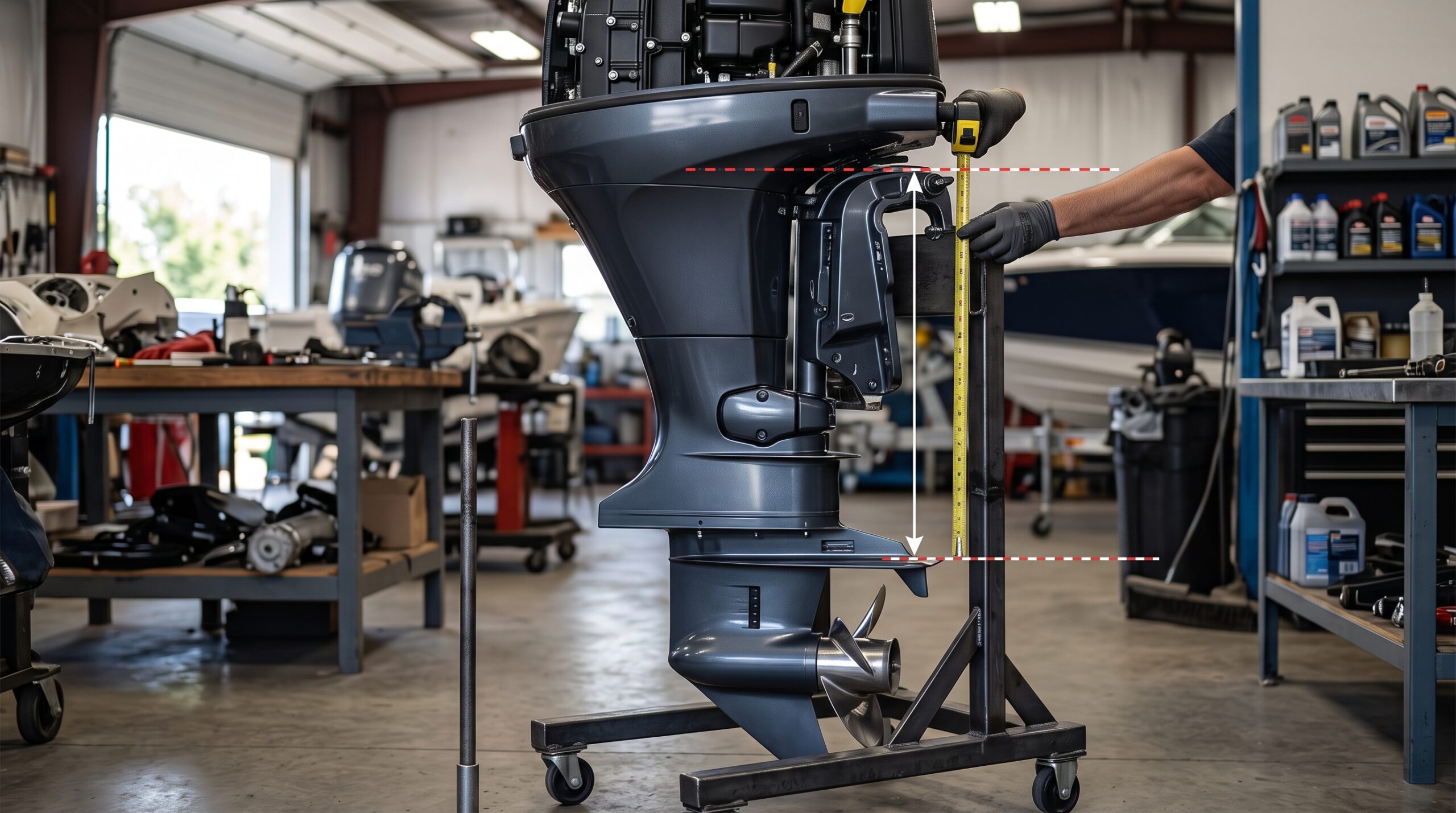
Choosing the right outboard motor shaft length is important for safe boating and good engine performance. If the shaft is too short, the propeller may sit too close to the water’s surface. This can cause ventilation, loss of thrust, and poor handling. If the shaft is too long, the motor may sit too deep in the water, which can increase drag and reduce performance.
The good news is that you can measure an outboard motor shaft with a measuring tape and a few simple steps. The key is to measure from the correct mounting reference point to the anti-ventilation plate, then compare your result with the motor manufacturer’s specifications.
In this guide, you will learn how to measure shaft length an outboard motor, identify common shaft sizes, measure your boat’s transom, and choose a motor that fits your boat.
You will also learn how to avoid common measuring mistakes and recognize signs that your motor’s shaft length may not match your boat.
What Is an Outboard Motor Shaft Length?
Outboard motor shaft length refers to the distance between the motor’s mounting reference surface and the anti-ventilation plate above the propeller.
This measurement helps determine whether the motor can reach the correct depth when mounted on a boat. It is one of the main details to check when buying a new or used outboard motor.
When learning how to measure shaft length an outboard motor, it is important to understand that shaft length does not mean the full height of the engine.
Understanding the Main Parts

Several parts help you identify the correct measuring points:
-
Mounting bracket: The assembly that secures the outboard to the boat’s transom.
-
Mounting reference surface: The surface used by the manufacturer as the starting point for shaft-length measurement.
-
Driveshaft housing: The long section between the powerhead and the lower unit.
-
Anti-ventilation plate: The horizontal plate above the propeller that helps limit air and exhaust gases from reaching the propeller blades.
-
Propeller: The rotating component that pushes water backward to move the boat forward.
For a typical outboard, the shaft-length measurement runs vertically from the specified mounting reference surface to the anti-ventilation plate.
Always confirm the reference point in your motor’s manual. Some motor designs have mounting brackets and transom clamps that can make the correct starting point less obvious.
Shaft Length vs. Overall Motor Length
These two measurements are different.
The overall motor length includes the powerhead, cowling, mounting bracket, lower unit, and other parts. Shaft length refers to a specific distance used to match the motor to the boat’s transom.
For example, a motor advertised with a 20-inch shaft does not mean the complete motor is only 20 inches tall. The powerhead and other components extend well above that measurement.
This distinction matters when comparing different outboard models. Two motors with similar overall heights may have different shaft lengths.
Why Is Measuring Outboard Motor Shaft Length Important?
The correct shaft length helps place the propeller and lower unit at an appropriate depth in the water. This supports efficient propulsion and helps the motor perform as intended.
Before buying or installing an outboard, take time to learn how to measure shaft length on outboard motor correctly. A small mistake in selecting the shaft category can lead to poor performance or an installation that does not follow the manufacturer’s recommendations.
1. It Helps Maintain Propeller Performance
A propeller needs suitable water flow to create thrust. Its position depends partly on the relationship between the motor’s shaft length and the boat’s transom height.
If the propeller sits too close to the surface, it may draw in air or exhaust gases. This is known as ventilation. The propeller can lose its grip on the water, causing the engine speed to rise without a matching increase in boat speed.
A correctly matched motor helps the propeller operate in the intended position.
2. It Helps Reduce Unnecessary Drag
When an outboard is mounted too low, more of the lower unit may remain in the water than the installation requires. This can increase drag and affect speed, fuel use, and handling.
However, shaft length is only one part of the setup. Mounting height, propeller selection, boat design, engine power, and load also affect performance.
3. It Supports Safe Handling
A motor that does not suit the boat’s transom may behave poorly in certain conditions. For example, ventilation may occur during turns or when the boat moves through waves.
The correct setup helps the propeller maintain a more consistent grip on the water. You should still follow all manufacturer guidelines and avoid operating the boat beyond its rated capacity.
4. It Helps You Buy the Right Motor
Outboard motors are available in different shaft lengths, and not every model offers every size.
If you know your boat’s transom height and the recommended shaft category, you can narrow your choices before visiting a dealer or shopping online.
Measuring carefully can also help you avoid buying a motor that needs a different mounting arrangement.
What Tools Do You Need to Measure Shaft Length?
You do not need expensive equipment to measure an outboard motor shaft. A few basic tools are enough for most standard outboards.

1. Measuring tape or ruler
Use a tape measure or ruler marked in inches. A rigid ruler can be easier to control when measuring short distances on a motor.

2. Straightedge or level
A straightedge helps you identify a reference line. A level can help check alignment, although it is not essential for every measurement.

3. Notebook and pen
Record the measurement, motor model, serial number, and any details you find in the owner’s manual.

4. Manufacturer’s specifications
The owner’s manual, official model specifications, or an authorized dealer can help confirm the correct measurement and shaft category.
Before starting, make sure the motor is switched off and stable. If the outboard is mounted on a boat, keep the boat secure and avoid placing your hands near moving parts.
How to Measure Shaft Length on Outboard Motor
The following steps explain how to measure the shaft on a typical outboard motor. Always check the model-specific manual because mounting arrangements can vary.
Step 1: Position the Outboard Motor Correctly
First, make sure the motor is in a stable position.
If the motor is already mounted on the boat, secure the boat and keep the engine switched off. If the motor has been removed, place it on an appropriate motor stand designed to support its weight.
Do not rest a heavy outboard on an unstable surface. Ask for help handling a heavy motor, and follow the manufacturer’s instructions for lifting and storage.
Next, identify the main parts of the motor:
-
The powerhead at the top
-
The mounting bracket that attaches to the transom
-
The driveshaft housing below the powerhead
-
The lower unit near the propeller
-
The anti-ventilation plate above the propeller
These parts help you identify the shaft-length measurement points.
You do not need to dismantle the engine. The measurement is usually taken from the outside of the motor.
Step 2: Find the Top Mounting Surface
The next step is to locate the correct mounting reference surface.
This is the surface from which the manufacturer defines shaft length. On many conventional outboards, it is associated with the top of the transom mounting area.
Look at the part of the motor that rests on or sits over the boat’s transom. Identify the specified reference surface rather than choosing a convenient point on the cowling or mounting bracket.
If the manual includes a diagram, use it to confirm the starting point.
Important: Do not measure from the top of the powerhead, the top of the engine cover, or an arbitrary point on the mounting bracket. These points do not represent the standard shaft-length measurement.
When learning how to measure shaft length on an outboard motor, choosing the correct starting point is just as important as reading the tape measure accurately.
Step 3: Locate the Anti-Ventilation Plate
The anti-ventilation plate is a horizontal metal plate located above the propeller and below the main body of the outboard.
It extends outward from the lower unit. When viewed from the side, it often looks like a flat shelf above the propeller.
Do not confuse it with the cavitation plate, a term commonly used by boaters for the same plate, or with other fins and projections on the lower unit.
The plate helps limit air and exhaust gases from reaching the propeller. Its position also serves as a key reference for shaft length.
Before measuring, inspect the plate and make sure you can identify the correct part.
Step 4: Measure the Shaft Length
Now you can take the measurement.
Follow these steps:
-
Place the end of the measuring tape at the manufacturer’s specified mounting reference surface.
-
Extend the tape vertically toward the anti-ventilation plate.
-
Keep the tape aligned with the intended measurement line.
-
Read the distance to the corresponding reference point on the plate.
-
Record the result in inches.
-
Repeat the measurement to check that the reading is consistent.
For example, suppose your measurement is close to 20 inches. That may indicate a nominal long-shaft outboard, but you should confirm the exact reference points and model specifications before making a decision.
Do not assume that every measurement must match a nominal shaft category exactly. Manufacturing designs and measurement conventions can differ.
If you are measuring a motor while it is mounted on a boat, make sure you are measuring the motor’s shaft length rather than simply measuring the exposed distance between the transom and the plate.
Step 5: Identify the Correct Shaft Length Category
Once you have recorded the measurement, compare it with the official specifications for your outboard model.
Common nominal categories include:
-
Short shaft: approximately 15 inches
-
Long shaft: approximately 20 inches
-
Extra-long shaft: approximately 25 inches
-
Ultra-long shaft: approximately 30 inches
These are common reference sizes, not a guarantee that every manufacturer’s measurement will match your tape reading exactly.
Some motors have different designs, mounting arrangements, or model-specific dimensions. A measurement that appears close to a standard size should be verified against the manufacturer’s documentation.
Write down both your measurement and the official shaft category. This gives you a useful record when comparing motors or discussing compatibility with a dealer.
What Are the Standard Outboard Motor Shaft Lengths?
Most conventional recreational outboards fall into familiar nominal shaft-length categories. The correct option depends on the boat’s transom, the motor design, and the manufacturer’s installation guidance.
Short Shaft: 15 Inches

A short-shaft outboard commonly has a nominal shaft length of 15 inches.
These motors are often used on boats designed with lower transoms, such as certain small aluminum boats, dinghies, and small tenders.
They can be useful when a compact boat is specifically designed for a short-shaft motor. Their suitability still depends on the manufacturer’s transom-height recommendation.
A short shaft is not automatically the best choice for every small boat. Some small boats require a longer shaft because of their hull design or transom arrangement.
Before buying, compare the motor specifications with the boat’s manual.
Long Shaft: 20 Inches

A long-shaft outboard commonly has a nominal shaft length of 20 inches.
This size is widely used on boats with a higher transom, including many fishing boats and other recreational vessels.
A long shaft can help place the propeller at the intended depth when the boat’s transom is designed for it.
However, a 20-inch shaft is not a universal fit for every fishing boat. Hull shape, transom height, engine mounting design, and manufacturer recommendations all matter.
If you are replacing an existing motor, check its model number and shaft specification rather than relying only on the size of the old engine.how to measure shaft length on outboard motor
Extra-Long Shaft: 25 Inches

An extra-long outboard shaft commonly measures 25 inches nominally.
It may be suitable for boats with higher transoms or installations that require a deeper motor position. Some larger recreational boats and specialized hull designs use extra-long outboards.
The purpose is to place the propeller and lower unit at the correct depth, not simply to provide a larger engine.
A 25-inch shaft may sit too low on a boat designed for a shorter shaft. This can create unnecessary drag and affect performance.
Always check the boat and engine specifications before selecting this category.
Ultra-Long Shaft: 30 Inches

An ultra-long shaft commonly refers to a nominal length of 30 inches.
It is used on certain specialized boats and installations that require a greater mounting depth. Availability varies by manufacturer, engine family, and horsepower range.
Do not assume that a motor with a 30-inch shaft is suitable for any tall transom. The boat must be designed for the motor, and the installation must follow the manufacturer’s instructions.
Some manufacturers offer other shaft lengths or use different naming conventions. Check the exact model specification before ordering.how to measure shaft length on outboard motor
Standard Shaft Length Comparison
| Shaft category | Common nominal length | Typical use |
|---|---|---|
| Short shaft | 15 inches | Compatible low-transom boats |
| Long shaft | 20 inches | Many standard recreational boats |
| Extra-long shaft | 25 inches | Certain higher-transom boats |
| Ultra-long shaft | 30 inches | Specialized high-transom installations |
These sizes are general guidelines. The manufacturer’s stated dimensions take priority over this table.
How to Match Outboard Shaft Length to Your Boat
Measuring the motor is only one part of the process. You must also check the boat’s transom height and confirm that the motor is suitable for the hull.
A good match helps position the lower unit correctly and supports reliable performance.
Step 1: Measure the Boat’s Transom Height

The transom is the rear section of the boat where the outboard motor is mounted.
To measure its height:
-
Park the boat on a stable, level surface.
-
Find the centerline of the transom where the motor mounts.
-
Place the measuring tape at the top mounting surface.
-
Measure down to the bottom of the hull along the appropriate vertical reference line.
-
Record the measurement in inches.
-
Compare your result with the boat and engine manufacturers’ recommendations.
Avoid measuring from the top of a decorative cap, an angled outer edge, or a surface that is not the actual mounting reference.
Also, be aware that transom height and shaft length are related but are not always identical measurements. The motor’s mounting arrangement and the boat’s hull design affect how the two dimensions match.
Step 2: Compare Transom Height With Shaft Length
Once you know the transom height, compare it with the recommended shaft length for your boat.how to measure shaft length on outboard motor
For example, a boat with a transom measuring approximately 20 inches may be designed for a long-shaft outboard. However, that measurement alone does not confirm compatibility.
The boat might have a special mounting bracket, an unusual transom shape, or a manufacturer-specific setup.
Use the following as a starting point, not as a substitute for official specifications.
| Boat transom design | Shaft category to investigate |
|---|---|
| Low transom | Short shaft |
| Standard-height transom | Long shaft |
| Higher transom | Extra-long shaft |
| Specialized high-transom setup | Ultra-long shaft or a specified alternative |
The exact match depends on the boat’s design. Do not purchase an outboard based only on this general comparison.
Step 3: Check the Boat Manufacturer’s Recommendations
Look in the boat owner’s manual or technical specifications for the recommended outboard shaft length.
The manufacturer may specify:
-
Recommended shaft categoryhow to measure shaft length on outboard motor
-
Maximum engine horsepower
-
Permitted engine weight
-
Transom dimensionshow to measure shaft length on outboard motor
-
Mounting height and installation limits
-
Restrictions for certain motor configurations
These details are important because two boats with similar transom heights may require different motor setups.
If you cannot find the manual, contact the boat manufacturer or an authorized dealer. Give them the boat model, year, and any available identification information.
Step 4: Check the Outboard Manufacturer’s Specifications
Next, confirm the shaft length of the exact engine you plan to use.
A model name alone may not be enough. Different versions of the same engine family may be offered with different shaft lengths.
Check the official specification sheet, owner’s manual, or product listing from the manufacturer.how to measure shaft length on outboard motor
If you are buying a used motor, ask the seller for the full model number and verify the shaft specification independently.
Learning how to measure shaft length on an outboard motor is particularly useful when the motor is being sold without its original paperwork.how to measure shaft length on outboard motor
Special Considerations for Different Boats
Inflatable boats: Many small inflatables use short-shaft motors, but some models are designed for long shafts. Check the transom height and the inflatable boat manufacturer’s guidance.
Fishing boats: Aluminum and fiberglass fishing boats can have different transom designs. A boat used in rivers may also have different requirements from a boat designed for offshore use.
Pontoon boats: Pontoons often use larger outboards and may have specialized mounting arrangements. Confirm the shaft recommendation, engine rating, and mounting requirements for the exact pontoon model.
Sailboats: Some sailboats use outboards mounted on brackets rather than directly on the transom. The bracket can change the effective mounting height, so a standard transom-height comparison may not be enough.
Boats with jack plates: A jack plate can change the motor’s mounting height. Its position and operating range must be considered when checking compatibility. Follow the boat and engine manufacturer’s guidance.
Common Mistakes to Avoid When Measuring Shaft Length
Even a simple measurement can be misleading if you use the wrong reference points. Avoid these common errors.
1. Measuring From the Wrong Mounting Point
One of the most common mistakes is starting the tape at the top of the engine cover or another convenient surface.
The correct starting point is the mounting reference specified by the manufacturer.how to measure shaft length on outboard motor
Before measuring, check the manual or official diagram. This helps prevent an incorrect reading that could lead you to choose the wrong shaft category.
2. Measuring the Entire Motor
The motor’s total height is not its shaft length.
The powerhead, cowling, bracket, and other components extend beyond the shaft-length measurement.
Measure only the specified distance between the mounting reference and the anti-ventilation plate.how to measure shaft length on outboard motor
3. Confusing Transom Height With Shaft Length
These measurements serve different purposes.
Transom height describes the boat’s mounting area. Shaft length describes a dimension of the outboard motor.
They must be considered together, but one should not be substituted for the other without checking the manufacturer’s installation guidance.
4. Ignoring the Manufacturer’s Specifications
A tape measure is useful, but it cannot tell you everything about a motor’s compatibility.
Some models use different mounting arrangements or shaft-length conventions. Always compare your result with the official specification for the exact model.
If the measurement and specification appear to disagree, check your reference points again or ask an authorized dealer for help.
5. Choosing a Shaft Based on Appearance
Two outboards may look similar while having different shaft lengths.
Likewise, a motor that looks tall enough when viewed outside the water may not place its propeller at the intended depth once installed.how to measure shaft length on outboard motor
Do not judge compatibility by appearance alone. Measure the motor and transom, then verify the recommended setup.how to measure shaft length on outboard motor
6. Forgetting About Mounting Brackets
A boat may have a bracket that changes the distance between the motor’s mounting point and the water.
This is especially important for sailboats and boats with specialized stern arrangements.
Measure the actual installation carefully and consult the manufacturer before deciding whether a standard shaft length will work.
What Happens If Your Outboard Motor Shaft Is Too Long or Too Short?
Using the wrong shaft length can affect how the boat moves through the water. The severity depends on the boat, engine, mounting height, propeller, and operating conditions.how to measure shaft length on outboard motor
Problems With a Shaft That Is Too Short
When learning how to measure shaft length on outboard motor, it is important to understand what happens when the shaft is too short. A short shaft may position the propeller too close to the water’s surface.
Common problems include:
Propeller ventilation: The propeller may draw in air or exhaust gases. This can cause engine speed to rise while thrust drops.
Reduced thrust: When the propeller loses its grip on the water, the boat may struggle to accelerate or maintain speed.
Handling issues: Ventilation may become more noticeable during turns, when the boat pitches, or when waves disturb the water around the propeller.
Cooling concerns: If the motor is mounted too high, the water intake may not remain properly submerged. This can reduce the cooling-water supply and cause engine damage.
If you suspect that the motor is mounted too high, stop and inspect the setup according to the owner’s manual. Do not continue running the engine if there are signs of overheating or inadequate cooling.
Problems With a Shaft That Is Too Long
Understanding how to measure shaft length on outboard motor also helps you avoid problems caused by an excessively long shaft. A shaft that is too long may place the lower unit deeper in the water than intended.
Possible problems include:
Increased drag: A lower unit that sits too deep may create more resistance as the boat moves.
Reduced performance: Excessive drag can affect acceleration, speed, and fuel efficiency.
Incorrect mounting geometry: The motor may not sit at the recommended height, which can affect how it interacts with the hull.
Clearance concerns: Some boats and mounting brackets have limited clearance. An unsuitable installation can create problems with steering, trimming, or other components.
A longer shaft is not automatically safer or better. The goal is to use the shaft length specified for your boat and motor combination.
Can the Wrong Shaft Length Be Corrected?
Sometimes, mounting height can be adjusted within the limits allowed by the manufacturer. Certain boats may also use a compatible mounting bracket or jack plate.
However, these options are not suitable for every installation.
Before deciding how to measure shaft length on outboard motor and correct a fitting issue, check the manufacturer’s installation instructions. Do not modify the transom, alter the motor’s mounting system, or change the engine’s position without confirming that the proposed setup is approved for your boat and motor.
If the motor is already installed and performs poorly, check the mounting height, propeller condition, engine specifications, and other possible causes before assuming shaft length is the only issue.
Frequently Asked Questions
How do you measure an outboard motor shaft length?
To understand how to measure shaft length on outboard motor, identify the manufacturer’s specified mounting reference surface and measure vertically to the anti-ventilation plate. Use a measuring tape or ruler, keep it aligned with the correct reference points, and record the distance in inches. Then compare your result with the official specifications for your exact motor model.
Is outboard shaft length the same as transom height?
No. Shaft length is a dimension of the outboard motor, while transom height is a measurement of the boat’s rear mounting area. These measurements help determine whether the motor will fit correctly, but they are not always identical. The manufacturer’s mounting instructions should guide your final choice.
How do I know if my outboard motor has a short or long shaft?
When researching how to measure shaft length on outboard motor, check the owner’s manual, model specifications, or identification information where available. You can also measure the distance from the specified mounting reference to the anti-ventilation plate. Common nominal sizes include 15 inches for short shafts and 20 inches for long shafts. Always verify the measurement against the manufacturer’s documentation.how to measure shaft length on outboard motor
Can I use a long-shaft outboard on a short-transom boat?
It depends on the boat and its mounting arrangement. A long-shaft motor on a boat designed for a short shaft may sit too low, increasing drag and affecting performance. Some boats have approved mounting arrangements that allow different shaft lengths, but you should not assume that a long shaft will fit. Check the boat manufacturer’s recommendations before installing the motor.
Where can I find my outboard motor’s shaft length specifications?
You can usually find shaft-length information in the owner’s manual, official product specifications, or the manufacturer’s website. An authorized dealer can also help identify the correct specifications from the full model number. If you are buying a used outboard, ask the seller for its model details and verify them before purchasing.
Does shaft length affect boat speed and performance?
Yes. Shaft length affects the position of the lower unit and propeller relative to the boat and water. If the motor sits too high or too low, it may experience ventilation, additional drag, reduced thrust, or handling problems. Correct shaft length supports proper installation, but boat speed also depends on engine power, propeller choice, hull design, load, and operating conditions.
Can I measure shaft length while the motor is mounted on the boat?
Yes, in many cases. You can learn how to measure shaft length on outboard motor while it is mounted, provided the relevant reference points are accessible. Measure the motor’s specified shaft-length distance, not simply the distance between the transom and the anti-ventilation plate. If access is difficult, consult the manual or ask a qualified marine technician.how to measure shaft length on outboard motor
Are all 20-inch outboard shafts exactly the same?
Not necessarily. Twenty inches is a common nominal shaft-length category, but measurement conventions, mounting designs, and model specifications can vary. A reading close to 20 inches does not automatically confirm that every long-shaft motor will fit your boat. Check the exact motor specifications and installation requirements.
What should I do if my measurement does not match the listed shaft length?
First, check that you used the correct mounting reference and the correct point on the anti-ventilation plate. Repeat the measurement and review the manufacturer’s diagram. If the result still differs, contact an authorized dealer or the manufacturer before buying or installing the motor. Accurate measurements are essential when determining how to measure shaft length on outboard motor and confirming compatibility.
Should I measure the motor or the boat first?
Ideally, measure both. Start by checking the boat’s transom height and recommended shaft category. Then measure the motor or verify its published shaft length. Comparing these details helps you identify a compatible motor before making a purchase.
Final Thoughts
Learning how to measure shaft length on outboard motor is a useful skill for anyone buying, replacing, or installing a boat engine. The process is simple when you use the correct reference points and follow the manufacturer’s instructions.
Start by locating the specified mounting surface and the anti-ventilation plate. Measure the distance between them, record the result, and compare it with the motor’s official shaft-length specifications. Next, measure your boat’s transom height and check the boat manufacturer’s recommendations.
Remember that common shaft sizes—15, 20, 25, and 30 inches—are useful starting points, not universal rules. The right choice depends on your boat, motor, and mounting arrangement.
For the most reliable results, follow the correct steps for how to measure shaft length on outboard motor, verify the exact motor specifications, and confirm compatibility with your boat before installation.













One thought on “How to Measure Shaft Length on Outboard Motor”