



Our Blogs
How Do You Measure Outboard Motor Shaft Length?

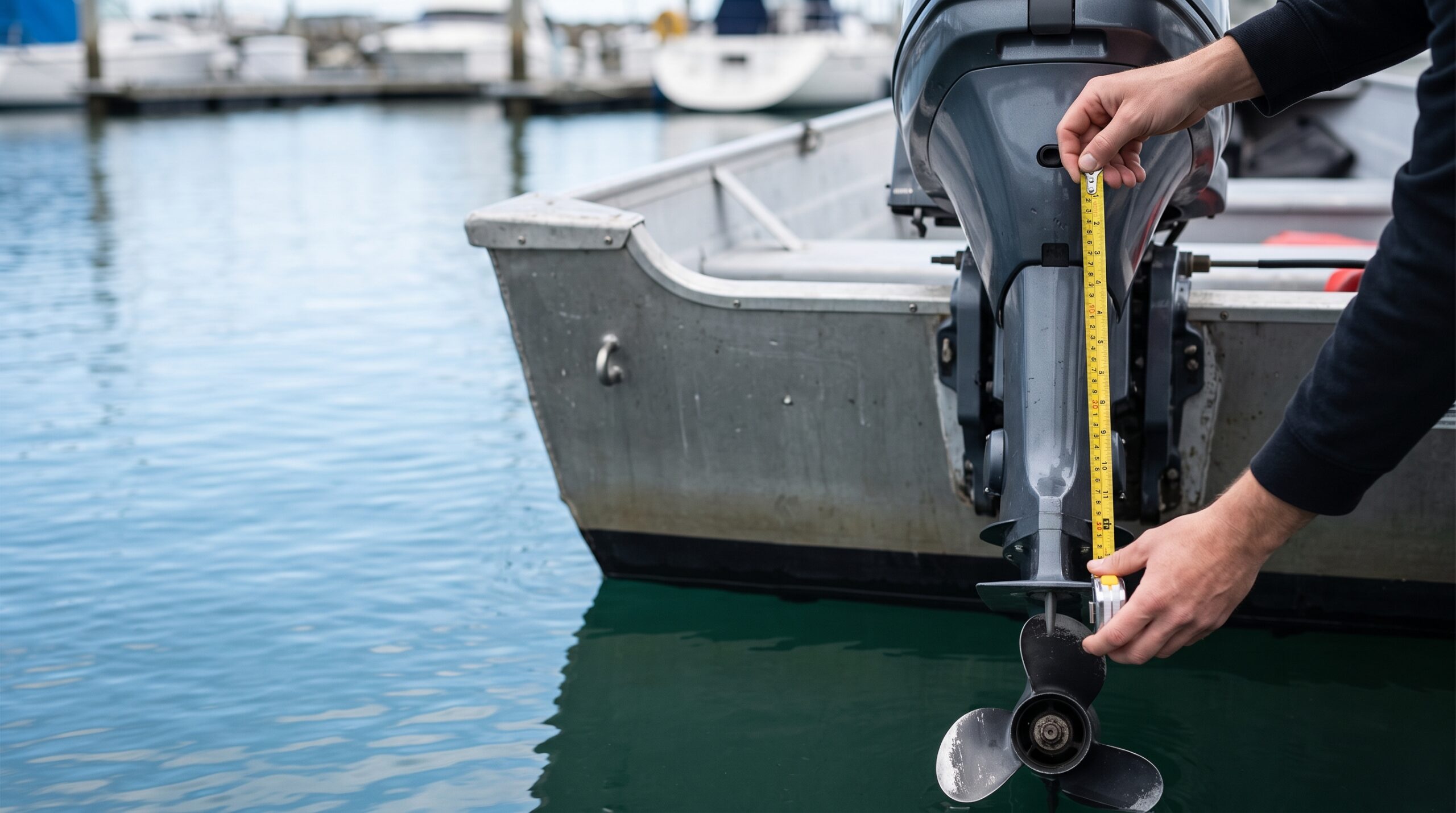
Choosing the correct outboard motor shaft length is important for safe boating and good engine performance. If the shaft is too short or too long, the propeller may sit at the wrong depth in the water. This can reduce thrust, affect handling, and cause problems when you operate your boat.
So, how do you measure outboard motor shaft length? The basic method is simple. Measure the distance from the top of the motor’s mounting bracket to the anti-ventilation plate, following the manufacturer’s measuring points. For many conventional outboard motors, this distance is close to 15, 20, or 25 inches.
You should also measure your boat’s transom height. The transom is the rear section of the boat where the outboard motor attaches. Its height helps you determine which shaft size is suitable for your boat.
This guide explains how to measure an outboard motor shaft, understand standard shaft sizes, avoid common mistakes, and select a motor that matches your boat. You will also learn when to check the manufacturer’s specifications before buying or installing an outboard motor.
Why Is Outboard Motor Shaft Length Important?
Outboard motor shaft length affects how the engine and propeller sit in the water. The correct size helps the propeller work at the intended depth and allows the motor to operate as designed.
Different boats have different transom heights. A small inflatable boat may need a short-shaft motor, while a larger fishing boat may require a long-shaft or extra-long-shaft motor.
Understanding these differences helps you make a better buying decision.
How Shaft Length Affects Boat Performance
An outboard motor produces thrust by turning its propeller in the water. The propeller must remain at a suitable depth to work effectively.
If the shaft length matches the boat’s transom, the propeller can operate near its intended position. This supports steady thrust, smooth handling, and reliable performance.
The correct shaft length can also help reduce problems during turns and when the boat moves through choppy water.
For example, imagine you have a small fishing boat with a transom designed for a 20-inch shaft. Installing a compatible 20-inch-shaft motor helps place the propeller at the intended depth.
A 15-inch shaft may place the propeller too close to the surface. A 25-inch shaft may place it lower than intended. Either mismatch can affect performance, depending on the boat and motor design.
Problems Caused by the Wrong Shaft Length
Using an unsuitable shaft length can cause several problems.
If the shaft is too short:
- The propeller may sit too close to the water’s surface.
- The propeller may draw in air or exhaust gases, a problem known as ventilation.
- Thrust may decrease when the boat accelerates or turns.
- The motor may lose its intended cooling-water supply in some installations.
- Handling may become less predictable in certain conditions.
If the shaft is too long:
- The propeller may sit too deep in the water.
- Drag may increase.
- The boat may not perform as intended.
- The motor may not fit the transom correctly.
- The lower unit may be more exposed to underwater obstacles.
These problems are not identical on every boat. Hull shape, mounting height, propeller design, water conditions, and motor specifications all matter.
How Shaft Length Affects Propeller Position
The propeller’s position is one of the main reasons shaft length matters.
The anti-ventilation plate is the flat plate above the propeller on most conventional outboard motors. It helps limit air from reaching the propeller from the water’s surface.
When the motor is installed correctly, this plate and the propeller should sit at a suitable height relative to the boat’s hull and the water.
A shaft that is too short can leave the propeller too high. A shaft that is too long can place it too low.
However, the correct mounting position is not determined by shaft length alone. Some boats and motors require specific mounting adjustments. Always follow the motor and boat manufacturers’ installation instructions.
How Do You Measure Outboard Motor Shaft Length?
The standard measurement uses two reference points on the motor: the top of the mounting bracket and the anti-ventilation plate.
Before measuring, make sure the motor is safely supported and cannot fall or move unexpectedly. If the motor is installed on a boat, keep the boat stable and follow the manufacturer’s safety instructions.
Tools Needed to Measure an Outboard Motor Shaft
You do not need many tools for this task.
Prepare the following:
- A tape measure marked in inches
- A straightedge or ruler, if needed
- A notepad or phone to record the result
- The motor’s model number or specification sheet
A tape measure is usually enough. A straightedge can help you identify the correct reference points when the bracket or plate has an unusual shape.
If the motor is heavy or difficult to access, ask a qualified marine technician for help rather than trying to lift or reposition it alone.
Step 1: Find the Top of the Mounting Bracket
Start by locating the mounting bracket at the top of the motor’s mounting area.
This is the section that rests against or attaches to the boat’s transom. On many conventional outboards, the relevant reference is the top of the bracket or the manufacturer’s specified mounting surface.
Do not automatically measure from the top of the engine cover. The engine cover is the outer housing that protects the engine, and it is not the standard starting point for shaft-length measurement.
Look at the mounting bracket carefully. If you are unsure which surface to use, consult the owner’s manual or the motor manufacturer’s measurement diagram.
Using the correct starting point is essential. A measurement from the wrong location can make a short shaft appear longer or a long shaft appear shorter than it really is.
Step 2: Locate the Anti-Ventilation Plate
Next, find the anti-ventilation plate above the propeller.
This flat, horizontal plate is part of the motor’s lower unit. It sits above the propeller and is usually easy to identify when you look at the motor from the side.
Do not confuse it with the propeller itself, the gearcase housing, or a separate fin attached to the motor.
The anti-ventilation plate is the usual lower reference point for conventional shaft-length measurements. However, the exact measurement method can vary by motor design, so check the manufacturer’s instructions when necessary.
Step 3: Measure the Distance Between the Two Points
Place the beginning of your tape measure at the specified upper mounting reference point.
Extend the tape down to the anti-ventilation plate. Measure the distance between the two points in a straight line, following the manufacturer’s measurement diagram.
Keep the tape steady and make sure it does not bend around the motor housing.
For example, suppose your measurement is close to 20 inches. That may indicate a conventional long-shaft motor. If it is close to 15 inches, it may indicate a short-shaft motor.
These are common categories, not universal rules for every outboard model. Some motors use different dimensions or mounting arrangements.
If your result seems unusual, measure again and compare it with the official specifications for your exact motor model.
Step 4: Record the Measurement in Inches
Write down your measurement in inches. Most conventional outboard shaft categories in the United States are described using inch measurements.
Use this common reference as a starting point:
| Approximate measurement | Common shaft category |
|---|---|
| 15 inches | Short shaft |
| 20 inches | Long shaft |
| 25 inches | Extra-long shaft |
These values are approximate reference dimensions for common motor types. They should not replace the manufacturer’s published specifications.
For example, a measurement near 20 inches does not automatically prove that every motor with that measurement is suitable for your boat. You must also check the transom height, the mounting arrangement, and the recommended installation position.
The most reliable approach is to measure the motor, identify its model, and verify the result using the manufacturer’s documentation.
What Are the Standard Outboard Motor Shaft Lengths?
Outboard motors come in several shaft sizes. The most common categories for conventional recreational motors are short shaft, long shaft, and extra-long shaft.
When learning how do you measure outboard motor shaft length, remember that these categories are starting points. Your motor’s actual specifications and your boat’s transom height determine the right match.
Short Shaft: Approximately 15 Inches

A short-shaft outboard motor typically has a nominal shaft length of about 15 inches.
These motors are often used on boats with lower transoms, including certain small fishing boats, dinghies, and inflatable boats designed for short-shaft engines.
Possible advantages include:
-
A suitable fit for compatible low-transom boats
-
A compact installation
-
Less unnecessary lower-unit depth when the boat is designed for a short shaft
However, a short-shaft motor is not right for every small boat. Some inflatable boats have higher transoms and require a different shaft size.
Before purchasing one, measure the transom and check the boat manufacturer’s recommended motor dimensions.
Long Shaft: Approximately 20 Inches

This size is common on many recreational boats, including various fishing boats and sailboats with suitable transom designs.
A long shaft can help position the propeller at the intended depth when a boat has a higher transom than a short-shaft boat.
For example, if your boat’s transom is approximately 20 inches high, a conventional long-shaft motor may be a suitable starting point. You must still confirm the exact mounting requirements.
Understanding how do you measure outboard motor shaft length helps you avoid choosing a motor based only on its horsepower or price.
Extra-Long Shaft: Approximately 25 Inches

This size may suit boats with taller transoms or particular hull and mounting designs. Some larger boats and specialized applications need more shaft length than a conventional long-shaft motor provides.
The extra length helps place the propeller at the intended depth when the boat’s design calls for it.
However, installing an extra-long shaft on a boat designed for a short shaft may put the propeller too deep in the water. That can increase drag and reduce performance.
Check the manufacturer’s transom-height range before selecting this category.
How to Identify Your Motor’s Shaft Category
You can identify your outboard’s shaft category in three main ways.
-
Measure the motor. Use the correct mounting reference and anti-ventilation plate.
-
Check the model number. Some manufacturers include a shaft designation in the model code.
-
Read the owner’s manual. The manual may list the shaft length, compatible transom height, and mounting requirements.
Do not rely on appearance alone. Two outboards with similar engine covers may have different shaft lengths.
If the model number does not clearly identify the shaft size, contact the manufacturer or an authorized dealer.
How to Measure Your Boat’s Transom Height
Measuring the motor is only half the job. You also need to measure the boat’s transom.
The transom is the rear wall of the boat where the outboard motor is mounted. Its height helps determine the shaft length needed to position the propeller correctly.
Where to Measure the Boat Transom
Start by placing the boat on a stable surface, with the motor removed or safely secured if necessary.
Find the centerline of the transom, where the motor will normally be mounted. Identify the upper mounting surface and the bottom edge of the hull at the relevant centerline.
Use a tape measure to measure the vertical distance between these points, following the boat manufacturer’s instructions.
Keep the tape straight and vertical. Do not measure along a sloping surface or use the top of a seat or decorative trim as the reference point.
Some boats have notched transoms, curved hulls, or special motor mounting areas. In these cases, the manufacturer’s diagram is especially important.
Record the result in inches.
For instance, if your measured transom height is close to 15 inches, a short-shaft motor may be appropriate. If it is close to 20 inches, a long-shaft motor may be suitable.
These examples are not a substitute for the boat manufacturer’s specifications.
How Transom Height Matches Shaft Length
The transom and shaft measurements work together to establish the motor’s mounting position.
Use the following table as a general guide for common conventional outboards.
| Typical transom height | Common shaft category |
|---|---|
| Around 15 inches | Short shaft |
| Around 20 inches | Long shaft |
| Around 25 inches | Extra-long shaft |
Actual compatibility depends on the motor’s design, the boat’s hull, and the manufacturer’s specified mounting height.
A transom that measures 19 inches, for example, should not automatically be paired with a 20-inch shaft without checking the installation instructions.
When deciding how to measure outboard motor shaft length for a specific boat, treat both measurements as part of one process. The motor’s shaft dimensions and the boat’s mounting dimensions must be compatible.
What to Do if Your Measurement Falls Between Sizes
Sometimes, the transom measurement does not match a standard shaft category exactly.
Do not automatically choose the longer or shorter motor.
First, repeat the measurement and check that you used the correct reference points. Then compare your result with the motor manufacturer’s approved transom-height range.
Also consider whether the boat has a special mounting bracket, a jack plate, or a transom design that changes the motor’s mounting height.
If the measurement still falls between categories, contact a marine technician or the boat manufacturer. A small difference can matter because the correct mounting position depends on the complete installation.
How to Choose the Right Outboard Motor Shaft Length
Choosing the right motor requires more than checking one number. Consider your boat type, transom height, motor specifications, and intended use.
Choosing a Shaft for an Inflatable or Small Boat
Small boats often use short-shaft motors, but this is not always the case.
Inflatable boats, tenders, and compact fishing boats vary in design. Some have low transoms, while others use raised mounting surfaces.
Before choosing a motor:
-
Check the boat’s recommended shaft category.
-
Measure the transom carefully.
-
Confirm the motor’s horsepower rating is within the boat’s limit.
-
Check the motor’s weight and mounting compatibility.
-
Follow the manufacturer’s installation instructions.
For example, two inflatable boats of similar length may need different motors because their transoms are different heights.
Knowing how do you measure outboard motor shaft length is useful when buying a replacement motor for an older inflatable boat.
Choosing a Shaft for a Fishing Boat
Fishing boats come in many sizes and hull designs. Some are built for short-shaft motors, while others require long or extra-long shafts.
Consider the boat’s transom height and the conditions in which you normally operate. A boat used on a lake may have different requirements from one designed for rougher water.
Also check whether the boat has a single motor, twin outboards, or a special mounting arrangement.
The manufacturer’s recommendations should guide your choice. Do not assume that a fishing boat needs a long shaft just because it is larger than a dinghy.
Choosing a Shaft for a Pontoon or Larger Boat
Pontoons and larger boats may have taller transoms or mounting arrangements that require special attention.
The correct shaft size depends on the boat’s design and the specific motor model. Some boats use standard long-shaft motors, while others require a longer shaft.
When choosing a motor for a pontoon, check:
-
The approved motor shaft length
-
The transom or motor mounting height
-
The maximum permitted horsepower
-
The motor’s weight limits
-
Any manufacturer-specific mounting instructions
If the boat uses a specialized bracket or adjustable mounting system, measure the actual mounting arrangement rather than relying only on the boat’s overall height.
Checking the Boat and Motor Manufacturer’s Recommendations
Always check the boat and motor documentation before buying a replacement engine.
The boat manual may list compatible shaft sizes, horsepower limits, and mounting requirements. The motor manual may provide the exact shaft measurement method and installation dimensions.
If the two sets of instructions appear to conflict, ask the manufacturers or an authorized marine dealer to confirm compatibility.
This is especially important for used motors, modified boats, and older installations.
A motor that physically fits the transom is not necessarily the correct motor for that boat.
Common Mistakes When Measuring Outboard Motor Shaft Length
Even a simple measurement can go wrong if you use the wrong reference points or misunderstand the motor’s specifications.
Avoid these common mistakes to get a reliable result.
Measuring From the Wrong Points
One of the most common mistakes is measuring from the top of the engine cover instead of the correct mounting reference.
The engine cover is not the standard starting point for measuring shaft length. Likewise, the propeller tip is not the correct lower reference point.
For a conventional outboard, the measurement generally runs from the manufacturer’s specified mounting-bracket reference to the anti-ventilation plate.
When checking how do you measure outboard motor shaft length, look at a diagram for your exact model if the reference points are unclear.
Measure twice and record the result. If two measurements differ, check your starting point and tape position before deciding which number is correct.
Confusing Overall Motor Length With Shaft Length
The overall length of an outboard motor is not the same as its shaft length.
Overall motor length may include the engine cover, mounting bracket, lower unit, and other components. Shaft length refers to a specific distance used to match the motor to the boat’s transom.
For example, a motor with a large engine cover may look much taller than another motor even if both have the same nominal shaft length.
Do not use the motor’s total height to identify its shaft category. Check the manufacturer’s specifications instead.
Ignoring Transom Height
Measuring the motor without measuring the boat’s transom can lead to a poor match.
A shaft that fits one boat may be unsuitable for another. Even boats with similar lengths can have different transom heights.
Before you buy a motor, measure the transom and compare the result with the manufacturer’s approved range.
When considering how to measure outboard motor shaft length, remember that the motor measurement tells you what shaft you have, while the transom measurement helps determine whether it is appropriate for your boat.
Both are important.
Assuming Every Motor Uses the Same Shaft Sizes
The familiar 15-, 20-, and 25-inch categories are useful, but they do not cover every outboard design.
Some motors use different dimensions, and manufacturers may define or label shaft length differently for certain models.
Specialized boats may also use brackets or mounting systems that change the installation requirements.
Never assume that a motor is compatible just because its measurement is close to a common category.
Confirm the exact model, shaft designation, and mounting instructions before making a purchase.
Can You Use an Outboard Motor With the Wrong Shaft Length?
Using an outboard motor with the wrong shaft length can affect performance and may create safety or reliability problems.
The severity depends on the size of the mismatch, the motor design, the boat’s hull, and the operating conditions.
If you suspect that your motor is mounted too high or too low, avoid running it at high speed until the installation has been checked.
What Happens When the Shaft Is Too Short?
A shaft that is too short may place the propeller too close to the water’s surface.
This can cause ventilation. Ventilation occurs when air or exhaust gases reach the propeller blades, reducing their grip on the water.
You may notice the engine speed rise while the boat loses thrust. The problem may become more noticeable during acceleration, sharp turns, or when the boat moves through waves.
A motor mounted too high may also have trouble maintaining the intended cooling-water supply, depending on its design and installation.
If the motor shows signs of overheating or a cooling-water warning, follow the owner’s manual and stop the engine as directed.
Do not try to correct the problem by raising the engine further or changing parts without confirming the manufacturer’s mounting requirements.
What Happens When the Shaft Is Too Long?
A shaft that is too long may place the propeller and lower unit deeper in the water than intended.
This can increase drag and affect the boat’s speed, efficiency, and handling. The lower unit may also be more exposed to underwater hazards.
A long shaft on a low-transom boat can create a mounting mismatch, even if the motor can be attached securely.
However, a longer shaft is not automatically a problem. It is correct when the boat and motor are designed for it.
The important question is whether the motor’s specified shaft length matches the boat’s mounting requirements.
How to Correct a Shaft-Length Mismatch
If your current motor appears to have the wrong shaft length, begin with a careful inspection.
Follow these steps:
-
Confirm the motor’s exact model and shaft designation.
-
Measure the boat’s transom using the manufacturer’s reference points.
-
Check the motor’s installation manual for the approved mounting height.
-
Inspect the current mounting position for signs of an incorrect setup.
-
Ask an authorized dealer or qualified marine technician to assess any mismatch.
Some installations allow approved adjustments to mounting height. Others require a motor with a different shaft length or a manufacturer-approved mounting solution.
Do not cut, modify, or convert the motor shaft without the proper technical guidance. Such changes can damage the motor, affect cooling, and create reliability or safety problems.
If you are buying a used outboard, confirm shaft compatibility before paying for it. This can help prevent an expensive mistake.
Frequently Asked Questions
How do you measure outboard motor shaft length?
To measure an outboard motor shaft, identify the manufacturer’s specified upper mounting reference and the anti-ventilation plate above the propeller. Measure the distance between these points in a straight line and record it in inches.
For many conventional outboards, the result is close to 15, 20, or 25 inches. Verify the measurement against your exact motor model because some designs differ.
Is an outboard motor shaft measured in inches?
Yes. Many conventional recreational outboards use inches to describe shaft length, especially models sold in the United States.
Common nominal sizes include 15 inches for a short shaft, 20 inches for a long shaft, and 25 inches for an extra-long shaft. Always check the manufacturer’s published dimensions.
Is a 15-inch or 20-inch outboard shaft better?
Neither size is automatically better. The correct choice depends on your boat’s transom height and the motor manufacturer’s recommendations.
A 15-inch shaft may suit a boat designed for a short-shaft motor. A 20-inch shaft may suit a boat with a higher transom.
Choosing the correct fit matters more than choosing the longer or shorter option.
How do I know if my outboard motor has a long shaft?
A conventional long-shaft outboard typically has a nominal shaft length of about 20 inches.
You can measure the distance between the specified mounting reference and the anti-ventilation plate. Then check the result against the motor’s model number and official specifications.
Do not rely only on the motor’s appearance, because similar models may have different shaft lengths.
Does shaft length depend on boat transom height?
Yes. Transom height is one of the main factors used to select an outboard shaft length.
The shaft must position the propeller at the intended depth for the boat and motor combination. However, the exact match also depends on hull design, mounting hardware, and manufacturer specifications.
Measure the transom and check the approved shaft range before purchasing an outboard.
Can I change an outboard motor from a short shaft to a long shaft?
Some outboard models can be converted using manufacturer-approved components, but others cannot be converted easily or economically.
A conversion may require specific parts and technical work. The correct procedure depends on the engine model and design.
Check with the manufacturer or an authorized service center before attempting a conversion. Do not assume that an extension or improvised modification will be safe or compatible.
Conclusion
Measuring your outboard motor shaft correctly helps you choose a motor that fits your boat and positions the propeller at the intended depth.
To understand how to measure outboard motor shaft length, follow these simple steps:
-
Find the correct upper mounting reference on the motor.
-
Locate the anti-ventilation plate above the propeller.
-
Measure the distance between the two points.
-
Record the result in inches.
-
Measure your boat’s transom and compare both measurements with the manufacturer’s specifications.
For many conventional outboards, common shaft categories are approximately 15 inches, 20 inches, and 25 inches. However, the correct size depends on your boat and motor combination.













One thought on “How Do You Measure Outboard Motor Shaft Length?”