



Our Blogs
Who Makes Mariner Outboard Motors? Brand History Explained

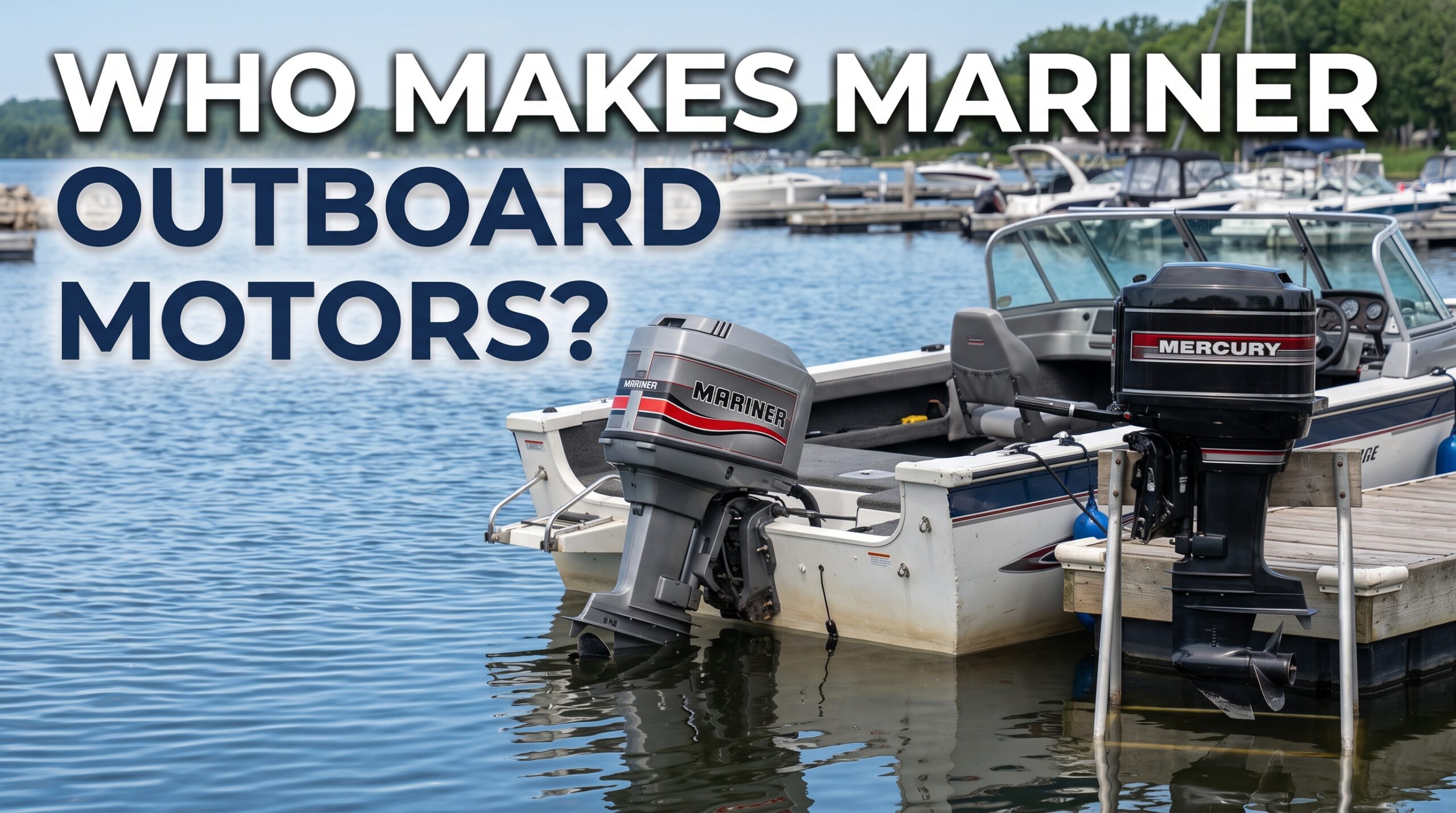
Mariner outboard motors are associated with Mercury Marine, a major manufacturer of marine engines and boating equipment. The Mariner brand developed through a close relationship with Mercury, and many Mariner engines share engineering, designs, or components with corresponding Mercury outboards.
However, this does not mean every Mariner engine is identical to a Mercury model. The relationship depends on the engine’s production year, horsepower, model, and market. Some models may share many components, while others have different specifications or parts.
If you own a Mariner outboard or plan to buy one, understanding this connection can help you choose the correct replacement parts, arrange repairs, and judge whether a used engine is worth buying.
This guide explains who makes Mariner outboard motors, how the brand developed, where these engines were manufactured, and how to identify and maintain an older model.
Who Makes Mariner Outboard Motors?
Mercury Marine is the company most closely associated with Mariner outboard motors. Mariner was used as an outboard engine brand in several markets, including regions where Mercury wanted to offer products through different sales and distribution channels.
Mercury Marine is part of Brunswick Corporation, a company with a long history in the marine industry. Mercury produces outboard engines and other marine propulsion products for recreational and commercial boating.
Mariner outboards became known among boat owners for their practical designs and their connection to Mercury’s engineering and service network.
The exact manufacturer and production details of an individual engine can depend on its age and model. For this reason, owners should check the identification plate and serial number instead of relying on the brand name alone.
Why Does the Manufacturer Matter?
Knowing the manufacturer can make engine ownership easier in several ways.
-
Replacement parts: You can investigate whether the engine shares parts with a corresponding Mercury model.
-
Maintenance: Manufacturer information helps you find the correct service procedures and specifications.
-
Repairs: A mechanic familiar with Mercury engines may also have experience with certain Mariner models.
-
Buying decisions: The engine’s production history can help you assess its condition and likely maintenance needs.
-
Resale value: Correct identification makes it easier to describe the engine accurately to potential buyers.
For example, suppose you find a used Mariner 40-horsepower outboard. Its seller may claim that it is identical to a Mercury 40-horsepower engine. That may be true for some components, but it should not be assumed without checking the model and serial number.
The safest approach is to identify the exact engine first and then use the appropriate parts catalog or service manual.
The History of Mariner Outboard Motors
The Mariner name has a long history in recreational boating. Its development is closely linked to Mercury Marine and Brunswick Corporation, which helped establish the brand in international markets.
According to Brunswick’s company history, Mariner outboards entered the Australian marketplace in 1974. The brand launched in the United States and Europe in 1975.
When Did Mariner Outboard Motors First Appear?
Mariner outboards first appeared in the 1970s. The brand was introduced during a period when outboard engines were an important part of the growing recreational boating market.
Boaters needed engines for fishing boats, small workboats, family boats, and other marine uses. Manufacturers competed by offering different engine sizes, designs, and features.
Mariner became one of the names available to boat owners during this period.
The brand’s early development was linked to Mercury Marine’s experience in marine engine design and production. This connection helped establish Mariner as a recognizable name in several markets.
Older Mariner engines may look different from modern outboards. Many early models used two-stroke technology, which was common in the industry at the time. Later models included other designs and improvements as marine engine technology changed.
When examining an older engine, it is important to remember that its age and specific design matter more than the name printed on its cover.
A well-maintained older outboard may still be useful for certain boats. However, its actual condition, maintenance history, and parts availability should guide any buying decision.
How Did Mariner Become Connected to Mercury Marine?
Mariner was introduced as a brand associated with Mercury Marine and its parent company, Brunswick. The brand helped Mercury serve different markets and customers.
Brunswick’s history records the Mariner launch in Australia in 1974 and its introduction in the United States and Europe in 1975.
This history explains why many Mariner engines have a close relationship with Mercury products.
Depending on the model, the two brands may share engineering, basic engine architecture, or individual components. Yet the relationship is not identical across every production year.
Regional sales arrangements and changes in product design also mean that two engines with similar horsepower may have different specifications.
For boat owners, the practical lesson is simple: the Mariner name gives you a useful starting point, but the complete model identification gives you the information needed for maintenance and repairs.
Are Mariner Outboard Motors Made by Mercury Marine?
Yes, Mariner outboards are historically associated with Mercury Marine. The relationship is well established, and many Mariner models are closely related to Mercury outboards.
However, it is more accurate to examine each engine individually than to say every Mariner is exactly the same as a Mercury.
Mercury Marine continues to offer outboard engines under its Mercury brand, including FourStroke, Verado, Pro XS, and SeaPro product families.
The Relationship Between Mariner and Mercury Engines
The relationship between Mariner and Mercury is important when identifying an engine or looking for service information.
Depending on the model, the engines may share features such as:
-
Similar engine architecture.
-
Related fuel delivery systems.
-
Similar ignition components.
-
Common or closely related lower-unit designs.
-
Some matching service parts.
-
Related maintenance procedures.
These similarities can make it easier to find a mechanic familiar with the engine family.
For example, a mechanic who has worked on Mercury outboards may already understand some of the systems used in a corresponding Mariner model. This can be helpful when diagnosing a starting problem or arranging routine service.
However, shared design does not automatically mean shared specifications. Even small changes in production year or engine version can affect the correct parts and service procedures.
Before ordering an ignition component, fuel pump, water pump kit, or propeller-related part, identify the exact engine and check the correct catalog.
Are All Mariner Motors the Same as Mercury Motors?
No. Mariner and Mercury outboards are not necessarily identical in every case.
Some models may be very closely related, while others can differ in important ways. Differences may involve the engine’s production year, horsepower rating, fuel system, ignition system, gear ratio, shaft length, or other specifications.
Consider this example:
A boat owner has an older Mariner 30-horsepower outboard and finds a Mercury 30-horsepower engine listed online. The two engines have the same horsepower, but that does not prove their water pump kits or ignition components are interchangeable.
The engines could belong to different model families or production periods.
Use the following checks before treating two engines as equivalent:
-
Compare the complete model details.
-
Record both serial numbers.
-
Check the relevant parts diagrams.
-
Compare the original part numbers.
-
Ask a qualified marine mechanic or authorized dealer if compatibility remains unclear.
This approach is more reliable than choosing a part based only on the brand or horsepower.
Where Were Mariner Outboard Motors Manufactured?
Mariner outboard manufacturing locations can vary by model and production year. The brand’s connection to Mercury Marine does not mean that every Mariner engine was assembled in the same factory.
Marine engine companies can produce different models or components at different facilities. Manufacturing arrangements can also change over time.
For this reason, there is no single country that should automatically be treated as the manufacturing origin of every Mariner outboard.
Mariner Outboard Motor Manufacturing Locations
Mercury Marine has a long manufacturing history in the United States. Brunswick’s corporate history also records the opening of a Mercury Marine components plant in Juárez, Mexico, in 1980.
These facts provide context for Mercury’s wider production history, but they do not establish where every Mariner engine was assembled.
An individual engine’s origin may depend on its design, model, and year. A component may also have a different origin from the facility where the complete engine was assembled.
If the country of manufacture matters to you, look for the engine’s original identification label and documentation. A dealer or manufacturer support team may be able to provide further information from the serial number.
Avoid assuming that a motor was made in a particular country simply because its brand is associated with a company headquartered there.
How to Find the Origin of Your Mariner Motor
Start by locating the identification plate or label on the engine.
On many outboards, identification details are found on or near the transom mounting bracket. The precise location can vary, especially on older engines.
Look for information such as:
-
Model or model code.
-
Serial number.
-
Horsepower rating.
-
Manufacturer or brand markings.
-
Any production or compliance information printed on the plate.
Write down the details exactly as shown. Take a clear photograph if the label is difficult to read.
Next, consult the appropriate manufacturer documentation or ask a marine dealer to identify the engine. If the plate includes a country-of-origin statement, use that as evidence rather than relying on the brand name.
If the label is damaged or missing, a mechanic may be able to help identify the engine from its physical features and other markings. Do not assume that a number cast into a metal part is the engine’s serial number; casting numbers often identify individual components.
Are Mariner Outboard Motors Reliable?
Mariner outboards can provide useful service when they are in good condition and maintained according to the correct specifications.
However, reliability depends on more than the brand. Engine age, operating conditions, storage, service history, fuel quality, and previous repairs all matter.
A well-maintained engine may run well for many years, while a neglected engine of the same model may need costly repairs.
Common Benefits of Mariner Outboards
1. A connection to Mercury engineering
Mariner’s historical relationship with Mercury can be helpful when identifying some engine designs and researching service information. Depending on the model, owners may find related Mercury documentation or parts references.
2. Practical performance
Older Mariner outboards were made for a range of boating needs. The suitability of a particular motor depends on its horsepower, design, condition, and the boat on which it is installed.
A smaller engine may suit a light fishing boat, while a larger boat may require a more powerful engine within its manufacturer’s approved limits.
3. Potentially manageable maintenance
Many older outboards can be serviced using ordinary marine maintenance procedures. However, the work required depends on the engine design.
Some models have carburetors, while others use different fuel delivery systems. Parts access and repair complexity can also vary.
4. Options in the used market
Because Mariner outboards were sold in earlier decades, used examples may be available through boat dealers and private sellers.
This can give buyers more choices, but it also makes a careful inspection important. A low purchase price does not necessarily mean the engine will be inexpensive to own.
5. Possible parts interchange
Some Mariner engines share parts with related Mercury models. When the exact match is confirmed, this relationship can help owners locate suitable replacement components.
Compatibility must still be verified for the specific engine.
Common Problems With Older Mariner Engines
Older Mariner motors may develop problems as parts wear, seals age, or maintenance is delayed. The following are common areas to investigate during a professional inspection.
Starting Problems
An engine that is difficult to start may have a weak battery, poor electrical connections, an ignition fault, a fuel delivery problem, or an incorrect starting procedure.
The cause cannot be determined from the symptom alone.
If the motor cranks but does not start, a mechanic can check the relevant systems in a safe and orderly way.
Fuel System Problems
Older fuel lines, connectors, filters, pumps, and carburetor components may deteriorate or become restricted.
Fuel that has been stored for too long can also cause running problems. The correct fuel type and storage procedure depend on the particular engine.
Have leaks or damaged fuel components checked before using the motor. Fuel system problems should not be ignored.
Cooling System Problems
An outboard needs proper cooling to avoid overheating. Problems can involve the water pump, impeller, water passages, thermostat, or other cooling components.
If the engine shows an overheating warning or other signs of a cooling fault, follow the manufacturer’s shutdown guidance and have the problem investigated before using it again.
Do not assume that an engine is safe merely because it starts and runs.
Electrical Problems
Corroded connectors, damaged wiring, faulty switches, and worn ignition components can cause intermittent operation.
Moisture and long periods of storage may make electrical issues more likely.
A proper diagnosis should identify the cause rather than replace parts at random.
Gearcase and Propeller Problems
The lower unit contains important drive components. Damaged seals, worn gears, neglected lubricant changes, or propeller damage can affect performance and safety.
Unusual noises, visible lubricant leaks, or signs of impact damage should be checked by a qualified technician.
Important: If you are considering an older Mariner, ask for a proper inspection and an on-water test conducted safely by a qualified person. A brief start-up alone cannot prove that the engine is reliable.
Are Mariner Outboard Motors Still Made Today?
Mariner is best understood as a legacy outboard brand rather than a current mainstream product line. Mercury Marine’s current official outboard lineup is presented under the Mercury name, with families such as FourStroke, Verado, Pro XS, and SeaPro.
The historical Mariner brand still matters because many of its engines remain in use. Their continued usefulness depends on their condition, service needs, and the availability of suitable parts.
Can You Still Buy a Mariner Outboard?
Yes, used Mariner outboards may be available through marine dealers, boat owners, and secondhand equipment sellers.
The choice of engines can vary by location. Some markets may have more older Mariner models available than others.
When shopping for one, look beyond the asking price. Consider the engine’s age, operating hours if known, maintenance records, and the cost of any required repairs.
Ask the seller for the model and serial number before arranging an inspection. This gives you a chance to research the engine and check whether essential service parts can be sourced.
Are Replacement Parts Still Available?
Replacement parts may be available for many Mariner engines, but availability depends on the specific model and component.
Routine service items may be easier to find than parts for a less common or older engine. Certain original components may no longer be available through every supplier.
Mercury Marine provides an official parts finder that allows users to search using an engine serial number. Its documentation explains how serial-number searches help identify suitable parts.
For older Mariner models, specialist marine parts suppliers and experienced repair shops may also be useful sources of information.
Before buying an engine, check the availability of the components most likely to be needed for routine service and common repairs.
How to Identify Your Mariner Outboard Motor
Correct identification is one of the most useful skills an outboard owner can develop. It helps you find accurate specifications, choose suitable parts, and avoid confusion between similar-looking engines.
The Mariner name and horsepower rating are helpful, but they may not provide enough detail to identify every component correctly.
Check the Model Number and Serial Number
Start by examining the identification plate on the motor.
On many Mercury-related outboards, the serial-number label is located on the transom bracket. Older Mariner engines may have different label designs or identification locations. Mercury’s official support information also recommends using the serial number when requesting assistance.
Record the following details:
-
Brand: Mariner.
-
Model: The complete model designation shown on the plate.
-
Serial number: The engine’s unique identification number.
-
Horsepower: The rated engine output, if displayed.
-
Other markings: Any additional codes that may help identify the model.
Keep these details in a safe place for future service.
If the label is difficult to read, take a photograph in good light. Do not remove or alter the identification plate.
A parts catalog may use serial-number ranges to distinguish between versions of the same model. That is why copying the full number is important.
Identify the Engine’s Horsepower and Production Year
Horsepower tells you the engine’s rated output, but it does not identify every detail of its design.
For example, two 25-horsepower outboards can differ in engine generation, shaft length, starting system, and other features. Their maintenance requirements and replacement parts may not be the same.
The production year is another useful detail. It helps narrow the range of possible specifications and service documents.
However, a model code does not always reveal the year in a simple, universal way. Identification methods can vary across production periods and markets.
To determine the year and specifications:
-
Record the model and serial number.
-
Check an appropriate manufacturer reference or parts catalog.
-
Confirm the information with a marine dealer if necessary.
-
Match the information to the engine itself before ordering parts.
Avoid guessing the year based only on paint color, decals, or the appearance of the engine cover. These features can be changed during repainting or repairs.
Are Mariner Outboard Parts Compatible With Mercury?
Some Mariner parts are compatible with corresponding Mercury outboards. This is a result of the brands’ close historical relationship and the shared designs found in certain models.
However, compatibility must be confirmed for the exact engine.
Even when two outboards have the same horsepower and look similar, differences in production year or engine configuration can affect the correct replacement part.
Which Parts Might Be Shared?
Depending on the engine family, some Mariner models may share components such as:
-
Water pump service components.
-
Ignition parts.
-
Fuel system components.
-
Filters and seals.
-
Selected lower-unit parts.
-
Certain mounting or control components.
This is a general list of possible shared components, not a guarantee that any specific part will fit your motor.
Some parts also have different versions within the same engine family. A component may fit one serial-number range but not another.
How to Verify Parts Compatibility
Use this process before purchasing a replacement component.
Step 1: Identify the engine. Record the complete model and serial number.
Step 2: Find the correct parts diagram. Use an appropriate manufacturer catalog or a reputable specialist catalog that covers the specific Mariner model.
Step 3: Compare part numbers. If you are considering a Mercury replacement, check whether the catalog lists the same part number or explicitly identifies the part as a suitable replacement.
Step 4: Confirm important specifications. Some parts may look identical but differ in dimensions, materials, electrical ratings, or other details.
Step 5: Ask for expert confirmation. If the catalog is unclear, consult a marine mechanic or parts specialist.
Mercury’s official parts resources provide a useful starting point for engine identification and parts research.
Do not order a part based solely on an online listing that says it fits all Mariner and Mercury engines.
Should You Buy a Used Mariner Outboard Motor?
A used Mariner outboard may be a reasonable choice if the engine is in good condition, suits the boat, and can be maintained with available parts.
Its connection to Mercury is useful background, but it does not guarantee that a particular used motor is reliable or inexpensive to repair.
Before buying, evaluate the complete engine rather than relying on the seller’s description.
What to Check Before Buying
1. Review the Engine’s History
Ask the seller how the motor was used and stored.
Find out whether it was serviced regularly, stored for long periods, or used in demanding conditions. Ask whether any major repairs have been completed and whether receipts or service records are available.
Missing records do not automatically mean an engine is defective, but they make an independent inspection more important.
2. Inspect the Exterior
Look for cracks, corrosion, damaged mounts, missing fasteners, and signs of previous repairs.
Check the transom bracket and other structural mounting areas for damage. Examine the propeller for impact damage and ask about any history of grounding or collision.
Fresh paint may be harmless, but it can also make earlier repairs harder to assess.
3. Check the Fuel and Electrical Systems
Ask a qualified mechanic to inspect fuel lines, connectors, wiring, battery connections, and other relevant systems.
Look for signs of leaks, corrosion, or improvised repairs. The engine should be checked using the correct procedure for its model.
4. Assess the Cooling System
A cooling fault can lead to serious engine damage.
Have the cooling system checked according to the service guidance for that engine. An inspection should include the relevant water pump components and other cooling parts as appropriate.
Do not rely only on the seller saying that the motor ran well the last time it was used.
5. Arrange a Proper Test
When possible, arrange a safe test under suitable conditions with a qualified person.
The test should help establish whether the engine starts, runs smoothly, responds properly to the controls, and shows any warning signs. The correct checks depend on the engine design.
Do not run an outboard in an enclosed space or operate it without the required cooling-water supply.
6. Compare the Total Cost
The purchase price is only one part of ownership.
Consider the cost of inspection, routine servicing, replacement parts, transport, and any repairs identified before purchase.
A more expensive engine with a clear service history may be a better choice than a cheaper engine that needs major work.
How to Check Parts Availability
Before agreeing to buy, identify the engine and check whether essential components are obtainable.
Start with the model and serial number. Search a suitable parts catalog for common service items and ask a supplier whether the relevant parts are available.
Check the availability of:
-
Water pump service components.
-
Fuel system service parts.
-
Ignition components where applicable.
-
Seals and gaskets.
-
Correct propeller options.
-
Gearcase service components.
You do not need to buy every part in advance. The goal is to understand whether routine maintenance and likely repairs can be supported.
If an essential component is difficult to obtain, ask a specialist about approved alternatives before deciding.
For buyers in regions with fewer marine service centers, such as parts of South Asia, it is particularly useful to confirm shipping options and local repair expertise before purchasing an uncommon engine.
FAQ
Who makes Mariner outboard motors?
Mariner outboard motors are historically associated with Mercury Marine, which operates under Brunswick Corporation. The Mariner brand was introduced in Australia in 1974 and in the United States and Europe in 1975.
Are Mariner outboards made by Mercury Marine?
Yes, Mariner has a long-standing manufacturing and engineering relationship with Mercury Marine. Many models are closely related to Mercury outboards, although their exact specifications and manufacturing details vary by model and year.
Are Mariner and Mercury outboards the same?
Not always. Some Mariner and Mercury engines share designs and components, but others may differ in important ways. Always compare the model, serial number, and official parts information before assuming that two engines or their parts are interchangeable.
Are Mariner outboard motors still manufactured?
Mariner is primarily a legacy brand today. Mercury Marine’s current mainstream outboard range is marketed under the Mercury name. Used Mariner engines remain available in some markets, depending on local supply and demand.
Where can I find a Mariner outboard motor’s serial number?
Start by checking the identification plate on or near the transom mounting bracket. The exact location can vary by model and age. Record the full serial number and model designation, then consult an appropriate parts catalog or marine specialist.
Are replacement parts available for older Mariner outboards?
Parts are available for some older Mariner models, but availability varies by engine and component. Check the exact model and serial number with a parts supplier before buying. Common service items may be easier to find than specialized components for older engines.
Is a Mariner outboard a good choice for a small fishing boat?
It can be, provided the engine is in good condition and its horsepower, shaft length, and mounting arrangement suit the boat. Check the boat manufacturer’s engine recommendations and have the outboard inspected before purchasing it.
Can I use Mercury oil or service parts in a Mariner outboard?
Do not assume that every Mercury product is suitable. Use the lubricant specification and service parts recommended for your exact Mariner model. Confirm compatibility in the relevant owner’s manual or parts catalog.
How can I find a service manual for my Mariner outboard?
Begin with the model and serial number, then look for the correct owner’s manual or service information through manufacturer resources or a reputable marine documentation supplier. Make sure the manual covers your particular engine version.
Final Thoughts
So, who makes Mariner outboard motors? Mariner is a legacy outboard brand closely associated with Mercury Marine and its parent company, Brunswick Corporation. The brand first appeared in Australia in 1974 and launched in the United States and Europe in 1975.
Many Mariner engines share a history, engineering, or components with Mercury outboards. However, that relationship does not guarantee that every engine or replacement part is identical.
If you own a Mariner motor or plan to buy one, focus on three important things:
-
Identify the engine correctly using its model and serial number.
-
Check parts compatibility using a suitable catalog or qualified marine specialist.
-
Evaluate its condition through maintenance records and a professional inspection.
With accurate identification and proper maintenance, you can make better decisions about servicing, repairing, or buying a used Mariner outboard motor.













2 thoughts on “Who Makes Mariner Outboard Motors? Brand History Explained”