



Our Blogs
How to Measure Outboard Motor Shaft Length Correctly

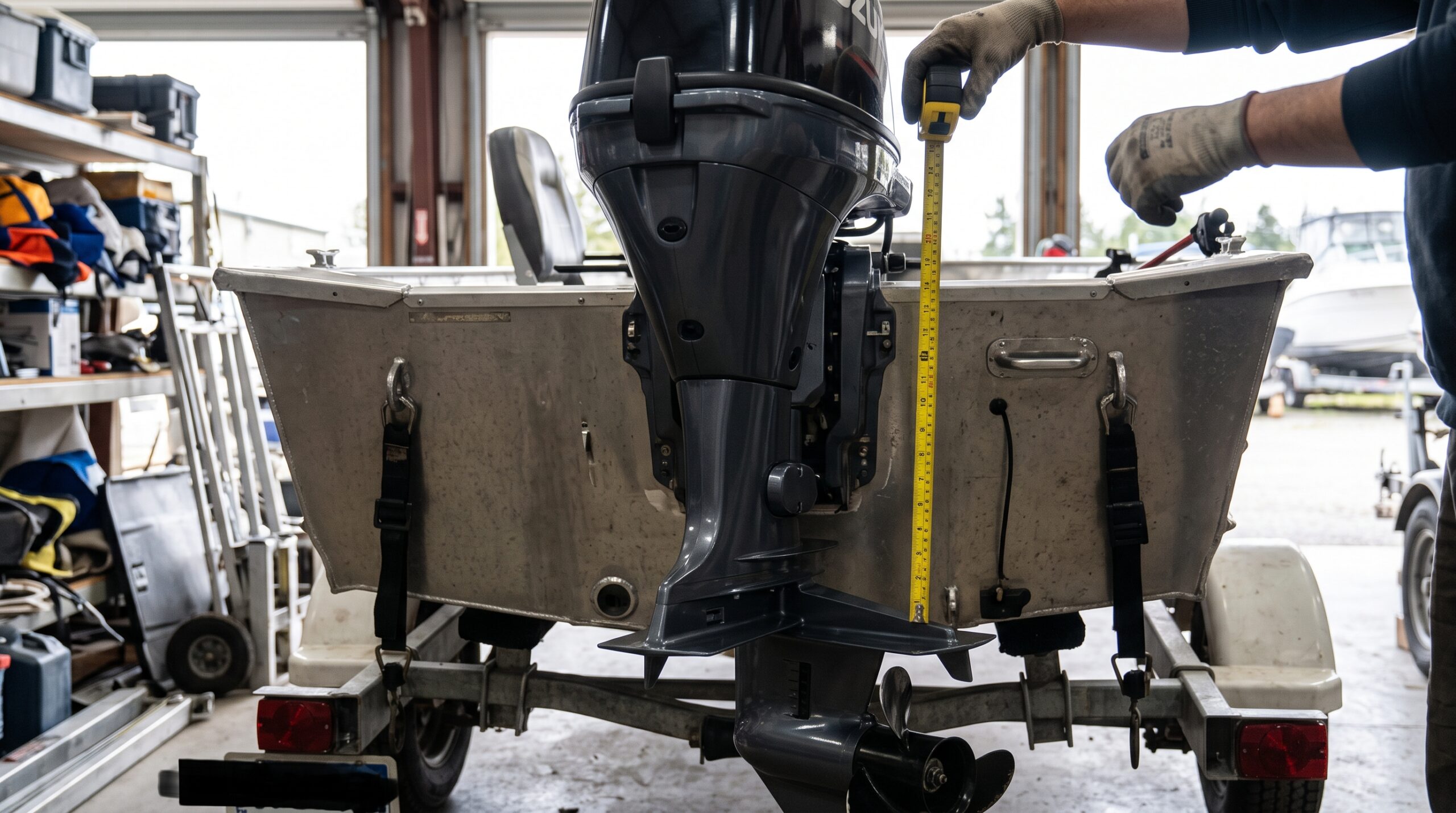
Choosing the correct outboard motor shaft length is important for safe and efficient boating. If the shaft is too short or too long for your boat, the propeller may sit at the wrong depth in the water. This can affect engine cooling, boat handling, speed, and overall performance.
The good news is that measuring an outboard motor shaft does not require many tools. You usually need a measuring tape, a straightedge, and the motor’s manual. You must also know which points the manufacturer uses for its measurement.
To understand how to Measure Outboard Motor Shaft Length Correctly, start by identifying the manufacturer’s upper reference point and measuring vertically to the specified lower reference point, often near the cavitation plate or anti-ventilation plate. Do not assume every brand uses exactly the same measuring method. Check your motor’s manual before recording the final measurement.
You should also measure your boat’s transom height. This helps you compare the motor with the boat and find a suitable shaft length.
In this guide, you will learn how shaft length works, which tools you need, how to measure it step by step, how to check transom height, and how to avoid common mistakes when choosing an outboard motor.
What Is Outboard Motor Shaft Length?
Outboard motor shaft length is the specified vertical distance used to identify the shaft size of an outboard engine. It helps determine whether the motor can be mounted at the correct height on a boat.
The measurement is related to the distance between the motor’s mounting area and the lower section of the engine. The exact reference points depend on the motor’s design and the manufacturer’s instructions.
Outboard motors commonly come in several nominal shaft lengths. These include short-shaft, long-shaft, extra-long-shaft, and ultra-long-shaft models.
The most common nominal sizes are:
-
Short shaft: 15 inches
-
Long shaft: 20 inches
-
Extra-long shaft: 25 inches
-
Ultra-long shaft: 30 inches
These sizes are common industry conventions, not a guarantee that every manufacturer offers all four options.
The Relationship Between Shaft Length and Transom Height
The transom is the rear part of a boat where the outboard motor is mounted. Its height helps determine which shaft length is appropriate.
For example, a boat with a lower transom may be designed for a short-shaft motor. A boat with a taller transom may need a long-shaft or extra-long-shaft motor.
The goal is to position the motor so that the propeller and the engine’s water intake operate at the intended depth.
However, transom height alone does not determine the correct motor. Boat design, mounting position, hull shape, and manufacturer recommendations also matter.
Shaft Length vs. Overall Motor Height
Shaft length and overall motor height are not the same measurement.
Shaft length refers to a specific dimension used to match the motor to the boat’s transom.
Overall motor height refers to the motor’s full vertical size. It may include the powerhead, engine cover, mounting bracket, and lower unit.
A motor can have a tall engine cover but still have a short shaft. Likewise, a motor with a longer shaft does not necessarily have a proportionally taller powerhead.
When comparing outboard motors, use the manufacturer’s shaft-length specification rather than the motor’s total height.
Why Is Measuring Outboard Motor Shaft Length Important?
Measuring the shaft correctly helps you select a compatible motor and avoid problems during installation and operation.
1. Ensure the Motor Fits Your Boat
Every boat has a design and mounting arrangement. A motor that fits one boat may not fit another boat with a different transom height.
Checking the shaft length before buying a motor can help prevent an expensive mismatch.
2. Maintain the Correct Propeller Position
The propeller must sit at a suitable depth when the boat is in the water.
If the motor is mounted too high, the propeller may draw air into the blades, a problem known as ventilation. This can cause the engine to rev without producing the expected thrust.
If the motor sits too low, the extra underwater drag may affect performance. The correct installation height depends on the hull and motor design.
3. Support Proper Engine Cooling
Many outboard motors draw cooling water through an intake in the lower unit.
If the motor is mounted too high or the water intake is not submerged as intended, the engine may receive insufficient cooling water. This can cause overheating and serious engine damage.
A longer shaft is not automatically the solution. The motor must be mounted according to its installation instructions.
4. Improve Handling and Operation
A properly matched outboard motor can help the boat perform as intended. It can support predictable handling, suitable trim, and effective thrust.
An incorrectly matched shaft may contribute to poor acceleration, excessive spray, ventilation, or other operating problems.
5. Make Replacement Easier
If you are replacing an existing motor, measuring the old motor and checking the boat’s transom can help you identify a compatible replacement.
However, do not assume that a replacement must have the same nominal shaft length. The old motor may have been installed incorrectly, or the boat may have special mounting requirements.
Check the boat and motor specifications before making a final decision.
Tools You Need to Measure Outboard Motor Shaft Length
You do not need specialized equipment for a basic measurement. A few common tools will usually be enough.

Measuring tape or ruler
Use a tape measure with clear inch markings. A ruler can work if the distance is short enough.

Straightedge or level
This helps you identify horizontal reference surfaces and keep your measurement aligned.

Manufacturer’s manual
The manual confirms the correct reference points, shaft specification, and installation requirements.

Clear view of the mounting bracket
You need to see where the motor attaches to the boat and identify the correct upper reference point.
A helper can also make the process easier, especially if the motor is mounted on the boat.
Before measuring, make sure the motor is secure and switched off. Keep your hands away from moving parts, and never run the engine out of the water unless the manufacturer’s approved procedure and cooling arrangements are followed.
How to Measure Outboard Motor Shaft Length Correctly Step by Step
The most important part of measuring an outboard motor shaft is using the correct reference points. A measurement taken from the wrong part of the engine can give you an incorrect result.
Follow these steps to get a reliable measurement.
Step 1: Identify the Motor’s Mounting Bracket
Start by locating the mounting bracket at the top of the outboard motor’s shaft area.
The mounting bracket is the part that secures the motor to the boat’s transom. It may include clamps, bolts, a swivel bracket, and a tilt mechanism.
Look for the reference surface specified in the motor’s manual. Depending on the model, the measurement may start at a defined mounting surface rather than the top of the engine cover.
Do not measure from the top of the powerhead or engine cover. These parts are not the standard reference points for identifying shaft length.
If you cannot identify the correct surface, look up the motor’s make, model, and serial number in the manufacturer’s documentation.
Step 2: Find the Top Reference Point
Place your attention on the manufacturer’s specified upper measuring point.
On many conventional outboard motors, shaft length is measured from the top of the transom bracket’s mounting surface to the lower reference plane associated with the anti-ventilation plate. However, the exact procedure can vary.
Use the manual to confirm which surfaces apply to your motor.
If the upper reference surface is flat, you can place a straightedge across it. This helps you establish a clear starting point for the measurement.
Make sure the straightedge is level and stable. A tilted straightedge can introduce errors into your measurement.
Important: Do not assume that the top edge of every mounting bracket is the correct starting point. Follow the reference diagram for your specific engine.
Step 3: Locate the Cavitation Plate
The next step is to identify the horizontal plate above the propeller.
This part is commonly called the anti-ventilation plate. Many boat owners refer to it as the cavitation plate, although ventilation and cavitation are different phenomena.

The plate sits above the propeller and extends outward from the lower unit. It helps control water flow around the propeller area.
To find it:
-
Look at the lower part of the outboard motor.
-
Locate the propeller at the rear of the lower unit.
-
Find the flat horizontal plate just above the propeller.
-
Check your manual to confirm whether this plate or another specified reference is used for the shaft measurement.
Do not confuse this plate with the engine’s water intake openings, skeg, or propeller blades.
The plate is a useful visual reference, but you should not automatically use its underside or top surface without checking the manufacturer’s instructions.
Step 4: Measure the Shaft Length
Once you have identified both reference points, take the measurement.
For a motor that follows the common convention, the measurement is taken vertically between the specified mounting reference and the designated lower reference plane.
Here is the basic process:
-
Keep the motor secure and in the position required by the manual.
-
Position your straightedge at the specified upper reference surface.
-
Hold the measuring tape vertically toward the lower reference point.
-
Keep the tape straight rather than following the curved shape of the engine.
-
Read the measurement carefully in inches or millimeters.
-
Record the result for comparison with the manufacturer’s specifications.
Avoid measuring along the outside of the housing or following the angle of the lower unit. Shaft length is a defined dimension, not the length of the visible engine casing.
For example, suppose the specified distance is approximately 20 inches. That may indicate a nominal long-shaft configuration. You must still confirm the motor’s official shaft specification before identifying it as a long-shaft model.
A measurement of 19.5 or 20.5 inches does not automatically mean the motor is a different shaft size. Small differences may result from the exact reference points, the motor design, or the way the measurement was taken.
Step 5: Confirm the Measurement
Do not rely on a single measurement if the result seems unusual.
Repeat the measurement from the same reference points. If possible, ask another person to check it independently.
Then compare your result with:
-
The motor’s owner’s manual
-
The manufacturer’s product specifications
-
The model and serial number information
-
Any shaft-length label or identification code
-
The installation instructions for your boat
The manufacturer’s stated shaft length is generally more reliable than a rough measurement of an assembled motor.
If the measured dimension does not match a listed nominal size, do not force it into the nearest category. Confirm the measurement method with the manufacturer or an authorized dealer.
Example: You measure a motor and get approximately 25 inches using the correct reference points. The manual lists the motor as an extra-long-shaft model. That is stronger evidence than the measurement alone because it confirms the model’s intended specification.
How to Measure Your Boat’s Transom Height
Measuring the boat’s transom is just as important as checking the motor’s shaft length.
Your transom height helps you determine whether the motor’s shaft is appropriate for the boat. The measurement is taken at the rear of the boat, near the centerline where the outboard is mounted.
Find the Center of the Transom
The transom is the rear wall or structural section of the boat.
First, identify the area where the motor attaches. If the boat has a single outboard, the center of the intended mounting position is usually the most useful place to start.
If the boat has a bracket, setback plate, or unusual transom design, the correct reference point may differ. Consult the boat manufacturer’s instructions.
Make sure you can see the mounting surface clearly. Remove any loose items that block access, but do not remove structural parts or hardware.
Measure from the Mounting Surface to the Bottom
Use a measuring tape or straightedge to measure the vertical distance from the specified motor mounting surface down to the boat’s bottom near the centerline.

Follow this process:
-
Locate the upper surface where the outboard mounting bracket rests.
-
Identify the boat bottom at the centerline near the mounting position.
-
Hold the tape vertically between the specified points.
-
Keep the measurement aligned with the boat’s intended mounting geometry.
-
Record the distance in inches.
-
Repeat the measurement to check your result.
Some hulls have curved bottoms, stepped transoms, integrated motor wells, or setback brackets. In these cases, the relevant reference points may be different from those on a simple flat transom.
Use the boat manufacturer’s instructions when available.
Also, do not measure from the ground to the top of the transom. That measurement tells you nothing useful about the transom’s actual height.
Compare Transom Height With Shaft Length
Once you have the transom measurement, compare it with the recommended shaft length for the boat.
The following table provides a general starting point for conventional transoms and common outboard shaft sizes.
| Common shaft type | Nominal shaft length | Typical transom category |
|---|---|---|
| Short shaft | 15 inches | Lower transom |
| Long shaft | 20 inches | Standard-height transom |
| Extra-long shaft | 25 inches | Taller transom |
| Ultra-long shaft | 30 inches | Special tall-transom applications |
These categories are only a guide. The transom’s measured height does not always equal the motor’s nominal shaft length because manufacturers may use different reference conventions.
Boat design, mounting brackets, hull shape, and the intended installation height all affect the final choice.
For example, if your boat’s transom is around 20 inches high, a conventional long-shaft motor may be a suitable starting point for your research. However, you should not buy one based on that number alone.
Check the boat’s maximum motor specifications and the outboard manufacturer’s installation guidance first.
Common Outboard Motor Shaft Length Sizes
Outboard manufacturers offer different shaft configurations to suit boats with different transom heights.
Knowing the common sizes can help you understand product listings and compare replacement motors.
Short Shaft: 15 Inches
A short-shaft outboard has a nominal shaft length of approximately 15 inches.
It is often used on small boats designed for this configuration. Examples may include certain small fishing boats, utility boats, and inflatable boats.
However, not every small boat requires a short shaft. Some small boats have taller transoms and need a long-shaft motor.
Always check the boat’s specifications before buying.
Long Shaft: 20 Inches
A long-shaft motor typically has a nominal shaft length of approximately 20 inches.
It is common on many fishing boats and other boats designed for a standard-height transom.
A long shaft can help position the propeller and water intake correctly when the boat is built for this setup.
Do not assume that every fishing boat uses a 20-inch shaft. Some have different mounting requirements.
Extra-Long Shaft: 25 Inches
An extra-long-shaft outboard typically measures about 25 inches according to the applicable nominal convention.
It may be suitable for boats with taller transoms or specific mounting arrangements.
Some larger boats and specialized hull designs use extra-long-shaft motors. The exact application depends on the boat and engine.
Ultra-Long Shaft: 30 Inches
Some outboards are available with a nominal shaft length of about 30 inches.
These motors are designed for particular applications that require a greater mounting height or a specialized installation arrangement.
They are not simply better or more powerful than shorter-shaft motors. Their purpose is to provide the appropriate fit for a compatible boat.
Availability varies by manufacturer, horsepower, and model.
Why Nominal Shaft Sizes Matter
Nominal sizes help boat owners compare outboards, but the listed length is not necessarily the length of every visible shaft component.
The measurement convention and reference points matter.
Before purchasing a motor, compare the manufacturer’s listed shaft length with the boat’s recommended configuration. This is more reliable than judging the motor by appearance.
How to Choose the Right Outboard Motor Shaft Length
The best shaft length depends on the boat’s design, transom height, intended use, and motor installation requirements.
Do not choose a motor based only on its price, horsepower, or overall appearance. A motor with the right power but the wrong shaft length may not perform as intended.
Choosing a Shaft for a Small Boat
Small boats often use short-shaft or long-shaft outboards, depending on their transom design.
For example, a small dinghy with a transom designed for a 15-inch shaft may work well with a compatible short-shaft motor. Another small boat with a taller transom may require a 20-inch shaft.
Before choosing, consider:
-
The boat manufacturer’s recommended shaft length
-
The height and shape of the transom
-
The outboard’s weight and horsepower limits
-
The intended use of the boat
-
Whether the motor can be mounted securely
If you have an inflatable boat, check whether its transom is designed for an outboard and whether the motor’s weight is within the boat’s limit.
Never assume that all inflatable or portable boats use the same shaft size.
Choosing a Shaft for a Fishing Boat
Fishing boats come in many shapes and sizes. Some are designed for short-shaft motors, while others require long-shaft or extra-long-shaft engines.
For a fishing boat, check the transom height and the manufacturer’s recommended mounting height.
You should also consider the boat’s loading conditions. Passengers, fishing equipment, fuel, and other gear affect how the boat sits in the water.
A suitable motor must match both the boat’s structure and its operating requirements.
If you are replacing an existing outboard, inspect the current installation. If the boat has handled poorly or the propeller has repeatedly ventilated, investigate the installation before assuming the old shaft size was correct.
Choosing a Shaft for a Pontoon or Larger Boat
Pontoons and larger boats may have special mounting arrangements.
Some use raised motor brackets or different transom structures. Others are designed for long-shaft, extra-long-shaft, or specific engine configurations.
The correct choice depends on the boat’s design, the motor’s mounting location, and the manufacturer’s requirements.
For these boats, avoid relying on a general shaft-length chart. Consult the boat’s documentation and the motor installation manual.
If the transom has been modified or the motor sits on an aftermarket bracket, professional advice can help you confirm the correct configuration.
Check the Manufacturer’s Recommendations
This is the most important step when choosing a replacement motor.
Find the boat’s model information and the outboard motor’s model or serial number. Use these details to check the official specifications.
Confirm the following:
-
Recommended outboard shaft length
-
Maximum permitted horsepower
-
Maximum engine weight, where specified
-
Required mounting height
-
Compatibility with any setback or mounting bracket
-
Propeller clearance and cooling-water requirements
If the information is unclear, contact the boat or motor manufacturer or an authorized dealer.
The correct choice is the shaft length that meets the boat’s installation requirements, not simply the one that matches a measurement from a general online chart.
Common Mistakes When Measuring Outboard Motor Shaft Length
Even a simple measurement can be inaccurate if you use the wrong reference points. Avoid these common errors.
1. Measuring From the Wrong Reference Point
One of the most common mistakes is measuring from the top of the engine cover instead of the specified mounting surface.
The engine cover is part of the powerhead assembly. It is not a reliable reference for identifying shaft length.
Always confirm the correct starting and ending points in the manual.
2. Confusing Overall Motor Height With Shaft Length
The overall height includes parts that are not part of the shaft-length measurement.
A motor’s appearance can be misleading because the powerhead, mounting bracket, and lower unit differ among models.
Use the official shaft specification rather than comparing the total height of two motors.
3. Using Transom Height as the Only Selection Factor
Transom height is important, but it is not the only factor.
A boat with a modified transom, setback bracket, or unusual hull shape may require a different approach.
Check the manufacturer’s recommended shaft length and mounting position before buying.
4. Assuming Every Manufacturer Uses the Same Convention
Different motor designs may have different measuring instructions or reference points.
A measurement that seems correct for one model may not be appropriate for another.
Do not assume that a tape-measure result automatically establishes the motor’s official shaft category.
5. Ignoring the Installation Manual
The manual contains important information about mounting, engine cooling, and installation height.
Ignoring it can lead to an incorrectly positioned motor or an unsuitable replacement.
If you do not have the printed manual, look for the official digital version using the motor’s make and model.
6. Measuring at an Angle
Shaft length is a defined dimension, usually measured vertically between specified reference points.
If you run the tape along a curved housing or at an angle, you may get an inaccurate result.
Use a straightedge where necessary and keep the measurement aligned with the required reference surfaces.
7. Buying a Replacement Without Checking Compatibility
Two motors with similar horsepower can have different shaft lengths and mounting arrangements.
Before ordering, check the exact model, shaft specification, mounting compatibility, and boat limits.
This is especially important when buying a used motor or replacing an engine from a different manufacturer.
What Happens If the Outboard Motor Shaft Is Too Long or Too Short?
An incorrect shaft length can affect the way the motor sits in the water and how it performs.
The effects depend on the boat, motor, mounting height, load, and water conditions.
Problems With a Shaft That Is Too Short
A shaft that is too short for the boat may position the propeller and water intake too high.
Possible problems include:
-
Propeller ventilation during acceleration or turns
-
Reduced thrust or inconsistent propulsion
-
Poor handling in some operating conditions
-
Water intake becoming insufficiently submerged
-
Risk of engine overheating if cooling water supply is affected
The exact symptoms vary by installation.
If the propeller repeatedly loses its grip on the water or the engine’s cooling-water flow seems abnormal, stop and inspect the installation. Do not continue running an engine that may be overheating.
A short shaft is not automatically wrong. It is wrong when it does not match the boat’s intended mounting configuration.
Problems With a Shaft That Is Too Long
A shaft that is too long for the boat may position the lower unit and propeller deeper than intended.
Potential effects include:
-
Increased underwater drag
-
Reduced performance in some conditions
-
More spray around the hull or transom
-
Changes in handling and trim
-
Reduced efficiency due to an unsuitable mounting arrangement
However, these symptoms do not prove that the shaft itself is too long. The mounting height, propeller selection, hull design, and engine setup may also contribute.
Do not raise or lower a motor simply to correct one symptom without checking the manufacturer’s installation guidance.
How Incorrect Shaft Length Can Affect Performance
The outboard motor, propeller, hull, and transom work together.
The engine needs a suitable position to provide thrust while maintaining the intended cooling-water supply. The propeller must operate at an appropriate depth for the boat’s design.
If the motor is installed too high, the propeller may ventilate or the cooling-water intake may not remain submerged as intended. If it is installed too low, drag may increase.
These issues can affect acceleration, handling, fuel use, and top speed. However, fuel consumption and speed also depend on engine condition, propeller choice, boat loading, and water conditions.
If your boat performs poorly, check the motor’s shaft specification and mounting height before changing parts. If you are unsure, ask a qualified marine technician to inspect the installation.
Frequently Asked Questions
How do you measure shaft length on an outboard motor?
To measure an outboard motor shaft, first identify the manufacturer’s upper and lower reference points. On many conventional outboards, the measurement runs vertically from the top of the mounting surface to the specified plane at the anti-ventilation plate.
Use a measuring tape and straightedge to check the distance. Then compare your result with the motor’s official specifications.
Do not measure from the top of the engine cover or assume that every manufacturer uses the same reference points.
How do I know if my outboard motor is a short or long shaft?
Check the motor’s manual, model number, or manufacturer’s specifications first.
Common nominal shaft sizes include:
-
Short shaft: 15 inches
-
Long shaft: 20 inches
-
Extra-long shaft: 25 inches
-
Ultra-long shaft: 30 inches
These sizes are general conventions. Confirm the listed specification for your particular model before identifying its shaft type.
Is outboard shaft length the same as transom height?
No. Outboard shaft length and boat transom height are related, but they are not the same measurement.
Shaft length is a specified dimension of the motor. Transom height is a measurement of the boat’s rear mounting area.
Transom height helps you determine the appropriate shaft length, but the correct match depends on the boat and motor manufacturer’s instructions.
Can I use a long-shaft motor on a short-transom boat?
Not necessarily. A long-shaft motor may sit too low on a boat designed for a short-shaft engine.
This can increase drag and affect handling or performance. A motor that is poorly matched to the boat may also require an unsuitable mounting arrangement.
Use the boat manufacturer’s recommended shaft length. Do not assume that a mounting adapter or bracket will solve the problem without checking compatibility and installation requirements.
Where can I find my outboard motor’s shaft length specifications?
You can usually find the specification in the owner’s manual, the official product page, or the manufacturer’s technical documentation.
You may need the motor’s make, model, horsepower rating, and serial number to identify the correct version.
If you are buying a used outboard, ask the seller for the full model information. You can then confirm the shaft length with the manufacturer or an authorized dealer.
Can I measure outboard shaft length without removing the motor?
Often, yes. You may be able to identify the required reference points and take the measurement while the motor is mounted.
However, access can be limited by the boat’s design, the mounting bracket, or other components. If you cannot see the reference points clearly, use the official model specifications instead of guessing.
Never loosen mounting hardware or place yourself in an unsafe position just to obtain a measurement.
What is the difference between a 15-inch and 20-inch outboard shaft?
A 15-inch shaft is commonly classified as a short shaft, while a 20-inch shaft is commonly classified as a long shaft.
The difference is important because the motor must match the boat’s transom and intended mounting height.
A 20-inch shaft is not automatically better than a 15-inch shaft. The correct choice depends on your boat’s design and the manufacturer’s recommendations.
Does a longer outboard shaft provide more power?
No. A longer shaft does not automatically increase engine horsepower.
Shaft length determines the motor’s mounting configuration. Horsepower is a separate engine specification.
Choose the appropriate shaft length for the boat, then select an engine that meets the boat’s permitted horsepower and weight limits.
Should I measure the shaft or the transom before buying a replacement motor?
Ideally, check both. Measuring the boat’s transom helps establish the required configuration, while checking the existing motor helps you understand the current setup.
Then compare both measurements with the boat manufacturer’s recommendations and the replacement motor’s official specifications.
If the old motor was mounted incorrectly, copying its shaft length may repeat the same problem.
Final Thoughts
Learning how to Measure Outboard Motor Shaft Length Correctlyis a practical way to avoid buying an incompatible engine.
Start by identifying the correct reference points in the motor’s manual. Measure the specified vertical distance, repeat the measurement, and check the result against the manufacturer’s listed shaft size.
Next, measure your boat’s transom height and compare it with the boat’s recommended outboard configuration.
Remember that 15-inch, 20-inch, 25-inch, and 30-inch shaft lengths are common nominal sizes, not universal rules for every boat.
The safest approach is to measure carefully, verify the manufacturer’s specifications, and confirm compatibility before purchasing or installing a replacement outboard motor.













One thought on “How to Measure Outboard Motor Shaft Length Correctly”