



Our Blogs
What Is a Car Suspension System? A Simple Guide

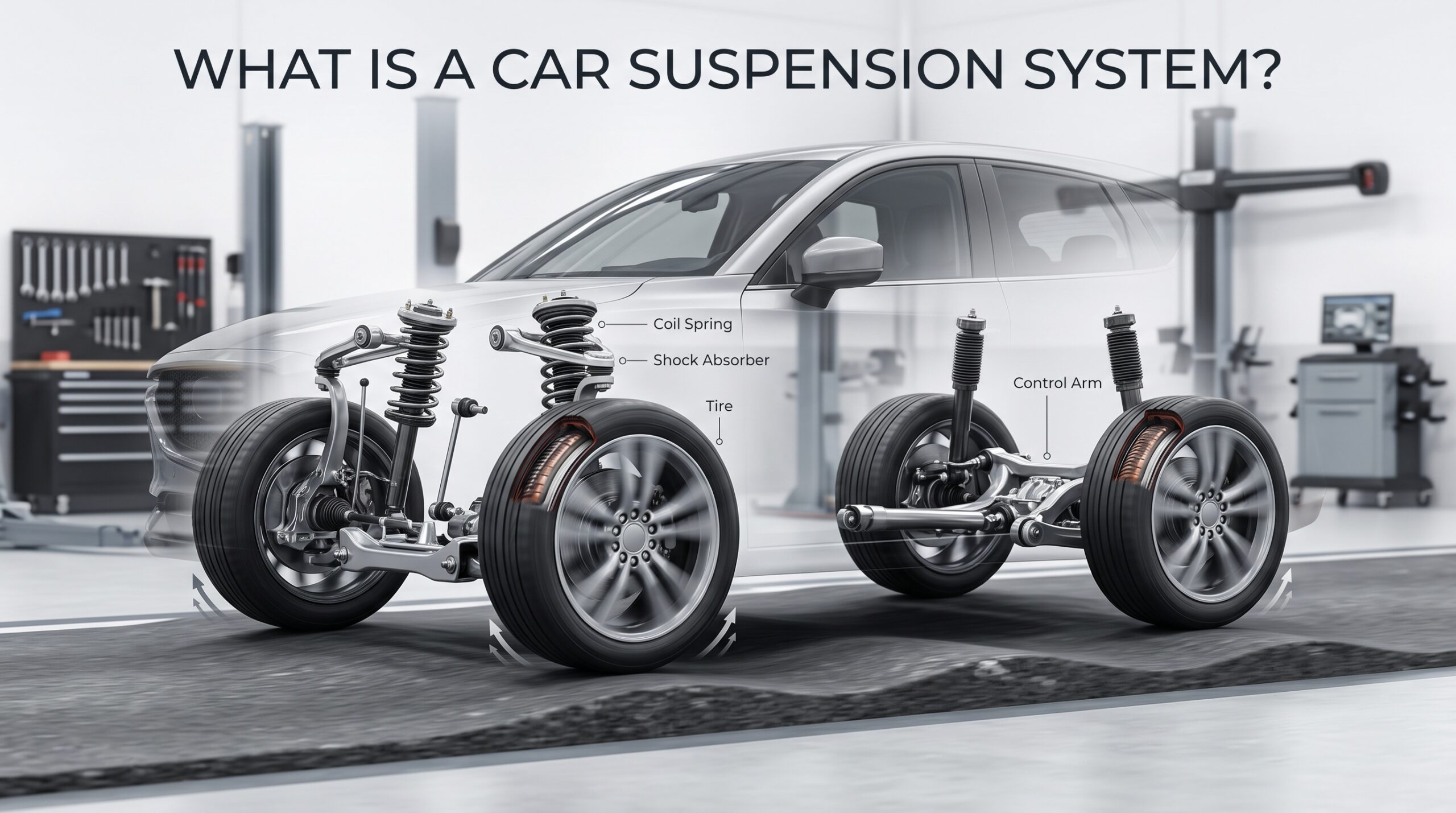
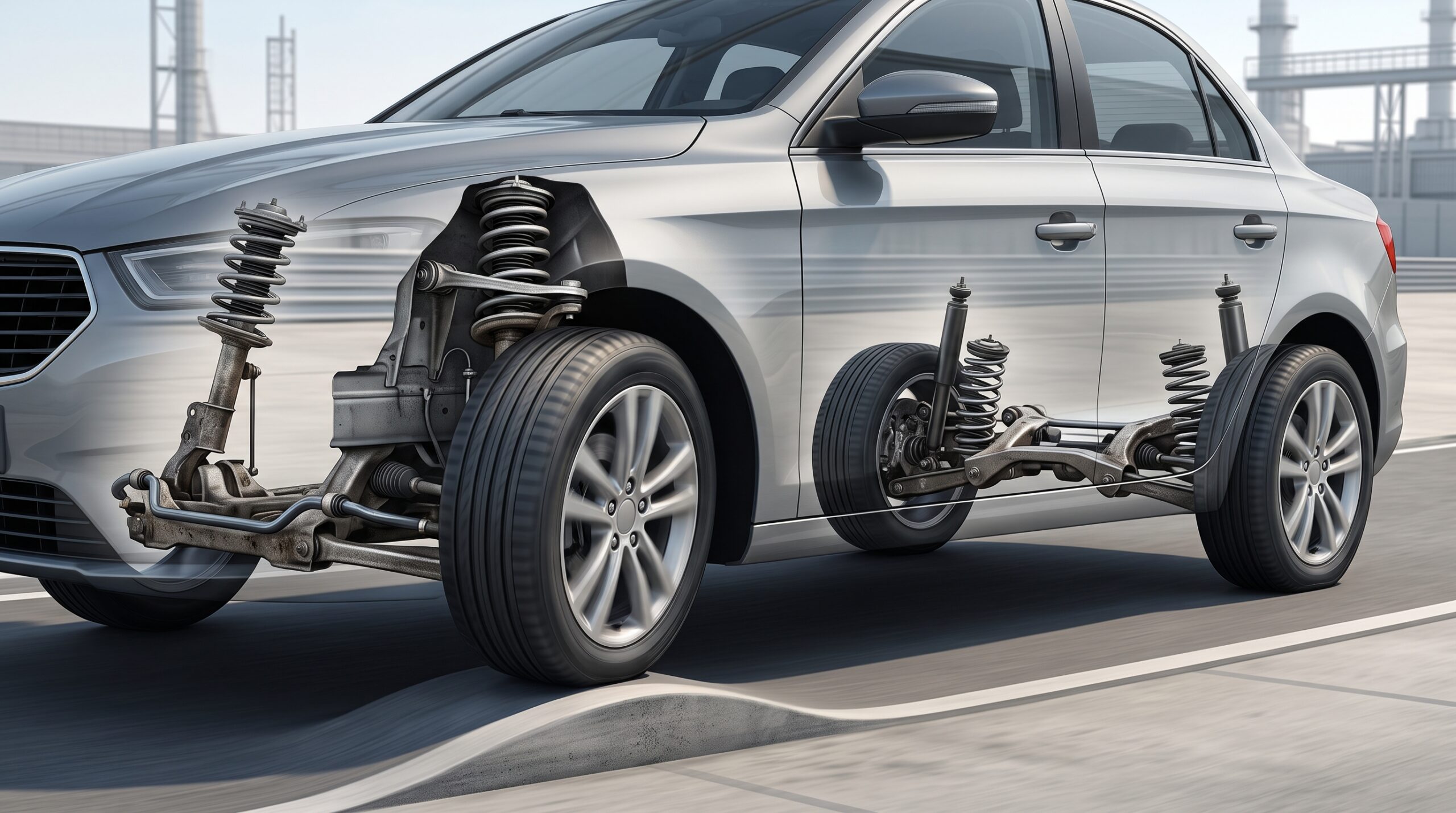
If you have ever wondered what is a car suspension system, the simple answer is that it is the group of parts that connects a vehicle’s wheels to its body and helps control how the vehicle moves over the road.
A suspension system does much more than make a ride feel comfortable. It helps the tires stay in contact with the road, supports the weight of the vehicle, improves handling, and helps the driver maintain control. Springs, shock absorbers, struts, control arms, ball joints, bushings, and other parts all work together as a system.
When you drive over a pothole, speed bump, rough road, or uneven surface, the suspension helps manage the movement caused by that road. Without a working suspension, every bump would have a much greater effect on the vehicle and its occupants.
Understanding what is a car suspension system can help you notice problems before they become more serious. Strange noises, uneven tire wear, excessive bouncing, pulling, or changes in ride height can all point to suspension issues.
In this guide, we will explain how suspension works, its main components, common suspension designs, warning signs, causes of failure, maintenance, repair costs, and when it may be unsafe to continue driving.
What Is a Car Suspension System?
So, what is a car suspension system in more technical terms?
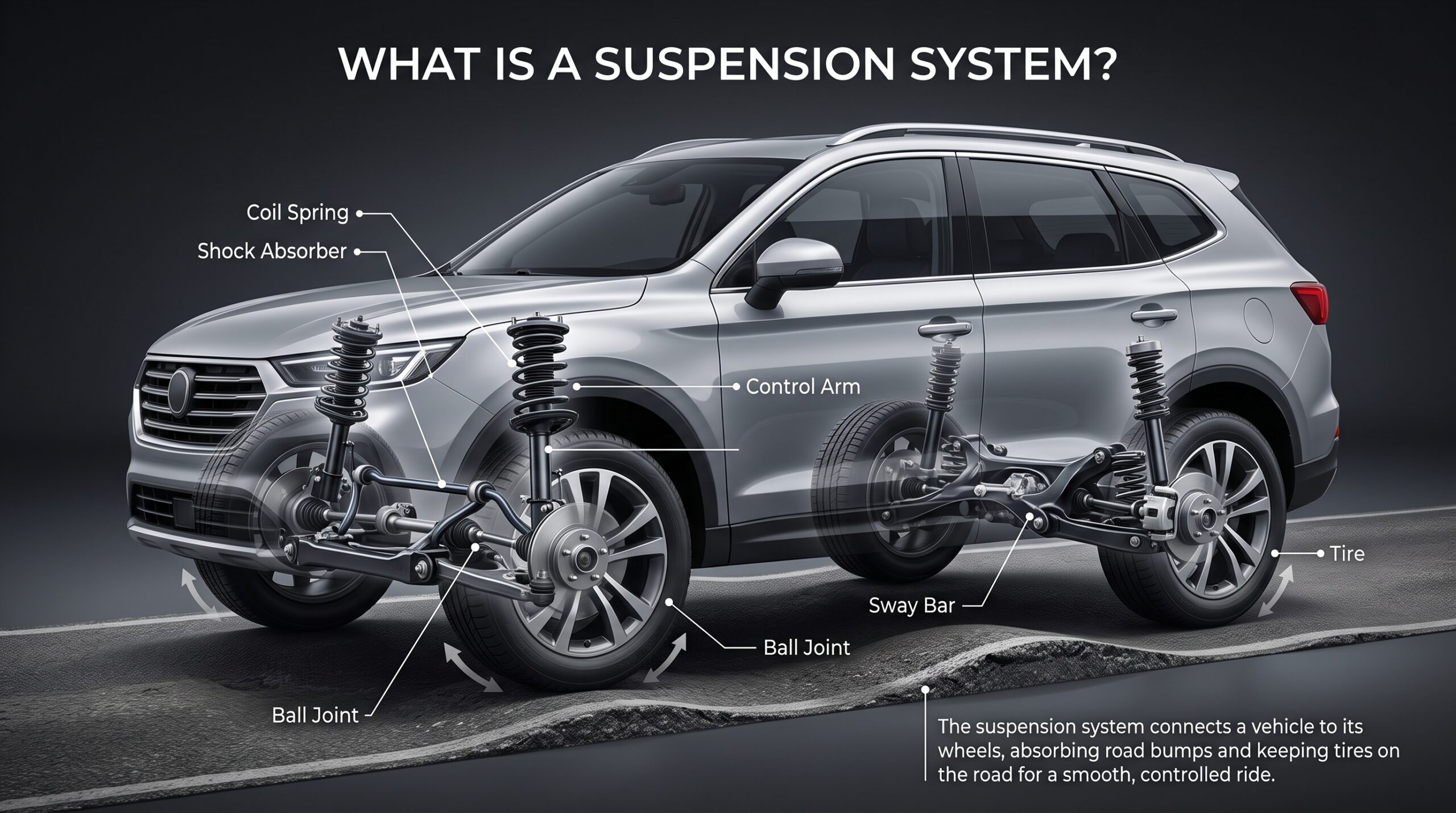
A car suspension system is a collection of mechanical components that connects the wheels and tires to the vehicle body or frame. Its job is to allow controlled wheel movement while supporting the vehicle and helping maintain tire contact with the road.
The suspension must handle several forces at the same time. When the vehicle accelerates, brakes, turns, or travels over an uneven road, the suspension responds to changes in weight and movement.
A basic suspension system usually includes:
- Springs
- Shock absorbers or struts
- Control arms
- Ball joints
- Bushings
- Steering knuckles or related mounting components
- Wheel hubs and bearings in related assemblies
- Anti-roll bars on many vehicles
Not every vehicle uses exactly the same parts. Suspension design depends on the vehicle’s size, weight, drivetrain, intended use, and manufacturer.
The Connection Between the Wheels and Body
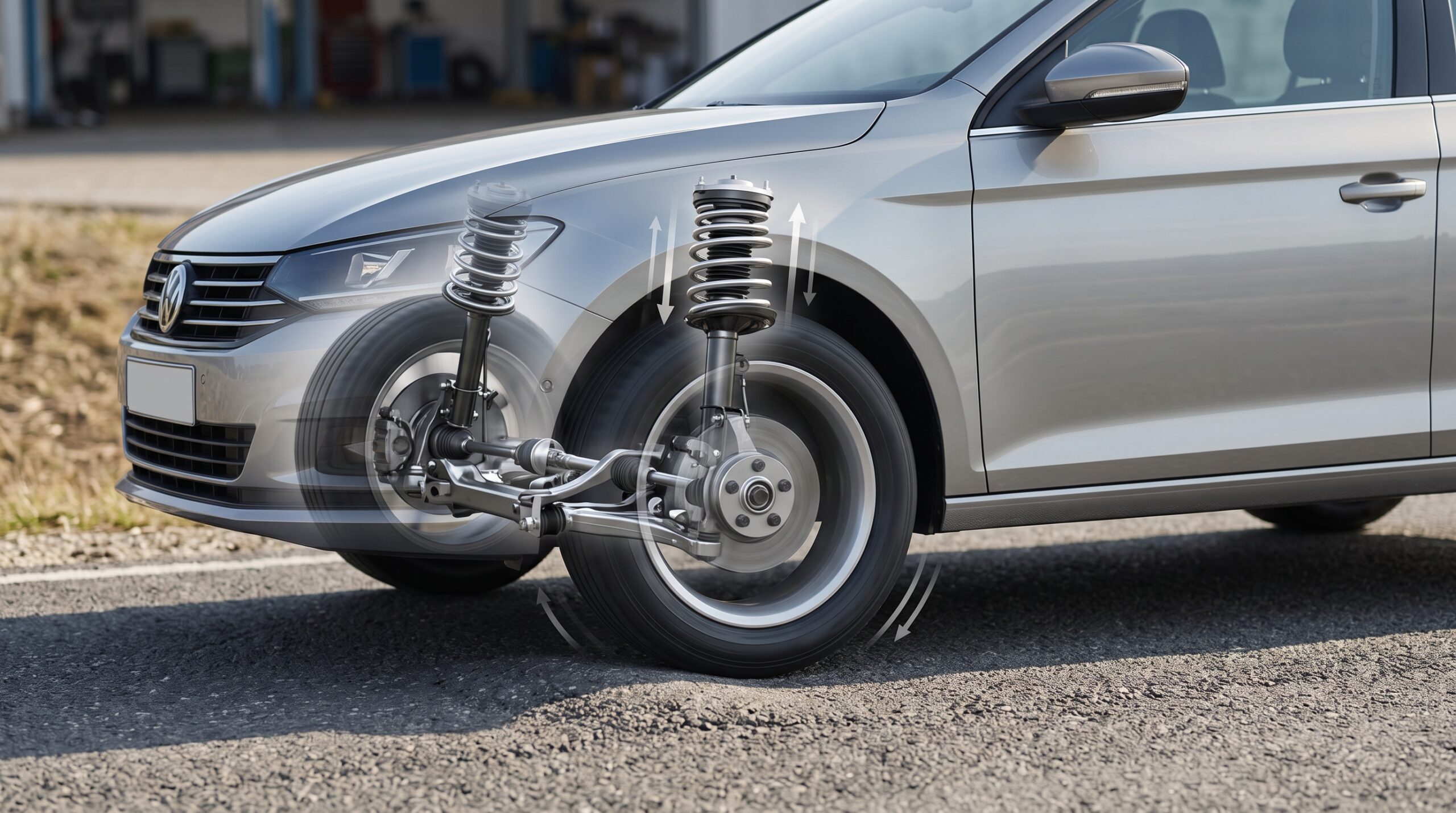
The suspension creates a controlled connection between the wheels and the vehicle body. The wheels need to move up and down when they encounter road surfaces, but the body should remain relatively stable.
For example, imagine driving over a speed bump. The wheel moves upward as it reaches the bump. The spring compresses to absorb some of that movement. The shock absorber controls the spring’s movement so the vehicle does not continue bouncing repeatedly.
This explains what is a car suspension system in everyday driving: it is the system that manages wheel movement and helps the vehicle remain stable while traveling over different road surfaces.
How Does a Car Suspension System Work?
Understanding what is a car suspension system becomes easier when you understand what happens when a vehicle moves.
The suspension performs three major jobs: it absorbs road movement, helps keep the tires connected to the road, and supports the vehicle’s weight.
Absorbing Road Bumps
Roads are not perfectly smooth. Potholes, cracks, speed bumps, uneven pavement, and other surfaces can make the wheels move quickly.
The suspension reduces how much of this movement reaches the vehicle body.
Springs compress and extend as the wheels move. However, springs alone would allow the vehicle to continue moving up and down after hitting a bump.
This is where shock absorbers help.
A shock absorber controls suspension movement by resisting the rapid motion of the suspension. It helps turn some of the movement’s energy into heat within the shock absorber.
The result is better control and less bouncing.
For example, if a car has weak shock absorbers, it may continue bouncing after passing over a bump. With properly functioning shocks, the vehicle should settle more quickly.
Keeping the Tires on the Road
Another important part of what is a car suspension system is tire contact.
The tires need to maintain good contact with the road for the vehicle to accelerate, brake, and turn effectively.
If a wheel moves excessively or loses contact with the road because of suspension problems, the vehicle may become harder to control.
A suspension system allows the wheel to move while helping control that movement. This is especially important when driving on uneven roads or during cornering.
Good tire contact also works together with proper tire pressure, tread condition, wheel alignment, and other vehicle systems.
Supporting Vehicle Weight
The suspension also supports the weight of the vehicle.
This includes the vehicle body, engine, transmission, fuel, passengers, luggage, and other loads.
Springs carry much of this load and help maintain the vehicle’s intended ride height.
Ride height is the distance between parts of the vehicle and the road. If a spring becomes damaged or weak, one corner of the vehicle may sit lower than normal.
That can affect handling and may also change suspension geometry.
Main Parts of a Car Suspension System
Knowing what is a car suspension system also means understanding its major components.
Different vehicles use different suspension designs, but many modern cars contain several common parts.
Springs
Springs support vehicle weight and allow the wheels to move relative to the vehicle body.
There are several common types.
Coil Springs
Coil springs are among the most common springs used in passenger vehicles.
They are made from specially designed spring steel formed into a coil. When the wheel moves upward, the spring compresses. When the wheel moves downward, it extends.
Coil springs are compact and can be designed for different vehicle weights and suspension requirements.
Leaf Springs
Leaf springs use long, curved strips of spring steel arranged in layers or other configurations.
They are common in many trucks and some other vehicles because they can support substantial loads.
A leaf spring can also help locate the axle, depending on the vehicle’s design.
Air Springs
Air suspension systems use pressurized air instead of conventional metal springs for the main springing function.
Air springs can allow changes in ride height and load management on certain vehicles.
They are found in some luxury vehicles, buses, trucks, and other applications.
Shock Absorbers
Shock absorbers control suspension movement.
One important difference between springs and shocks is their main function.
A spring stores and releases energy as it compresses and expands. A shock absorber controls the speed and amount of that movement.
This distinction is important when learning what is a car suspension system because people sometimes use the words “spring” and “shock” as if they perform the same job.
They do not.
A worn shock absorber may allow excessive bouncing, poor body control, or other handling changes.
Struts
A strut can perform a structural role in the suspension in addition to providing damping.
The most common example is the MacPherson strut design, widely used on the front suspension of many passenger cars.
A typical strut assembly can include a spring, damper, upper mount, and other related components.
A strut and a traditional shock absorber both control suspension movement, but they are not always interchangeable terms. A strut can be an important structural part of the suspension.
Control Arms
Control arms connect the wheel assembly to the vehicle body or frame.
They allow controlled movement as the wheel travels up and down.
Many vehicles have upper and lower control arms, while others use different arrangements.
Control arms usually work with bushings and ball joints.
If a control arm or its mounting points become damaged, wheel alignment and handling can be affected.
Ball Joints
Ball joints provide a flexible connection between suspension components.
They allow parts of the suspension to move through different angles while the wheels move and steer.
A ball joint must allow movement without excessive looseness.
A worn ball joint can cause changes in steering feel, suspension noise, or wheel alignment. Severe wear can become a serious safety concern.
Bushings
Bushings are flexible components that help isolate vibration and allow controlled movement between suspension parts.
They are commonly made from rubber or other flexible materials.
Bushings help reduce unwanted vibration and noise.
Over time, bushings can crack, harden, wear, or become damaged.
Possible signs of worn bushings include unusual noises, changes in handling, or visible deterioration during an inspection.
Types of Car Suspension Systems
There is more than one answer to what is a car suspension system because vehicles use different suspension designs.
The three broad categories are independent, dependent, and semi-independent suspension.
Independent Suspension
With independent suspension, movement at one wheel can occur without directly forcing the opposite wheel to move by the same amount.
This gives engineers more control over wheel movement and vehicle handling.
Common independent suspension designs include:
- MacPherson strut
- Double wishbone
- Multi-link
- Trailing-arm arrangements
Independent suspension is common on passenger cars.
For example, when one front wheel passes over a small bump, the suspension can allow that wheel to respond without requiring the opposite front wheel to follow the same movement.
Dependent Suspension
Dependent suspension connects the movement of the wheels on an axle more directly.
A common example is a solid axle, where the two wheels are connected by a rigid axle assembly.
This design is still used in many trucks and other vehicles because it can offer useful characteristics for heavy loads and demanding applications.
The suspension choice depends on the vehicle’s purpose.
Semi-Independent Suspension
Semi-independent suspension sits between fully independent and dependent designs.
A common example is a torsion-beam rear suspension.
The wheels can move to some degree independently, but the design still links their movement through a structural beam.
This type of suspension is common in many compact and small passenger vehicles.
Why Is a Car Suspension System Important?
If someone asks what is a car suspension system and why it matters, the answer goes beyond comfort.
The suspension affects several aspects of driving.
Ride Comfort
The suspension helps reduce the effect of bumps and uneven roads.
Without adequate suspension movement and damping, passengers would feel much more road vibration.
A properly working system provides a controlled ride without excessive bouncing.
Steering Control
Suspension geometry affects how the wheels move and remain positioned relative to the vehicle.
If suspension components become worn or damaged, steering may feel different.
The vehicle may wander, pull, or feel less stable.
Braking Performance
Braking depends heavily on tire contact with the road.
A suspension problem can affect how the tires interact with the road, particularly if the vehicle has excessive movement or damaged components.
Suspension condition is therefore one part of overall vehicle control.
Tire Contact and Traction
Tires need contact with the road to produce traction.
The suspension helps the wheels follow uneven road surfaces while controlling movement.
However, tire condition, road conditions, tire pressure, and vehicle speed also have major effects on traction.
Vehicle Stability
During a turn, braking, or acceleration, vehicle weight shifts.
The suspension helps manage these movements.
Anti-roll bars, springs, dampers, and suspension geometry can all contribute to body control.
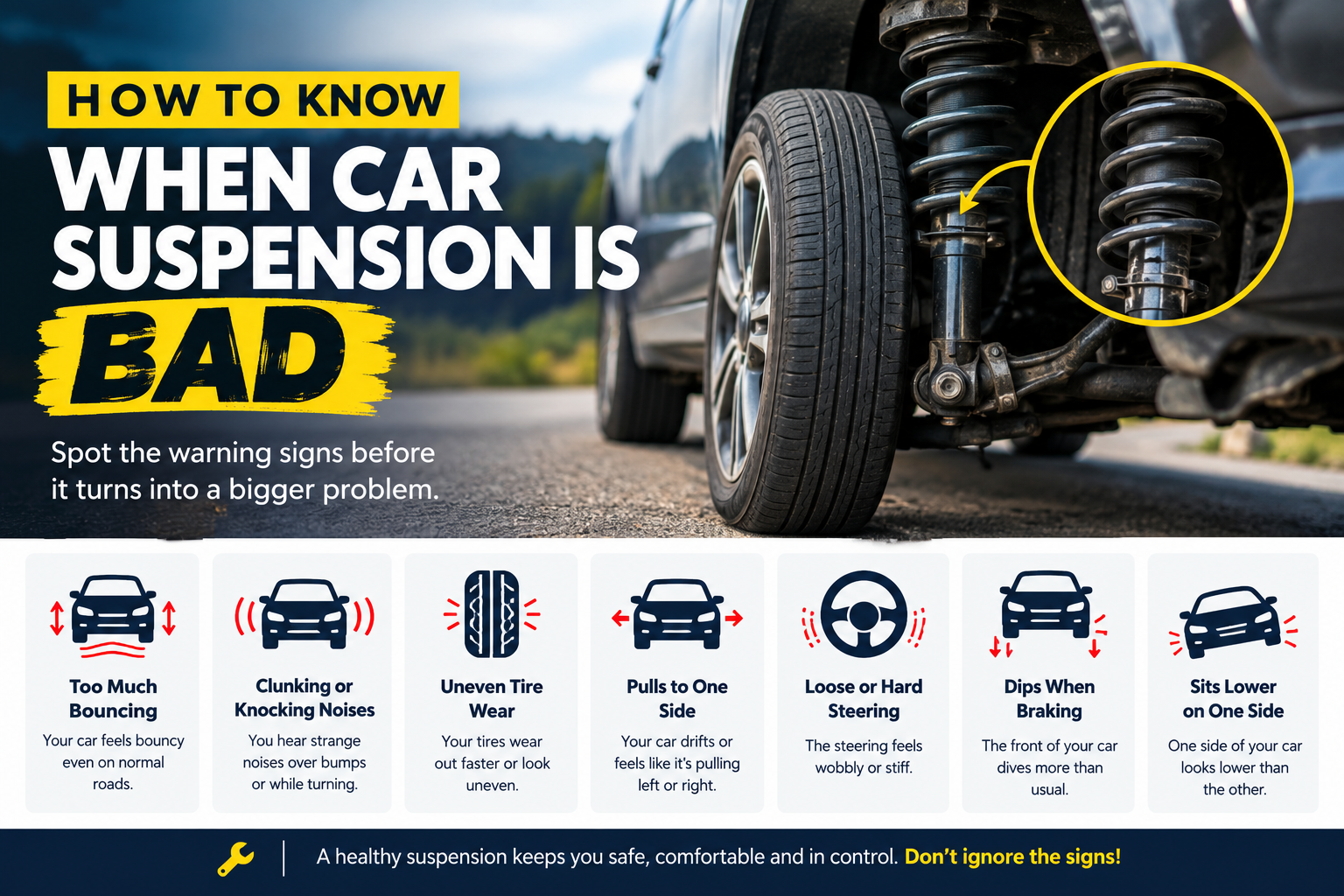
Signs of a Bad Suspension System
Knowing what is a car suspension system is useful, but knowing how to recognize problems is even more practical.
Suspension problems can develop slowly or appear suddenly after an impact.
Here are common warning signs.
Excessive Bouncing
If your vehicle keeps bouncing after passing over a bump, the dampers may not be controlling suspension movement properly.
Do not assume that every bouncing problem is caused by a shock absorber. Springs and other components can also contribute to suspension problems.
A professional inspection can identify the actual cause.
Uneven Tire Wear
Suspension problems can sometimes contribute to uneven tire wear.
For example, worn components may allow unwanted wheel movement or change suspension geometry.
However, uneven tire wear can also be caused by incorrect tire pressure, poor wheel alignment, tire imbalance, or other problems.
If you see unusual wear, have the tires and suspension checked.
Vehicle Pulling to One Side
If your car consistently moves toward one side, several causes are possible.
These can include:
- Wheel alignment problems
- Tire pressure differences
- Tire problems
- Brake issues
- Suspension damage
Because pulling has multiple possible causes, do not replace suspension parts without proper diagnosis.
Knocking or Clunking Sounds
A knocking, clunking, or rattling noise over bumps can indicate a worn or loose suspension component.
Possible causes include worn bushings, ball joints, stabilizer links, strut mounts, or other parts.
The exact source can be difficult to identify without inspection.
Excessive Body Roll
Some body movement during cornering is normal.
However, excessive leaning or a sudden change in cornering behavior can indicate a suspension or stabilizer-system problem.
It may also indicate other handling issues.
Nose Diving During Braking
A vehicle naturally moves its weight forward when braking.
Some front-end movement is normal.
Excessive nose diving can indicate problems with damping, springs, or other suspension components.
It should be inspected if the behavior is new or noticeably worse than before.
Uneven or Sagging Ride Height
If one side or one corner of the vehicle sits lower than the others, there may be a damaged or weakened spring or another suspension problem.
A sagging vehicle should be inspected rather than simply assuming the problem is cosmetic.
What Causes Suspension Problems?
Several factors can explain what is a car suspension system problem and why it develops.
Rough Roads and Potholes
Repeated impacts from potholes, broken pavement, speed bumps, and rough roads can place stress on suspension components.
A severe pothole can also damage a wheel, tire, steering component, or suspension part in a single event.
Normal Wear and Tear
Suspension parts experience repeated movement and loads.
Over time, components such as bushings, ball joints, springs, shocks, and struts can wear.
The service life varies widely based on vehicle design, driving conditions, mileage, climate, and component quality.
Overloading the Vehicle
Carrying loads above the vehicle’s recommended capacity puts additional stress on the suspension.
Always follow the vehicle manufacturer’s load limits.
Overloading can also affect braking, steering, tire performance, and overall vehicle control.
Corrosion
Road salt, moisture, mud, and other environmental factors can contribute to corrosion.
Corrosion may affect springs, mounting points, fasteners, and other components.
Vehicles used in areas with harsh road conditions may require more frequent inspection.
Damaged or Worn Components
A suspension system is made of many connected parts.
Damage to one component can affect other parts.
For example, a worn bushing may allow extra movement, while a damaged ball joint can affect suspension and steering geometry.
How to Maintain a Car Suspension System
Understanding what is a car suspension system is only the first step. Regular maintenance can help identify problems early.
Check Tire Pressure Regularly
Correct tire pressure is important for handling, ride quality, tire wear, and overall vehicle performance.
Use the vehicle manufacturer’s recommended pressure rather than relying on the maximum pressure printed on the tire sidewall.
Check pressure when the tires are cold when possible.
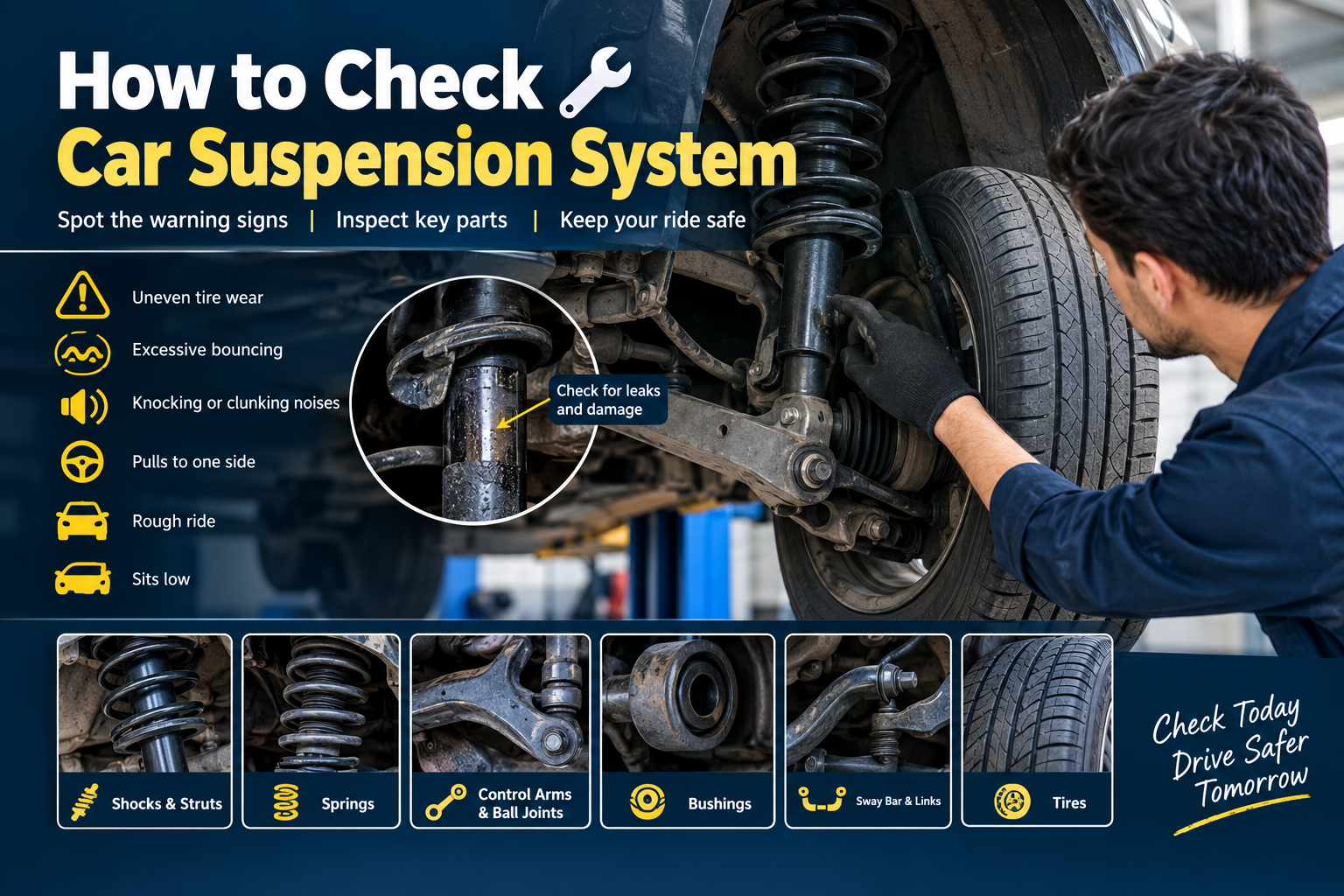
Inspect Suspension Components
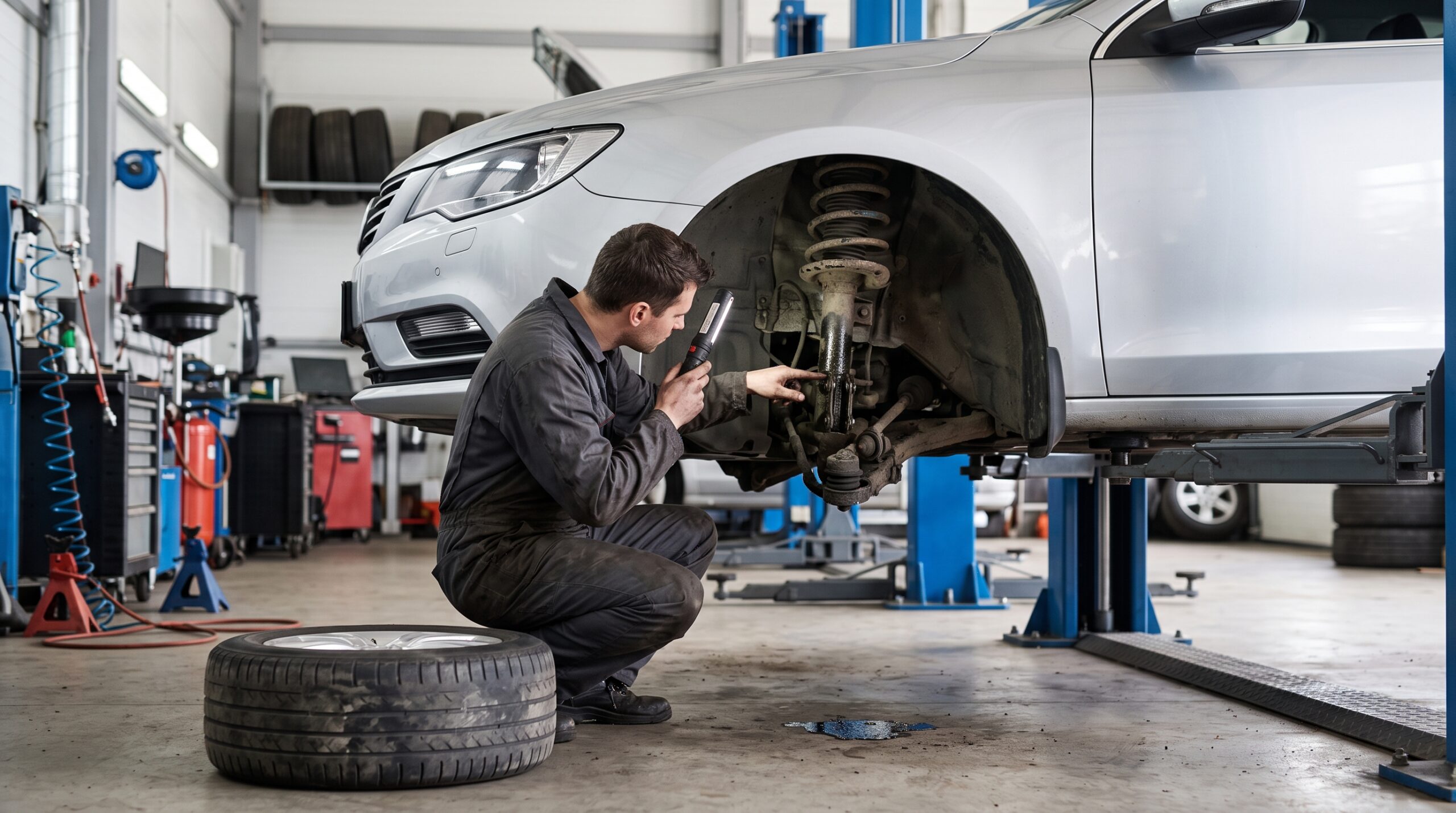
During routine vehicle service, ask a qualified technician to inspect important suspension components.
They may check:
- Springs
- Shocks
- Struts
- Bushings
- Ball joints
- Control arms
- Stabilizer links
- Mounting points
Inspection is especially useful if the vehicle has unusual noises or handling changes.
Watch for Fluid Leaks
Some shock absorbers and struts contain hydraulic fluid.
A visible fluid leak around a damper can indicate a problem.
However, not every suspension problem produces a visible leak.
Get Wheel Alignment Checked
Wheel alignment affects how the tires sit and point relative to the road.
Alignment should be checked when appropriate, especially after certain suspension repairs, severe pothole impacts, or when tire wear and steering behavior suggest a problem.
Replace Worn Parts Promptly
Do not ignore a suspension problem for a long period.
A worn component may affect other parts or change vehicle handling.
The correct repair depends on the failed component and the vehicle manufacturer’s design.
How Much Does Suspension Repair Cost?
There is no single price for suspension repair.
The cost depends on the vehicle, the failed component, local labor rates, parts quality, and the amount of work required.
For example, replacing a single stabilizer link may be much less expensive than replacing several struts, springs, mounts, and related components.
Factors That Affect Repair Costs
Important factors include:
- Vehicle make and model
- Front or rear suspension
- Number of failed components
- Original equipment or aftermarket parts
- Labor rates
- Rust or corrosion
- Alignment requirements
- Additional damage
A technician may also discover related worn parts during an inspection.
Parts and Labor
Suspension repair usually includes both parts and labor.
Parts can range from relatively simple rubber bushings or links to larger assemblies such as control arms, struts, or springs.
Labor depends on how accessible the component is and how much disassembly is required.
Why Costs Vary by Vehicle
A small economy car and a large luxury SUV may use very different suspension systems.
Some vehicles also use electronically controlled or air suspension systems, which can have different repair requirements.
For an accurate estimate, get a written quote based on your exact vehicle and the diagnosed fault.
When Professional Inspection Is Recommended
A professional inspection is recommended when you notice a major handling change, severe noise, visible suspension damage, unusual ride height, or other serious symptoms.
A proper diagnosis is better than replacing parts based only on symptoms.
Can You Drive With a Bad Suspension?
Whether you can safely drive depends on the type and severity of the problem.
A minor worn bushing and a severely damaged ball joint are not the same situation.
A damaged suspension component can affect steering, tire contact, braking behavior, and vehicle stability.
If the vehicle suddenly becomes difficult to control, a wheel or suspension component appears damaged, the vehicle is sitting unusually low, or there is a serious new noise after an impact, it is safer to stop driving and arrange professional assistance.
Do not assume a vehicle is safe simply because it still moves.
If the problem is minor and the vehicle remains controllable, a technician may advise you about the safest way to get it inspected. Follow professional advice and the vehicle manufacturer’s guidance.
Car Suspension vs. Steering System
People sometimes confuse suspension and steering because both systems affect vehicle direction and control.
The suspension’s main role is to support the vehicle, control wheel movement, absorb road inputs, and help maintain tire contact.
The steering system’s main role is to allow the driver to change the direction of the vehicle.
However, the systems work closely together.
For example, steering components can connect to parts of the suspension and wheel assembly. A problem in one area can sometimes affect the other.
Suspension System
The suspension:
- Supports vehicle weight
- Controls wheel movement
- Absorbs road inputs
- Helps maintain tire contact
- Influences vehicle stability
Steering System
The steering:
- Responds to driver input
- Changes the direction of the wheels
- Helps the vehicle follow the desired path
Understanding what is a car suspension system also means understanding that suspension and steering are separate but connected systems.
A qualified technician should inspect both when a vehicle develops unusual steering or handling behavior.
Frequently Asked Questions
What is a car suspension system?
A car suspension system is a group of components that connects the wheels to the vehicle body or frame. It supports vehicle weight, controls wheel movement, absorbs road impacts, and helps maintain tire contact with the road.
In simple terms, what is a car suspension system? It is the system that helps your vehicle move over uneven roads while keeping the body controlled and the wheels properly connected to the road.
What are the main parts of a suspension system?
The main parts can include springs, shock absorbers, struts, control arms, ball joints, bushings, stabilizer bars and links, and related mounting components.
The exact parts vary by vehicle and suspension design.
Springs support the vehicle’s weight, while shocks and struts control suspension movement. Control arms guide wheel movement, and ball joints allow controlled movement between connected components.
How long does a car suspension system last?
There is no universal lifespan for an entire suspension system.
Different components wear at different rates. Driving conditions, road quality, vehicle weight, climate, mileage, maintenance, and component design all affect service life.
A vehicle driven regularly on rough roads may experience different wear from one used mainly on smooth highways.
Rather than replacing suspension parts based only on mileage, inspect them when the manufacturer’s maintenance schedule calls for it or when symptoms appear.
What are the signs of suspension failure?
Common warning signs include excessive bouncing, unusual knocking or clunking, uneven tire wear, pulling, excessive body roll, nose diving during braking, and uneven ride height.
However, these symptoms can have more than one possible cause.
For example, pulling may result from alignment, tires, brakes, steering, or suspension. Proper diagnosis is important.
Can bad suspension affect braking?
Yes, a suspension problem can affect vehicle behavior during braking.
The suspension helps control how the vehicle moves and how the tires interact with the road. A damaged or poorly functioning suspension can contribute to reduced vehicle control or unusual movement.
However, braking problems can also come from brake components, tires, road conditions, or other systems.
If braking feels different, have the vehicle inspected promptly.
How often should suspension be inspected?
There is no single inspection interval that fits every vehicle.
Follow the maintenance schedule provided by the vehicle manufacturer. It is also wise to have the suspension checked when you notice unusual noises, handling changes, uneven tire wear, a change in ride height, or damage after hitting a major pothole or road obstacle.
Regular inspections can help identify worn components before they develop into more serious problems.
Final Thoughts
So, what is a car suspension system?
It is the collection of components that connects the wheels to the vehicle structure and allows controlled wheel movement. It supports the vehicle’s weight, absorbs road impacts, helps maintain tire contact, and contributes to steering control, braking behavior, comfort, and stability.
The main components can include springs, shock absorbers, struts, control arms, ball joints, and bushings. Different vehicles use different suspension designs, such as independent, dependent, and semi-independent systems.
A healthy suspension should provide controlled movement without excessive bouncing, unusual noises, severe pulling, or abnormal ride height.
If you notice a new clunking sound, uneven tire wear, excessive body movement, or a change in how your vehicle handles, do not ignore it. Have the vehicle inspected by a qualified technician.
Understanding what is a car suspension system helps you recognize why these parts matter. More importantly, regular inspections and timely repairs can help keep the vehicle’s handling and road contact working as intended.

3 thoughts on “What Is a Car Suspension System? A Simple Guide”