



Our Blogs
How to Know If Suspension Is Bad: Warning Signs

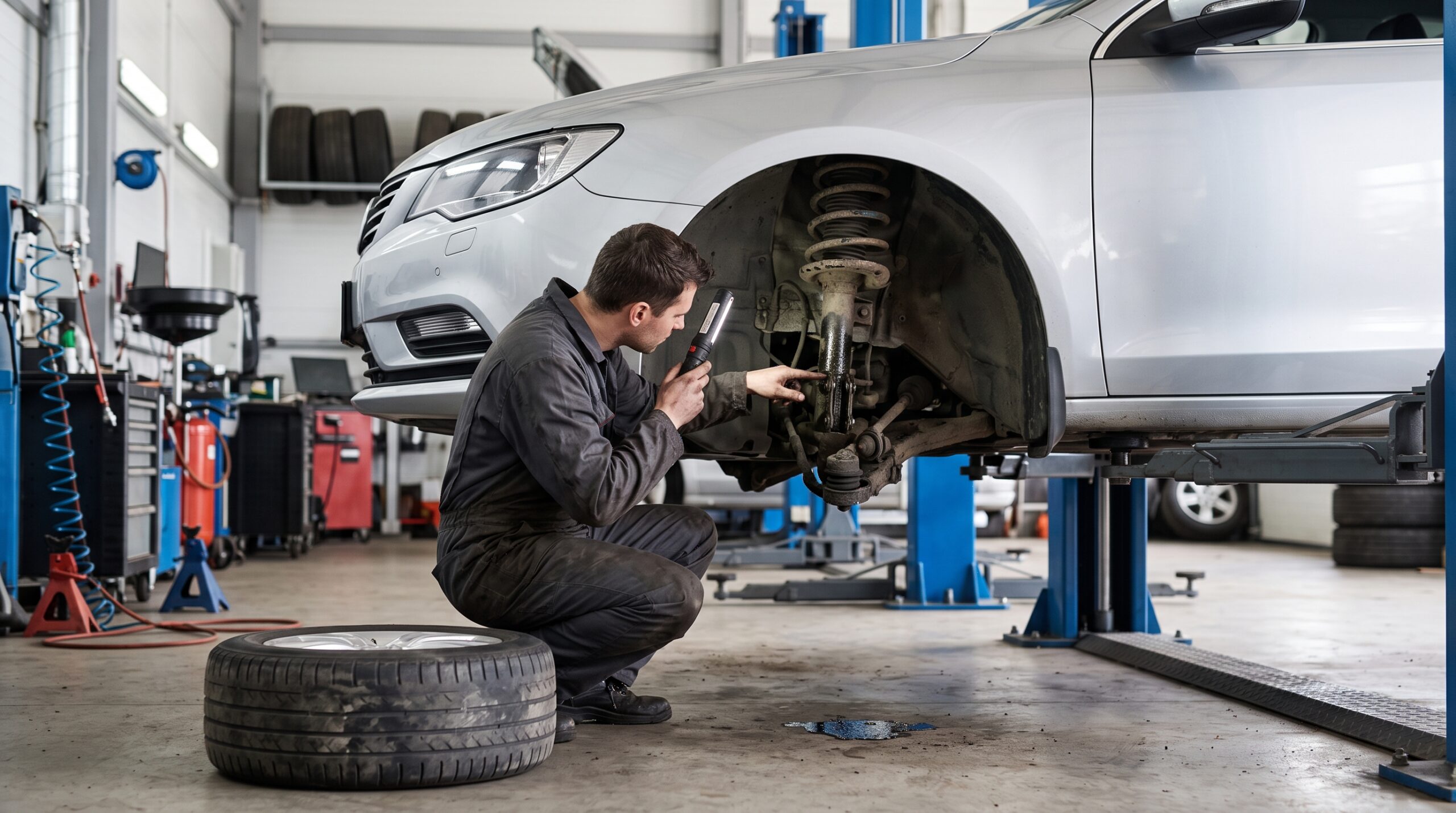
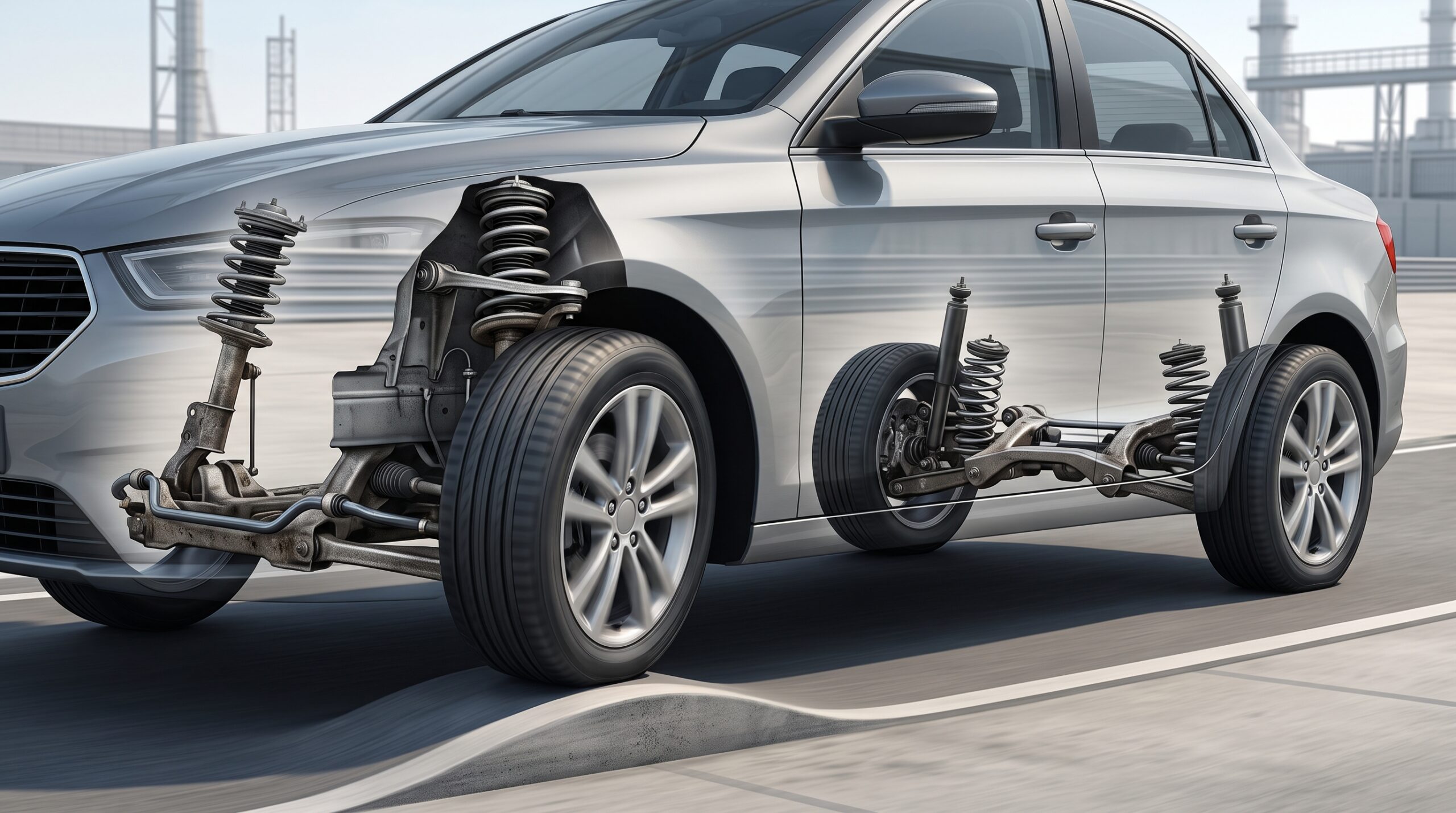
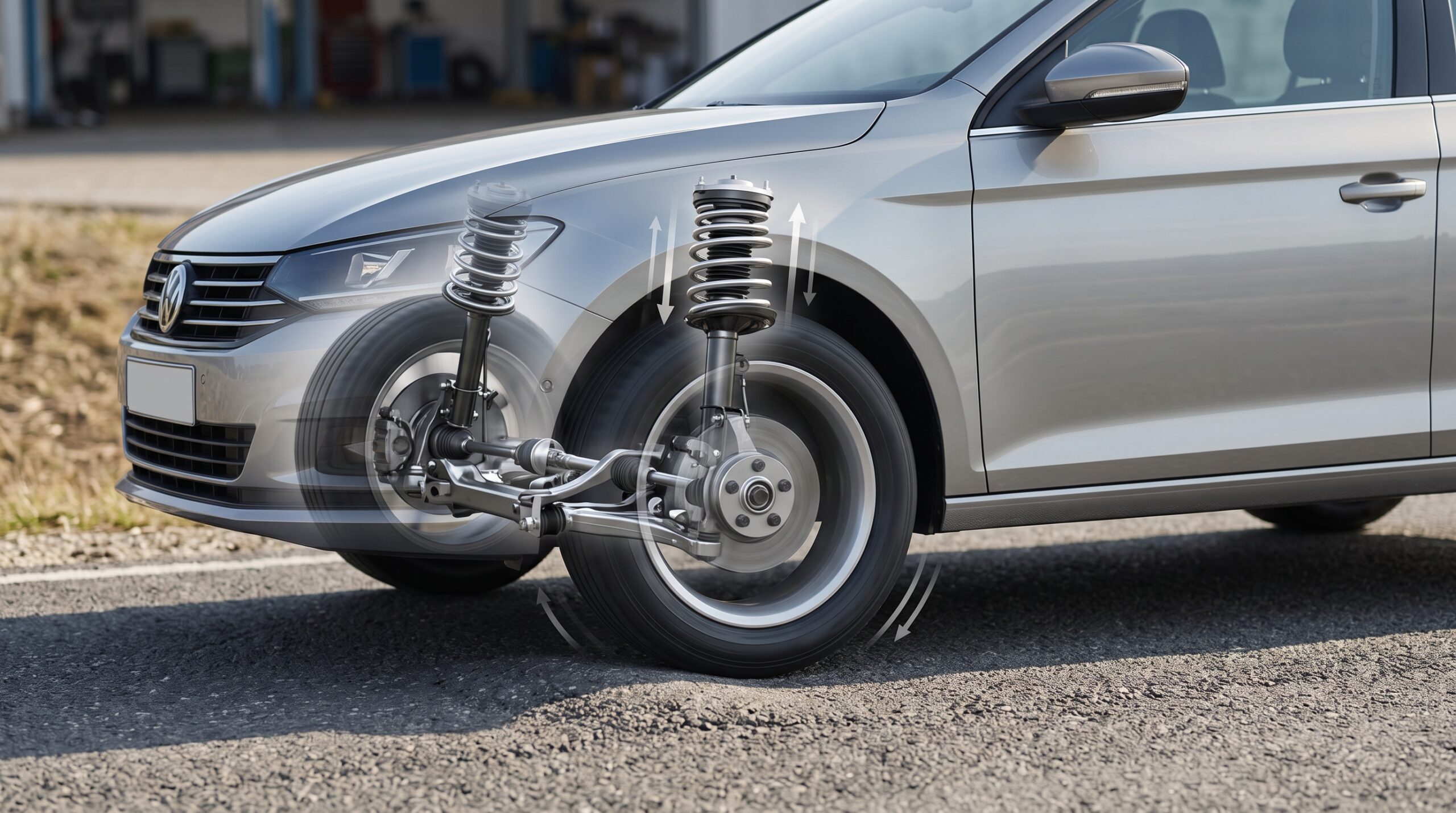
A car’s suspension system does much more than make your ride comfortable. It helps keep the tires in contact with the road, supports the vehicle’s weight, controls body movement, and helps the driver maintain steering and handling control.
When suspension parts become worn or damaged, you may notice changes in how the car feels. The vehicle may bounce more than usual, pull to one side, sit lower on one corner, make clunking noises, or wear its tires unevenly.
If you are wondering how to know if suspension is bad, start by paying attention to changes in ride quality, handling, tire wear, and unusual sounds. These signs can help you identify a possible problem before it becomes more serious.
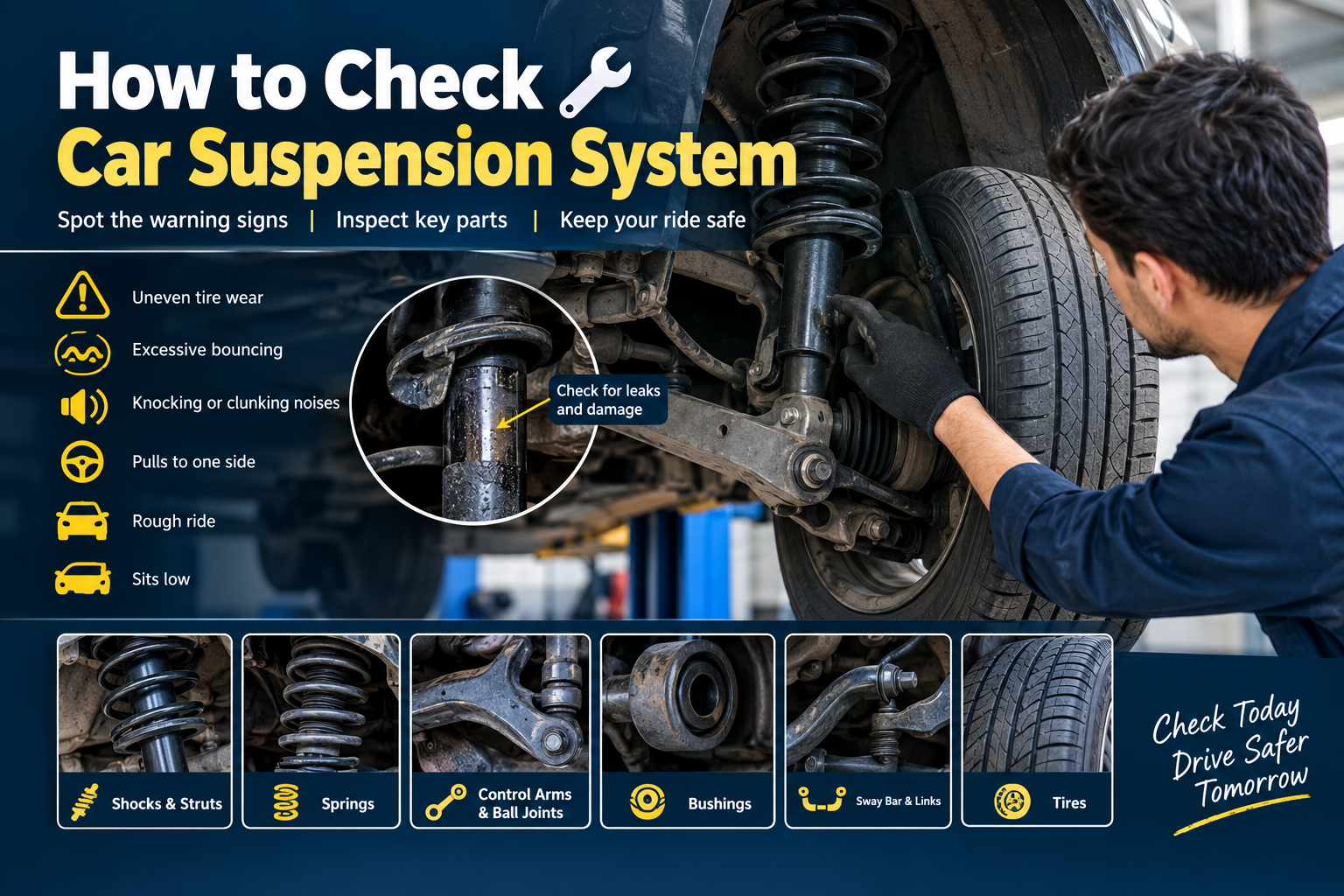
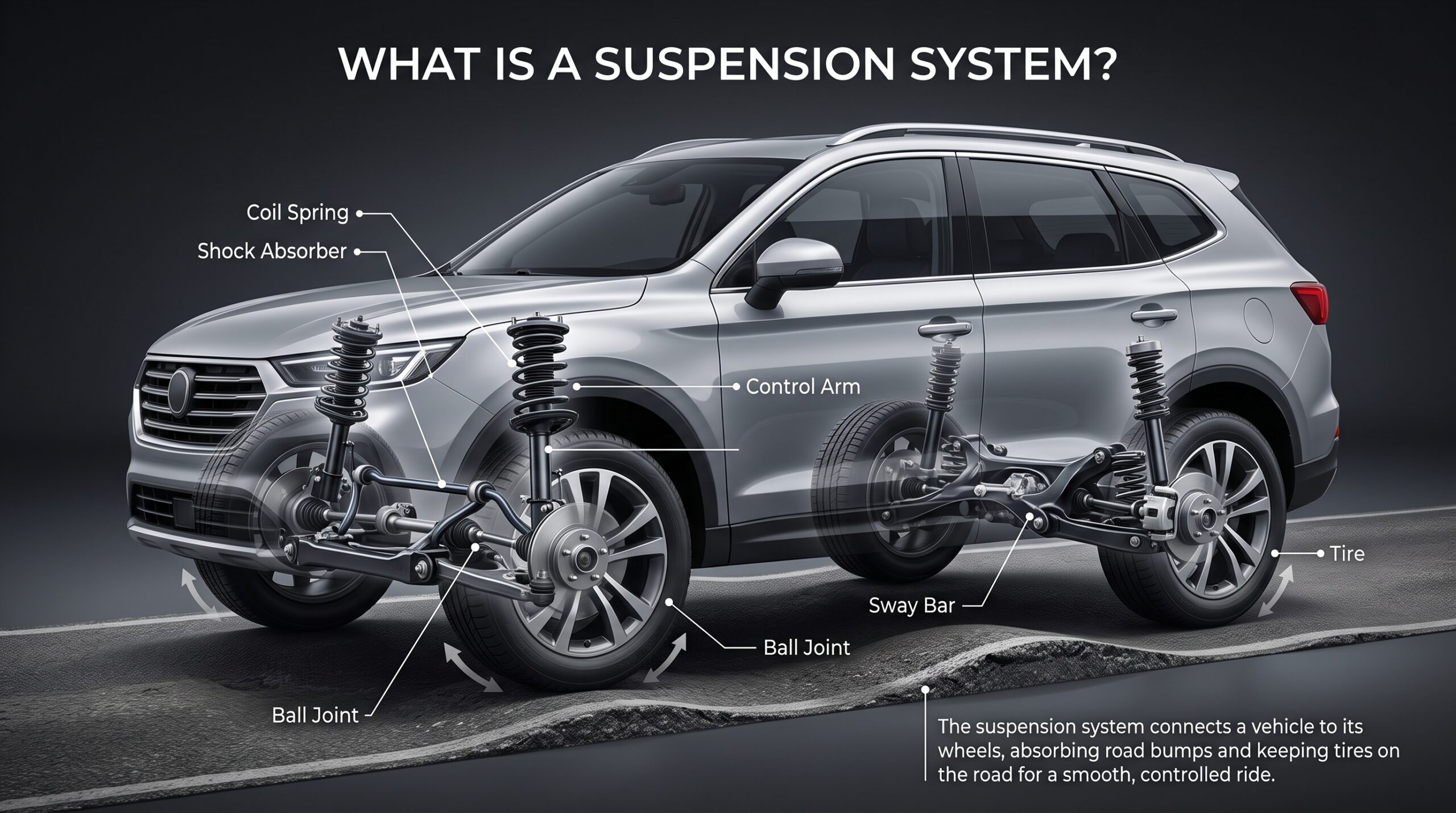
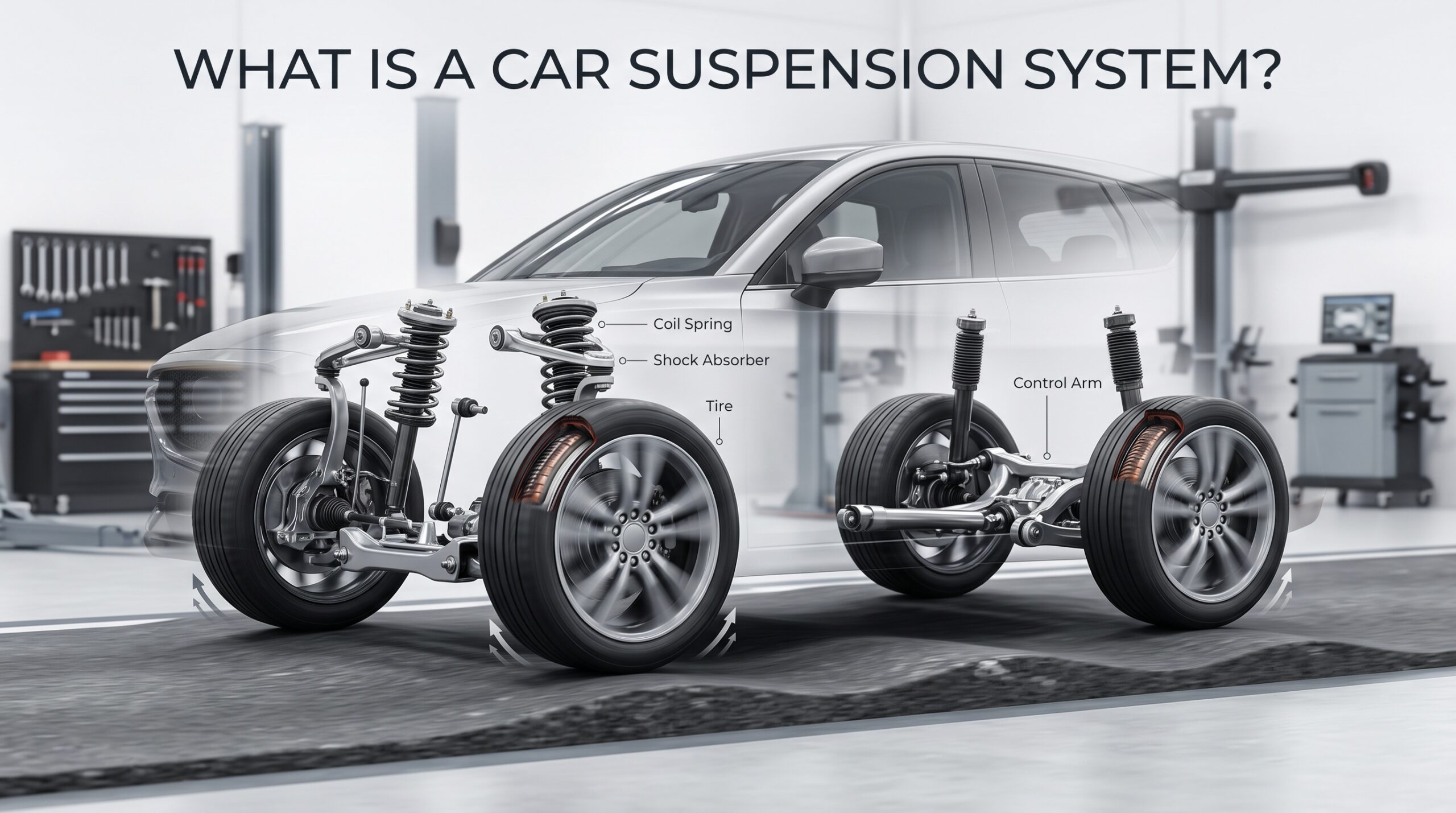
The suspension system includes several parts, such as shock absorbers, struts, springs, control arms, bushings, ball joints, and sway bar links. Not every suspension symptom means the same part has failed. A professional inspection is often needed to identify the exact cause.
This guide explains the most common warning signs, simple checks you can perform at home, when it may be unsafe to drive, typical repair costs, and the difference between suspension and tire problems.
How to Know If Suspension Is Bad
There are several signs that can point to a suspension problem. Some are easy to notice while driving, while others can be found during a visual inspection.
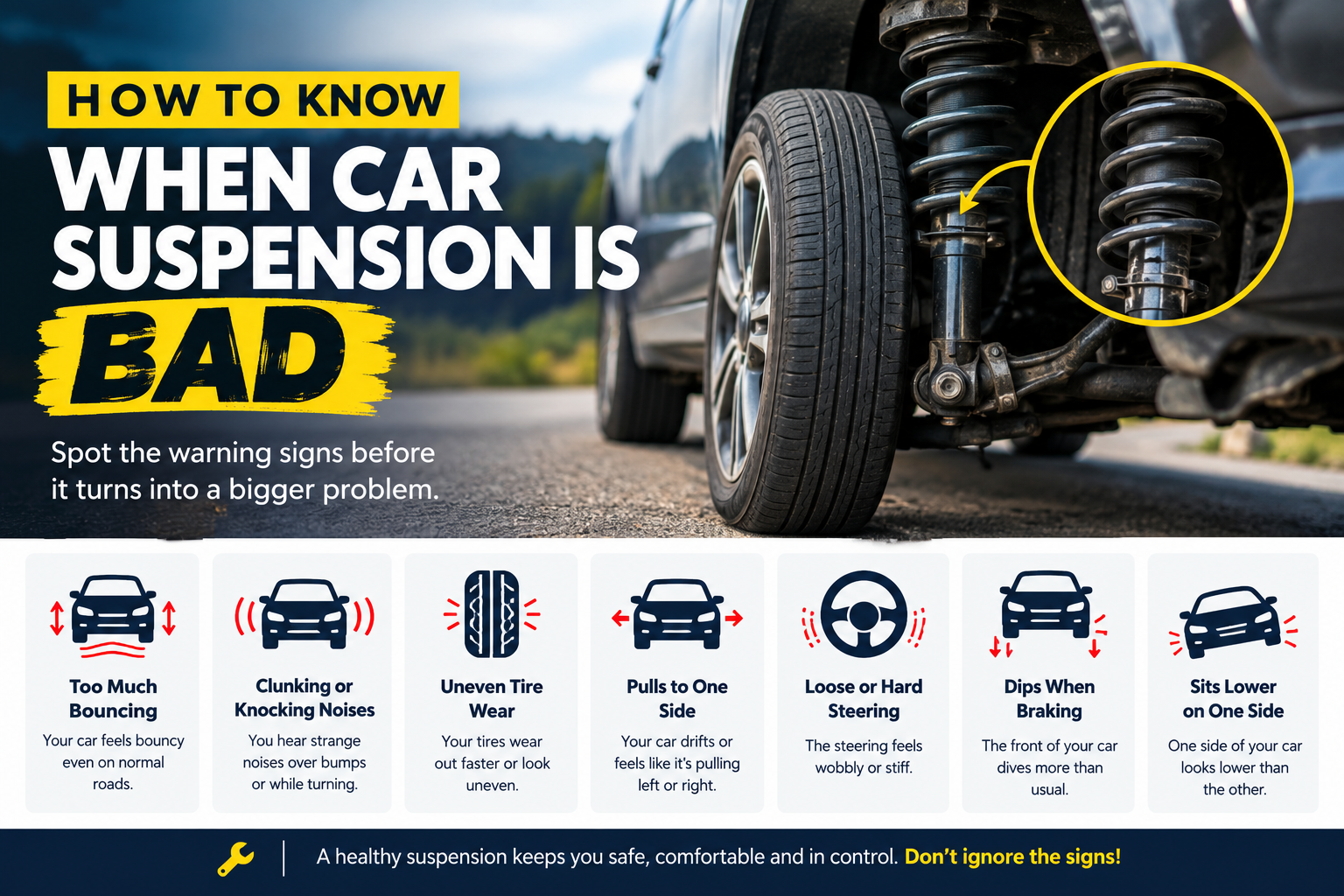
Here are the most common signs to watch for:
- Excessive bouncing after bumps
- A rough or unstable ride
- Pulling or drifting
- An uneven vehicle height
- Clunking or knocking sounds
- Uneven tire wear
- The front of the car dipping during braking
- The front end lifting during acceleration
Knowing how to know if suspension is bad starts with noticing these changes rather than ignoring them.
The Car Bounces More Than Usual
One of the easiest suspension problems to notice is excessive bouncing.
Your car should settle fairly quickly after going over a normal bump. If it continues to bounce or oscillate several times, the shock absorbers or struts may not be controlling suspension movement properly.
Shock absorbers help control the movement of the springs. When they become worn, the vehicle may feel loose or floaty.
For example, imagine driving over a speed bump. A healthy suspension should absorb the bump and settle the car quickly. A worn suspension may allow the body to continue moving after the bump.
Excessive bouncing does not prove that a shock absorber is bad. Springs, tires, bushings, and other suspension components can also affect ride movement.
Still, it is an important warning sign when learning how to know if suspension is bad.
The Ride Feels Rough or Unstable
A suspension system should help the car handle bumps and uneven road surfaces in a controlled way.
If the ride suddenly feels much rougher than it used to, there may be a problem with a suspension component.
You may also notice that the vehicle feels unstable when driving over rough roads. The body may move more than expected, or the car may feel less controlled after hitting a bump.
A rough ride can also be caused by incorrect tire pressure, damaged tires, or other problems. Therefore, do not assume the suspension is always responsible.
A noticeable change in ride quality is one of the clues that can help you understand how to know if suspension is bad.
The Car Pulls or Drifts While Driving
Does your vehicle seem to move toward the left or right when you are trying to drive straight?
Pulling can have several causes. Wheel alignment, tire pressure, tire condition, brake problems, road conditions, and suspension components can all play a role.
A damaged control arm, worn bushing, or other suspension problem can change the position of a wheel and affect vehicle stability.
If the vehicle consistently pulls to one side on a reasonably flat road, it is worth having the tires, alignment, steering, brakes, and suspension checked.
This is an important part of understanding how to know if suspension is bad, because handling changes should not be ignored.
The Vehicle Sits Unevenly
Park the car on a reasonably flat surface and look at it from a distance.
Does one corner appear lower than the others?
An uneven ride height can be caused by a damaged, broken, or weakened spring. Other suspension problems may also change the way the vehicle sits.
Compare the left and right sides of the vehicle rather than judging only from the front or rear.
Do not assume that every difference is a suspension failure. Uneven loading inside the vehicle can also make one side sit lower.
Still, an unexplained change in ride height is another useful clue when determining how to know if suspension is bad.
You Hear Clunking or Knocking Sounds
Suspension problems can sometimes produce unusual sounds.
You may hear:
- Clunking
- Knocking
- Rattling
- Squeaking
- Popping
The sound may appear when driving over potholes, speed bumps, or rough roads.
Worn bushings, sway bar links, ball joints, strut mounts, and other components can produce noises when they have excessive movement or damage.
However, sounds do not identify a specific failed part by themselves. A technician may need to inspect the suspension while moving or loading the affected components.
If your car has suddenly developed a loud suspension noise, it is worth having it checked. This is especially important when considering how to know if suspension is bad.
The Tires Wear Unevenly
Look closely at your tire tread.
Are certain sections wearing faster than others?
Uneven tire wear can be associated with alignment problems, worn suspension components, incorrect tire pressure, tire imbalance, or other issues.
For example, excessive wear along one edge may indicate an alignment or suspension-related issue. Cupping or scalloped wear can also be associated with problems that prevent the tire from maintaining consistent contact with the road.
Do not replace the tires without finding the reason for unusual wear. Otherwise, the replacement tires may develop the same problem.
Tire condition is an important part of learning how to know if suspension is bad.
The Car Dips When Braking
When you press the brake pedal, some forward weight transfer is normal.
However, if the front of the vehicle drops noticeably or the car feels unstable during braking, there may be a problem with the suspension or another vehicle system.
Worn shocks or struts can contribute to excessive body movement. Brake problems can also cause unusual behavior.
If braking feels different, do not automatically blame the suspension. Brakes are a critical safety system and should be inspected promptly when performance changes.
This symptom can help explain how to know if suspension is bad, but it should always be evaluated alongside brake condition.
The Front End Lifts During Acceleration
Some movement at the front of a vehicle during hard acceleration is normal.
However, excessive lifting can indicate poor control of body movement.
Worn shocks or struts may allow the vehicle to move more than expected during acceleration. The sensation may be especially noticeable in vehicles with softer suspension setups.
Other drivetrain or tire issues can affect how acceleration feels, so this symptom alone does not confirm a suspension failure.
If you notice major changes in vehicle movement during acceleration, braking, or cornering, an inspection can help determine how to know if suspension is bad.
Common Signs of Bad Suspension Parts
Different suspension components produce different symptoms. Understanding the parts can make it easier to describe the problem to a mechanic.
Worn Shock Absorbers
Shock absorbers control spring movement and help reduce excessive bouncing.
Common signs of worn shocks can include:
- Excessive bouncing
- Poor body control
- Nose diving during braking
- Increased body movement
- Uneven tire wear
- Fluid leakage around the shock
A worn shock absorber does not always leak. Some shocks can lose performance without showing obvious fluid around the housing.
When asking how to know if suspension is bad, remember that a visual inspection alone cannot always determine whether a shock is still working correctly.
Damaged Struts
A strut is a major suspension assembly used on many modern vehicles.
Depending on the vehicle design, the strut may combine a shock absorber with other structural or mounting components.
A damaged strut can affect ride quality, steering feel, tire wear, and vehicle stability.
Possible signs include unusual noises, excessive bouncing, uneven tire wear, and visible damage.
Because struts can be connected to steering and other suspension components, repairs should be performed using the correct procedures for the specific vehicle.
Broken or Weak Springs
Springs support the vehicle’s weight and help determine ride height.
A broken spring can cause one corner of the vehicle to sit lower than normal. It may also create unusual noises or change the way the vehicle handles.
A weakened spring may not be visibly broken but can still affect ride height and suspension performance.
If one side of the vehicle suddenly looks lower, have the suspension inspected rather than trying to compensate by adjusting tire pressure.
Spring condition is another factor in determining how to know if suspension is bad.
Worn Control Arms and Bushings
Control arms connect suspension components to the vehicle body or frame.
Bushings allow controlled movement while reducing vibration and noise.
When bushings wear out, you may experience:
- Clunking sounds
- Steering changes
- Uneven tire wear
- Vehicle wandering
- Changes in alignment
The exact symptoms depend on the vehicle and the specific bushing.
A technician may inspect the bushings for cracks, separation, excessive movement, or other damage.
Damaged Ball Joints
Ball joints allow suspension and steering components to move relative to each other.
A worn ball joint can create looseness, noise, or steering problems.
Because a severely damaged ball joint can affect wheel control, this type of issue should not be ignored.
If you hear a repeated clunk and also notice steering or handling changes, arrange an inspection promptly.
Ball joints are an important consideration when learning how to know if suspension is bad.
Bad Sway Bar Links
Sway bars help reduce excessive body roll during cornering.
Sway bar links connect the sway bar to suspension components.
Worn links may create a clunking or rattling sound, particularly when driving over uneven roads.
A sway bar link problem may not make the vehicle feel dramatically different during normal straight-line driving. The main symptom may be noise.
A technician can check the links and their mounting points for looseness or damage.
How to Check Your Suspension at Home
You can perform several basic checks without special equipment.
These checks can help you identify warning signs, but they cannot replace a professional inspection.
Perform a Visual Inspection
Park the vehicle on a flat, safe surface.
Turn the steering wheel if necessary so you can see parts of the front suspension. Look for obvious signs of:
- Broken springs
- Damaged components
- Bent parts
- Cracked bushings
- Missing hardware
- Fluid around shocks or struts
- Unusual tire wear
Do not place any part of your body under a vehicle supported only by a jack.
A visual check is a useful first step in understanding how to know if suspension is bad.
Check for Fluid Leaks
Some shock absorbers and struts use hydraulic fluid.
If you see oil-like fluid around the outside of a shock or strut, the component may be leaking.
A small amount of dirt or moisture does not always mean a serious leak. The source of any fluid should be identified before assuming a suspension component has failed.
Other vehicle systems can also leak fluid, so do not rely on appearance alone.
Look for Uneven Tire Wear
Inspect all four tires.
Look across the tread instead of looking at only one section.
Uneven wear can indicate alignment or suspension issues, but it may also result from tire pressure problems or other factors.
If one tire looks significantly different from the others, have it inspected.
Tires provide valuable clues when determining how to know if suspension is bad.
Check the Vehicle’s Ride Height
With the car parked on level ground, compare the ride height from side to side.
You can use the wheel arch as a visual reference.
If one corner is noticeably lower, the vehicle may have a spring or suspension problem.
For a more accurate measurement, a technician can measure ride height according to the vehicle manufacturer’s specifications.
Test for Excessive Bouncing
A traditional bounce test may provide a rough indication of suspension condition.
With the vehicle stationary and using safe body positioning, you can observe how quickly the suspension settles after controlled movement.
However, this test is not a reliable way to diagnose every modern suspension system.
A vehicle can pass a simple bounce test and still have worn suspension components.
Therefore, use the test only as one clue when learning how to know if suspension is bad.
Can You Drive With a Bad Suspension?
Whether you can safely drive depends on what has failed and how severe the problem is.
Some minor suspension issues may allow a short trip to a repair shop. Other failures can make continued driving unsafe.
When It May Be Safe to Drive Briefly
If the vehicle has a mild symptom and remains stable, you may be able to drive a short distance to a qualified repair facility.
For example, a minor noise without major changes in steering, braking, ride height, or tire condition may not require an immediate roadside stop.
However, the vehicle should still be inspected.
If you are unsure how to know if suspension is bad, do not use the absence of a dramatic symptom as proof that the vehicle is safe.
When You Should Stop Driving
Avoid driving the vehicle if you notice serious symptoms such as:
- A broken suspension spring
- A wheel sitting at an unusual angle
- Severe steering looseness
- Major instability
- A suspension component visibly detached
- Severe tire damage
- A sudden major change in handling
- A loud new mechanical noise combined with steering problems
In these situations, professional assistance or towing may be safer than driving the vehicle.
Why Ignoring Suspension Problems Is Risky
Suspension components affect wheel control, tire contact, steering behavior, and vehicle stability.
A worn component may also place additional stress on related parts.
For example, an unresolved suspension or alignment issue may contribute to uneven tire wear. A damaged component can also affect handling during braking or cornering.
That does not mean every suspension noise is an emergency. It means persistent or worsening symptoms deserve attention.
Understanding how to know if suspension is bad can help you address problems before they become more difficult to repair.
How Much Does Suspension Repair Cost?
Suspension repair prices vary widely.
The cost depends on the vehicle, damaged component, parts quality, labor rates, location, and whether other components need replacement.
Because prices change by vehicle and market, the figures below should be treated as general categories rather than exact quotes.
Shock and Strut Replacement Costs
Shock and strut replacement can range from a relatively modest repair to a more expensive job.
The final price depends on whether one or multiple components need replacement and whether related hardware must also be serviced.
Many vehicles require additional alignment work after certain suspension repairs.
Spring Replacement Costs
Spring replacement costs depend on spring type and vehicle design.
Coil springs, leaf springs, air suspension components, and other designs can have very different repair procedures and prices.
If a spring is broken, the technician should also inspect nearby components for damage.
Control Arm and Bushing Costs
Control arms and bushings can sometimes be replaced separately, depending on the design and repair procedure.
Labor can make up a significant part of the total cost because some components are difficult to access.
If a control arm has excessive movement, the technician may also check alignment after the repair.
Factors That Affect Repair Prices
Several factors influence suspension repair costs:
- Vehicle make and model
- Number of damaged components
- Parts quality
- Labor rates
- Vehicle design
- Alignment requirements
- Additional damage
- Local repair prices
A proper diagnosis is important before approving expensive repairs.
If a shop recommends replacing several suspension parts, ask which components are worn, how they were tested, and why each replacement is necessary.
Bad Suspension vs. Bad Tires
Suspension and tire problems can sometimes feel similar.
Both can cause vibration, uneven wear, poor handling, or an uncomfortable ride.
Knowing the differences can make diagnosis easier.
Symptoms of Suspension Problems
Suspension-related symptoms may include:
- Excessive bouncing
- Uneven ride height
- Clunking over bumps
- Excessive body movement
- Steering instability
- Uneven tire wear
- Nose diving during braking
These signs do not automatically confirm a suspension problem, but they are useful clues.
Symptoms of Tire Problems
Tire problems may include:
- Low tire pressure
- Vibration
- Uneven tread wear
- Bulges
- Cracks
- Excessive tread wear
- Pulling caused by pressure or tire condition
A damaged tire can be dangerous even if the suspension is working correctly.
How to Tell the Difference
Start with simple checks.
Check tire pressure using a reliable pressure gauge. Inspect the tread and sidewalls. Then consider whether the vehicle also has bouncing, unusual ride height, clunking, or excessive body movement.
If both tire and suspension symptoms are present, inspect both systems.
A tire problem can sometimes hide a suspension issue, while a suspension issue can contribute to abnormal tire wear.
This is why how to know if suspension is bad should not be treated as a question with only one possible symptom.
When Should You Get Your Suspension Checked?
You should have the suspension inspected when you notice a significant change in ride, handling, steering, or tire wear.
Some warning signs deserve faster attention than others.
A new clunking noise may require inspection soon. A vehicle that suddenly becomes unstable or develops a major steering problem should be treated as a more urgent safety concern.
Regular inspections can also help identify worn parts before they fail completely.
Warning Signs That Need Quick Attention
Contact a qualified repair professional promptly if you notice:
- Sudden changes in steering
- Severe pulling
- A broken spring
- A wheel sitting incorrectly
- Significant fluid leakage
- Major tire wear
- Severe bouncing
- New instability
- Suspension parts that appear loose or damaged
Do not wait for a suspension component to completely fail before checking it.
Importance of a Professional Inspection
A professional inspection can identify problems that are difficult to see at home.
A technician can inspect suspension joints, bushings, springs, shocks, struts, mounting points, steering components, tires, and wheel alignment.
They can also compare the condition of components on both sides of the vehicle.
If you are still unsure how to know if suspension is bad, a professional inspection is the most reliable way to confirm the problem.
Why Suspension Components Should Be Checked Together
Suspension components work as a system.
For example, a worn bushing can affect alignment. A damaged spring can change ride height. A worn shock can contribute to poor wheel control and abnormal tire wear.
Replacing only one part without checking related components may leave another problem unresolved.
A complete inspection helps create a clearer picture of the vehicle’s condition.
FAQ
How do I know if my suspension is bad?
Common warning signs include excessive bouncing, an unstable ride, unusual clunking sounds, uneven ride height, uneven tire wear, pulling, and excessive body movement during braking or acceleration.
If you notice several of these symptoms together, have the suspension inspected.
Learning how to know if suspension is bad is mainly about recognizing changes from the vehicle’s normal behavior.
What does a bad suspension feel like?
A bad suspension can feel loose, bouncy, rough, or unstable.
The vehicle may move more than expected after hitting bumps. It may also feel less controlled during braking or cornering.
However, different suspension failures produce different symptoms. A worn bushing may cause noise, while a weak shock absorber may cause excessive bouncing.
How long can you drive with bad suspension?
There is no universal safe mileage or time period.
A minor suspension issue may allow a short trip to a repair shop, while a broken or severely damaged component may make driving unsafe.
The severity and type of failure matter more than a specific number of miles.
If the vehicle has major steering problems, severe instability, a broken spring, or a visibly damaged suspension component, avoid driving it until it has been assessed.
What does a failing shock absorber sound like?
A failing shock absorber may produce a knocking or clunking sound, especially when driving over bumps.
However, these sounds can also come from mounts, bushings, sway bar links, ball joints, or other components.
A noise alone cannot confirm that a shock absorber has failed.
Can bad suspension damage tires?
Yes, certain suspension or alignment problems can contribute to abnormal tire wear.
For example, worn suspension components may allow unwanted wheel movement. Alignment changes can also cause certain areas of the tread to wear faster.
If your tires are wearing unevenly, check the tires, alignment, steering, and suspension rather than replacing the tires without finding the cause.
This is an important part of understanding how to know if suspension is bad.
How often should suspension be inspected?
There is no single inspection interval that applies to every vehicle.
Follow the maintenance schedule in your owner’s manual and have the suspension checked when symptoms appear.
It is also sensible to have the system inspected when replacing tires, performing alignment work, or after a significant pothole or road impact.
Drivers who regularly travel on rough roads may also benefit from paying closer attention to suspension condition.
Conclusion
Knowing how to know if suspension is bad starts with recognizing changes in how your vehicle rides, handles, brakes, and wears its tires.
Common warning signs include excessive bouncing, a rough or unstable ride, pulling or drifting, uneven ride height, clunking noises, uneven tire wear, brake dive, and excessive front-end lift during acceleration.
You can perform basic checks at home by looking for damaged parts, fluid leaks, uneven tire wear, and changes in ride height. These checks are useful, but they cannot replace a proper inspection.
If the vehicle has serious steering problems, a broken spring, severe instability, or a visibly damaged suspension component, avoid driving it until it has been inspected.
Suspension components work together, so a professional should check the related parts when diagnosing a problem. Catching worn components early can help protect your tires, maintain predictable handling, and prevent a small issue from becoming a larger repair.
In short, if you are asking how to know if suspension is bad, look for excessive bouncing, unusual noises, uneven tire wear, pulling, uneven ride height, and changes in handling. When these signs appear, have the vehicle inspected by a qualified technician before continuing to drive normally.


One thought on “How to Know If Suspension Is Bad: Warning Signs”