

Our Blogs
Performance Transmission Guide: Best Auto & Manual Picks (2026)

People spend $8,000 on an engine and then bolt it to whatever gearbox was already in the car. That transmission was designed around half the torque it is now being asked to carry. It will not last, and when it goes it usually takes the torque converter and the driveshaft with it.
This guide covers how to choose a performance transmission, what each one can actually hold, why the torque converter matters more than the gearbox, and the mistakes that destroy transmissions inside a thousand miles.
What Makes a Performance Transmission Different?
A performance transmission differs from a factory unit in three ways: torque capacity, heat management, and how it is calibrated.
A factory transmission is built to a cost and a duty cycle. It is designed to shift smoothly, last 150,000 gentle miles, and be cheap to assemble. A performance transmission trades some of that smoothness for strength — better clutches, more of them, a hardened input shaft, a stronger pump, and shift calibration that applies clutches fast enough that they do not slip and burn.
Slip is what kills a performance transmission. Every soft, comfortable, factory-calibrated shift is a moment of clutch slip. Slip makes heat. Heat destroys fluid. Dead fluid destroys everything else.
Browse our transmissions and drivetrain.
Torque Is What Breaks a Transmission — Not Horsepower
This is the first thing to get right, because every performance transmission rating you will read is expressed in lb-ft of torque, not horsepower.
Horsepower is a calculation. Torque is the actual twisting force arriving at the input shaft. A 700-horsepower engine that makes its power at 7,000 rpm can be gentler on a transmission than a 450-horsepower big block that makes 600 lb-ft at 3,000 rpm.
So when you size a performance transmission, look up your engine’s peak torque figure and add margin. Not its horsepower. And add real margin — a transmission rated at exactly your engine’s output is a transmission running at 100% of design load every time you use it.
Sticky tyres make it worse. A performance transmission that survives behind spinning tyres will fail behind tyres that hook. The transmission never sees the shock load until the tyres stop letting it escape.
Automatic Performance Transmission Options

| Transmission | Speeds | Overdrive | 1st Gear | Rough Torque Limit | Electronic? |
|---|---|---|---|---|---|
| Powerglide | 2 | No | 1.76 / 1.82 | Very high (built) | No |
| TH350 | 3 | No | 2.52 | ~450 lb-ft | No |
| TH400 | 3 | No | 2.48 | Very high | No |
| 200-4R | 4 | 0.67 | 2.74 | Moderate (high, built) | No |
| 700R4 | 4 | 0.70 | 3.06 | Moderate | No |
| 4L60E | 4 | 0.70 | 3.06 | ~360–400 lb-ft stock | Yes |
| 4L80E | 4 | 0.75 | 2.48 | High | Yes |
| 6L80E | 6 | 0.67 / 0.85 | 4.02 | High | Yes |
The Powerglide
Two speeds. Brutally strong, very little parasitic loss, and the drag racing default for decades. It is a terrible street performance transmission — two ratios is not enough for a car you drive. Do not put one in a cruiser because it looked strong on paper.
TH350 and TH400
The classic three-speed performance transmission options. The TH350 is compact and light. The TH400 is enormously strong and the traditional choice behind big power, but it is heavier, longer, and absorbs more power to turn.
Neither has overdrive. That is the whole problem, and the next section explains why.
700R4 and 200-4R — and the mistake that destroys them
Both are four-speed overdrive units, and both are excellent value. The 700R4’s deep 3.06 first gear multiplies torque beautifully off the line.
Both use a Throttle Valve (TV) cable, and it must be adjusted correctly. The TV cable controls line pressure. Set it wrong and line pressure is too low, the clutches slip on every shift, and the transmission cooks itself — often within a few hundred miles.
This is the single most common way people destroy a rebuilt 700R4. It is not a break-in item and it is not “close enough”. Adjust it properly, to the procedure, before you drive the car.
4L60E
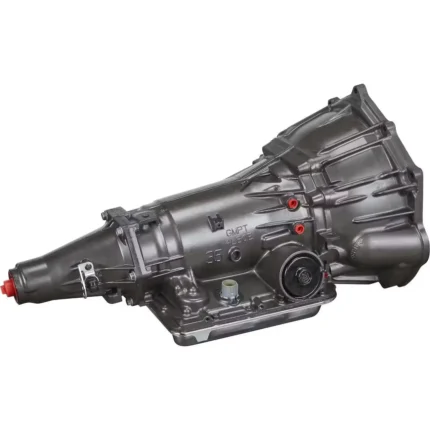
The electronic 700R4, and the most common performance transmission in the hobby. Everywhere, affordable, and the default behind an LS swap. Its weakness is torque capacity — plan on a built unit above roughly 400 lb-ft.
It is electronically controlled. In a carbureted car with no factory ECU, you will need a standalone transmission controller. Budget for it.
4L80E
Essentially a TH400 with overdrive. Far stronger than a 4L60E and the right answer for a serious performance transmission behind a torquey engine.
The cost is size. It is heavier, longer and wider. Check your transmission tunnel and your crossmember before you buy one — this swap frequently involves sheet metal.
6L80E
Six speeds, modern ratios, superb on the road. The most refined automatic performance transmission on this list. Needs a sophisticated controller and costs more. Excellent if you want the transmission to disappear and just work.
Browse automatic transmissions.
Manual Performance Transmission Options

| Transmission | Speeds | Overdrive | Torque Capacity | Notes |
|---|---|---|---|---|
| Muncie M20 / M21 / M22 | 4 | No | Moderate | Period-correct. The M22 “Rock Crusher” is the strong one. |
| Super T10 | 4 | No | Moderate | Classic. No overdrive. |
| T5 | 5 | Yes | Light duty | Compact, everywhere, cheap. Not a high-torque transmission. |
| TKO 500 / 600 | 5 | Yes | 500 / 600 lb-ft | Superseded by the TKX. Tall case — often needed floor surgery. |
| TKX | 5 | Yes | 600 lb-ft | The modern retrofit answer. Compact, classic 4-speed bolt pattern. |
| T56 | 6 | Yes | High | Factory unit from LS1 F-bodies. Big. |
| T56 Magnum | 6 | Double OD | 700 lb-ft | The aftermarket flagship. Expect sheet metal work. |
TKX: the one most people should buy
Tremec designed the TKX as a performance transmission specifically for retrofits into classic cars. It is rated at 600 lb-ft, shifts cleanly to 7,500 rpm, and — critically — has a compact case and the classic 4-speed bolt pattern, so it drops into many stock transmission tunnels without cutting the floor.
That last point is worth real money. The TKO it replaced was tall and broad-shouldered, and frequently required custom tunnel work.
T56 Magnum: when you need more
The T56 Magnum is Tremec’s flagship — a double-overdrive six-speed rated at 700 lb-ft, derived from the factory TR-6060.
It is a big transmission. Six-speeds are larger in nearly every dimension than a five-speed, and fitting one into a classic car usually means modifying sheet metal and the crossmember. Tremec publish a dimensional comparison — measure your tunnel against it before you order, not after.
Browse manual transmissions and shifters.
Overdrive: Why It Is Not a Luxury

Take a car at 70 mph with a 3.73 rear gear and 27-inch tyres:
| Transmission | Top Gear Ratio | Engine RPM at 70 mph |
|---|---|---|
| TH350 / TH400 (3-speed) | 1.00 direct | ~3,250 rpm |
| 4L80E | 0.75 | ~2,440 rpm |
| 700R4 / 4L60E / TKX | 0.70 | ~2,270 rpm |
| T56 Magnum (6th) | ~0.50 | ~1,625 rpm |
That is roughly 1,000 rpm saved, at every moment you spend on a highway. Quieter, cooler, better economy, and dramatically less wear.
And there is a second benefit most people miss: overdrive lets you run a steeper rear gear. A 4.10 rear with a 0.70 overdrive gives you savage acceleration and a relaxed cruise. Without overdrive you must choose one.
If you drive the car any distance at all, get overdrive. This is the single most common regret we hear from people who chose a three-speed because it was cheaper and stronger.
Related: differential and rear-end components.
The Torque Converter: The Part That Ruins Good Transmissions

You can buy exactly the right performance transmission and still end up with a car that feels slow. The converter is usually why — and no performance transmission can save you from a converter that does not match your camshaft.
Stall speed is the engine rpm the converter allows before it starts effectively transferring torque. Below that, it slips. That slip is not a fault — it is how the engine reaches its powerband from a standstill.
The stall speed must match your camshaft.
| Camshaft | Suggested Stall Speed |
|---|---|
| Stock / stock replacement | 1,600 – 2,000 rpm |
| Mild street cam | 2,000 – 2,400 rpm |
| Street / strip cam | 2,400 – 3,000 rpm |
| Aggressive cam | 3,000 – 3,500 rpm |
| Race | 3,500 rpm and up |
Stall too low behind a big cam and the engine cannot reach the rpm where the cam works. The car bogs. It feels gutless off the line despite making enormous power on paper. This is the classic disappointment: a $9,000 engine that feels slower than the stock one.
Stall too high on a street car and the converter slips constantly. Slip makes heat. The car feels mushy, drinks fuel, and cooks its fluid.
Lock-up converters (700R4, 4L60E, 4L80E) eliminate slip entirely once locked in overdrive. On a street car this is a genuinely large win for heat and economy — but the lock-up must be wired and controlled. Do not leave it unconnected.
Heat: What Actually Kills Automatic Transmissions

Ask any builder what kills an automatic performance transmission and they will say heat before you finish the question.
The widely used industry rule of thumb: automatic transmission fluid at around 175°F lasts roughly 100,000 miles. Every 20°F above that roughly halves its life.
- 175°F — around 100,000 miles
- 195°F — around 50,000 miles
- 215°F — around 25,000 miles
- 235°F — around 12,000 miles
- 255°F — around 6,000 miles
- 275°F — around 3,000 miles
A performance transmission makes more heat than the factory cooling system was designed to shed. A high-stall converter makes more heat still. A radiator-integrated cooler alone is not enough.
Fit an auxiliary cooler. Fit a temperature gauge. Between them they cost a fraction of a performance transmission, and the gauge will tell you about a problem while it is still a problem and not yet a rebuild.
Will It Bolt Up? Bellhousing Patterns
A performance transmission is useless if it does not mate to your engine. Bellhousing patterns are not universal, and they are not even consistent within a manufacturer.
- Chevy small block and big block share a pattern.
- LS engines use a different pattern. Your TH350 will not bolt to an LS without an adapter.
- BOP (Buick / Oldsmobile / Pontiac) is a different pattern again.
- Ford small block, FE and Modular are all different from each other.
- Adapter plates exist for most common combinations, and they work — but they add length, which affects the crossmember and the driveshaft.
Three more things to confirm before you buy any performance transmission: input shaft spline count, crank flange bolt pattern, and flexplate or flywheel. All three must match, and all three are cheap to get wrong.
Buying the engine and performance transmission together removes all of this. Chevrolet’s own engine and transmission packages exist for exactly this reason — the matching is the hard part, not the parts.
See our engine and transmission combos, or run a compatibility check.
What Else a Performance Transmission Swap Needs
The performance transmission itself is not the whole bill. Every one of these is required, and every one of them gets forgotten:
- Torque converter or clutch and flywheel, matched to the build
- Transmission crossmember — almost always needs to move
- Driveshaft — a different transmission length means a different driveshaft. Measure it last, with everything in its final position.
- Transmission controller, for any electronic unit (4L60E, 4L80E, 6L80E)
- Shifter and linkage
- Auxiliary cooler and lines
- Speedometer drive — mechanical or electronic, and they are not interchangeable
- Tunnel clearance — particularly for a 4L80E or a six-speed
- Fluid — and the correct type. Do not improvise this.
Cannot find a part? Send us the details through part request.
What a Performance Transmission Costs

| Item | Budget | Street Performance | High Power |
|---|---|---|---|
| Transmission | $1,200 – $2,000 | $2,500 – $3,800 | $4,500 – $6,000 |
| Torque converter | $350 | $650 | $1,000 |
| Transmission controller | $0 (non-electronic) | $700 | $900 |
| Crossmember | $100 – $250 | $250 | $400 |
| Driveshaft | $300 | $450 | $700 |
| Shifter and linkage | $150 | $300 | $450 |
| Auxiliary cooler + lines | $180 | $280 | $400 |
| Fluid, gaskets, hardware | $150 | $200 | $280 |
| Parts total | ~$2,600 | ~$5,400 | ~$8,700 |
Those totals are for the performance transmission and its supporting parts only. Add tunnel and sheet metal work if you are fitting a 4L80E or a six-speed. Add shop labour if you are not doing it yourself.
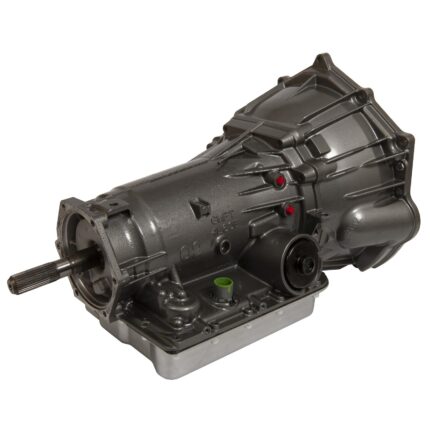
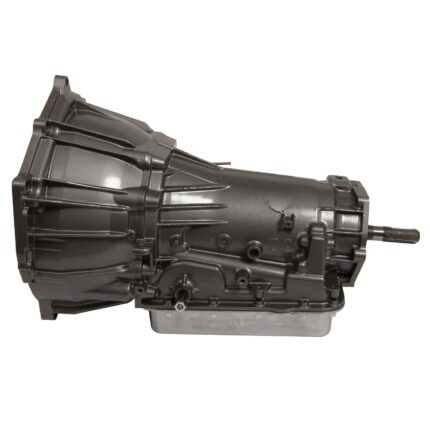
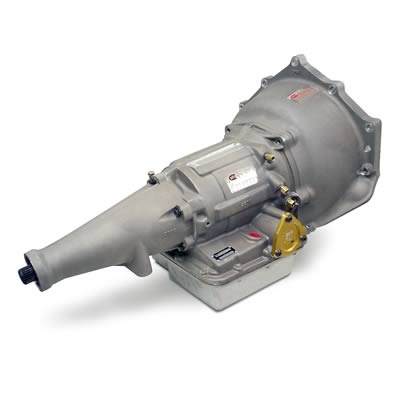
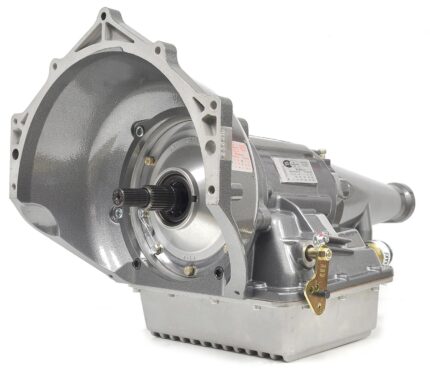
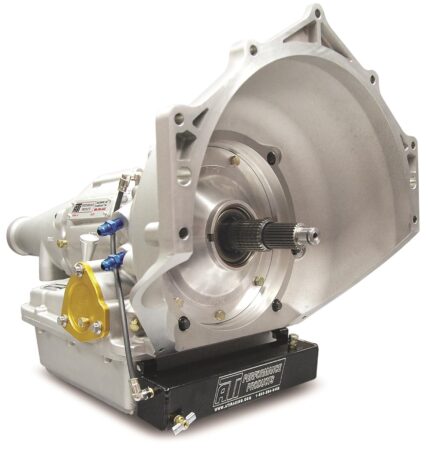
Performance transmissions from our inventory: the ATI ATI201435 at $3,100 through to the ATI ATI201454LU at $5,900.
Request a quote and we will price the whole system — converter, crossmember, driveshaft and cooler included.
Eight Performance Transmission Mistakes
- Sizing on horsepower instead of torque. Every rating is in lb-ft. Look up your engine’s torque figure and add margin.
- Keeping the stock transmission behind a new engine. A performance transmission is not optional once you have raised the torque. It is a countdown, not a plan.
- Mismatching the converter to the camshaft. Stall too low behind a big cam and the car bogs. This ruins more builds than any mechanical failure.
- Not adjusting the TV cable on a 700R4 or 200-4R. Low line pressure, slipping clutches, a destroyed transmission inside a few hundred miles.
- No auxiliary cooler. Heat halves fluid life every 20°F. A cooler costs a fraction of a rebuild.
- Forgetting that electronic transmissions need a controller. A 4L60E in a carbureted car will not shift by itself.
- Not measuring the tunnel before buying a 4L80E or six-speed. Sheet metal work you did not budget for.
- Choosing a three-speed to save money. Then spending every highway mile at 3,250 rpm regretting it.
Performance Transmission FAQ
How do I know what performance transmission my engine needs?
Look up your engine’s peak torque in lb-ft — not horsepower — and choose a performance transmission rated comfortably above it. Then confirm the bellhousing pattern matches your engine, and that the unit physically fits your tunnel and crossmember.
Is a 4L60E strong enough for an LS swap?
For a stock or mildly modified LS, generally yes. Beyond roughly 400 lb-ft you want a built unit or a 4L80E. A stock 4L60E behind a cammed 6.0 with sticky tyres is living on borrowed time.
Do I really need overdrive?
If you drive the car on a highway, yes. A three-speed with a performance rear gear will sit around 3,250 rpm at 70 mph. A four-speed overdrive drops that to roughly 2,270 rpm — quieter, cooler, more economical, and far less wear. It also lets you run a steeper rear gear without penalty.
What stall speed torque converter do I need?
Match it to the camshaft. Stock cams want 1,600–2,000 rpm; a mild street cam 2,000–2,400; a street/strip cam 2,400–3,000. Too low behind a big cam and the car bogs. Too high on the street and it slips, overheats and drinks fuel.
TKX or T56 Magnum?
The TKX is rated at 600 lb-ft, is compact, uses the classic 4-speed bolt pattern, and fits many stock tunnels without cutting the floor. The T56 Magnum handles 700 lb-ft and adds a sixth gear, but it is physically much larger and usually requires sheet metal work. Unless you need the extra torque capacity or the extra gear, the TKX is the easier and cheaper answer.
Will my TH350 bolt to an LS engine?
Not directly. LS engines use a different bellhousing pattern from the small block Chevy. Adapter plates exist and work, but you will be running a three-speed with no overdrive behind an engine that deserves better.
What is a TV cable and why does it matter?
The Throttle Valve cable on a 700R4 or 200-4R controls line pressure inside the transmission. If it is adjusted incorrectly, line pressure drops, the clutches slip on every shift, and the transmission burns itself out — often within a few hundred miles. It is the single most common way people destroy a freshly rebuilt 700R4.
Do I need a transmission cooler?
On any performance build, yes. Fluid life roughly halves for every 20°F above 175°F. A high-stall converter generates significant heat. An auxiliary cooler and a temperature gauge together cost a fraction of a rebuild.
Automatic or manual performance transmission?
An automatic performance transmission with the right converter will usually be quicker in a straight line and far easier in traffic. A manual is more engaging, cheaper to build to high torque capacity, and has no converter to get wrong. Neither is the wrong answer — it depends entirely on how you want to drive the car.
Where to Start
- Find your engine’s peak torque figure. In lb-ft. This sets everything.
- Decide on an automatic or a manual performance transmission. Be honest about how you actually drive.
- Insist on overdrive unless the car never sees a highway.
- Measure your tunnel and crossmember before you buy anything large.
- Match the converter to the camshaft. Ask us if you are unsure — this is the one people get wrong.
- Budget the cooler, controller, crossmember and driveshaft at the same time as the performance transmission, not after it.