Our Blogs
Is the 6.2 Ford a Good Engine? Pros and Cons

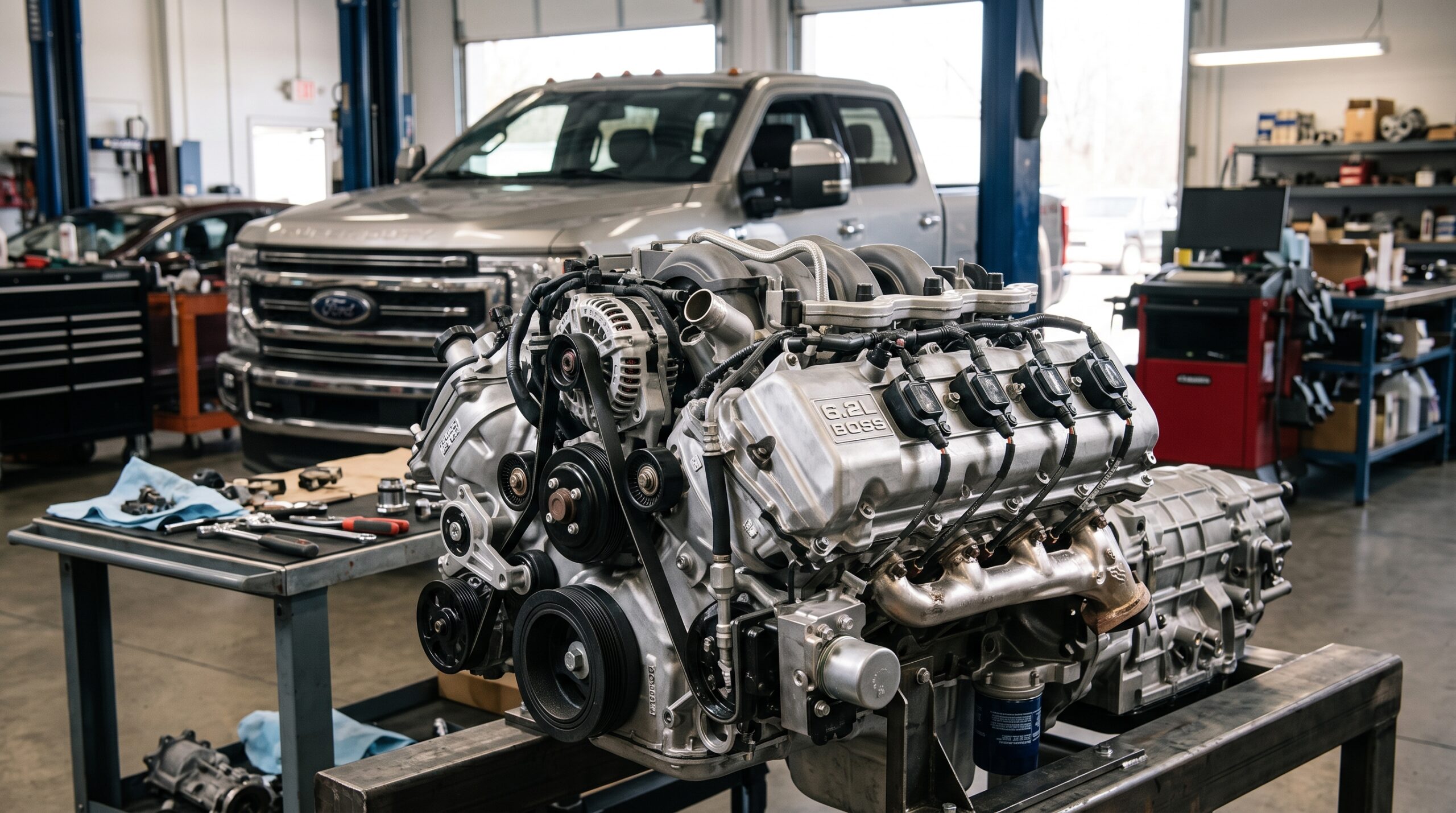
The Ford 6.2L V8 is a large gasoline engine built for trucks that need strong power and dependable performance. It is often called the Ford 6.2 Boss engine. Ford used it in several Super Duty trucks and some other truck models.
But is the 6.2 Ford a good engine for long-term ownership?
Yes, the Ford 6.2L V8 is generally a good engine when it receives proper maintenance. It offers strong horsepower, useful torque, and good performance for towing and hauling. Its naturally aspirated design also avoids some of the added complexity found in turbocharged engines.
However, it is not perfect. Fuel consumption can be high, and repairs may become expensive as the truck ages. Some engines may also develop ignition, oil leak, cooling system, or valve train problems.
If you are considering a used Ford truck, it is important to look beyond the engine’s reputation. Its service history, mileage, working condition, and previous use can tell you much more about its remaining life.
This guide explains the engine’s specifications, reliability, common problems, maintenance needs, and comparisons with other Ford V8 engines. By the end, you will have a clearer idea of whether it suits your needs.
What Is the Ford 6.2L V8 Engine?
The Ford 6.2L V8 is a gasoline-powered, naturally aspirated engine designed for trucks and other applications that need substantial power. Ford introduced this engine for the 2010 model year.
It became known as the Boss V8 and was used in vehicles designed for demanding work. These included heavy-duty pickup trucks, where engine strength and practical performance mattered more than excellent fuel economy.
Overview of the Ford 6.2 Boss Engine
![「【6.2 Boss】 V型8気筒 6.2L [6.2 Boss]」エンジン情報 | TOPPER[トッパー]](https://images.openai.com/static-rsc-4/sLQxiEC1u47U7vQLI3WLpqm_DjaE_iM63oRR3Xok0fY393mZYGg6myqwuejMS1pu3RDeVnDEvJM9kw1N0q9IUPuzH3lLQRzpZYdrqnJ7rJk7lQOUMQl-A6fNax_saPPtp3t7vG67CjZ8eimSUgCm24eRFy4aavBdjNkUQl12VqY?purpose=inline)
The 6.2L Boss uses a V8 layout. This means it has eight cylinders arranged in two banks, with four cylinders on each side.
Its main design features include:
-
Displacement: 6.2 liters, or approximately 379 cubic inches.
-
Configuration: V8 gasoline engine.
-
Aspiration: Naturally aspirated, meaning it does not use a turbocharger or supercharger from the factory.
-
Valvetrain: Single overhead camshafts, with two valves per cylinder.
-
Fuel system: Electronic fuel injection.
-
Block and cylinder heads: Aluminum cylinder heads on an iron engine block.
The large displacement helps the engine produce useful power without relying on forced induction. This is helpful for truck owners who need steady power when carrying loads or pulling trailers.
The engine’s design is relatively straightforward compared with some modern turbocharged powertrains. However, that does not mean every repair is simple or inexpensive. Access to components, labor rates, and the truck’s age can affect repair costs.
Which Ford Vehicles Use the 6.2L Engine?
Ford installed the 6.2L V8 in several vehicles, although availability varied by model year, trim, and market.
Common applications include:
-
Ford F-250 Super Duty
-
Ford F-350 Super Duty
-
Certain Ford F-150 models, including some SVT Raptor versions
-
Ford E-Series vans and cutaway chassis in selected configurations
-
Certain Ford commercial and fleet vehicles
The engine was especially important in Super Duty trucks during the 2010s. It offered a gasoline alternative to diesel power for people who needed a work truck but did not necessarily want the extra cost and maintenance associated with a diesel engine.
Before purchasing a used truck, check its VIN, original window sticker, or factory specifications. Not every truck in the same model year came with the same engine.
Key Specifications of the Ford 6.2 V8
The exact output depends on the vehicle and model year. The following table provides a general overview of common specifications.
| Specification | Ford 6.2L Boss V8 |
|---|---|
| Engine type | Gasoline V8 |
| Displacement | 6.2 liters |
| Displacement in cubic inches | About 379 cu in |
| Cylinder arrangement | V8 |
| Aspiration | Naturally aspirated |
| Valvetrain | SOHC, two valves per cylinder |
| Typical horsepower | About 385–411 hp |
| Typical torque | About 405–434 lb-ft |
| Fuel | Unleaded gasoline meeting the owner’s manual requirements |
| Common application | Ford Super Duty trucks |
These figures are representative, not universal ratings for every application.
Horsepower measures how quickly an engine can do work. Torque measures its twisting force. Both matter in a truck, but the vehicle’s transmission, axle ratio, tires, cooling system, and weight also affect real-world performance.
For towing, the truck’s official tow rating matters more than engine output alone.
Is the 6.2 Ford a Good Engine for Reliability?
Reliability is one of the main reasons people consider the Ford 6.2L V8.
In general, the engine has a solid reputation as a work-oriented gasoline V8. Its design can support long service life when the oil, cooling system, ignition components, and other maintenance items receive proper attention.
Still, no engine is guaranteed to last a certain number of miles. Two trucks with the same engine can have very different outcomes because of their maintenance records and working conditions.
Engine Reliability and Durability
The Ford 6.2 has several features that make it useful for long-term truck ownership.
First, its naturally aspirated design does not include a factory turbocharger. That removes one group of components that can require maintenance or repair on turbocharged engines.
Second, its large displacement provides strong power for demanding tasks. It can deliver useful performance without needing to operate like a small engine under every load.
Third, the engine was designed for truck applications. Many vehicles using it were intended for towing, hauling, fleet work, and other demanding jobs.
However, these strengths do not make it immune to wear. Regular heavy towing, poor oil maintenance, overheating, and neglected repairs can shorten engine life.
A well-maintained truck with higher mileage may be a better purchase than a low-mileage truck with poor service records.
Expected Ford 6.2 Engine Lifespan
How long can you expect the engine to last?
A properly maintained Ford 6.2L V8 may reach 200,000 miles or more. Some engines may last longer, while others may need major repairs much earlier.
There is no reliable guarantee that every engine will reach 200,000 or 300,000 miles. Actual lifespan depends on the condition of the engine and how the vehicle has been used.
For example, a truck used for moderate highway driving and serviced on schedule may experience less stress than a similar truck that regularly tows heavy loads in hot weather.
When checking mileage, consider the following:
-
Maintenance records and oil change intervals
-
Signs of overheating
-
Engine noise during a cold start
-
Oil leaks and fluid condition
-
Previous towing or commercial use
-
Transmission and cooling system condition
Mileage is useful, but it should never be the only factor in your buying decision.
Factors That Affect Engine Longevity
Several everyday habits can help or hurt the engine’s service life.
Oil quality and oil changes: Engine oil reduces friction and helps carry heat away from moving parts. Old or incorrect oil can increase wear.
Cooling system condition: Low coolant, a faulty thermostat, a damaged radiator, or a failing water pump can cause overheating. Severe overheating can lead to major engine damage.
Driving style: Frequent hard acceleration, heavy loads, and long periods of high engine speed can increase stress.
Load and towing conditions: A truck regularly operated near its rated limits needs careful maintenance. Correct trailer weight, tire pressure, and cooling system condition matter.
Repair quality: Poor-quality replacement parts or incorrect repairs can create new problems.
Age and storage: Rubber seals, hoses, wiring, and other components can deteriorate over time, even when a vehicle is driven infrequently.
The best approach is to follow the maintenance schedule for the specific model year and repair small faults before they become larger problems.
Ford 6.2 Engine Performance and Power
The Ford 6.2L V8 is designed to deliver strong, predictable power. It is not a high-revving sports car engine, but it performs well in a truck that needs to carry equipment, transport materials, or tow a trailer.
Its naturally aspirated design gives it a familiar power delivery. You press the accelerator, the engine responds, and power builds without waiting for a turbocharger to spool up.
Horsepower and Torque Ratings
Depending on the vehicle and model year, the Ford 6.2L V8 produces approximately 385 to 411 horsepower and 405 to 434 lb-ft of torque.
These figures make it a capable gasoline engine for many truck applications.
Horsepower is useful when a truck needs to maintain speed, accelerate, or operate at higher engine speeds. Torque helps the engine move heavy loads, especially when pulling away from a stop or climbing a hill.
For example, consider a contractor who carries tools and building materials every day. The 6.2L V8 provides the power needed for this type of work when the truck is properly equipped and operated within its limits.
However, engine power is only one part of the equation. Transmission gearing, axle ratio, vehicle weight, and tire size all influence how much power reaches the road.
Towing and Hauling Performance
The 6.2L V8 can be a good choice for towing, especially in a properly equipped F-250 or F-350.
It can handle many common tasks, including:
-
Pulling work trailers
-
Carrying construction equipment
-
Hauling tools and supplies
-
Transporting recreational trailers
-
Supporting farm and commercial work
The actual towing capacity depends on the truck’s model year, cab style, drivetrain, axle ratio, hitch, and configuration. Some trucks can tow much more than others, even when they use the same engine.
Always check the owner’s manual and the manufacturer’s towing guide for the exact vehicle. Stay within the truck’s gross vehicle weight rating (GVWR), gross combined weight rating (GCWR), and axle limits.
Remember that towing places more demand on the engine, transmission, brakes, tires, and cooling system. Regular inspection becomes especially important if you tow frequently.
For occasional towing, the 6.2L V8 may offer a useful balance of capability and simplicity. For very heavy, frequent towing, compare the complete truck specifications with those of a suitable diesel model before making a decision.
Fuel Economy and Everyday Driving
Fuel economy is one of the biggest disadvantages of the Ford 6.2L V8.
Its large displacement and truck applications mean it can consume a substantial amount of gasoline. Actual mileage depends on the truck, traffic, load, road conditions, driving habits, and maintenance.
City driving often uses more fuel than steady highway driving. Towing, carrying heavy loads, driving at high speeds, and frequent acceleration can also increase consumption.
For example, a lightly loaded truck on an open highway will usually use less fuel than the same truck pulling a heavy trailer through stop-and-go traffic.
If fuel costs are a major concern, calculate your expected annual mileage before buying. A powerful engine may suit your work needs, but its running costs should fit your budget.
The 6.2L V8 is usually a better choice for someone who values gasoline-powered truck capability over maximum fuel efficiency.
Common Ford 6.2 Engine Problems
The Ford 6.2L V8 is generally considered a capable engine, but it can develop problems as it ages.
Not every engine experiences these issues. Some are related to ordinary wear, while others may result from poor maintenance or faulty components.
Knowing the warning signs can help you diagnose problems earlier and avoid unnecessary repairs.
Spark Plug and Ignition System Issues
Spark plugs ignite the air-fuel mixture inside the cylinders. Ignition coils help provide the electrical energy needed for that process.
Over time, spark plugs wear out, and ignition components may fail. This can cause an engine misfire, which means one or more cylinders are not producing power as expected.
Common warning signs include:
-
Rough idling
-
Shaking during acceleration
-
Reduced engine power
-
Poor fuel economy
-
An illuminated check engine light
A diagnostic scan may reveal misfire codes, but a code alone does not always identify the failed part. A mechanic may need to inspect the plugs, coils, wiring, and other related components.
Use the spark plugs specified for your truck and follow the correct service procedure. Spark plug removal and installation must be done carefully to avoid damaging the cylinder head threads.
Valve Train Noise and Wear
The valve train controls the opening and closing of the engine’s valves. It includes components that must work together to maintain proper airflow into and out of the cylinders.
Some mechanical noise can be normal, particularly during a cold start. However, a new, loud, or persistent ticking or knocking sound deserves attention.
Possible causes include:
-
Low engine oil
-
Incorrect oil viscosity
-
Worn valve train components
-
Oil pressure problems
-
Other internal mechanical faults
Do not assume that every ticking sound means the engine is failing. Exhaust leaks and other components can also produce noises that resemble valve train problems.
Check the oil level first. If the sound continues, becomes louder, or occurs with an oil pressure warning, have the engine inspected promptly.
A deep knock, especially when accompanied by low oil pressure, should not be ignored.
Oil Leaks and Oil Consumption
Oil leaks can develop as seals and gaskets age. Heat cycles and long-term use can make some sealing surfaces less effective.
Possible leak areas depend on the exact engine application and its condition. A mechanic should inspect the engine rather than assume a particular gasket has failed.
Look for:
-
Fresh oil around the engine
-
Oil spots beneath the truck
-
Burning oil smells
-
Smoke coming from the engine bay
-
Oil levels that fall between services
A small leak may be manageable, but it can become serious if the oil level drops too low.
Oil consumption is a separate issue. Some engines use a small amount of oil during normal operation, but a sudden increase needs investigation.
Check the dipstick on level ground using the procedure in the owner’s manual. Never continue driving with critically low oil pressure.
Cooling System Problems
The cooling system keeps the engine within its intended operating temperature range.
A worn hose, damaged radiator, faulty thermostat, water pump issue, or other cooling system fault can cause overheating.
Warning signs may include:
-
The temperature gauge rising above its normal range
-
Coolant loss
-
Steam from the engine bay
-
A coolant warning
-
A sweet smell near the vehicle
-
Visible coolant leaks
If the engine overheats, stop somewhere safe and switch it off when appropriate. Do not open a hot radiator or coolant reservoir under pressure. Hot coolant can cause severe burns.
Once the engine is fully cool, the coolant level and visible components can be checked. Repeated overheating requires professional diagnosis.
Overheating can turn a relatively small repair into major engine damage, so it is one of the most important problems to address early.
Symptoms of a Failing Ford 6.2 Engine
A failing engine may show several warning signs before a complete breakdown. Some signs, however, can also result from problems outside the engine itself.
| Symptom | Possible cause | Recommended action |
|---|---|---|
| Rough idle | Ignition, fuel, or air intake issue | Scan for codes and inspect |
| Hard starting | Battery, starter, fuel, or ignition fault | Test the starting system |
| Blue exhaust smoke | Oil entering the combustion process | Arrange an engine inspection |
| Persistent white smoke after warm-up | Possible coolant entry or another fault | Check the cooling system |
| Low oil pressure warning | Low oil or lubrication system fault | Stop safely and investigate |
| Rising temperature gauge | Cooling system problem | Stop safely and avoid further overheating |
| Loud knocking | Possible internal mechanical damage | Stop driving and seek diagnosis |
| Loss of power | Ignition, fuel, airflow, or mechanical problem | Scan and inspect the vehicle |
A single symptom does not prove that the engine needs replacement. Proper diagnosis is important because a failed sensor or ignition part may be much cheaper to repair than an internal engine problem.
Pros and Cons of the Ford 6.2L Engine
Before deciding whether this engine is right for you, consider both its strengths and weaknesses.
Main Advantages of the 6.2 Ford V8
1. Strong V8 performance
The engine provides useful horsepower and torque for work trucks. It can accelerate a heavy vehicle and support many hauling tasks when properly equipped.
2. Good towing capability
In suitable Super Duty configurations, the 6.2L V8 can tow substantial loads. The exact rating depends on the complete truck setup, not just the engine.
3. Durable design
With correct maintenance, the engine can provide many years of service. Its reputation makes it worth considering for people who prefer a large gasoline V8.
4. Naturally aspirated power
The engine does not rely on a factory turbocharger or supercharger. This means fewer forced-induction components to service, although other engine systems can still require costly repairs.
5. Gasoline convenience
For some owners, a gasoline truck is easier to refuel and may be less expensive to purchase than a comparable diesel truck. The total cost depends on local fuel prices, the truck’s condition, and how it is used.
Main Disadvantages of the 6.2 Ford V8
1. High fuel consumption
A large V8 in a heavy truck can use considerable gasoline. This may become expensive for people who drive long distances every week.
2. Potentially expensive repairs
Engine parts, labor, and related truck repairs can cost a lot, especially when several older components need attention at once.
3. Age-related wear
Many vehicles with this engine are now used vehicles. Hoses, seals, wiring, suspension parts, and cooling components may need replacement even if the engine itself remains healthy.
4. Heavy-duty maintenance needs
Frequent towing and commercial use place more stress on the complete vehicle. Owners need to budget for tires, brakes, fluids, and drivetrain servicing as well as engine maintenance.
5. Less fuel-efficient than some alternatives
If your main goal is saving fuel during daily commuting, a smaller engine or a more efficient vehicle may be a better fit.
Overall, the engine’s strengths are most useful to owners who genuinely need truck power. Its disadvantages matter more to people who mainly drive in cities or want the lowest possible running costs.
How Long Does a Ford 6.2 Engine Last?
The Ford 6.2L V8 can last a long time, but the vehicle’s condition matters more than any single mileage target.
Average Mileage Expectations
An engine reaching 200,000 miles is a reasonable possibility with good maintenance, but it is not a promise. Some engines will require major work before that point, while others may continue operating beyond it.
When reviewing a used truck, think about mileage in context.
A truck with 180,000 miles and complete service records may be a better option than one with 110,000 miles and evidence of overheating or neglected oil changes.
Ask how the truck was used. Long highway trips, frequent short journeys, heavy towing, and extended idling can create different types of wear.
Also remember that an engine can remain healthy while other parts of the truck become expensive to repair.
Maintenance Habits That Extend Engine Life
Good maintenance cannot prevent every failure, but it can reduce avoidable wear.
Follow these habits:
-
Change the oil and filter according to the correct service schedule.
-
Use the oil grade and specification listed for your model year.
-
Replace spark plugs and filters when required.
-
Inspect coolant, hoses, belts, and visible leaks.
-
Keep the cooling system in good condition.
-
Address warning lights and unusual noises promptly.
-
Use the correct towing setup and stay within rated limits.
-
Keep records of every service and repair.
If the truck works in dusty conditions, carries heavy loads, or tows often, check whether its service schedule requires more frequent maintenance.
Warning Signs to Check Before Buying a Used Truck
Before buying, look for evidence of poor maintenance or previous damage.
Pay attention to a rough idle, difficult starting, unusual smoke, coolant loss, fresh oil leaks, and abnormal engine noises.
Check the service records for regular oil changes and cooling system repairs. Look for signs that the engine has overheated or that warning lights have been ignored.
A cold start can reveal problems that may disappear once the engine warms up. Ask the seller not to warm up the truck before your inspection.
Finally, arrange an independent pre-purchase inspection. A qualified mechanic can check for diagnostic trouble codes, leaks, mechanical noises, and signs of more serious problems.
Ford 6.2 vs. Other Ford Engines
Ford offers several V8 engines with different strengths. Comparing them helps you decide which one suits your truck, budget, and driving needs.
Ford 6.2 vs. 5.0L Coyote V8
![現行フォードラインアップで最大排気量ユニット[6.2Boss]|エンジンデータブック Motor-Fan[モーターファン]](https://images.openai.com/static-rsc-4/3ocGJKaxMbF0NsSKu7ohlf19sfjPY7TWD4-2yFBtnmRHv3EAad8osdoqnt3JaVwOXy7p90eCXuZH45zZS0eM7wwQE4HtWeQyv37dYCVBPfHnmvWTdT0arpnPNkPvugopJjjVT7Es_EdsmihNgsBCWL7-mTukSdMn_izBI7NT4EM?purpose=inline)
Ford 6.2L Boss V8
Truck-focused power and heavy-duty applications.

Ford 5.0L Coyote V8
A smaller V8 used in F-150 trucks and Mustang cars.
Both engines are gasoline-powered V8s, but they serve somewhat different purposes.
The 6.2L Boss was used in heavy-duty trucks and certain F-150 models. The 5.0L Coyote is a smaller-displacement engine used in F-150 pickups and Mustang models, with output varying by application.
Here are the main differences:
| Feature | 6.2L Boss | 5.0L Coyote |
|---|---|---|
| Displacement | 6.2 liters | 5.0 liters |
| Design | SOHC, two valves per cylinder | DOHC, four valves per cylinder |
| Common use | Super Duty trucks and selected other models | F-150 and Mustang |
| Main strength | Work-truck performance | Broad performance range |
| Fuel economy | Often high consumption | Depends on model and driving conditions |
| Best choice | Suitable heavy-duty truck applications | Light-duty trucks and performance applications |
Which is better?
For a used Super Duty that needs to tow or haul, the 6.2L may be the more relevant option because it was offered in that truck class.
For an F-150 used for commuting, family travel, and occasional towing, a 5.0L-equipped truck may be worth considering.
Neither engine is automatically more reliable in every situation. Condition, service history, model year, and the specific vehicle configuration should guide your decision.
Ford 6.2 vs. 7.3L Godzilla V8

6.2L Boss
An older gasoline V8 option in Super Duty trucks.

7.3L Godzilla
A newer large-displacement gasoline V8 for work trucks.
The 7.3L Godzilla is another naturally aspirated gasoline V8 designed for truck and commercial applications. It arrived in Super Duty trucks for the 2020 model year.
Its larger displacement and newer design give it a different performance profile from the 6.2L Boss.
| Feature | 6.2L Boss | 7.3L Godzilla |
|---|---|---|
| Displacement | 6.2 liters | 7.3 liters |
| Valvetrain | SOHC | OHV |
| Typical horsepower | About 385–411 hp | About 350–430 hp, depending on application and year |
| Typical torque | About 405–434 lb-ft | About 468–485 lb-ft, depending on application and year |
| Used Super Duty availability | Earlier model years | 2020 and newer model years |
| Main consideration | Used purchase price and condition | Newer truck features and stronger torque in many versions |
The 7.3L Godzilla often produces more torque than the 6.2L Boss, making it attractive for demanding work. However, a newer engine does not automatically make a used truck the better purchase.
A well-maintained 6.2L truck may offer better value than a more expensive 7.3L truck in poor condition. Compare purchase price, service records, towing ratings, fuel use, and expected repairs.
Which Ford Engine Is Better for Towing?
The best engine depends on how much weight you need to pull and how often you tow.
-
Occasional towing: A properly equipped 6.2L Super Duty may be sufficient.
-
Frequent heavy towing: Compare the 6.2L and 7.3L trucks using their exact factory towing and payload ratings.
-
Everyday driving and light towing: A suitable F-150 with a 5.0L V8 may offer a better fit.
-
Long-distance commercial towing: Consider the full operating costs of gasoline and diesel options.
Do not select an engine based on horsepower alone. Trailer weight, payload, axle ratio, braking capacity, and the manufacturer’s ratings are critical.
Ford 6.2 Engine Maintenance Costs
Maintenance costs depend on where you live, the truck’s age, the parts you choose, and whether you do the work yourself.
A gasoline V8 can be straightforward to maintain, but routine servicing is only one part of the total cost of ownership.
Oil Changes and Routine Servicing
Regular oil changes are among the most important tasks for keeping the engine in good condition.
The correct oil grade, oil specification, filter, and service interval depend on the vehicle’s model year and owner’s manual. Heavy-duty use may require a different maintenance schedule from ordinary driving.
Routine servicing may include:
-
Engine oil and filter changes
-
Air filter replacement
-
Spark plug inspection or replacement
-
Coolant inspection and servicing
-
Belt and hose checks
-
Battery and charging system checks
-
Inspection for fluid leaks
For a used truck, ask the mechanic to review the entire service schedule rather than focus only on the engine.
There is no single maintenance price that applies to every Ford 6.2. Obtain quotes from local repair shops using the exact vehicle identification number (VIN) and required parts.
Spark Plugs, Filters, and Ignition Repairs
Spark plugs and filters are normal service items. Ignition coils, sensors, and related components may also need attention as the vehicle ages.
The final bill depends on the failed part, the labor involved, and whether other problems are discovered during diagnosis.
For example, a misfire may result from a worn spark plug, but it can also involve a coil, wiring fault, fuel delivery issue, or mechanical problem.
A proper diagnosis helps prevent spending money on parts that do not fix the problem.
Factors That Increase Repair Costs
Several conditions can increase the cost of maintaining an older truck.
Heavy towing: Frequent towing may increase wear on the engine, transmission, brakes, and cooling system.
Poor maintenance: Delayed oil changes or neglected coolant problems can lead to expensive repairs.
Age-related damage: Old hoses, seals, connectors, and wiring may need replacement.
Labor rates: Repair costs vary by region and workshop.
Part availability: Some model-year-specific parts may cost more or take longer to obtain.
Previous repairs: Poor workmanship can create additional faults.
When buying a used truck, leave room in your budget for unexpected repairs. A purchase price that looks attractive may not be a good deal if the truck immediately needs major work.
Is a Used Ford 6.2 Truck Worth Buying?
For many buyers, a used Ford 6.2L truck can be a practical purchase. It offers V8 power and useful towing capability without requiring a diesel engine.
However, buying the right truck matters more than buying the engine with the best reputation.
What to Inspect Before Purchasing
Use this checklist when looking at a used truck.
Used truck inspection checklist
0 of 10
Reset checklist
A clean exterior does not guarantee a healthy engine. Focus on mechanical condition, maintenance history, and evidence of previous damage.
If the seller refuses an independent inspection, consider walking away.
Questions to Ask the Seller
Before agreeing to a price, ask:
-
How often was the engine oil changed?
-
Has the engine ever overheated?
-
Has the truck regularly towed heavy trailers?
-
Have the spark plugs, coils, or cooling system been repaired?
-
Does the engine consume oil between services?
-
Are there any current warning lights or diagnostic codes?
-
Has the engine or transmission ever been replaced or rebuilt?
-
Are maintenance receipts available?
-
Why is the truck being sold?
-
Will the seller allow a cold start and independent inspection?
The answers can help you decide which areas need closer attention.
How to Check Service Records and Engine Condition
Look for dated receipts, service invoices, inspection reports, and records that match the vehicle’s VIN.
Consistent maintenance records are a positive sign, but documents should be checked for accuracy. Compare recorded mileage across different service visits to identify gaps or inconsistencies.
A mechanic can also perform a diagnostic scan, inspect fluid leaks, check the cooling system, and assess how the engine runs.
Depending on the symptoms and inspection findings, further tests may be useful. These can include a compression test or leak-down test to assess the condition of the cylinders and internal sealing.
Not every used truck needs every test. A mechanic can recommend the right checks based on the vehicle’s condition.
How to Maintain a Ford 6.2 Engine
Regular maintenance is the best way to support reliable operation and reduce avoidable repair costs.
Follow the Recommended Oil Change Schedule
Use the maintenance schedule for the exact truck and model year.
The owner’s manual provides the correct service intervals and explains whether driving conditions call for more frequent oil changes.
If you tow regularly, drive in dusty conditions, or make many short trips, check the severe-service recommendations.
Keep receipts and write down the mileage at each service. These records can also help when you decide to sell the truck.
Use the Correct Oil and Replacement Parts
Do not choose engine oil based only on price or a recommendation for a different Ford engine.
Check the owner’s manual for the required viscosity and specification. Use suitable filters, spark plugs, and replacement components for the exact application.
Incorrect parts may lead to poor performance or additional wear.
If you are unsure which parts fit your vehicle, a Ford dealer or qualified parts supplier can verify them using the VIN.
Monitor Engine Temperature and Fluid Levels
Check the oil and coolant as recommended in the owner’s manual.
Watch for changes in the temperature gauge, repeated coolant loss, and new fluid spots beneath the vehicle.
Do not remove a pressurized coolant cap while the engine is hot. Let the engine cool completely before inspecting the system.
If a warning light appears or the temperature rises abnormally, investigate the cause instead of continuing to drive as usual.
Fix Small Problems Before They Become Expensive
A small oil leak, weak battery, worn belt, or faulty ignition component may be less expensive to repair when identified early.
Pay attention to new noises, changes in starting behavior, rough running, and declining performance.
Keep a record of symptoms and when they occur. For example, note whether an engine misfire happens only during acceleration or also while idling.
That information can help a mechanic diagnose the fault more efficiently.
Frequently Asked Questions
Is the Ford 6.2 a reliable engine?
Yes, the Ford 6.2L Boss V8 is generally regarded as a capable and durable gasoline engine when properly maintained. Its long-term reliability depends on oil changes, cooling system condition, driving habits, and repair history. A used example should be inspected before purchase.
How many miles can a Ford 6.2 engine last?
A well-maintained engine may reach 200,000 miles or more, but there is no guaranteed lifespan. Heavy towing, overheating, neglected servicing, and previous damage can shorten its service life.
Does the Ford 6.2 have any major problems?
Potential issues include ignition misfires, oil leaks, cooling system faults, and mechanical noise. These are not inevitable failures in every engine. Proper diagnosis is necessary to identify the cause and determine the repair cost.
Is the Ford 6.2 good for towing?
Yes, it can be a good towing engine in a properly equipped truck. The correct choice depends on trailer weight, payload, axle ratio, drivetrain, and the manufacturer’s ratings. Check the exact truck’s towing guide before pulling a heavy load.
Is the Ford 6.2 better than the 5.0 V8?
Neither engine is better for every buyer. The 6.2L Boss is associated with heavy-duty truck applications, while the 5.0L Coyote is widely used in F-150 trucks and Mustangs. Choose based on the vehicle, intended workload, running costs, and condition.
Does the Ford 6.2 get good gas mileage?
Fuel economy is not its main strength. A heavy truck with this engine can use a lot of gasoline, particularly in city traffic or while towing. Actual mileage varies with vehicle configuration, load, driving conditions, and maintenance.
Is the Ford 6.2 engine expensive to maintain?
Routine servicing may be manageable, but repair costs can rise as the truck ages. Labor rates, parts prices, and heavy-duty use all affect the final cost. Budget for oil changes, filters, ignition components, cooling system service, and unexpected repairs.
Final Verdict: Is the 6.2 Ford a Good Engine?
Yes, the Ford 6.2L Boss V8 is a good engine for buyers who need dependable gasoline-powered truck performance and are comfortable with its fuel consumption.
It offers useful horsepower, strong torque, and a naturally aspirated design. With proper care, it can provide many years of service and may reach high mileage without major engine work.
However, fuel economy is a clear drawback, and an older truck can need costly repairs. Its reputation should never replace a careful inspection.
If you are considering buying one, prioritize maintenance records, engine condition, and the truck’s exact towing ratings. Have a qualified mechanic inspect it before you commit.
For work trucks, hauling, and suitable towing tasks, the Ford 6.2L V8 is worth considering. If low fuel costs are your top priority, compare it with more efficient alternatives.
The best purchase is not simply the truck with the strongest engine reputation. It is the one that matches your needs, fits your budget, and has been properly maintained.