Our Blogs
How to Check Car Suspension System: A Simple Guide

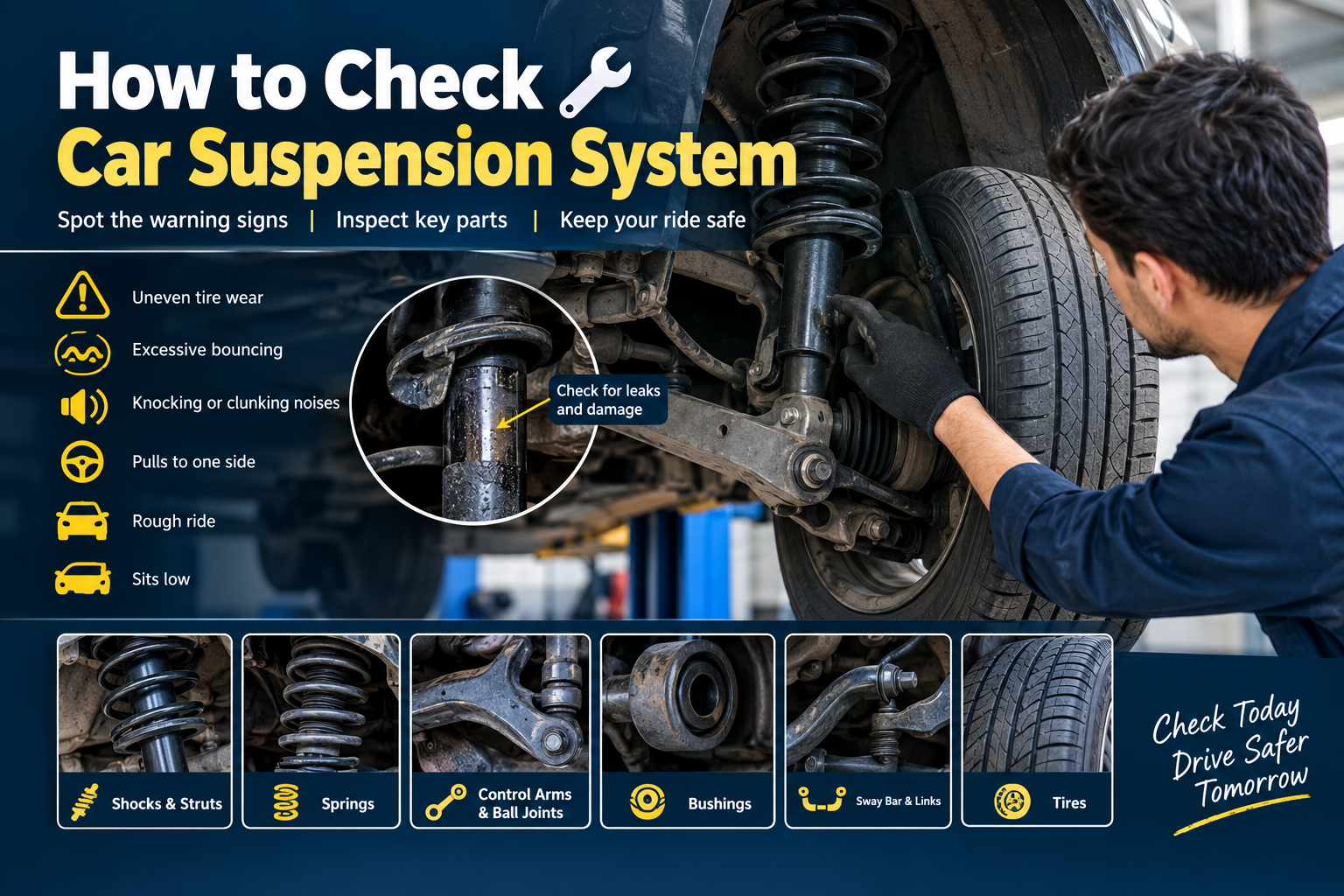
Your car’s suspension system helps keep the ride smooth, the tires in contact with the road, and the vehicle stable when you turn or brake. When suspension parts wear out or become damaged, you may notice unusual noises, uneven tire wear, excessive bouncing, or changes in steering.
If you want to learn how to check car suspension system at home, start with a visual inspection. Park on level ground, compare the vehicle’s ride height, inspect the tires, and look for visible leaks or damaged parts. You can also pay attention to how the car handles during normal driving. However, some faults are hidden and need a professional inspection.
This guide explains the main suspension parts, common warning signs, simple inspection steps, and ways to keep your suspension in good condition. You will also learn when to stop driving and ask a mechanic for help.
What Is a Car Suspension System?
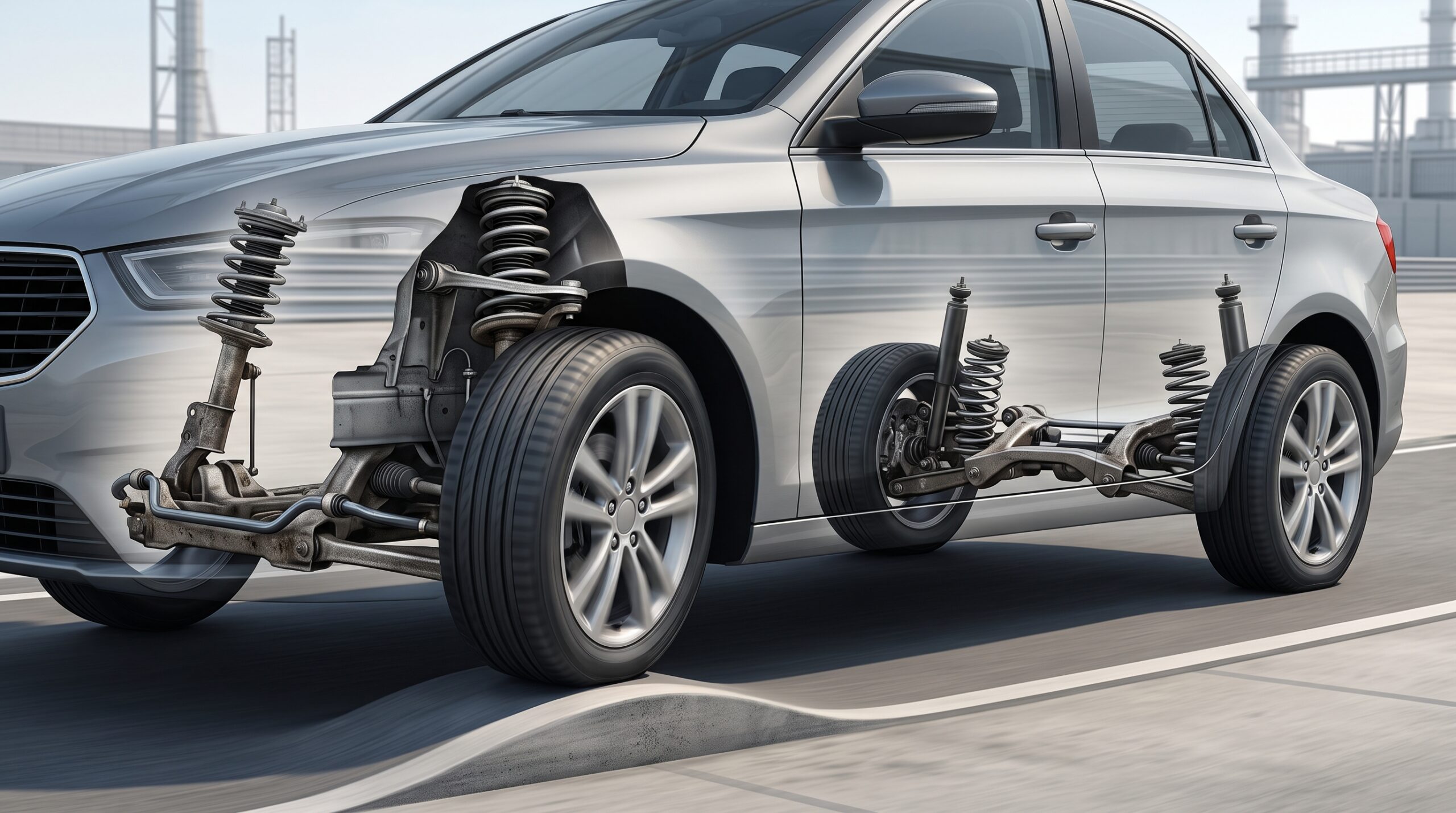
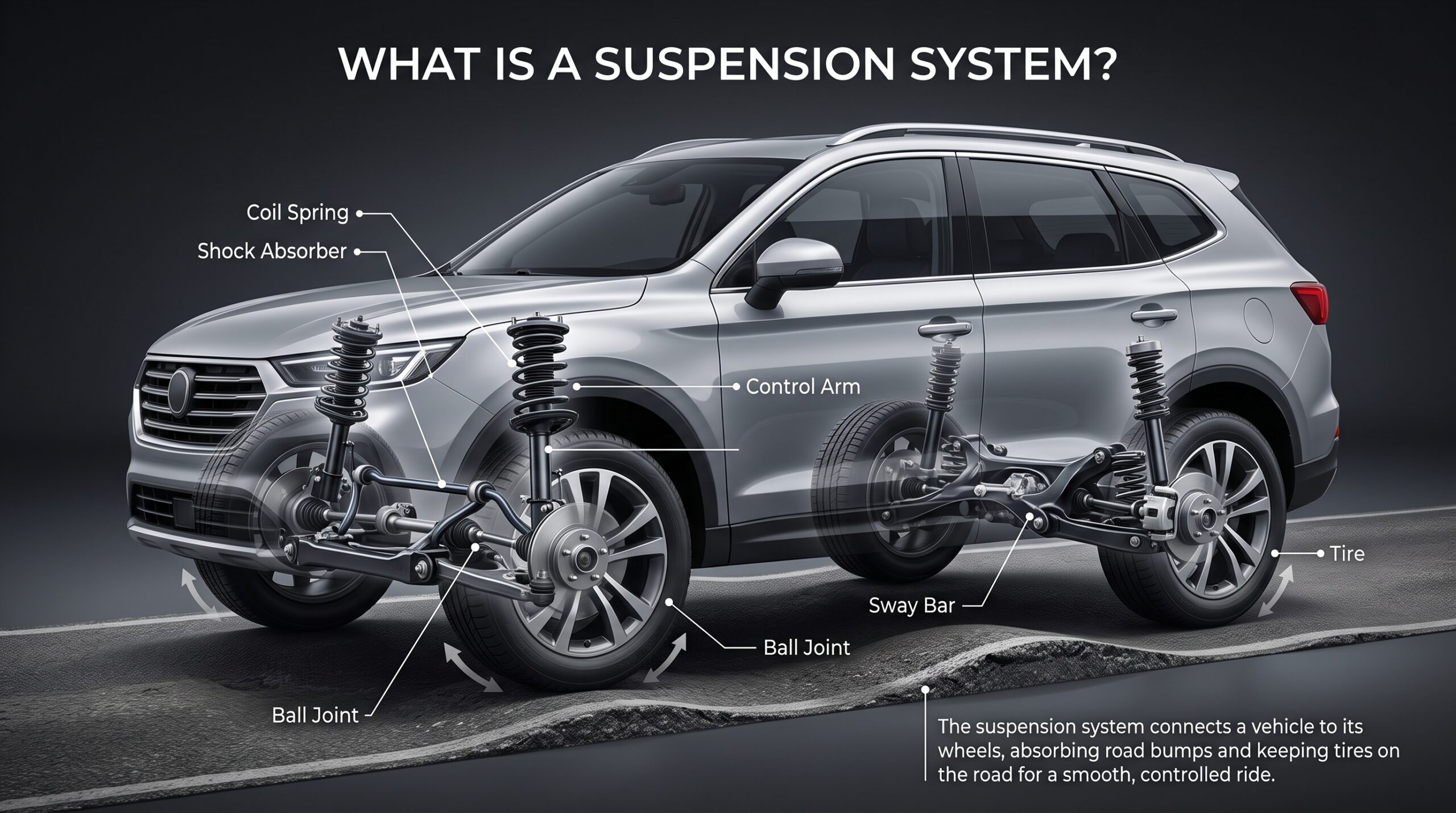
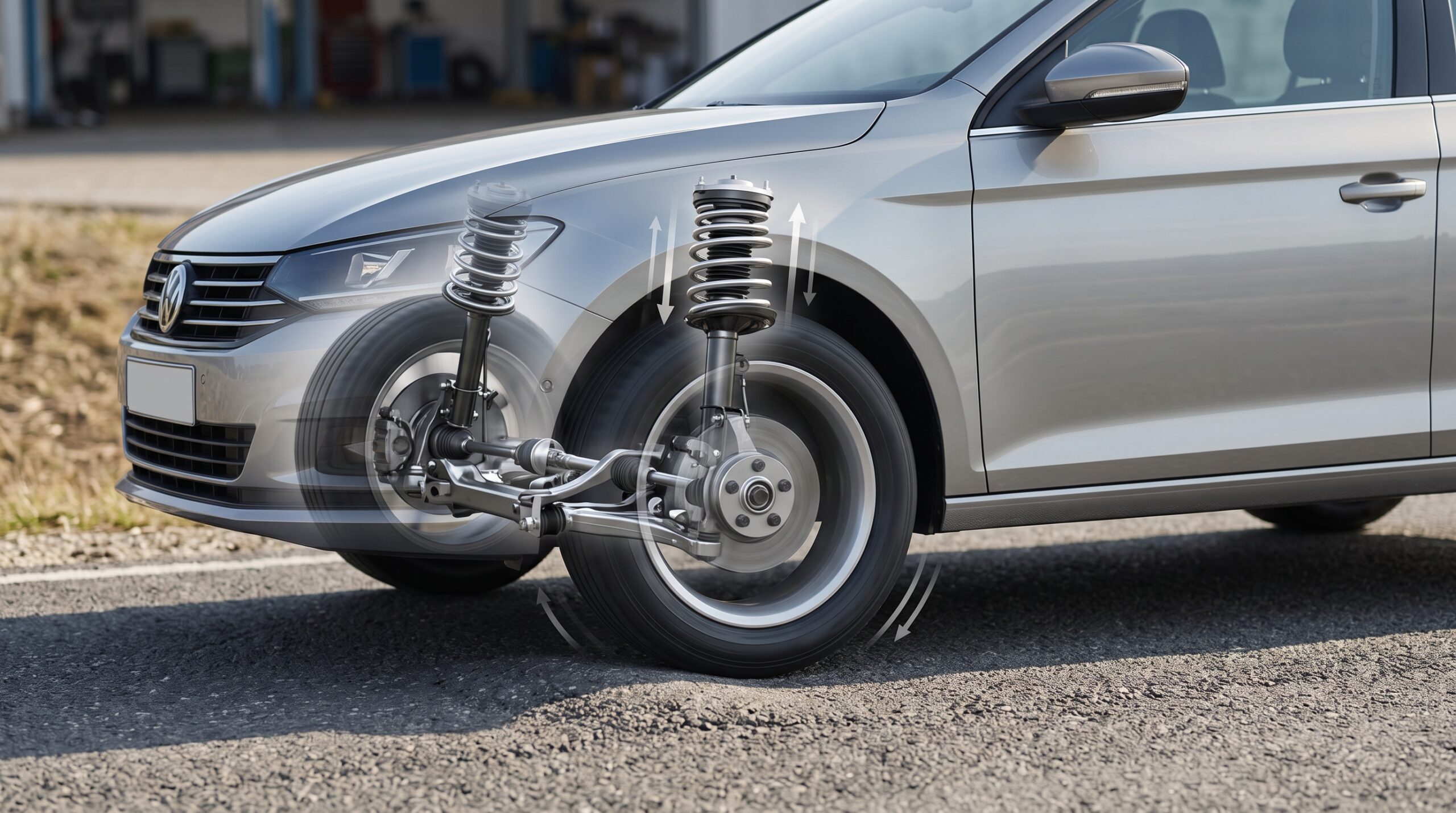
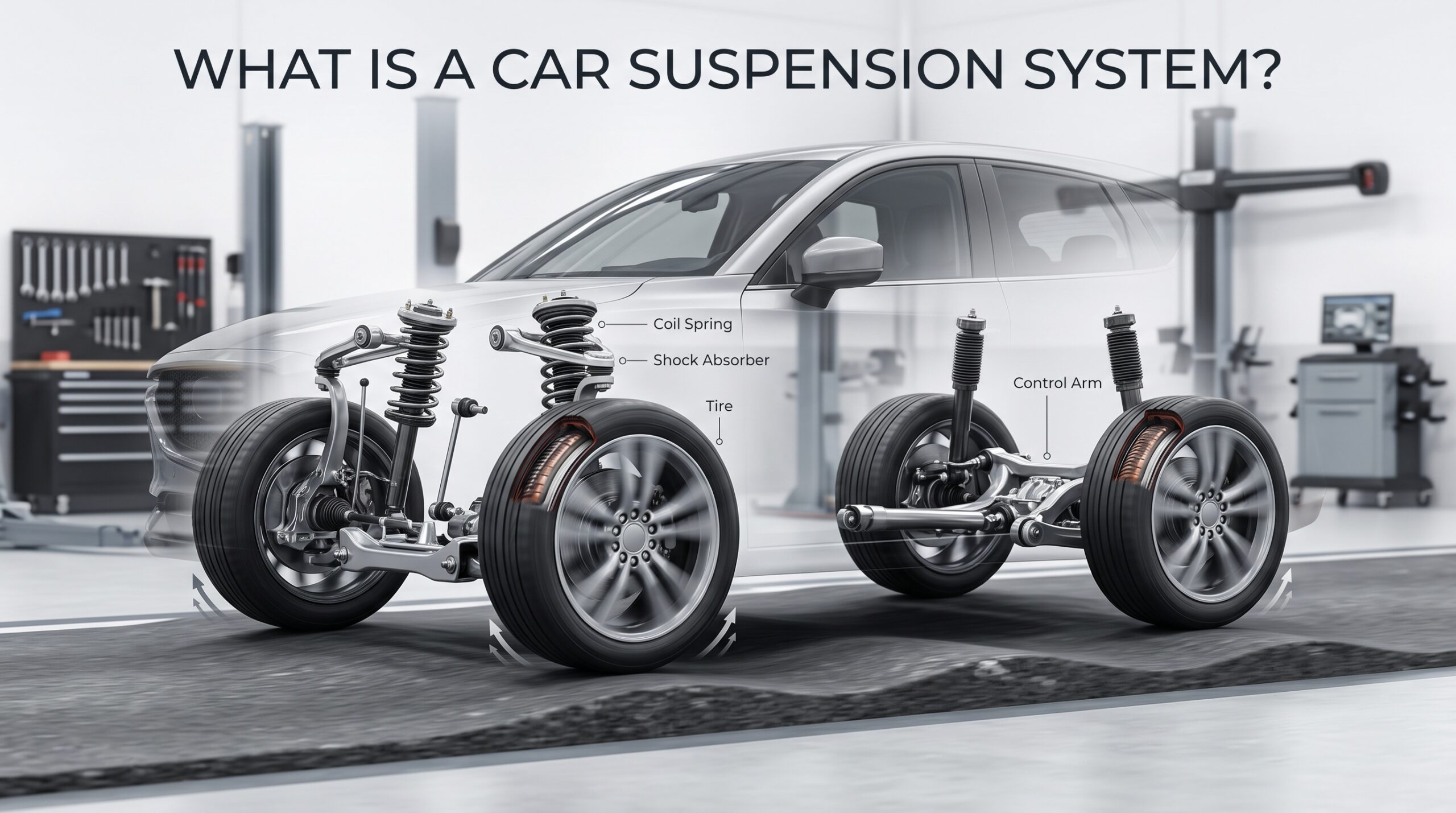
A car suspension system connects the vehicle’s body to its wheels. It helps absorb bumps, reduce unwanted movement, and maintain contact between the tires and the road.
The suspension must work well on smooth roads and rough surfaces. It also helps the vehicle remain stable when turning, braking, or driving over uneven ground.
Understanding the basic parts makes it easier to recognize problems during a visual check.
Main Parts of a Car Suspension
Several components work together to support your car and control wheel movement.
Shocks and struts: Shock absorbers control spring movement and help reduce bouncing. Struts also serve as structural parts of many suspension designs.
Coil springs and leaf springs: These springs support the vehicle’s weight and absorb energy from bumps. Coil springs are common in passenger cars, while leaf springs are often found in pickup trucks and some larger vehicles.
Control arms and ball joints: Control arms help guide the movement of the wheels. Ball joints allow connected parts to move as the suspension travels and the wheels steer.
Bushings and sway bars: Rubber or similar bushings cushion joints and reduce vibration. A sway bar, also called an anti-roll bar, helps limit body roll during cornering.
Tires and wheel connections: Tires are not suspension parts, but they work closely with the suspension. Wheel bearings, hubs, and steering links also affect how the wheels move and remain aligned.
The exact design varies by vehicle. Some cars use a MacPherson strut system, while others use double-wishbone, multilink, or torsion-beam designs.
Why Is the Suspension System Important?
A healthy suspension system provides several benefits.
- Ride comfort: Springs and dampers reduce the effects of bumps and uneven roads.
- Tire contact: The suspension helps keep the tires in contact with the road.
- Vehicle stability: Properly working components help control body movement.
- Steering control: The suspension and steering systems work together to help the driver guide the vehicle.
- Tire life: Worn or damaged parts can contribute to uneven tire wear.
A suspension fault may affect more than comfort. It can also change braking stability, steering response, and tire contact. That is why unusual symptoms should not be ignored.
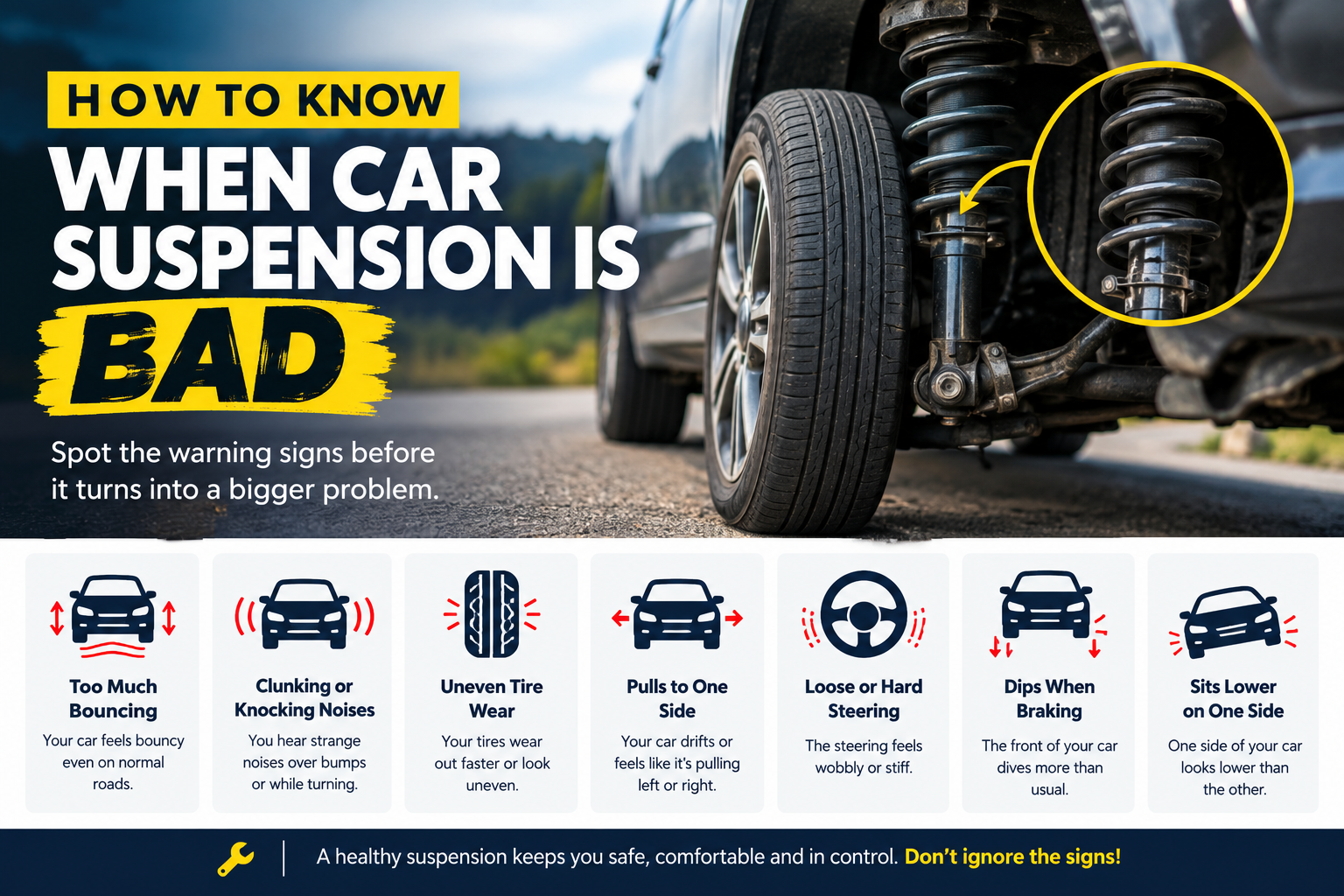
Signs Your Car Suspension Needs Checking
Before learning how to check car suspension system components, understand the warning signs. These symptoms can help you decide whether a basic inspection is enough or professional help is needed.
Uneven Tire Wear
Look at the tread across the width of each tire. If one edge wears faster than the other, the wheels may be incorrectly aligned, or a suspension component may be worn.
For example, the inside edge of a front tire may wear much faster than the center. This can point to an alignment issue, excessive negative camber, or worn parts.
Uneven wear can also result from incorrect tire pressure, tire defects, or wheel balance problems. Therefore, tire wear alone cannot confirm a suspension fault.
Check the tire pressure against the vehicle manufacturer’s recommended figures. If the tread is badly worn, damaged, or showing exposed cords, arrange prompt professional help.
Excessive Bouncing After Bumps
Does your car continue to bounce after crossing a speed bump? Worn shock absorbers or struts may be the cause.
Springs absorb energy from road impacts, while dampers control spring movement. If the dampers cannot control that movement well, the vehicle may feel unsettled.
However, not every bounce means the shocks are faulty. Vehicle design, road conditions, tire pressure, and the load inside the car can affect how the suspension feels.
Knocking or Clunking Noises
A clunk from the front or rear suspension may indicate worn bushings, loose links, damaged joints, or a broken spring.
Listen for when the sound occurs. Does it happen over potholes, while turning, or when braking? These details help a mechanic narrow down the cause.
A light squeak may come from rubber bushings, while a sharp metal noise may indicate loose or damaged hardware. Sound alone is not enough to identify the faulty part.
If the noise is sudden, loud, or accompanied by poor steering, stop driving when safe and arrange an inspection.
The Car Pulls to One Side
If your vehicle drifts or pulls to one side on a reasonably level road, check for possible causes such as incorrect tire pressure, wheel alignment problems, tire defects, or damaged suspension or steering parts.
Do not assume that the suspension is always responsible. Brake faults can also cause pulling.
If the steering changes suddenly or the vehicle becomes difficult to control, avoid continuing the journey. Have the car inspected before driving again.
A Rough or Uncomfortable Ride
A car that suddenly feels much harsher than usual may have worn or damaged suspension components. You might feel more road vibration, hear repeated impacts, or notice that the vehicle struggles to settle after bumps.
First, consider the tires. Incorrect pressure can affect ride comfort, and a damaged tire can create unusual vibration.
If tire pressure is correct and the ride remains poor, have the suspension and wheels checked.
The Front or Rear of the Car Sits Low
Look at the vehicle while it is parked on level ground. One corner that sits noticeably lower than the others may indicate a broken spring, a weak spring, or another suspension problem.
An uneven appearance can also result from uneven ground, different tire pressures, or a heavy load in the vehicle.
Remove unnecessary cargo and check the ground before drawing a conclusion. If one corner remains unusually low, arrange a professional inspection.
How to Check Car Suspension System at Home
You can carry out several basic checks without special tools. These checks help identify warning signs, but they cannot replace a complete workshop inspection.
1. Park on a Level Surface
Choose a flat, firm parking area away from traffic. Turn off the engine, engage the parking brake, and select Park for an automatic transmission or an appropriate gear for a manual transmission.
Allow hot parts to cool before inspecting nearby areas.
Keep your hands away from moving parts. Never place any part of your body under a vehicle supported only by a jack.
2. Check the Vehicle’s Ride Height
Stand several feet away and look at the front, rear, and sides of the vehicle.
Compare the distance between each wheel arch and the tire. Look for a corner that sits unusually low or a body that appears tilted.
Use the following checklist:
- Is one corner noticeably lower than the others?
- Does the car lean when parked on level ground?
- Does the vehicle appear lower than usual?
- Is there a visible gap difference between the left and right sides?
Remember that some vehicles have different front and rear ride heights by design. Fuel level, cargo, and passenger weight can also affect the result.
If you notice a sudden change or a visibly broken spring, do not continue with road testing. Arrange professional help.
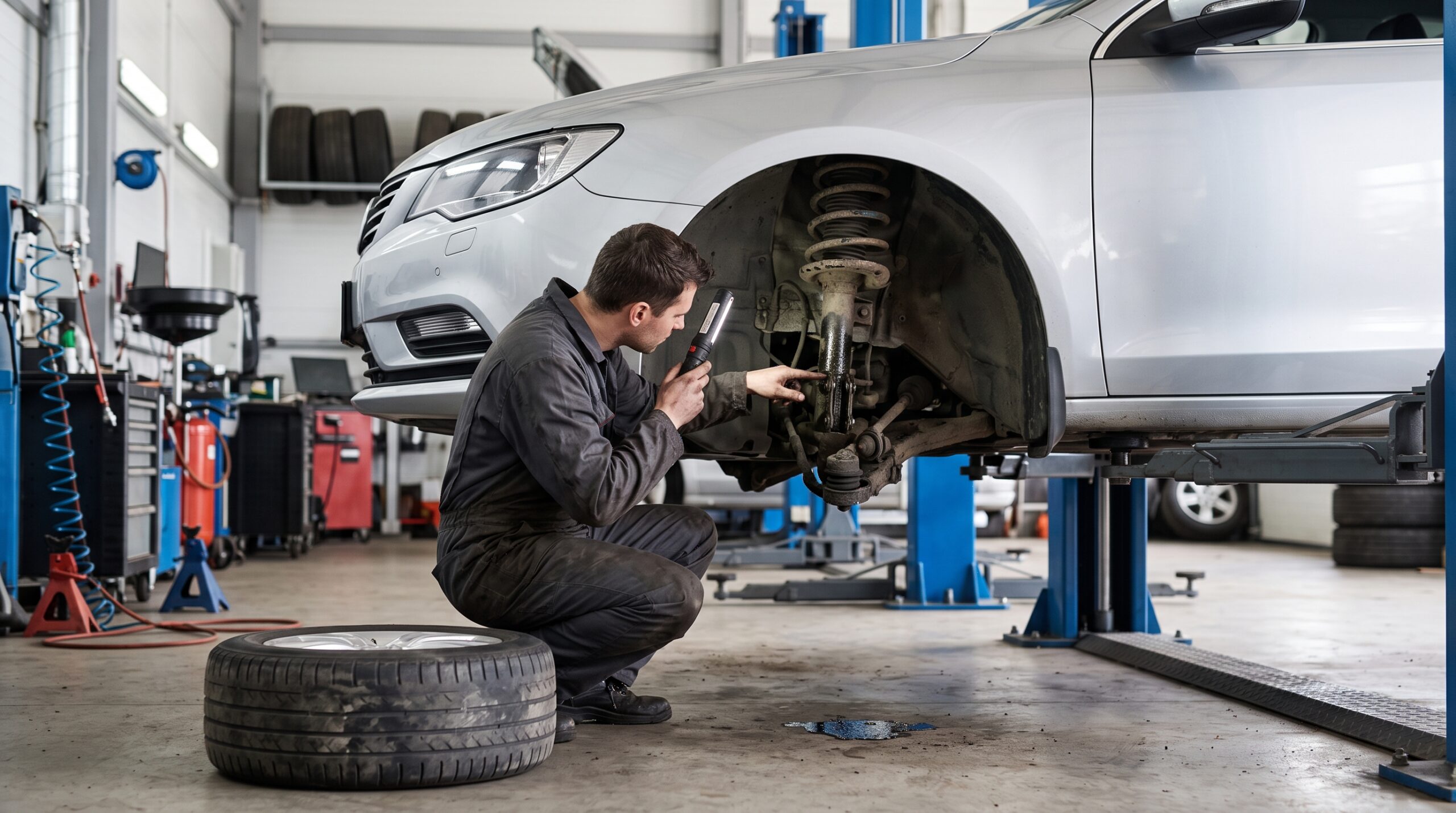
3. Inspect the Shocks and Struts
Look through the wheel openings where the components are visible. Use a flashlight if needed, but do not reach into narrow gaps.
Check for:
- Wet, oily residue along a shock absorber or strut.
- Heavy corrosion or visible damage.
- Bent-looking components.
- Damaged mounting areas.
- Broken spring sections near the strut, where visible.
A thin film of dirt or moisture does not automatically mean a shock is leaking. Fresh oily fluid around the damper can be a warning sign.
Some suspension components are hidden behind covers or inside the wheel assembly. Do not remove parts unless you have the correct tools and training.
If you find a leak or visible damage, ask a mechanic to inspect the component.
4. Examine the Tires
Tire inspection is an important part of checking suspension condition.
Look across the tread surface and compare all four tires. Check for wear along the inner edge, outer edge, or in uneven patches.
Common patterns include:
- One-edge wear: May indicate incorrect alignment or worn suspension parts.
- Feathered tread: May suggest an alignment issue.
- Cupped or scalloped wear: Can be associated with wheel imbalance, worn dampers, or other problems.
- Wear across both shoulders: May be associated with underinflation.
- Wear near the center: May be associated with overinflation.
These patterns are clues, not definite diagnoses.
Use a reliable pressure gauge when the tires are cold. Follow the recommended pressure on the driver’s door label or in the owner’s manual, not the maximum pressure printed on the tire sidewall.
A mechanic can check whether tire wear comes from alignment, suspension, or another cause.
5. Listen for Unusual Noises
You can learn a lot by noticing when suspension noises happen during normal use.
Pay attention to clunks, rattles, squeaks, or knocking sounds when the car crosses bumps or enters a driveway.
Record a few useful details:
- Does the noise come from the front or rear?
- Does it happen on small bumps or large ones?
- Does it occur when turning?
- Does it happen when braking or accelerating?
- Did it start after hitting a pothole?
Worn bushings may allow excess movement. Loose sway bar links can create rattling noises, while damaged ball joints may produce clunks.
Do not deliberately drive over potholes or repeat a dangerous maneuver to reproduce a sound. If the vehicle feels unstable, stop and arrange an inspection.
6. Check for Visible Damage
With the car parked securely, inspect only the parts you can see safely from outside the vehicle.
Look for:
- Broken or displaced spring sections.
- Torn or split rubber bushings.
- Damaged shock absorbers.
- Bent-looking control arms.
- Loose-looking links or mounting parts.
- Signs of a recent impact near a wheel.
Do not pull, twist, or strike suspension components to test them. Some parts store considerable spring force and can cause serious injury if handled incorrectly.
Never crawl underneath a car supported only by a jack. A vehicle must be supported with properly rated equipment on a suitable surface before anyone works underneath it. If you do not have the correct equipment and experience, leave this work to a professional.
How to Perform a Basic Suspension Bounce Test
A bounce test is a simple screening method. It may offer clues about damper performance, but it does not prove that the suspension is healthy or faulty.
Steps to Perform the Test Safely
First, park on level ground, switch off the engine, and engage the parking brake. Make sure the area around the vehicle is clear.
On a vehicle where the body panel can be pressed safely, use your hands to apply gentle downward pressure near a wheel. Avoid pressing on fragile body panels, hot areas, or sharp edges.
Release the pressure and observe how the body settles.
Do not climb onto the vehicle or apply force near exposed springs. If the vehicle’s design makes the test awkward or unsafe, skip it.
What the Results May Tell You
If the body continues to oscillate noticeably after being released, worn dampers may be one possible cause.
Uneven movement between sides may also justify a closer inspection. However, modern suspension designs, spring rates, body structure, and active suspension systems can make a bounce test less reliable.
A vehicle can pass this test and still have worn bushings, loose ball joints, alignment problems, or leaking dampers.
Use the result as one clue among several. Do not rely on this test alone to decide whether a car is safe to drive.
How to Check Different Suspension Components
Knowing how to check car suspension system parts individually can help you describe a problem more clearly to a mechanic.
How to Check Shocks and Struts
Look for fluid leaks, dents, corrosion, and damaged mounting areas. Notice whether the vehicle bounces more than usual or feels unstable after bumps.
Some dampers are difficult to see without removing a wheel. Do not remove wheels unless you have the proper equipment and know how to secure the vehicle.
A workshop can check the damper condition, mounts, and related parts.
How to Check Ball Joints and Control Arms
Ball joints connect moving suspension parts, while control arms help guide wheel movement.
From a safe viewing position, look for damaged rubber boots, displaced parts, or visible impact damage.
A torn boot may allow dirt and moisture into a joint, which can speed up wear. However, a ball joint can be worn even when its boot looks intact.
Checking joint play often requires lifting the vehicle and moving the wheel or suspension in a controlled way. The correct method varies by design.
Leave this test to a trained mechanic if you lack suitable equipment.
How to Check Suspension Bushings
Bushings reduce vibration and allow controlled movement at suspension joints.
Look for rubber that appears split, badly cracked, displaced, or separated from its metal sleeve.
Worn bushings may cause clunks, vibration, or changes in wheel alignment under load. However, small surface cracks do not always mean a bushing needs immediate replacement.
A mechanic can check how much movement is present and whether the part is still working within its intended range.
How to Check Coil Springs
Coil springs support the vehicle’s weight. A broken spring may cause one corner to sit lower than normal or create a clunking sound.
Look for visible gaps in the spring, missing sections, heavy corrosion, or an unusual vehicle stance.
Some broken spring ends are hidden inside the spring seat, so a visual check may miss them.
Never loosen or remove a spring yourself without the proper equipment and training. Suspension springs can store substantial energy. Have a professional inspect any suspected spring damage.
How to Check the Sway Bar and Links
The sway bar helps reduce body roll during turns. Links and bushings connect it to the suspension.
Look for obvious damage or displaced rubber where these parts are visible. A worn link may cause a rattle or clunk over small bumps.
Noise from the sway bar area does not always mean the bar itself is damaged. The links, mounting bushings, and nearby components may be responsible.
A mechanic can inspect the joints and mounting points for excess movement.
Common Car Suspension Problems and Their Causes
Suspension problems often develop gradually, but a major impact can cause sudden damage.
Worn Shocks or Struts
Dampers wear through repeated use. Heat, road conditions, vehicle load, and component quality can affect their service life.
Common signs include leaking fluid, excessive body movement, and reduced stability over bumps.
Worn dampers may also contribute to uneven tire wear. A mechanic should inspect them before deciding whether replacement is needed.
Broken or Weak Springs
Springs can weaken or break because of corrosion, fatigue, damage, or severe impacts.
Possible signs include a low ride height, a tilted vehicle, unusual noises, and reduced clearance around a wheel.
A broken spring can affect tire clearance and handling. Do not drive if a spring is visibly broken or may contact a tire.
Damaged Bushings or Ball Joints
Bushings may deteriorate with age, heat, and exposure to road contaminants. Ball joints can wear as their internal surfaces and protective boots deteriorate.
Possible symptoms include clunks, loose steering, vibration, or uneven tire wear.
A severely worn ball joint can affect wheel control. Prompt professional inspection is important when a joint is suspected of being loose.
Incorrect Wheel Alignment
Wheel alignment refers to the angles of the wheels relative to the vehicle and the road.
Incorrect alignment can result from worn parts, a pothole impact, or previous repair work. It may cause the car to pull to one side or wear tires unevenly.
An alignment adjustment can correct angle settings when the components are sound. It cannot repair a broken spring, worn ball joint, or bent control arm.
Suspension Damage From Potholes
A deep pothole can damage a tire, bend a wheel, affect alignment, or harm suspension components.
After a strong impact, check for tire bulges, wheel damage, unusual steering, new noises, or a change in ride height.
If the car suddenly vibrates, pulls strongly, or feels unstable, stop in a safe location. Do not assume the problem is minor simply because the vehicle can still move.
When Should You Get a Professional Suspension Inspection?
A home inspection can identify obvious warning signs, but a workshop has tools and equipment to assess parts that are difficult to reach.
Arrange a professional check if symptoms persist, even when the cause is unclear.
Warning Signs That Need Immediate Attention
Stop driving when it is safe to do so and arrange assistance if you notice:
- A sudden and severe change in steering.
- A visibly broken spring.
- A wheel that appears loose, tilted, or out of position.
- Sudden changes in handling or tire contact.
- A loud impact followed by strong vibration.
- A tire rubbing against a damaged suspension part.
- A serious suspension noise combined with poor control.
Do not continue driving to test whether the symptoms disappear. Depending on the fault, the vehicle may need recovery rather than a road journey to a workshop.
What a Mechanic Checks During an Inspection
A professional inspection may include:
Suspension joints and mounting points: The mechanic looks for wear, looseness, damage, and excess movement.
Steering components: Tie rods, steering joints, and related parts are checked for safe operation.
Shock absorbers and struts: The mechanic looks for leaks, damage, worn mounts, and signs of poor damping.
Springs and control arms: These parts are checked for cracks, bends, corrosion, and other damage.
Wheel alignment and tires: The technician checks tire condition and alignment when the symptoms or wear patterns suggest a problem.
The exact inspection depends on the vehicle, symptoms, and initial findings. Ask for an explanation of the fault and an estimate before approving repairs.
How Much Does a Car Suspension Inspection Cost?
The cost of a suspension inspection varies by location, vehicle, workshop, and the type of examination needed.
A basic visual check may be included in a general service, while a detailed inspection that requires lifting the vehicle or removing components may cost more.
Factors That Affect Inspection Costs
Several factors can influence the final price.
- Vehicle make and model: Some cars have suspension designs that take longer to inspect.
- Suspension type: Complex multilink or adaptive systems may require extra diagnostic work.
- Labor rates and location: Workshop prices differ by region and business.
- Additional tests: Wheel alignment measurements or other diagnostic checks may be charged separately.
- Repairs: Replacing parts adds the cost of components and labor.
Before booking, ask what the inspection includes and whether the fee will be credited toward an approved repair.
Inspection Cost vs. Repair Cost
An inspection is not the same as a repair. A mechanic may find that your vehicle needs only an alignment adjustment, or they may discover a worn joint, damaged spring, or leaking shock absorber.
The repair price depends on the part, the vehicle, and the labor involved. Replacing a single component may cost less than replacing several parts, but components should not be replaced without a sound diagnosis.
Ask the workshop to explain which parts have failed, why replacement is needed, and whether related parts should also be checked.
If you are in Bangladesh, request a written estimate in taka (BDT). Local workshop rates and spare-part prices can vary, so it is better to compare actual quotations than rely on a single general price.
Tips to Keep Your Car Suspension in Good Condition
Regular care can help you identify problems early and reduce avoidable wear.
Avoid Potholes When Safe
Watch the road ahead and slow down before rough surfaces when conditions allow. Avoid sudden swerves that could put you or other road users at risk.
If you cannot avoid a pothole, reduce speed safely before reaching it rather than braking sharply at the last moment.
Check Tire Pressure Regularly
Use a pressure gauge and follow the manufacturer’s recommendations. Correct tire pressure supports proper handling and helps reduce abnormal tire wear.
Check pressure when the tires are cold, and inspect them for cuts, bulges, and other damage.
Follow the Vehicle Manufacturer’s Maintenance Guidance
Use the owner’s manual to understand recommended inspections and service intervals. Some suspension components have specific inspection requirements, while others are checked when symptoms appear.
There is no single replacement interval that applies to every car or every suspension part.
Fix Unusual Noises Early
A new clunk or repeated rattle may be an early sign of a worn component. Getting it checked promptly can help prevent additional damage and clarify whether the vehicle is safe to drive.
Avoid Overloading the Vehicle
Follow the vehicle’s maximum load limits. Excessive weight can place added stress on springs, dampers, tires, and other components.
If the vehicle sits low after carrying a load, remove the extra weight and check whether the ride height returns to normal.
Inspect the Suspension After a Major Impact
After hitting a deep pothole or curb, look for tire damage, wheel damage, leaks, unusual ride height, and changes in steering.
Arrange an inspection if anything appears abnormal. A wheel alignment check may be useful, but physical damage should be ruled out first.
Frequently Asked Questions
How do I know if my car suspension is bad?
Common signs include excessive bouncing, uneven tire wear, clunking noises, a low ride height, or changes in steering and handling. These symptoms can have other causes, so a professional inspection may be needed to confirm the problem.
Can I check my car suspension at home?
Yes. You can inspect the ride height, tires, visible shocks, and accessible suspension parts while the car is parked safely. You can also note unusual noises during normal driving. Do not crawl under a vehicle supported only by a jack or attempt to dismantle spring-loaded parts.
How often should I inspect my suspension system?
Check for visible damage and unusual tire wear regularly, such as during routine tire-pressure checks or vehicle cleaning. Follow the maintenance schedule in your owner’s manual and arrange an inspection whenever new symptoms appear. The required interval depends on the vehicle and how it is used.
Can bad suspension affect tire wear?
Yes. Worn joints, damaged springs, faulty dampers, and incorrect alignment can contribute to uneven tire wear. However, incorrect tire pressure, wheel imbalance, and tire defects can also cause abnormal wear. A proper inspection helps identify the actual cause.
Is it safe to drive with damaged suspension?
It depends on the type and severity of the damage. Minor issues may allow a short, careful trip to a workshop, but a broken spring, loose wheel connection, severe steering change, or unstable handling can make driving unsafe. Stop when safe and arrange recovery if a serious fault is suspected.
How long does a car suspension system last?
There is no single lifespan for the entire suspension system. Shocks, struts, springs, bushings, and joints wear at different rates. Road quality, climate, mileage, vehicle load, and driving habits all affect service life. Follow the manufacturer’s guidance and replace parts based on their condition and specifications.
Can wheel alignment fix suspension problems?
Wheel alignment can correct wheel-angle settings when the suspension and steering parts are in suitable condition. It cannot repair worn ball joints, broken springs, leaking dampers, or bent control arms. A mechanic should check for damaged or loose components before performing an alignment.
Conclusion
Learning how to check car suspension system components starts with a safe visual inspection. Park on level ground, compare the vehicle’s ride height, examine the tires, and look for leaks, broken springs, and other visible damage. Pay attention to unusual noises, excessive bouncing, and changes in steering.
Remember that a home check cannot identify every fault. If your vehicle has a visibly damaged component, sudden handling changes, or signs of an unsafe wheel connection, stop driving when safe and seek professional help.
Regular checks, correct tire pressure, sensible driving, and prompt repairs can help keep your suspension in good condition and support safe, comfortable driving.