Our Blogs
How to Know When Car Suspension Is Bad: 7 Key Signs

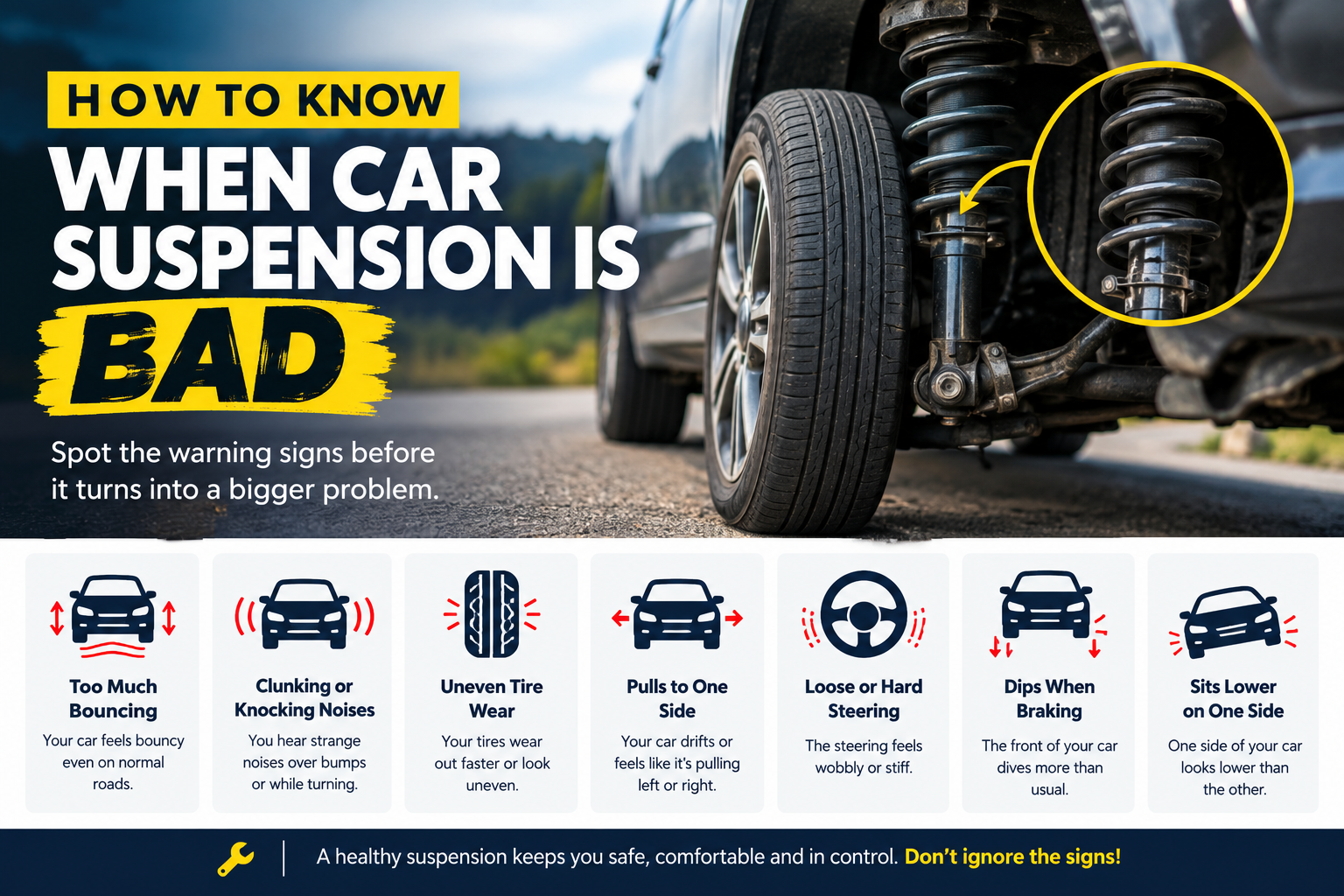
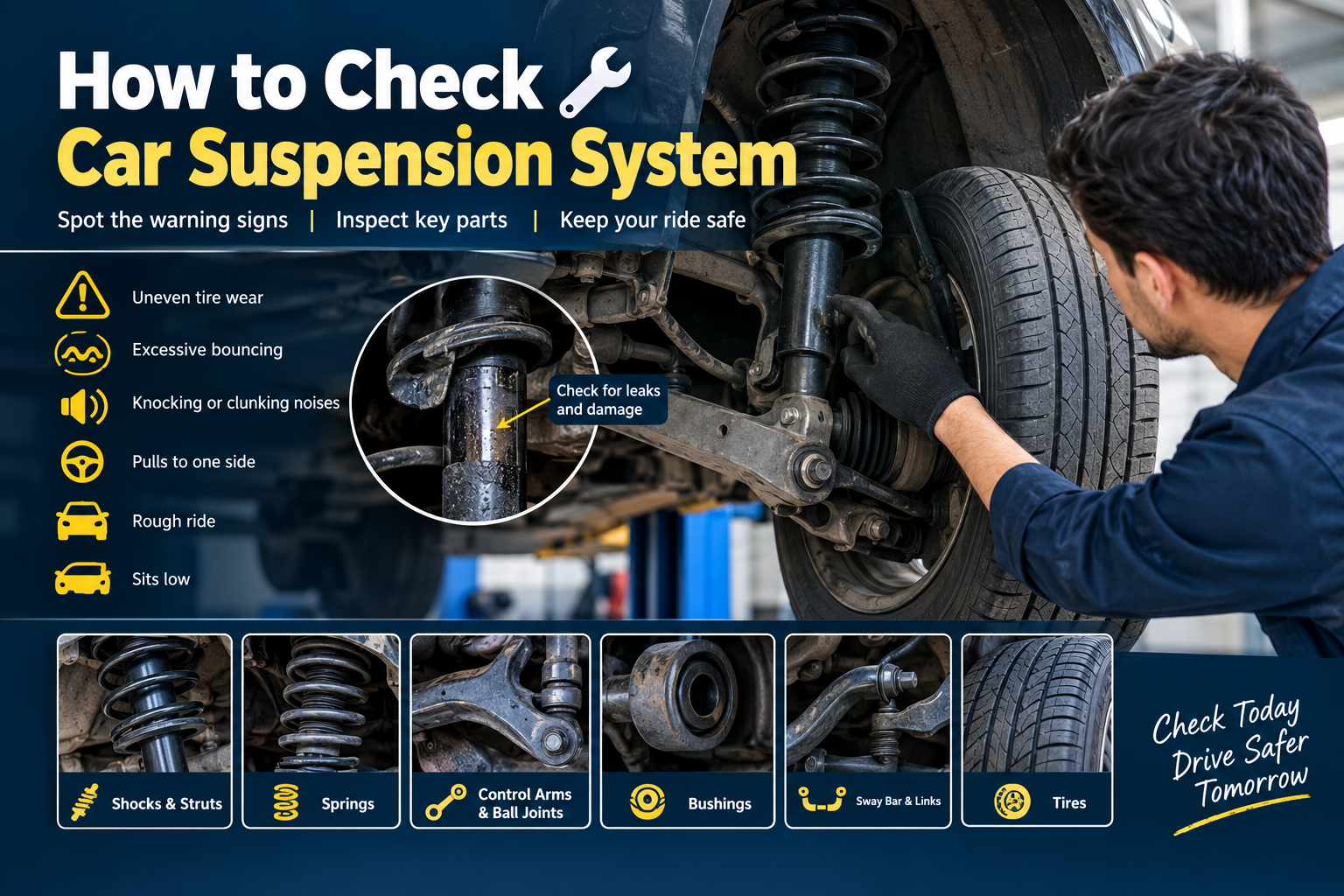
Your car’s suspension system helps keep your ride smooth, your tires in contact with the road, and your vehicle under control. When it starts to fail, you may notice extra bouncing, strange noises, uneven tire wear, or changes in steering and braking.
Knowing how to know when car suspension is bad can help you spot problems early and avoid further damage. Some symptoms are easy to notice during a normal drive, while others become clear when you inspect your tires or look at the vehicle’s ride height.
A bad suspension does not always mean that every suspension part needs replacing. The cause may be a worn shock absorber, a damaged spring, a loose joint, or a problem with wheel alignment. These faults can produce similar symptoms, so a proper inspection is important.
In this guide, you will learn the main warning signs, common causes, simple checks you can perform at home, possible repair costs, and ways to maintain your suspension system.
1. What Does a Car Suspension System Do?
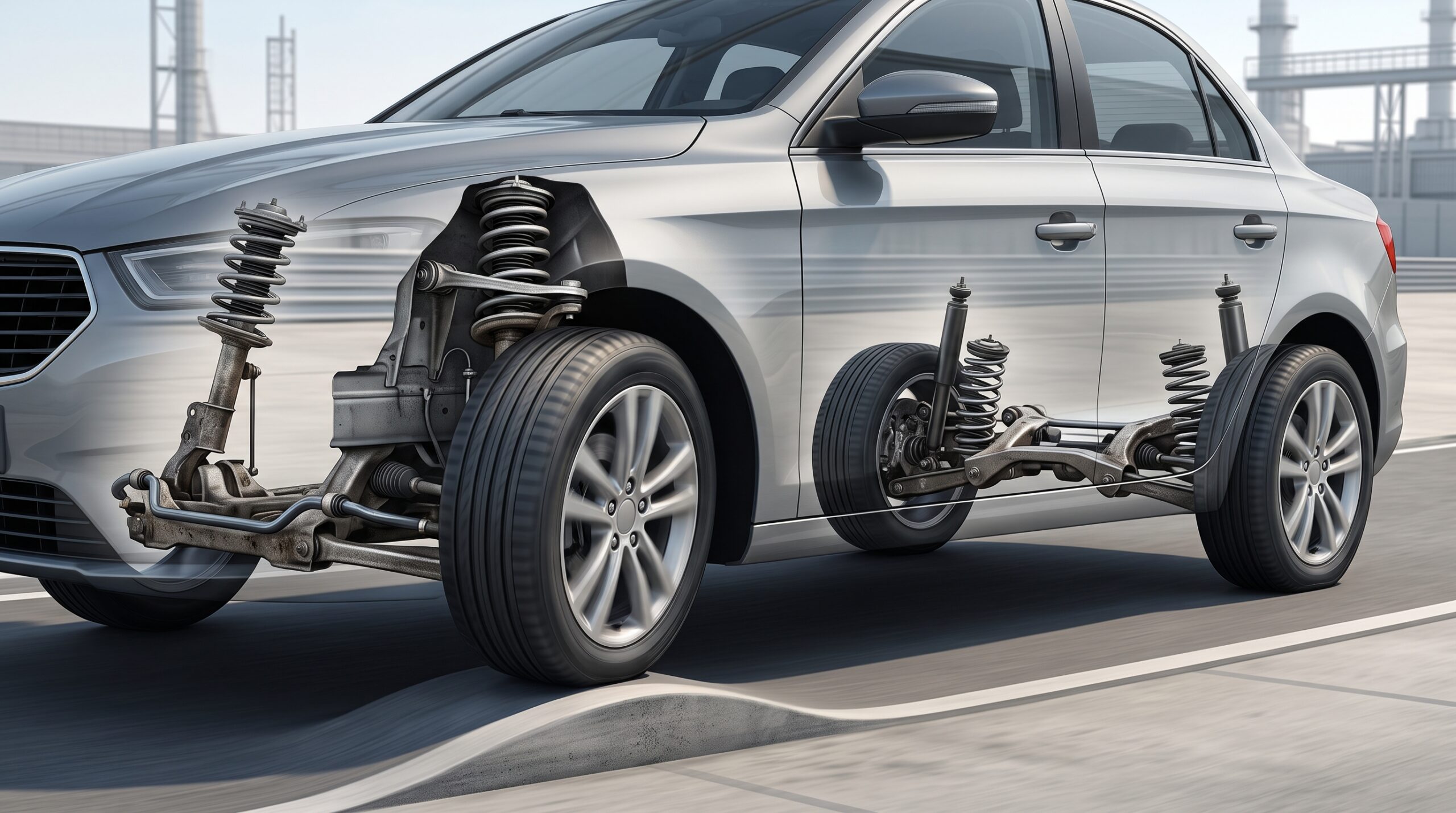
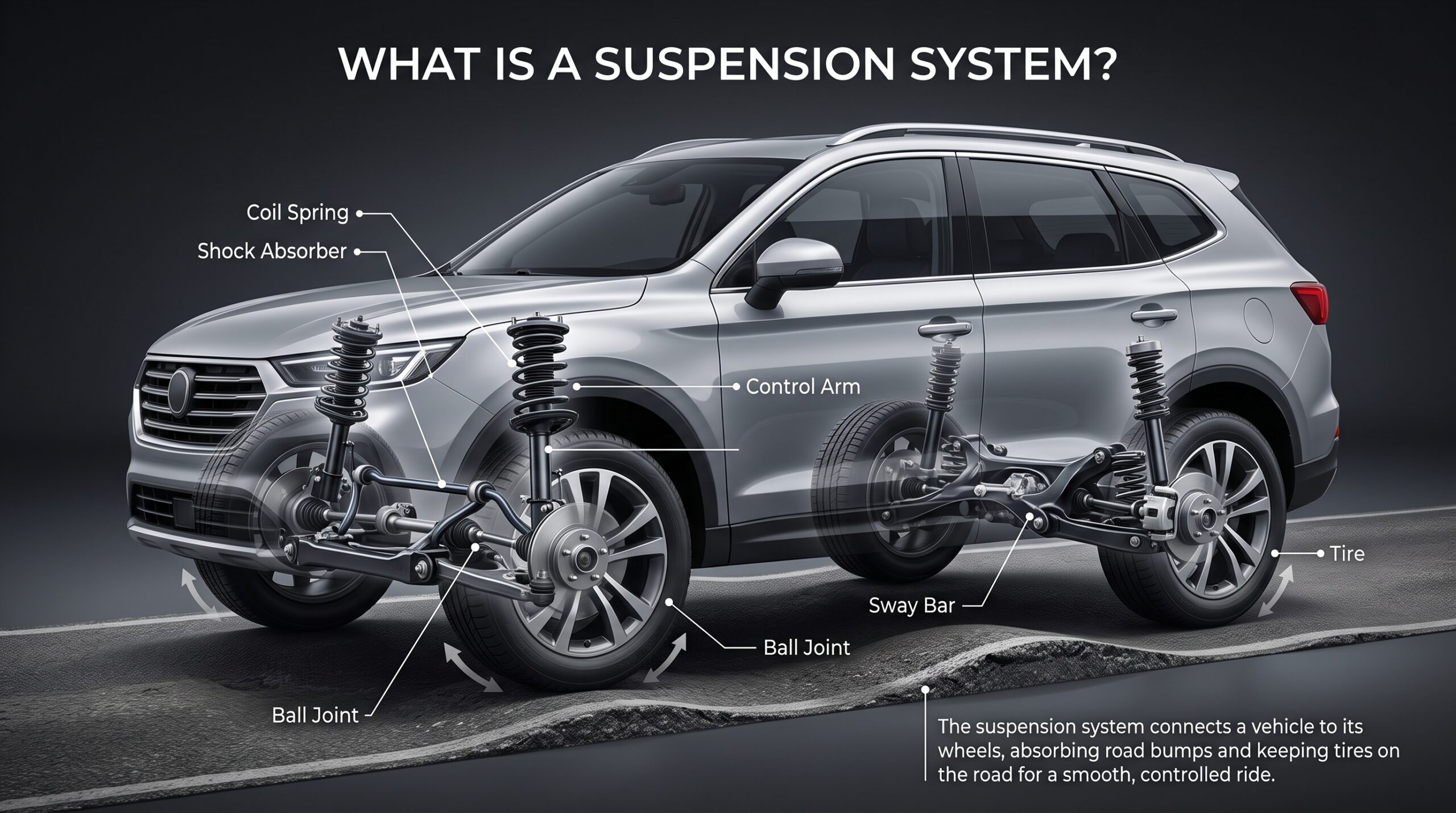
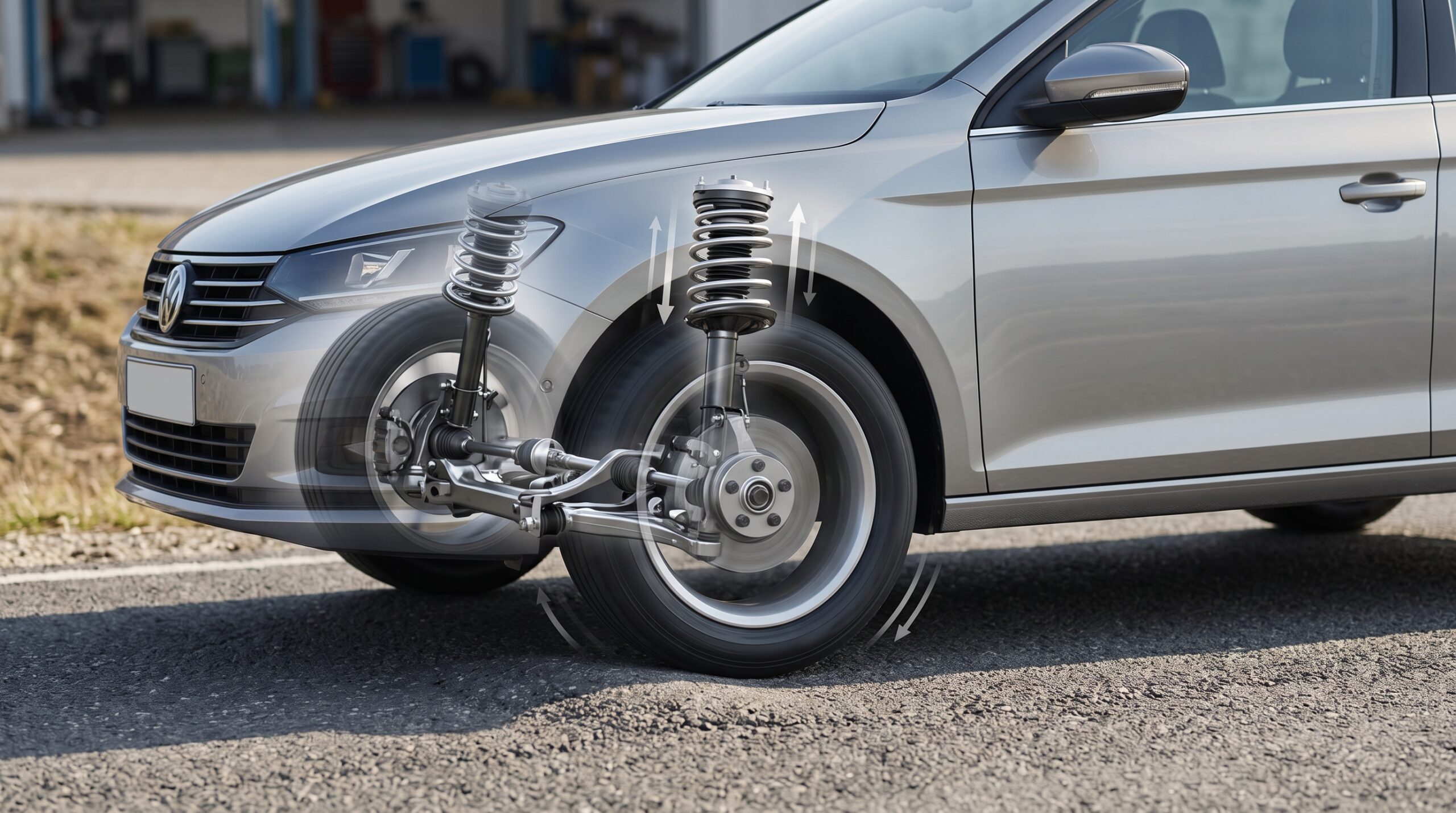
A car suspension system connects the wheels to the vehicle’s body and helps control how the vehicle responds to bumps, dips, and changes in the road surface.
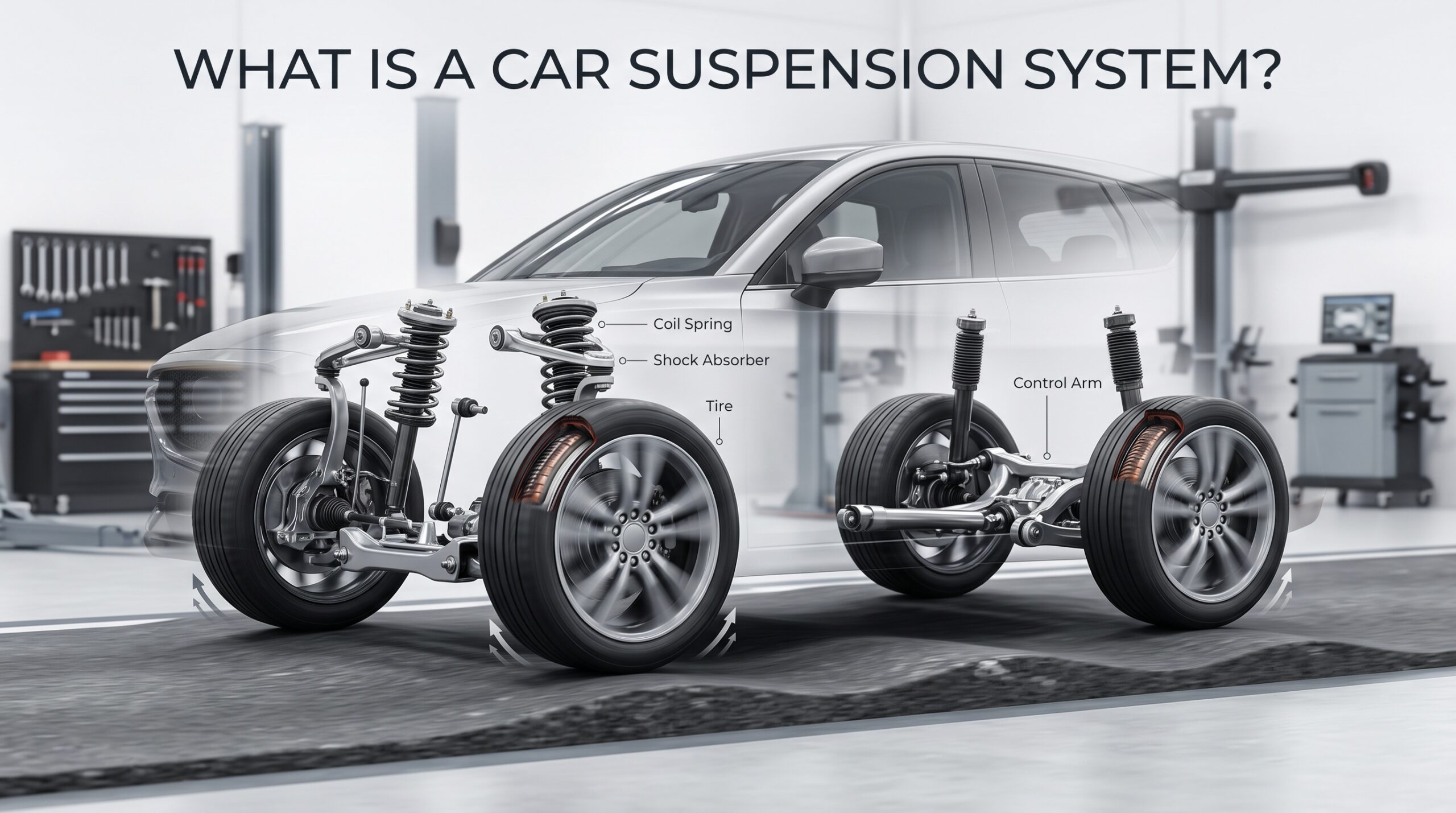
It includes springs, shock absorbers or struts, control arms, bushings, ball joints, and other parts. The exact design depends on the make and model of the vehicle.
When you drive over a pothole, the wheels move up and down. The suspension absorbs and controls this movement so that the impact does not transfer directly to the cabin.
To know when your car’s suspension is bad, it helps to understand what each part does and how a fault can affect your driving experience.
Main Parts of a Car Suspension System
1. Shock absorbers
Shock absorbers control the movement of the springs. They help prevent the car from continuing to bounce after hitting a bump.
Worn shocks may allow excessive bouncing, reduce stability, and make it harder to keep the tires in consistent contact with the road.
2. Struts
Struts are structural suspension components used in many modern vehicles. A strut often combines a shock absorber with a structural support and spring assembly.
A damaged or worn strut can affect ride comfort, steering response, tire wear, and vehicle stability.
3. Springs
Coil springs or other spring designs support the vehicle’s weight and absorb road impacts. If a spring breaks or weakens, one corner of the car may sit lower than the others.
4. Control arms and bushings
Control arms help guide the wheels as the suspension moves. Bushings are flexible parts that reduce vibration and allow controlled movement.
Worn bushings may cause clunking sounds, vibration, or changes in wheel position.
5. Ball joints and related joints
Ball joints allow suspension components to move in different directions while keeping them connected. Worn joints can cause steering problems, unusual noises, and unstable handling.
These parts need professional attention because some joint failures can affect the driver’s ability to control the vehicle.
Why Your Suspension System Is Important
A healthy suspension provides several important benefits.
- Better comfort: It reduces the impact of bumps and uneven road surfaces.
- Improved handling: It helps the vehicle respond more predictably when turning.
- Tire contact: It helps maintain consistent contact between the tires and road.
- Braking stability: It helps control body movement during braking.
- Vehicle control: It supports stable steering and predictable movement.
- Component protection: It helps manage road impacts that could otherwise place extra stress on other parts.
When these parts wear out, the vehicle may feel less stable or become harder to control. Learning how to know when car suspension is bad is therefore useful for both comfort and safety.
2. Seven Signs Your Car Suspension Is Bad
Suspension problems can develop slowly, so you may not notice them immediately. Pay attention to changes in how your vehicle rides, sounds, steers, and responds to braking.
The following seven symptoms can help you recognize a possible fault. However, none of them proves on its own that a specific suspension part has failed.
1. Your Car Bounces Too Much
Excessive bouncing is one of the most familiar signs of worn suspension components.
When you drive over a speed bump or uneven road, the springs compress and then return toward their normal position. Shock absorbers control that movement.
If the shocks are worn, your vehicle may continue moving up and down after the bump instead of settling quickly.
You may notice that:
- The car bounces several times after crossing a speed bump.
- The ride feels unusually soft or unsettled.
- The vehicle feels less stable on rough roads.
- Passengers feel more movement inside the cabin.
- The car seems to float over dips or uneven surfaces.
For example, imagine driving over a small road dip. Your car rises and falls, but the movement continues longer than you expect. If this happens repeatedly, worn shocks or struts may be the cause.
Other problems, including damaged springs or incorrect tire pressure, can also affect ride comfort.
Do not rely only on pushing down on a corner of the car to test its suspension. Some modern suspension systems behave differently, and this simple test cannot reliably identify every fault.
If you notice persistent bouncing and want to understand how to know when car suspension is bad, arrange an inspection rather than assuming the shocks are the only problem.
2. You Hear Clunking or Knocking Noises
Unusual sounds from beneath your vehicle may indicate worn or damaged suspension parts.
A clunk may occur when you cross a speed bump, drive over a pothole, turn the steering wheel, or move over an uneven surface.
Possible causes include:
- Worn control-arm bushings
- Loose or damaged suspension joints
- Worn ball joints
- Damaged strut mounts
- Broken or displaced springs
- Loose suspension fasteners
The location and timing of the sound can help a mechanic narrow down the cause.
For example, a knocking sound from the front when turning may be related to a steering or suspension component. However, similar noises can also come from other parts of the vehicle.
Pay attention to whether the sound occurs at low speeds, during braking, or only on rough roads. Share these details with your mechanic.
Do not ignore a new, loud clunk, especially if it comes with loose steering, vibration, or a change in how the vehicle handles.
3. Your Tires Wear Unevenly
Uneven tire wear is another possible warning sign of suspension trouble.
Your tires should wear in a reasonably even pattern when the wheels are correctly aligned, the tires are properly inflated, and the suspension is in good condition.
When suspension parts become worn or bent, they may affect wheel alignment. This can cause certain areas of the tire tread to wear faster than others.
Common patterns include:
Inner-edge or outer-edge wear: This may be associated with incorrect wheel alignment, worn suspension parts, or other geometry problems.
Cupping or scalloped wear: The tread has alternating high and low areas. Worn dampers, wheel imbalance, or other faults may contribute.
Uneven wear between tires: One tire may wear faster because of alignment differences, pressure issues, driving conditions, or a mechanical problem.
Check your tires regularly for unusual patterns. Also check tire pressure against the vehicle manufacturer’s recommended figures, usually found on the driver’s door label or in the owner’s manual.
Remember that uneven tire wear does not automatically mean your suspension is damaged. Incorrect tire pressure, poor alignment, and worn tires can also be responsible.
A mechanic may need to inspect the suspension and measure wheel alignment before recommending repairs.
4. Your Car Pulls to One Side
Does your car drift left or right when you expect it to travel straight?
This may indicate a suspension or steering problem, but several other causes are possible.
Potential causes include:
- Incorrect wheel alignment
- Uneven tire pressure
- Uneven tire wear
- Damaged suspension components
- A sticking brake caliper
- Differences between tires
A damaged control arm or worn joint may affect the position of a wheel. This can change the way your car tracks along the road.
For example, if the car begins pulling after hitting a deep pothole, the impact may have affected the wheel alignment or damaged a component.
Do not test this by taking your hands off the steering wheel on a public road. Instead, notice whether the vehicle consistently pulls during normal driving and seek a professional inspection.
If the pulling is sudden or severe, stop somewhere safe and arrange assistance. A serious steering, tire, brake, or suspension fault can make continued driving dangerous.
Understanding how to know when car suspension is bad also means recognizing that similar symptoms can have different causes.
5. Your Steering Feels Loose or Hard
Your steering should feel predictable and respond smoothly to your inputs.
If it suddenly feels loose, unusually stiff, shaky, or less accurate, there may be a problem with the steering system, suspension, tires, or wheel alignment.
You might notice:
- Excessive movement in the steering wheel before the car responds
- Vibration through the steering wheel
- Difficulty keeping the vehicle on a straight path
- Unusual resistance when turning
- Knocking sounds during steering
- A change in steering response after hitting a pothole
Worn ball joints, tie-rod ends, control-arm bushings, and other joints can affect steering behavior. However, power-steering faults, tire problems, and wheel-bearing issues can create similar symptoms.
A loose steering feel should not be treated as a minor comfort problem. Some faults can affect your ability to control the car.
If steering becomes difficult, unpredictable, or suddenly different, stop driving when it is safe to do so and arrange professional help.
6. Your Car Dips When Braking
When you apply the brakes, the vehicle’s weight shifts toward the front. A small amount of forward movement is normal.
However, excessive nose-diving may indicate worn shocks or struts, damaged springs, or another problem affecting suspension control.
You may notice that:
- The front of the car drops more than it used to.
- The vehicle feels unstable during braking.
- Passengers feel a strong forward movement.
- The car takes an unusual attitude when slowing down.
Worn dampers may allow excessive body movement. Other suspension problems can also affect stability.
However, braking issues should never be diagnosed from body movement alone. Worn brake pads, faulty calipers, tire problems, and other brake-system faults can affect stopping performance.
If your car pulls sharply when braking, the brake pedal feels abnormal, or stopping performance has changed, arrange an immediate inspection.
Do not perform sudden-braking tests on public roads to check the suspension.
7. Your Car Sits Lower on One Side
A vehicle that sits noticeably lower on one corner or side may have a damaged spring or another suspension problem.
Common causes include:
- A broken coil spring
- A weakened spring
- Damaged suspension mounts
- A faulty air suspension component
- Uneven loading
- A problem with another structural suspension part
For example, you may notice that the front-left corner looks lower than the front-right corner when the car is parked on level ground.
First, make sure the vehicle is on a level surface and that its load is distributed normally. Some vehicle designs have a small amount of visual variation, so compare the ride height according to the manufacturer’s specifications when possible.
A broken spring may also produce a clunking noise or affect tire clearance. In some cases, the broken part can damage a tire.
If the car is suddenly lower on one corner, or a spring appears broken, avoid driving it until it has been inspected. A damaged spring can create a serious safety issue.
Recognizing this symptom is an important part of learning how to know when car suspension is bad because a visible change in ride height can indicate a mechanical fault that needs prompt attention.
3. What Causes Car Suspension Problems?
Suspension components operate every time you drive. Over time, they experience repeated movement, friction, road impacts, and exposure to moisture and dirt.
The rate of wear depends on the vehicle, road conditions, mileage, load, driving habits, and maintenance history.
Worn Shocks and Struts
Shocks and struts control spring movement and help the vehicle remain stable.
Their internal parts and seals can wear over time. Some units may also develop leaks.
Common warning signs include excessive bouncing, reduced stability, uneven tire wear, and unusual body movement.
There is no single replacement interval that applies to every car. Follow the manufacturer’s maintenance guidance and have the dampers inspected when symptoms appear.
Replace them based on the manufacturer’s recommendations and the results of a proper inspection, not only because the vehicle has reached a particular mileage.
Damaged Springs and Bushings
Springs support the vehicle’s weight and help absorb road impacts.
A spring may break because of fatigue, corrosion, or a severe impact. A damaged spring can cause uneven ride height, noise, or poor handling.
Bushings are flexible components that cushion movement between suspension parts. Over time, rubber bushings may crack, harden, split, or become loose.
Worn bushings can produce clunking noises, vibration, and changes in wheel alignment under load.
The correct repair depends on which component has failed. Replacing a shock absorber will not fix a broken spring or a damaged control-arm bushing.
Potholes, Rough Roads, and Road Impacts
Potholes and rough roads place extra stress on suspension components.
A strong impact may bend a control arm, damage a wheel, break a spring, or affect alignment. Even when no damage is visible, an impact can create a problem that becomes noticeable later.
Speed bumps can also cause damage when approached too quickly or crossed at an unsuitable angle for the vehicle and road conditions.
To reduce the risk:
- Slow down before potholes and speed bumps.
- Keep a safe distance so you can see road hazards.
- Avoid sudden steering movements around obstacles.
- Do not overload the vehicle beyond its rated capacity.
- Have the car checked after a severe impact if handling changes.
You cannot avoid every rough road, but careful driving can reduce unnecessary stress on your suspension.
Normal Wear and Lack of Maintenance
Suspension components do not last forever.
Repeated movement, road salt, moisture, dust, and general use can contribute to wear. In areas with poor roads, parts may experience frequent impacts.
Lack of maintenance can also allow small problems to continue. For example, a worn component may affect alignment and cause a tire to wear faster.
Regular inspections help identify problems before they cause additional damage.
If you are learning how to know when car suspension is bad, remember that the cause may be ordinary wear rather than one major incident. A mechanic can inspect the related parts and identify what needs repair.
4. How to Check Your Car Suspension at Home
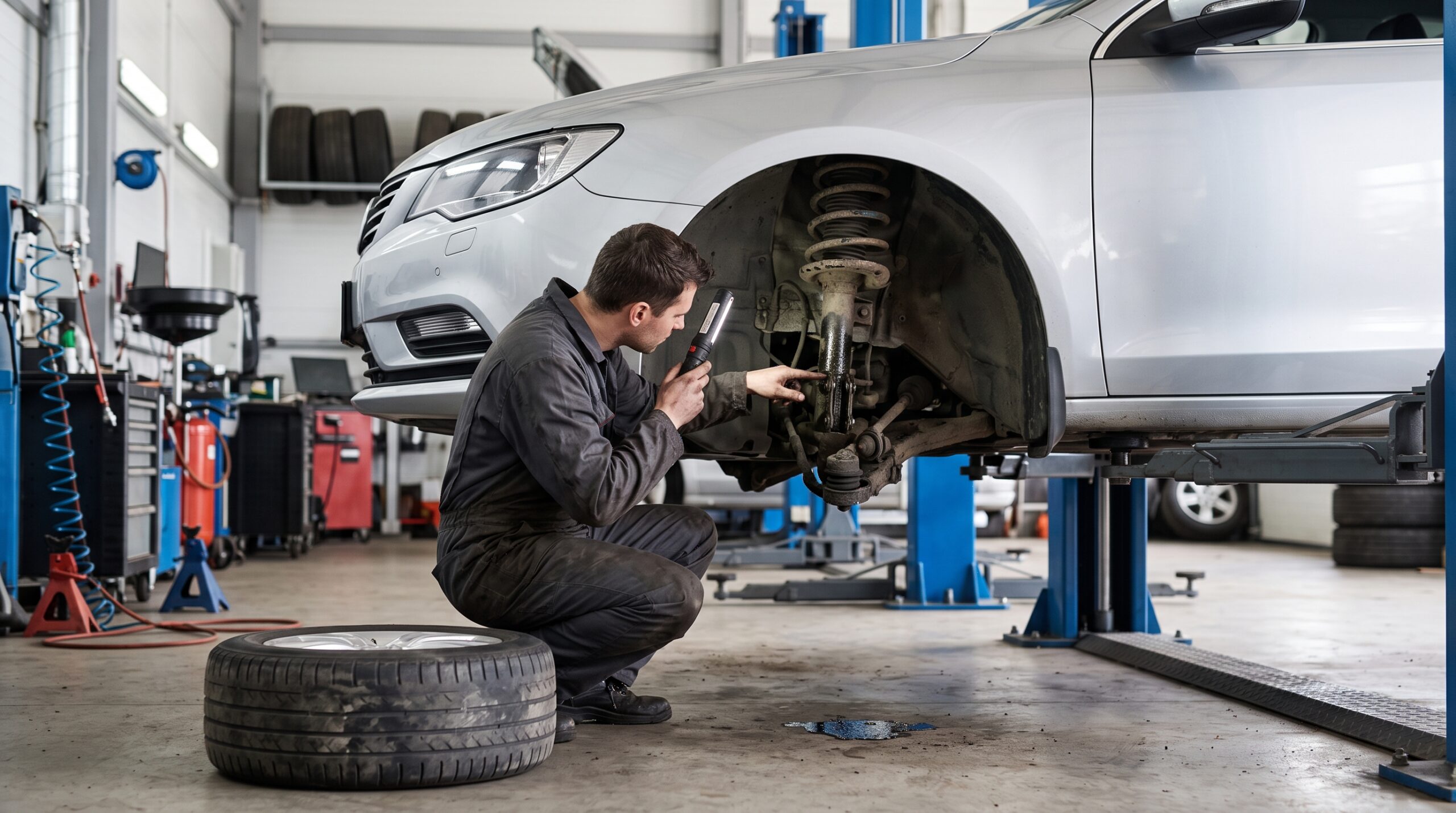
You can perform several basic visual checks without taking the vehicle apart. These checks may help you identify warning signs before visiting a mechanic.
However, a home inspection cannot confirm every suspension fault. Some worn joints and bushings only show problems when the suspension is loaded or tested with suitable equipment.
Safety first: Park on level ground, switch off the engine, engage the parking brake, and allow hot components to cool. Never crawl under a vehicle supported only by a jack. If a vehicle must be lifted, use the correct lifting points and properly rated stands on a suitable surface, or leave the work to a professional.
Inspect the Vehicle’s Ride Height
Park the car on a flat surface and look at it from the front, rear, and sides.
Check whether:
- One corner appears lower than the others.
- The body leans to one side.
- The ride height has changed recently.
- A wheel appears unusually close to the wheel arch.
Make sure the vehicle is not carrying an uneven load. Remove unnecessary heavy items from the trunk before judging the ride height.
If you notice a sudden change, a broken spring, or a strong lean, arrange an inspection.
Some cars have different front and rear ride heights by design, so do not assume the vehicle is damaged simply because the front and rear do not look level.
Look for Tire Wear and Visible Damage
Inspect all four tires from a safe position.
Look for uneven tread wear, exposed cords, bulges, cuts, or other damage. Check the tire pressure when the tires are cold and compare it with the vehicle manufacturer’s recommended pressure.
You can also look around the visible wheel area for signs of damaged parts, displaced components, or heavy corrosion.
Do not touch hot brake components or reach into narrow spaces around the wheels.
If you see a damaged tire, a broken spring, or a component that appears loose, avoid driving until the problem has been assessed.
Tire problems and suspension problems can look similar from the outside. A professional inspection can help separate them.
Listen for Unusual Noises
During normal driving, pay attention to when noises occur.
For example:
- A clunk over bumps may indicate a worn joint or mount.
- A squeak while the suspension moves may be related to a bushing or another moving part.
- A knocking sound when turning may involve steering or suspension components.
These are clues, not definitive diagnoses.
If it is safe to do so, note whether the sound happens at low speeds, on rough roads, or when turning. Avoid deliberately driving over potholes or repeatedly bouncing the vehicle to reproduce a noise.
Tell the mechanic what you heard and when it occurred. This information can help narrow down the inspection.
Check for Fluid Leaks Around Shocks and Struts
Some shock absorbers and struts contain hydraulic fluid. A damaged seal may allow fluid to escape.
From a safe position, look for fresh wetness or oily residue on the visible outer surface of the damper.
A light film of residue does not always prove a unit has failed. Dirt, road moisture, and other substances can make visual checks misleading.
A significant leak, especially when accompanied by excessive bouncing or poor handling, deserves prompt attention.
Do not remove components or place your body beneath an unsupported vehicle to get a better view.
The key lesson in how to know when car suspension is bad is that home checks can reveal warning signs, but a trained mechanic must confirm the cause before repairs are chosen.
5. Can You Drive With a Bad Suspension?
Whether you can drive with a suspension problem depends on the fault and its severity.
A minor issue may allow you to travel a short distance to a repair shop after receiving appropriate advice. A broken spring, severely damaged joint, or major loss of steering control can make the vehicle unsafe to drive.
Do not assume that a car is safe simply because it still moves.
Safety Risks of a Damaged Suspension
A damaged suspension can affect how the tires maintain contact with the road and how the vehicle responds to steering and braking.
Possible risks include:
Reduced stability: Worn dampers may allow excessive body movement, especially over uneven surfaces.
Poor handling: Worn joints or damaged suspension arms can affect wheel position and steering response.
Uneven tire wear: Incorrect wheel geometry can shorten tire life and reduce tire performance.
Reduced braking stability: Excessive body movement or a related mechanical fault can make the vehicle less predictable when slowing down.
Further damage: Continuing to drive with a damaged spring or loose component may cause additional damage to nearby parts.
The level of risk depends on the specific fault. A mechanic must inspect the vehicle to determine whether it is safe to drive.
When to Stop Driving and Get Professional Help
Stop in a safe place and arrange professional assistance if you notice:
- Sudden or severe steering problems
- A broken spring or a wheel that appears out of position
- A tire rubbing against the body
- A loud new clunk accompanied by unstable handling
- A strong pull that makes it difficult to control the vehicle
- A sudden drop in ride height
- A major change in braking performance
If the vehicle cannot be controlled safely, do not drive it to the repair shop. Arrange towing or roadside assistance.
If the symptoms are mild, contact a qualified mechanic for advice before continuing to use the car.
Knowing how to know when car suspension is bad is useful, but knowing when not to drive is just as important.
6. How Much Does It Cost to Repair a Car Suspension?
Suspension repair costs vary widely. The price depends on the failed part, vehicle type, local labor rates, parts availability, and whether additional damage has occurred.
A simple replacement may cost much less than repairing several worn components or a complex electronic or air suspension system.
Because prices differ between countries and vehicle models, it is best to obtain a quote from a local repair shop rather than rely on a single general estimate.
Factors That Affect Suspension Repair Costs
1. The damaged component
A worn bushing, shock absorber, strut, coil spring, or control arm can each have a different parts and labor cost.
2. Vehicle make and model
Parts for common cars may be easier to find than parts for uncommon, luxury, or imported vehicles.
3. Labor time
Some components are easy to reach. Others require substantial disassembly, special tools, or additional checks.
4. Wheel alignment
Replacing certain suspension components may change wheel alignment. The repair may therefore require an alignment check or adjustment.
5. Related damage
A severe pothole impact may damage more than one component. A mechanic may also find a worn mount or joint while inspecting the original fault.
6. Suspension design
A standard suspension is generally less complex than some adaptive, electronically controlled, or air suspension systems. The actual cost depends on the vehicle.
Ask for an itemized estimate that separates parts, labor, alignment, and any extra work.
Repairing Individual Parts vs. Replacing Multiple Parts
The best repair is the one that addresses the confirmed fault and meets the vehicle manufacturer’s requirements.
In some cases, replacing one failed part is appropriate. In others, replacing related parts in pairs may be recommended.
For example, shocks or struts are often replaced in pairs on the same axle to help maintain balanced handling. However, the correct choice depends on the manufacturer’s guidance, the condition of the other unit, and the type of suspension.
Do not replace every suspension component simply because one part has failed.
Ask the mechanic to explain:
- Which part is damaged or worn
- What evidence supports the diagnosis
- Whether related parts need attention
- Whether alignment is required
- What the repair warranty covers
If the quote seems unclear, a second opinion can help you compare the recommended work.
When investigating how to know when car suspension is bad, remember that the symptoms identify a possible problem, while a proper diagnosis identifies the repair you actually need.
7. How to Prevent Suspension Problems
You cannot prevent every suspension fault, but good driving habits and regular maintenance can help reduce wear and identify problems early.
A little attention to your tires, road conditions, and vehicle maintenance can also help you avoid unnecessary repair costs.
Avoid Potholes and Rough Driving
Road impacts are a common source of suspension damage.
When you see a pothole, slow down if it is safe to do so. Avoid sudden swerves, as these can create other hazards. Cross speed bumps at a controlled speed and follow any posted signs.
Try to avoid driving over deep potholes when a safe alternative is available. If you cannot avoid one, keep control of the steering wheel and avoid abrupt movements.
After a strong impact, pay attention to changes in steering, ride height, vibration, or tire condition.
For example, if your car starts pulling to one side after hitting a pothole, have the tires, wheels, suspension, and alignment checked.
Also, avoid carrying loads beyond your vehicle’s rated capacity. Excessive weight can place additional stress on springs, tires, and other components.
Check Tire Pressure and Tire Wear
Correct tire pressure supports predictable handling and helps reduce unnecessary stress on the tires and suspension.
Check your tire pressure regularly, ideally when the tires are cold. Use the recommended pressure listed on the driver’s door label or in the owner’s manual.
Do not use the maximum pressure printed on the tire sidewall as a substitute for the vehicle manufacturer’s recommended pressure.
Inspect the tread for uneven wear, cuts, bulges, and other damage. Rotate your tires according to the vehicle manufacturer’s schedule.
If the tires wear unevenly despite correct pressure and regular maintenance, ask a mechanic to check the wheel alignment and suspension.
These simple habits can help you notice changes before they become more serious.
Follow Your Vehicle’s Maintenance Schedule
Your owner’s manual provides maintenance guidance for your particular vehicle.
Follow the recommended inspection schedule and pay attention to any instructions about suspension joints, steering components, tires, and wheel alignment.
During routine servicing, ask the mechanic to check for:
- Worn shocks and struts
- Damaged springs
- Cracked or loose bushings
- Worn ball joints and steering joints
- Signs of fluid leakage
- Uneven tire wear
- Loose or damaged suspension components
Not every vehicle requires the same inspection or replacement interval. Your driving conditions also matter.
If you regularly drive on rough roads, carry heavy loads, or travel long distances, you may need more frequent inspections.
Keeping service records can help you track repairs and identify recurring issues.
Ultimately, learning how to know when car suspension is bad is only part of responsible vehicle ownership. Regular maintenance and early inspections help you respond to problems before they become more serious.
FAQ
What are the first signs of a bad suspension?
The first signs may include excessive bouncing, clunking noises over bumps, uneven tire wear, loose steering, or changes in ride height.
Some drivers also notice that the car feels less stable when turning or driving over uneven roads.
These symptoms can have causes other than suspension damage. If you notice a new or persistent change, arrange an inspection to identify the fault.
How long does a car suspension system last?
There is no single lifespan for every suspension system.
Shocks and struts may last many years, but their service life depends on vehicle design, mileage, road conditions, driving habits, and maintenance.
Springs, bushings, and joints also wear at different rates. A car driven mostly on smooth roads may experience different wear from one driven frequently on rough roads.
Follow the manufacturer’s recommendations and have the suspension inspected when symptoms appear rather than relying on mileage alone.
Can bad suspension cause uneven tire wear?
Yes. Worn or damaged suspension components can affect wheel alignment and how the tires contact the road. This may cause uneven tread wear.
However, incorrect tire pressure, poor alignment, unbalanced wheels, and other mechanical problems can also contribute.
If you notice unusual tread wear, have the tires, wheel alignment, and suspension inspected together. Fixing the cause early may help prevent further tire damage.
How do I know if my shocks or struts need replacing?
Common warning signs include excessive bouncing, reduced stability, unusual body movement, fluid leakage, and uneven tire wear.
You may also notice that the car feels unsettled after crossing bumps.
However, these symptoms do not prove that the shocks or struts are faulty. A mechanic can inspect the dampers, mounts, springs, and related components to confirm the cause.
Replace them according to the manufacturer’s guidance and the inspection results.
Is a bad suspension expensive to fix?
The cost depends on the damaged part, the vehicle, parts availability, labor rates, and whether other components need repair.
Replacing one worn component may be relatively straightforward. Repairing multiple components or a complex air suspension system can cost much more.
Request an itemized quote before approving repairs. Ask whether the price includes parts, labor, wheel alignment, and any necessary additional work.
Comparing quotes can help, but make sure each shop is recommending repairs for the same confirmed problem.
Can bad suspension affect braking?
Yes. The suspension helps control body movement and maintain consistent tire contact with the road.
Worn shocks or damaged suspension components can affect stability during braking, particularly on uneven surfaces.
However, a car that takes longer to stop may have a brake, tire, or other mechanical problem. Do not assume the suspension is responsible.
If stopping performance changes, the brake pedal feels unusual, or the vehicle pulls sharply during braking, have the vehicle inspected promptly.
Can I check my suspension without visiting a mechanic?
You can look for visible warning signs at home. Check for unusual ride height, uneven tire wear, visible damage, and possible fluid leaks around accessible shock absorbers or struts.
You can also listen for unusual noises during normal driving.
However, these checks cannot reliably identify every worn joint, bushing, or internal fault. Do not crawl under a vehicle supported only by a jack.
If you find a broken part or notice a major change in handling, arrange professional assistance.
Is it safe to drive with worn shocks?
It depends on the degree of wear and the condition of the rest of the vehicle.
Worn shocks can allow excessive bouncing and reduce stability. A minor issue may not require the same response as a severely damaged suspension component, but the vehicle should still be inspected.
If handling becomes unpredictable, steering is affected, or a wheel or spring appears damaged, stop driving when safe and arrange professional help.
Do not delay repairs simply because the vehicle can still move.
Should shocks and struts be replaced in pairs?
Replacing shocks or struts in pairs on the same axle is often recommended because it can help maintain balanced handling.
However, the correct repair depends on the vehicle manufacturer’s guidance, the condition of the existing parts, and the suspension design.
Ask your mechanic whether both sides need replacement and why. This helps you understand the repair and avoid unnecessary expenses.
Does wheel alignment fix a bad suspension?
Wheel alignment can correct certain wheel-angle problems, but it cannot repair a broken spring, worn ball joint, damaged control arm, or leaking shock absorber.
If a suspension component is worn or bent, it may need repair before the wheels can be aligned correctly.
A mechanic should inspect the suspension first when damage is suspected. Once the faulty components have been addressed, an alignment check may be necessary.
Conclusion
Knowing how to know when car suspension is bad starts with paying attention to changes in your vehicle. Excessive bouncing, clunking noises, uneven tire wear, pulling to one side, unusual steering, excessive nose-diving, and uneven ride height are important warning signs.
These symptoms do not always point to the same fault. A damaged shock absorber, broken spring, worn bushing, steering problem, or incorrect wheel alignment may produce similar effects.
You can perform basic visual checks at home, but a professional inspection is the best way to confirm the cause and choose the right repair.
Do not ignore serious handling changes or visible suspension damage. If your vehicle becomes difficult to control, stop driving when safe and arrange professional assistance.