Our Blogs
What Does Suspension Do on a Car? A Simple Guide

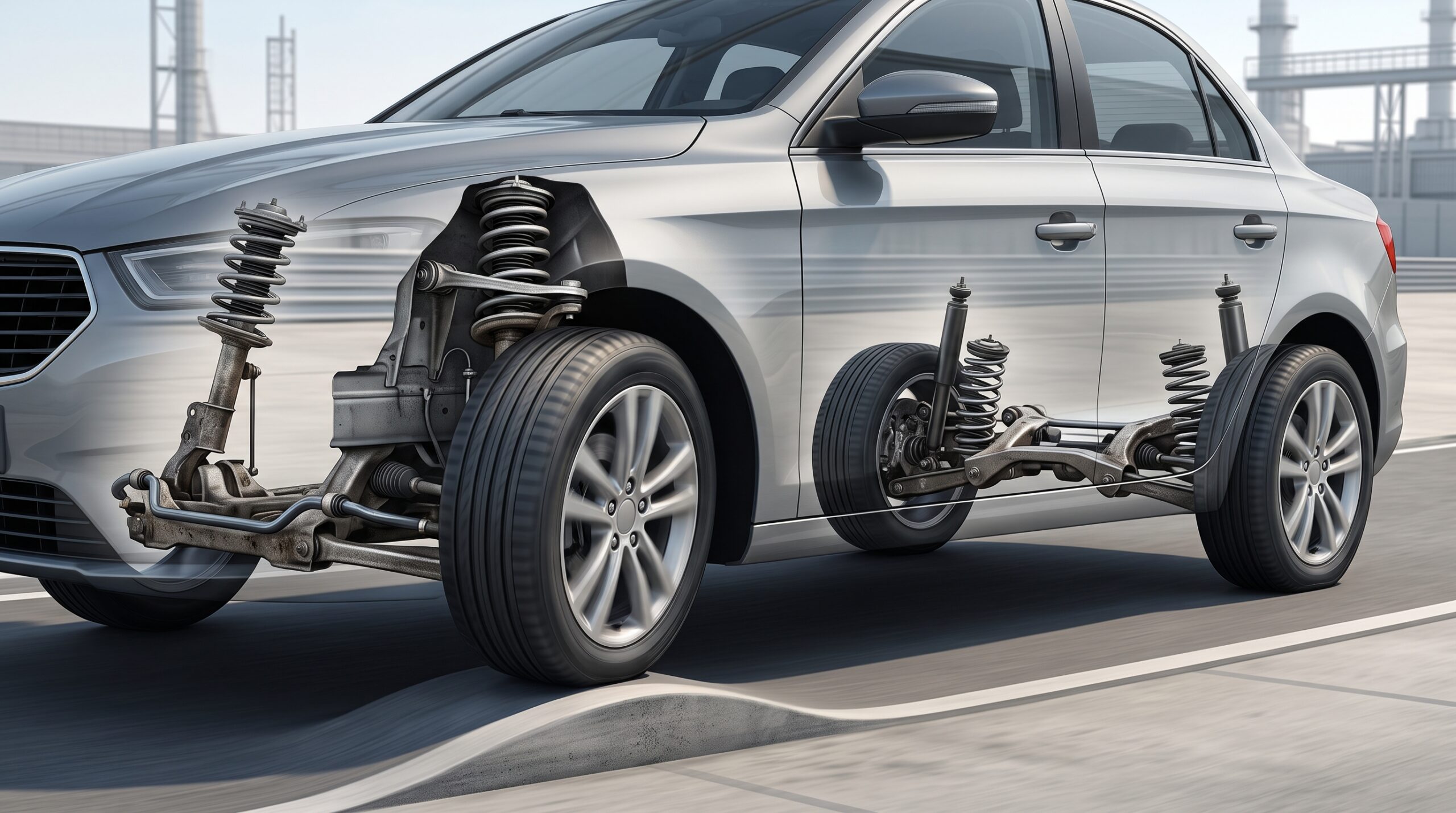
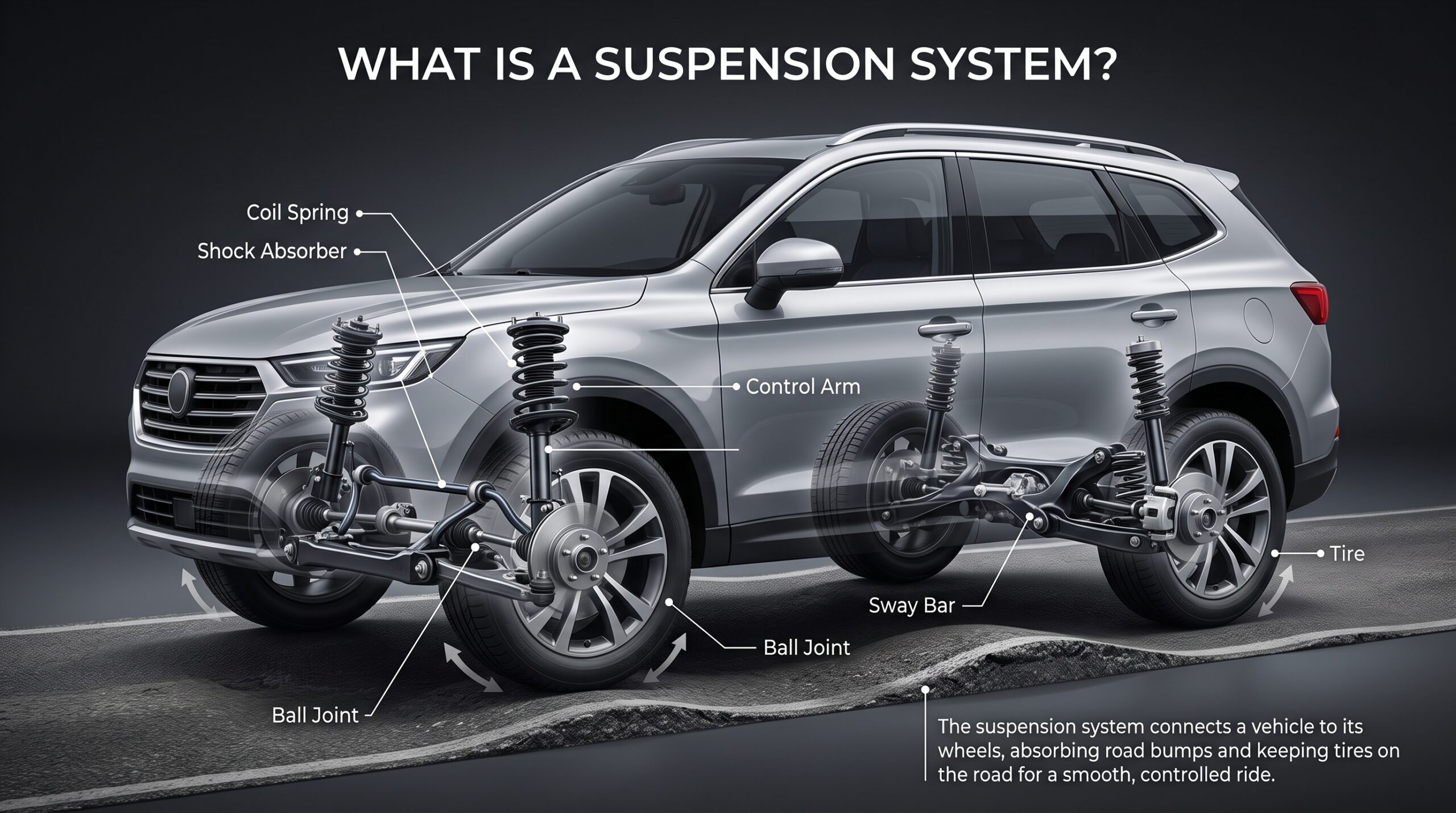
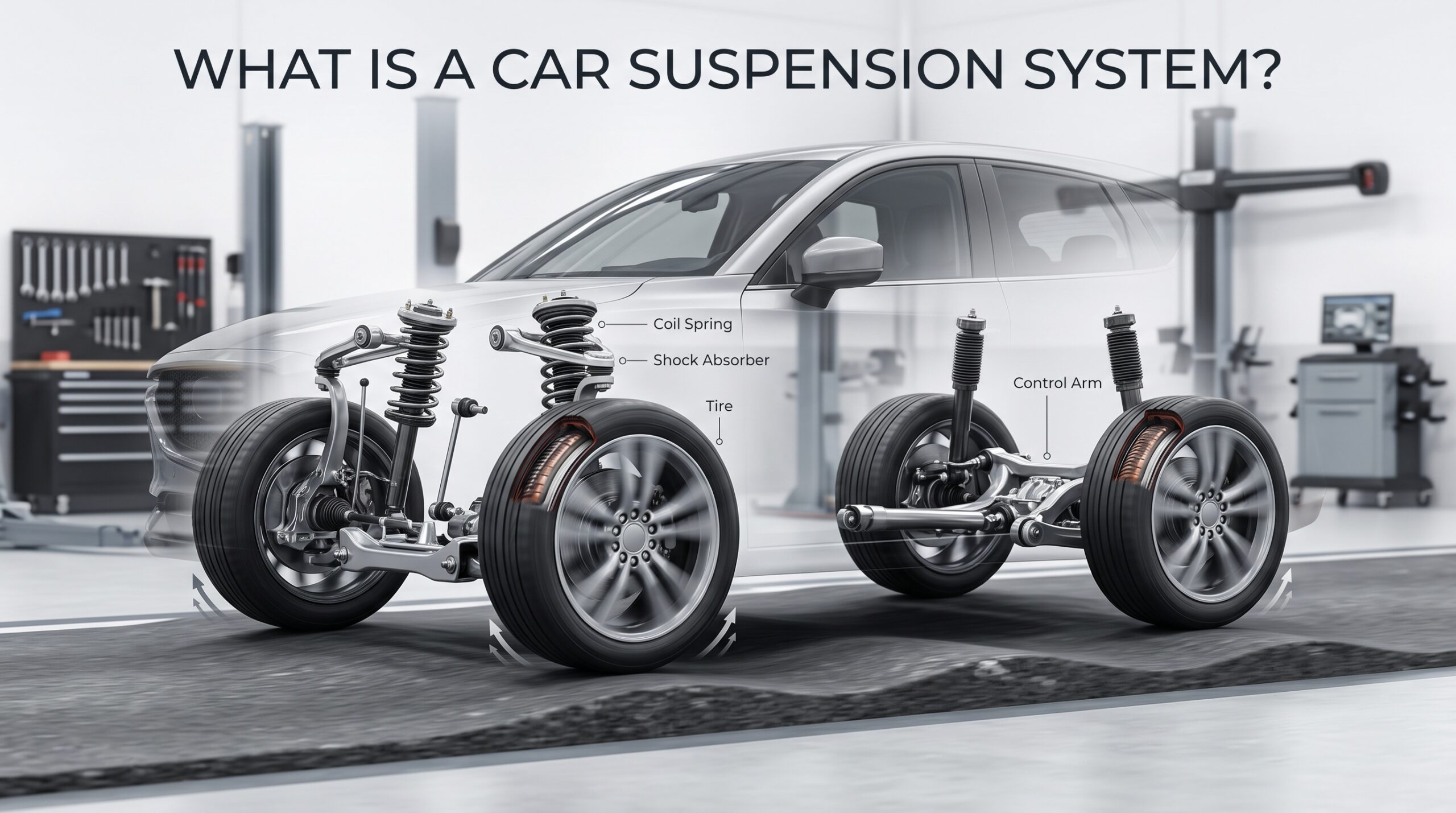
A car’s suspension system connects the wheels to the vehicle body and helps control how the vehicle moves over different road surfaces. It includes several parts, such as springs, shock absorbers or struts, control arms, ball joints, bushings, and sway bars.
So, what does suspension do on a car? Its main jobs are to support the vehicle’s weight, help keep the tires in contact with the road, absorb bumps, and improve steering, handling, and stability.
When you drive over a pothole, speed bump, or rough road, the suspension allows the wheels to move while limiting how much that movement affects the rest of the vehicle. This helps create a smoother ride and gives the driver better control.
A healthy suspension is important for more than comfort. It also works with the tires, steering, and brakes to help the vehicle behave in a predictable way.
In this guide, you will learn how car suspension works, what its main parts do, common signs of suspension problems, how to check it, and when repairs may be needed.
What Does Suspension Do on a Car?
The suspension system has several important jobs. It supports the vehicle while allowing the wheels to move up and down as the road changes.
One of the easiest ways to understand what does suspension do on a car is to think about a wheel traveling over a pothole.
Without a suspension system, much of the force from the road would be transferred directly into the vehicle body. The ride would be extremely harsh, and keeping the tires properly connected to the road would be much harder.
A suspension system helps manage this movement.
How Suspension Supports the Vehicle
The springs in the suspension carry much of the vehicle’s weight. They allow the wheels to move relative to the body.
For example, when you add passengers or cargo, the suspension has to support the additional load. The exact amount of load a vehicle can safely carry depends on the manufacturer’s specifications.
Suspension components also help keep the wheels in their intended position as they move.
How Suspension Keeps Tires in Contact With the Road
Tires need contact with the road to provide traction for steering, acceleration, and braking.
Road surfaces are rarely perfectly smooth. A wheel may move over a small bump, dip, or uneven section within seconds.
The suspension allows the wheel to respond to these changes while helping limit uncontrolled body movement.
This is a key part of understanding what does suspension do on a car. Good suspension does not simply make the ride soft. It helps manage wheel and body movement so the vehicle remains controlled.
How Suspension Improves Ride Comfort and Handling
Comfort and handling are closely connected to suspension design.
A suspension system that absorbs road movement can make the cabin feel more comfortable. At the same time, it needs to control excessive movement during braking, acceleration, and cornering.
Vehicle manufacturers design suspension systems around the vehicle’s size, weight, intended use, and handling characteristics.
How Suspension Works
The suspension system uses several components that work together.
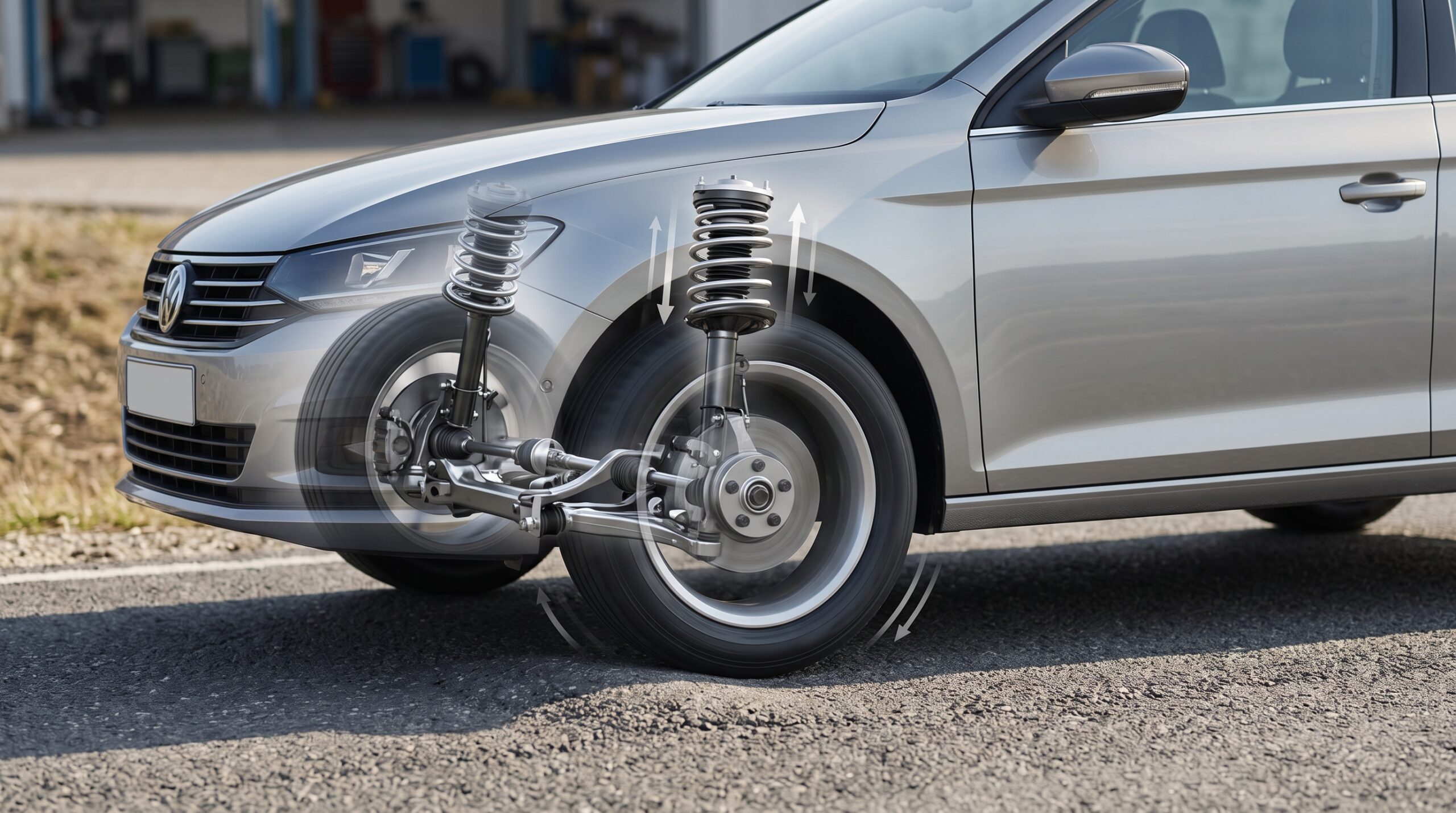
When a wheel hits a bump, the wheel moves upward. The spring compresses or changes position, allowing the wheel to move without forcing the entire vehicle body to move by the same amount.
The shock absorber or strut then helps control the speed and amount of that movement.
What Happens When a Car Hits a Bump or Pothole?
Imagine driving over a speed bump.
As the front wheel climbs the bump, the wheel moves upward relative to the vehicle body. The suspension spring compresses.
As the wheel comes down from the bump, the spring releases some of the stored energy. Without enough damping, the vehicle could continue bouncing.
The shock absorber controls this movement by resisting suspension motion.
The result is a more controlled response instead of repeated bouncing.
How Springs and Shock Absorbers Work Together
Springs and shock absorbers have different jobs.
The spring mainly supports the vehicle and allows suspension movement. The shock absorber controls that movement.
A simple way to remember it is:
- Spring: supports the vehicle and allows movement.
- Shock absorber: controls the movement.
- Other suspension parts: guide and locate the wheel while allowing controlled movement.
This teamwork is central to what does suspension do on a car.
Why Tire Contact With the Road Matters
A tire can only provide useful traction when it has appropriate contact with the road.
If suspension movement is not controlled, a tire may lose consistent contact over uneven surfaces. This can affect the way the vehicle responds to steering, braking, and acceleration.
That is why suspension condition matters even when the car still feels comfortable during normal driving.
Main Functions of a Car Suspension System
The suspension system performs several functions at the same time.
1. Provides a Smoother Ride
One major purpose of suspension is to reduce the amount of road movement felt by people inside the vehicle.
Roads contain cracks, bumps, potholes, joints, and other imperfections. The wheels must respond to these surfaces, but the vehicle body does not need to follow every movement.
Springs and other suspension components help isolate the body from much of this movement.
Shock absorbers then control the resulting motion.
A properly working suspension does not remove every bump. Instead, it manages the movement so the vehicle remains comfortable and controlled.
2. Keeps Tires on the Road
Another important answer to what does suspension do on a car is that it helps maintain useful tire contact with the road.
The wheels need to move as the road surface changes. Suspension components allow this movement while keeping the wheel properly positioned.
Good tire contact supports traction.
This is especially important when driving on uneven roads, turning, or braking.
Suspension condition is only one part of traction, however. Tire condition, tire pressure, road surface, weather, speed, and vehicle design also affect traction.
3. Improves Steering and Handling
Suspension affects how a vehicle responds to steering inputs.
During a turn, the vehicle body naturally tends to lean toward the outside of the corner. This movement is called body roll.
Suspension components help control that movement.
A well-maintained system can help the vehicle respond in a more predictable way. Worn or damaged components may cause excessive movement, unusual steering behavior, or a less controlled feeling.
4. Supports the Vehicle’s Weight
The suspension also carries the vehicle’s weight through its springs and related components.
The body and frame provide the main structure of the vehicle. The suspension connects that structure to the wheels and allows controlled wheel movement.
This distinction is important.
The suspension does not simply “hold up” the car by itself. Instead, its components work as part of the complete vehicle structure and wheel assembly.
5. Helps With Braking Stability
Braking causes the vehicle’s weight to shift forward.
This movement is normal, but the suspension helps control how the body responds.
If suspension components are worn, damaged, or not working correctly, the vehicle may show excessive nose dive or other unusual movement during braking.
This does not mean every braking problem is caused by suspension. Brake pads, rotors, calipers, tires, and other components also affect braking performance.
Still, suspension condition is an important part of overall vehicle stability.
What Are the Main Parts of a Car Suspension?
Understanding the main components makes it easier to understand what does suspension do on a car.
Different vehicles use different suspension designs, so not every car has exactly the same parts.
Springs
Springs support the vehicle’s weight and allow the wheels to move over road surfaces.
Coil Springs
Coil springs are common on modern passenger vehicles.
They are made from specially shaped spring steel and compress when the suspension moves.
Leaf Springs
Leaf springs use long, curved strips of spring material.
They are common on some trucks and other vehicles, especially where carrying loads is important.
Air Springs
Some vehicles use air springs instead of traditional steel springs.
Air suspension can adjust ride height and may provide different ride characteristics depending on the vehicle’s design.
Shock Absorbers and Struts
Shock absorbers and struts help control suspension movement.
A shock absorber reduces excessive bouncing after the suspension moves.
A strut can perform a similar damping function but is also an important structural part of certain suspension designs.
The terms are sometimes used interchangeably in casual conversation, but shocks and struts are not identical components.
Control Arms
Control arms connect parts of the suspension to the vehicle structure.
They help guide the wheel through its intended range of movement.
Control arms commonly use bushings and may connect to the steering knuckle through a ball joint, depending on the suspension design.
Ball Joints
Ball joints allow controlled movement between suspension components.
They work somewhat like a flexible joint, allowing movement in different directions while helping keep the wheel properly located.
Because ball joints can be safety-related components, worn or damaged ball joints should be inspected and repaired promptly.
Bushings
Bushings are flexible components used to isolate vibration and allow controlled movement between parts.
They can reduce noise and harshness.
Over time, bushings can wear, crack, or deteriorate.
Worn bushings may contribute to clunking noises, unusual movement, or changes in handling.
Sway Bar and Links
A sway bar, also called an anti-roll bar or stabilizer bar, helps reduce excessive body roll during cornering.
Sway bar links connect the bar to other suspension components.
A worn link may produce a clunking or rattling noise, especially when driving over uneven surfaces.
What Happens When Your Suspension Is Bad?
A suspension problem does not always appear in the same way.
The symptoms depend on which component is worn or damaged.
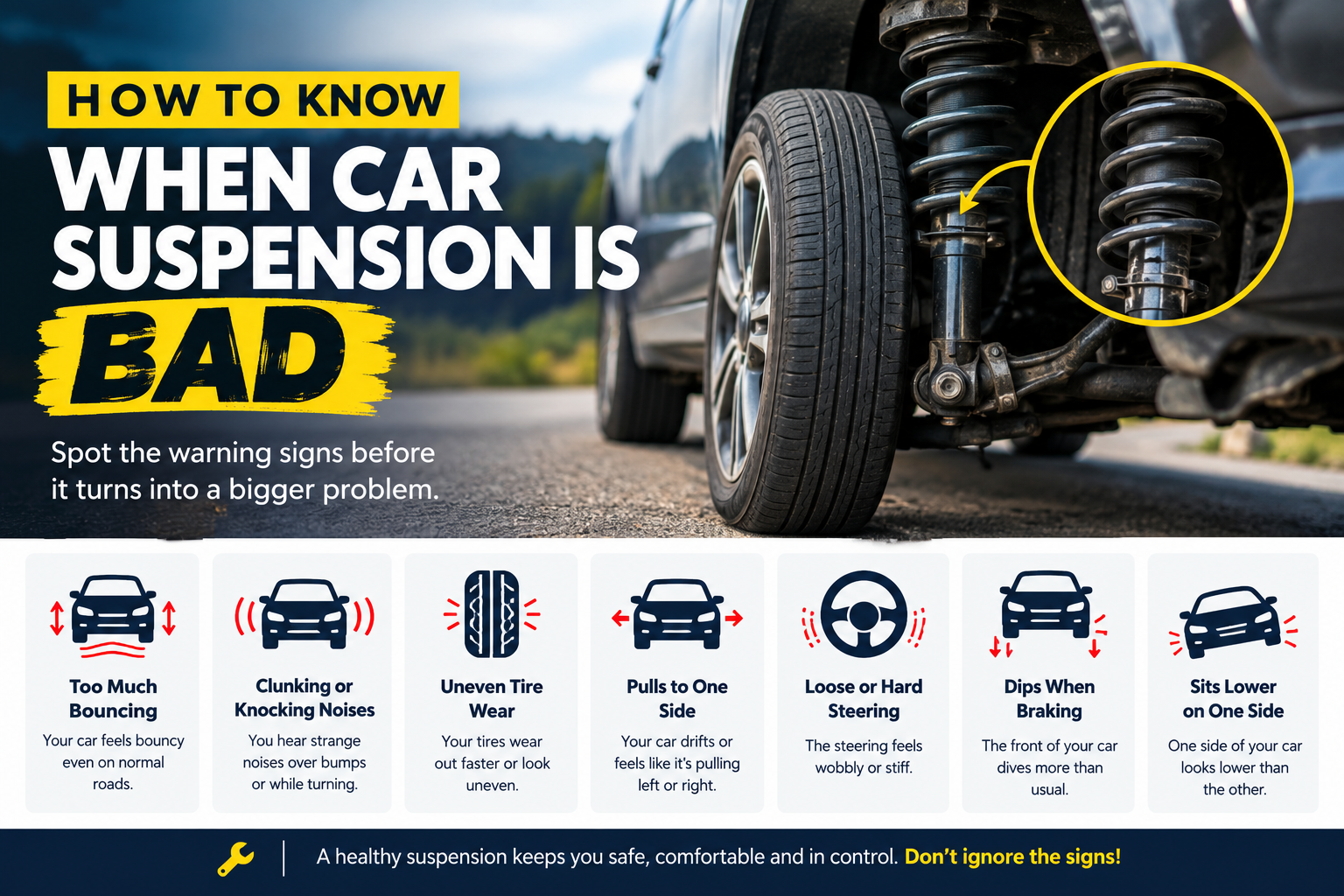
Common Signs of Suspension Problems
Here are some common warning signs:
Excessive Bouncing
If the vehicle continues to bounce more than expected after going over a bump, the shocks or struts may need inspection.
Uneven Tire Wear
Uneven tire wear can sometimes be related to suspension or alignment problems.
However, tire pressure, wheel alignment, worn steering components, and incorrect inflation can also cause uneven wear.
Vehicle Pulling or Drifting
If the vehicle consistently pulls to one side, it may have an alignment, tire, brake, steering, or suspension issue.
Do not assume suspension is the only possible cause.
Nose Diving During Braking
Some forward movement during braking is normal.
Excessive nose dive can indicate a problem with suspension control or other components and deserves inspection.
Excessive Body Roll
A vehicle that leans more than expected during turns may have a suspension-related problem.
Clunking or Knocking Sounds
Repeated clunking, knocking, or rattling over bumps may indicate a worn or damaged suspension component.
Rough or Uncomfortable Ride
A sudden change in ride quality can be a useful warning.
For example, if a car that normally feels controlled suddenly becomes harsh, bouncy, or unstable, it should be checked.
Vehicle Sitting Lower on One Side
If one side of the vehicle appears noticeably lower than the other, a damaged spring or another suspension issue could be responsible.
How Bad Suspension Affects Driving
Knowing what does suspension do on a car also helps explain why worn suspension should not be ignored.
A damaged suspension component can affect the way the vehicle responds to road conditions.
Possible effects include:
- Less predictable handling
- Excessive bouncing
- More body movement
- Uneven tire wear
- Changes in steering feel
- Reduced ride comfort
- Poorer control over bumps
- Possible changes in braking stability
The severity depends on the failed component and the condition of the rest of the vehicle.
A small worn bushing and a severely damaged suspension component are not the same problem.
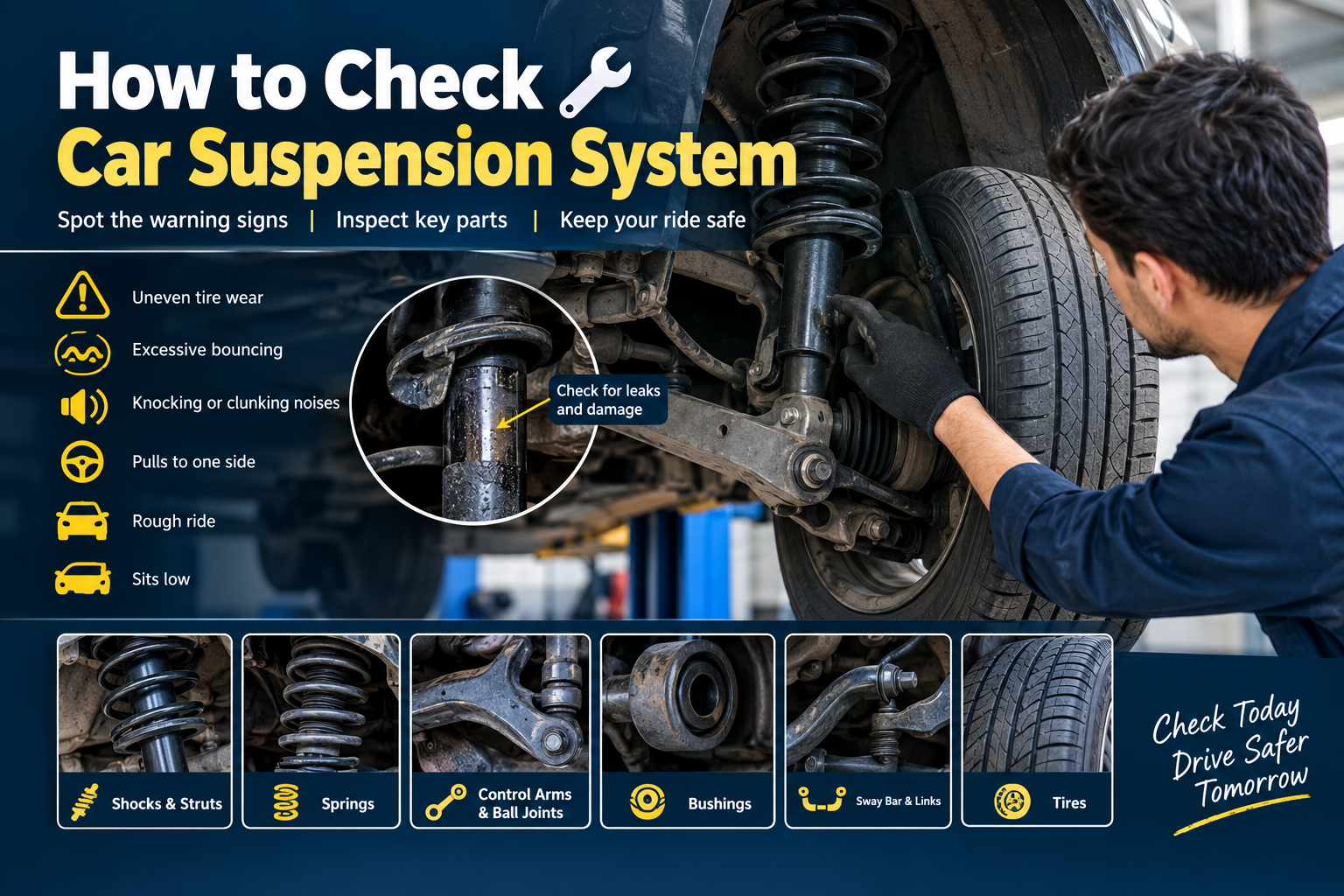
How to Check Your Car’s Suspension
You can look for basic warning signs, but a complete suspension inspection may require a qualified technician.
Visual Inspection
With the vehicle safely parked, look for obvious signs such as:
- Damaged springs
- Visible leaks around shocks or struts
- Broken or loose components
- Damaged rubber bushings
- Uneven vehicle height
- Unusual tire wear
Do not place any part of your body under a vehicle supported only by a jack. Properly rated stands and safe lifting procedures are essential when working underneath a vehicle.
Test the Ride
Pay attention while driving at safe speeds.
Notice whether the car:
- Bounces excessively
- Feels unstable
- Makes new noises
- Pulls to one side
- Leans excessively in turns
- Feels different after hitting bumps
These observations can help a technician diagnose the problem.
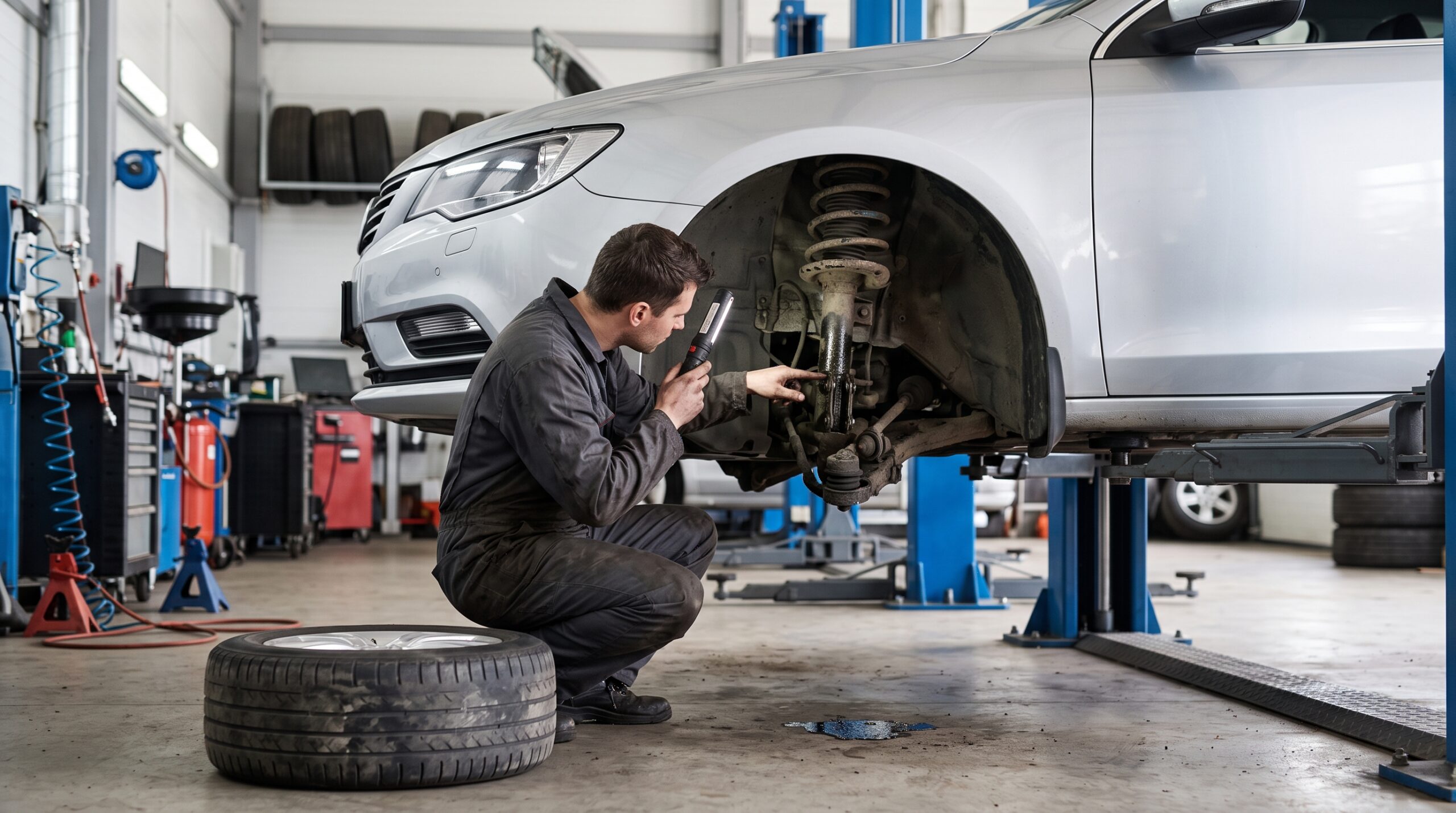
Professional Suspension Inspection
Some suspension problems cannot be confirmed through a simple visual check.
A mechanic may inspect components for excessive play, wear, leaks, damage, or movement.
Specialized equipment may be needed to safely inspect certain components.
If you notice serious handling changes, repeated suspension noises, or visible damage, professional inspection is the safer choice.
How Often Should Car Suspension Be Replaced?
There is no single replacement interval that applies to every suspension component.
This is another important part of understanding what does suspension do on a car. Different components experience different types and amounts of wear.
Suspension life can be affected by:
- Vehicle mileage
- Road quality
- Potholes
- Heavy loads
- Driving habits
- Climate and corrosion
- Vehicle design
- Component quality
- Previous repairs
For this reason, replacing suspension parts only because the vehicle reaches a certain mileage is not always appropriate.
Regular inspection is more useful.
Follow the maintenance schedule provided by the vehicle manufacturer and have the system checked when symptoms appear.
Can You Drive With Bad Suspension?
It depends on the problem.
A minor noise does not automatically mean the vehicle is unsafe to drive. However, some suspension failures can affect steering, wheel control, or vehicle stability.
Serious warning signs include:
- A broken spring
- Severe steering instability
- A wheel that appears badly out of position
- Major suspension damage
- Sudden severe handling changes
- Loud mechanical noises combined with unusual vehicle movement
If the vehicle becomes difficult to control or you suspect a serious suspension failure, stop driving when it is safe to do so and arrange for professional inspection or towing.
Do not continue driving simply because the engine and brakes still appear to work.
Suspension vs. Shocks and Struts
Many people ask about suspension and shocks as if they are two separate systems.
They are related, but they are not the same thing.
The suspension system includes many components that connect the vehicle body to the wheels and control their movement.
Shocks and struts are components within that larger system.
So, when someone asks what does suspension do on a car, the answer includes more than shock absorbers.
A complete suspension system can include:
- Springs
- Shocks
- Struts
- Control arms
- Ball joints
- Bushings
- Sway bars
- Sway bar links
- Steering-related connections, depending on the design
Each part has a different role.
How Much Does Suspension Repair Cost?
Suspension repair costs vary widely.
There is no reliable single price for every vehicle because the final cost depends on the failed component and the vehicle itself.
Factors include:
- Type of suspension component
- Vehicle make and model
- Parts prices
- Labor rates
- Number of components needing repair
- Whether alignment is required
- Local shop pricing
For example, replacing a small bushing may involve a very different cost from replacing multiple struts and related components.
Some repairs also require additional work after installation.
The best approach is to diagnose the actual problem before buying parts.
If a mechanic recommends replacing several components, ask which parts are worn, how they were diagnosed, and whether the repair is urgent.
How to Maintain Your Car’s Suspension
Good maintenance can help you identify problems early.
Check Tire Pressure Regularly
Correct tire pressure helps the tires work as designed and can reduce unnecessary stress on the vehicle.
Use the vehicle manufacturer’s recommended pressure rather than the maximum pressure printed on the tire sidewall.
Avoid Excessive Vehicle Loads
Every vehicle has a maximum load rating.
Carrying more weight than recommended can place additional stress on suspension, tires, brakes, and other components.
Drive Carefully Over Potholes
Potholes can place large forces on wheels and suspension components.
When road conditions allow, slow down safely and avoid severe potholes.
Never make a sudden unsafe maneuver just to avoid a road hazard.
Inspect Tires for Uneven Wear
Look at the tire tread regularly.
If one part of the tread is wearing much faster than another, have the tires, alignment, steering, and suspension checked.
Follow the Manufacturer’s Maintenance Recommendations
Your owner’s manual contains vehicle-specific maintenance information.
Follow those recommendations for inspections and replacement procedures.
Address Unusual Noises Early
A new clunk, knock, squeak, or change in handling should not automatically be ignored.
Finding a worn component early may prevent the problem from affecting other parts.
Frequently Asked Questions
What does suspension do on a car?
The suspension supports the vehicle’s weight, allows controlled wheel movement, helps keep tires in contact with the road, absorbs road impacts, and improves handling and stability.
In simple terms, what does suspension do on a car comes down to controlling the relationship between the wheels and the vehicle body.
What are the main functions of a car suspension?
The main functions include supporting vehicle weight, absorbing road impacts, controlling body movement, helping maintain tire contact, and improving steering and handling.
Suspension also works with the tires and brakes to help the vehicle remain stable during braking and cornering.
How do I know if my car suspension is bad?
Common signs include excessive bouncing, uneven tire wear, unusual clunking sounds, excessive body roll, nose diving during braking, pulling or drifting, and a rough change in ride quality.
However, these symptoms can have multiple causes. A professional inspection may be needed to identify the exact problem.
What is the difference between shocks and suspension?
Shocks are one type of component within the larger suspension system.
The suspension includes springs, shocks or struts, control arms, bushings, ball joints, sway bars, and other components depending on the vehicle design.
Can bad suspension affect tires?
Yes. Worn suspension components can contribute to uneven or irregular tire wear.
However, tire pressure, wheel alignment, tire condition, and steering components can also cause unusual wear.
If tire wear looks abnormal, the complete system should be inspected rather than assuming suspension is the only cause.
How long does car suspension last?
Suspension lifespan varies by component, vehicle, road conditions, load, and driving habits.
There is no universal replacement mileage for every suspension part.
Instead of replacing everything at a fixed mileage, follow the manufacturer’s maintenance guidance and inspect components when wear or symptoms appear.
Does suspension affect braking?
Yes. Suspension controls vehicle body and wheel movement during braking.
A worn suspension component can contribute to excessive nose dive or other unwanted movement.
However, actual stopping performance also depends heavily on the brakes, tires, road surface, and vehicle condition.
Can suspension problems cause a car to pull to one side?
They can, but pulling is not always caused by suspension.
Tire pressure differences, wheel alignment, tire problems, brake issues, steering components, and suspension components can all contribute.
A persistent pull should be diagnosed rather than guessing at the cause.
What happens if a shock absorber fails?
A failed or badly worn shock absorber may allow excessive bouncing and reduce control of suspension movement.
It can also contribute to unusual tire wear and a less stable driving feel.
The exact symptoms depend on the vehicle and the condition of the component.
Is a smooth ride the only purpose of suspension?
No.
A smooth ride is only one part of what does suspension do on a car.
The suspension also helps support vehicle weight, control wheel movement, maintain useful tire contact, reduce excessive body movement, and improve handling.
Conclusion
So, what does suspension do on a car? The suspension system supports the vehicle’s weight, allows the wheels to move over uneven roads, helps keep the tires connected to the road, and controls body movement.
It also plays an important role in ride comfort, steering, cornering, and braking stability.
The suspension is not just the springs or shock absorbers. It is a complete system made up of several components that work together.
If your car begins bouncing excessively, pulling, leaning, making unusual suspension noises, wearing tires unevenly, or showing other changes in handling, have it inspected.
Understanding what does suspension do on a car makes it easier to recognize warning signs and take care of problems before they become more serious.