



Our Blogs
What Is a Blueprinted Engine? Benefits, Costs, and More

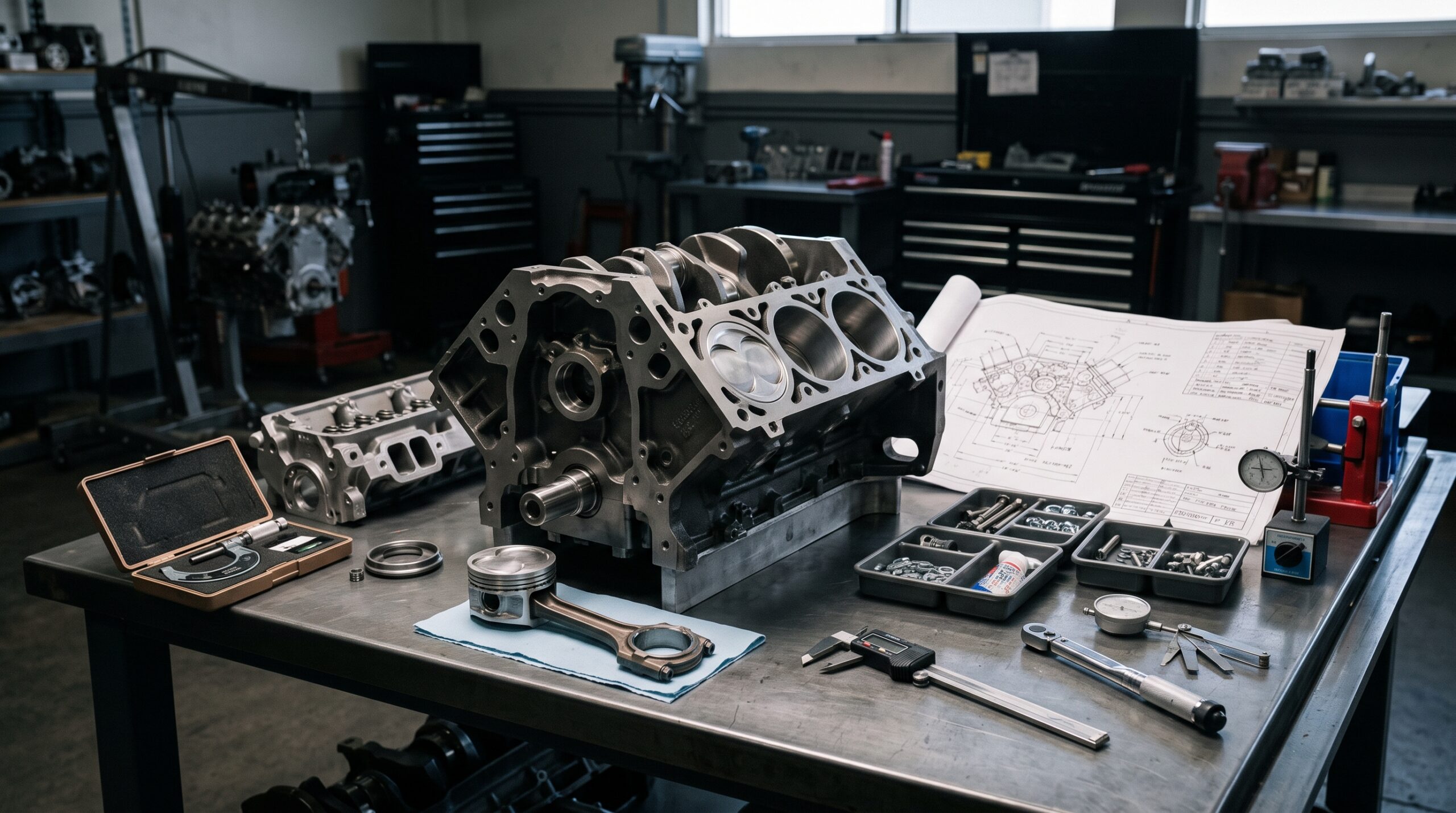
An engine is made of many parts that must work together with great precision. Even when an engine leaves the factory, small differences in measurements can affect how its parts fit and move. Engine blueprinting helps address these differences by measuring, checking, and assembling engine components to meet specific technical requirements.
So, what is a blueprinted engine? A blueprinted engine is an engine that has been carefully measured, machined when needed, and assembled to precise specifications. The goal is to ensure that its internal parts fit and work together as intended. This can help improve consistency, performance, and reliability.
Engine blueprinting is common in motorsports, performance car building, and custom engine projects. However, it can also be useful for certain street cars and restoration projects.
The process involves much more than simply rebuilding an engine. An engine builder checks important measurements, such as bearing clearances, cylinder bore sizes, crankshaft dimensions, and piston clearances. The builder then corrects any issues and assembles the engine according to the chosen specifications.
The final result depends on the engine design, the quality of the parts, the builder’s skill, and the intended use of the vehicle.
In this guide, you will learn how engine blueprinting works, which parts are checked, how much it costs, and whether it is worth considering for your vehicle.
What Is a Blueprinted Engine?
A blueprinted engine is built or rebuilt with careful attention to its exact dimensions and operating clearances.
Every engine has specifications that describe how its parts should fit together. These specifications may include acceptable measurement ranges, known as tolerances.
During blueprinting, an engine builder measures the actual components instead of assuming that every part matches its intended dimensions. The builder checks whether the parts meet the required specifications and makes adjustments when necessary.
For example, two engine bearings may look identical, but the actual clearance between each bearing and the crankshaft may differ. Measuring these clearances helps the builder confirm that the parts will receive proper lubrication and operate as designed.
Blueprinting can focus on factory specifications or a carefully developed performance specification. The correct choice depends on the engine’s design and purpose.
Definition of Engine Blueprinting
Engine blueprinting is the process of measuring, inspecting, correcting, and assembling an engine to precise specifications.
The term comes from the idea of using an engineering blueprint as a reference. In practice, the builder follows technical dimensions and tolerances rather than relying only on general assembly instructions.
A typical blueprinting project may include:
- Measuring cylinder bores for size, taper, and roundness.
- Checking crankshaft dimensions and alignment.
- Measuring bearing clearances.
- Matching piston weights and connecting rod weights.
- Checking piston-to-cylinder clearances.
- Verifying camshaft timing.
- Inspecting the cylinder head and valve train.
- Confirming that oil passages are clean and correctly prepared.
Not every project requires all these steps. The scope depends on the engine, the budget, and the intended performance level.
The most important principle is that measurements guide the work. Parts are not assumed to be correct simply because they are new or came from a reputable manufacturer.
How a Blueprinted Engine Differs From a Standard Engine
A standard production engine is manufactured and assembled using factory processes designed to balance quality, cost, efficiency, and durability across many vehicles.
Manufacturers use precise equipment and quality controls, but production engines generally allow specified tolerances rather than requiring every measurement to be identical.
A blueprinted engine receives additional attention to its actual dimensions and component relationships. The builder checks the parts in the specific engine and may select, match, machine, or adjust them to meet the chosen specifications.
Consider these differences:
| Feature | Standard production engine | Blueprinted engine |
|---|---|---|
| Assembly | Factory production process | Detailed, measurement-based assembly |
| Part measurements | Factory quality-control standards | Individual measurements of selected components |
| Clearances | Within approved production tolerances | Verified against the chosen build specifications |
| Component matching | Depends on factory process | May include detailed weight and size matching |
| Machining | Based on production requirements | Additional machining may be performed when needed |
| Cost | Included in the vehicle’s purchase price | Usually involves additional labor and machine work |
A standard engine is not automatically poorly built. Modern factory engines can provide excellent performance and long service life.
The difference is the level of individual measurement, verification, and customization performed during the build.
Why Engine Blueprinting Matters
An engine contains moving parts that operate under heat, pressure, and friction. Small differences in dimensions can affect how those parts interact.
For example, bearing clearance that is too tight may restrict lubrication and increase the risk of damage. Excessive clearance may reduce oil pressure or affect oil control, depending on the engine design.
Blueprinting helps identify these issues before the engine is put into service.
It also allows a builder to create a more consistent engine. This matters when the engine must handle high loads, sustained high engine speeds, or demanding racing conditions.
However, blueprinting is not a guarantee against engine failure. Incorrect machining, poor lubrication, unsuitable parts, overheating, or bad maintenance can still cause problems.
The value comes from verifying the details that matter for the specific engine.
How Does Engine Blueprinting Work?
Engine blueprinting follows a planned process. The exact steps vary by engine type, but most projects involve inspection, measurement, machining, component matching, and careful assembly.
The builder should know the engine’s intended use before choosing the specifications.
A street engine may need to prioritize cold starts, fuel economy, smooth operation, and long service life. A racing engine may require different clearances and components to handle higher loads and engine speeds.
Measuring Engine Parts With Precision
The first major step is to measure the parts accurately.
An engine builder may use micrometers, dial bore gauges, precision scales, dial indicators, and other measuring tools. The tools must be suitable for the measurement and checked for accuracy.
For example, a micrometer can measure the diameter of a crankshaft journal. A bore gauge can measure the inside diameter of a cylinder or bearing housing.
These measurements help reveal whether a part is within specification, worn, damaged, or in need of machining.
The builder records important measurements and compares them with the relevant technical data.
This process is essential because parts that appear normal may still have dimensional problems that affect the finished engine.
Checking Factory Specifications and Tolerances
Manufacturers publish specifications for many engine components. These may include:
- Cylinder bore dimensions.
- Crankshaft journal diameters.
- Main and connecting rod bearing clearances.
- Piston-to-cylinder clearance.
- Piston ring end gaps.
- Valve clearances.
- Camshaft timing.
- Crankshaft endplay.
The builder compares actual measurements with the correct specifications for the engine model.
A tolerance is the permitted range of variation for a measurement. It does not mean that every value inside the range produces identical results in every application.
For a performance build, the engine builder may use a narrower target range or a different specification approved for the intended setup. Such choices must account for oil viscosity, operating temperature, engine speed, load, and the parts being used.
Simply choosing the smallest possible clearance is not a sound blueprinting strategy. Every measurement must suit the engine’s design.
Matching and Balancing Internal Engine Components
Engine components may differ slightly in weight, even when they share the same part number.
A builder can weigh pistons and connecting rods, then select or carefully adjust components to achieve the required balance.
Crankshaft balancing is another important step. A machine shop can measure and correct rotating imbalance using suitable equipment.
Proper balancing can reduce unwanted vibration and help the engine operate more smoothly. It can also reduce certain mechanical stresses, although it cannot eliminate every source of vibration.
The amount of balancing required depends on the engine design and whether its rotating assembly is being modified.
Matching parts does not mean every component must be identical in every way. It means the components must meet the appropriate specifications and work correctly as a set.
Assembling the Engine to Exact Specifications
After inspection and machining, the builder prepares the components for assembly.
This includes cleaning parts, confirming oil passages are clear, checking measurements again, and using the correct assembly procedures.
Fasteners are tightened according to the required torque or torque-angle specifications. Some engines also require special procedures for particular bolts, bearing caps, or cylinder heads.
The builder verifies critical clearances and timing as the assembly progresses.
For example, checking crankshaft endplay helps confirm that the crankshaft can move within the specified axial range. Checking valve timing helps confirm that the camshaft and crankshaft operate in the intended relationship.
A careful assembly process reduces the chance that a measurement or installation error will damage an otherwise well-prepared engine.
What Parts Are Checked During Engine Blueprinting?
The components inspected depend on the engine and the project. A complete performance build often involves most of the engine’s major internal systems.
Engine Block and Cylinder Bores
The engine block holds the cylinders, crankshaft supports, and many oil and coolant passages.
A builder checks the block for cracks, damage, corrosion, and signs of previous repairs. The main bearing bores and cylinder bores may also need detailed measurement.
Cylinder bores should have the correct size, shape, and surface finish for the selected pistons and rings.
If a cylinder is worn, tapered, or out of round, a machine shop may need to bore and hone it. The final dimensions must suit the pistons being installed.
Some engines may benefit from honing with a torque plate, which simulates the distortion caused by a tightened cylinder head. Whether this process is useful depends on the engine design and the builder’s goals.
The builder also checks deck surfaces and other critical dimensions when required.
Crankshaft and Connecting Rods
The crankshaft converts the pistons’ up-and-down motion into rotational motion.
Its journals must meet the required diameter, surface finish, and alignment specifications. The builder checks for wear, scoring, cracks, and other damage.
The connecting rods transfer force between the pistons and crankshaft. They must be inspected for damage and dimensional accuracy.
Depending on the build, the shop may check rod alignment, big-end dimensions, small-end dimensions, and fastener condition.
The connecting rods may also be weighed and matched. The crankshaft and rotating assembly can then be balanced as appropriate.
These checks help the builder confirm that the moving components are suitable for the expected loads and engine speeds.
Pistons and Piston Rings
Pistons move inside the cylinders and transfer combustion pressure to the connecting rods.
The builder checks piston dimensions, condition, and weight. Piston-to-cylinder clearance must match the piston manufacturer’s instructions and the intended application.
Different piston materials and designs expand at different rates when heated. This is why the correct clearance is important.
Piston rings also require attention. Their end gaps must meet the applicable specifications, and the ring grooves must be suitable for the selected rings.
Ring gaps that are too small may close as the engine heats up, potentially causing damage. Excessive gaps can affect sealing and oil control.
The correct values depend on factors such as engine design, ring material, fuel type, and operating conditions.
Camshaft and Valve Train
The camshaft controls when the engine’s valves open and close.
The valve train may include lifters, pushrods, rocker arms, valves, springs, retainers, and timing components. The exact setup depends on the engine design.
A builder checks the camshaft specifications and confirms that the selected camshaft suits the engine’s intended use.
Other checks may include valve spring pressure, installed height, valve guide condition, rocker geometry, and valve-to-piston clearance.
Camshaft timing is especially important. Incorrect timing can reduce performance or, in some engines, cause valves to contact pistons.
A performance camshaft may increase power in a certain engine-speed range while reducing low-speed drivability. Blueprinting verifies the setup; it does not automatically make an unsuitable camshaft a good choice.
Bearings, Clearances, and Oil Passages
Engine bearings support the crankshaft and connecting rods while allowing the parts to rotate with an oil film between their surfaces.
The builder measures bearing clearances and checks the condition of the bearing surfaces.
Clearances must be suitable for the engine’s design, operating temperature, oil supply, and expected loads.
The oil passages also need inspection and cleaning. Machining debris left inside the engine can damage bearings and other moving parts soon after startup.
The builder should verify oil pump compatibility, oil pickup position, and other lubrication-system details relevant to the particular engine.
These checks are important because even an accurately machined engine can fail if its lubrication system is not prepared correctly.
Benefits of a Blueprinted Engine
A properly blueprinted engine can provide several benefits, but the results depend on the quality of the work and the original condition of the engine.
Improved Engine Performance
Blueprinting can help an engine deliver more consistent performance by correcting dimensional problems and ensuring that its parts operate within the intended specifications.
For example, accurate cylinder preparation and correct piston ring installation can support good cylinder sealing. Correct camshaft timing helps the engine produce the performance expected from its design.
In an engine that had poor clearances or badly matched parts, correcting these issues may improve output.
However, blueprinting alone does not guarantee a large horsepower increase. An engine that already meets its factory specifications may show little measurable power gain.
Better Engine Balance and Smoothness
Balancing the rotating assembly can reduce vibration caused by uneven rotating mass.
A smoother engine may be more comfortable to drive and may experience less vibration-related stress in certain components.
This can be particularly useful in engines that operate at high speeds or have modified internal components.
However, engine vibration can also come from worn mounts, misfires, accessory drives, driveline problems, and other sources. Blueprinting does not correct every vibration issue.
Improved Reliability and Consistency
Careful measurement and inspection can reveal problems before the engine is assembled.
For example, a builder may find a worn crankshaft journal, a damaged bearing surface, or a cylinder bore that does not match the selected piston.
Correcting such problems helps reduce the risk of premature wear or failure.
Reliability still depends on the quality of the parts, the accuracy of the machining, the engine’s operating conditions, and proper maintenance.
An engine built with excellent measurements can still fail if it overheats or loses oil pressure.
More Efficient Use of Engine Power
Correct clearances, proper ring sealing, accurate valve timing, and suitable component matching can help an engine operate as intended.
In some builds, these improvements may reduce unnecessary friction or mechanical losses.
The actual result depends on the original engine and the work performed. It is not correct to assume that every blueprinted engine will use less fuel or produce more power.
For daily driving, the most noticeable benefit may be smoother operation and consistent performance rather than a dramatic increase in output.
Blueprinted Engine vs. Rebuilt Engine
A rebuilt engine has been disassembled and repaired or reconditioned using suitable parts and procedures.
A blueprinted engine may also be rebuilt, but the term emphasizes precise measurement and assembly.
The two terms describe different aspects of an engine project. A rebuilt engine can be blueprinted, and an engine that has received extensive blueprinting work may be part of a complete rebuild.
Main Differences in the Building Process
A basic rebuild may focus on restoring worn components to acceptable service condition.
For example, a shop might replace piston rings and bearings, recondition the cylinder head, and repair other worn parts as needed.
A blueprinting project places extra emphasis on measuring components individually and documenting whether they meet the chosen specifications.
Depending on the scope, this may include balancing, precision machining, and additional inspection.
Not every rebuild needs a full blueprinting process. Likewise, blueprinting does not always require replacing every component.
The right approach depends on the engine’s condition and the owner’s goals.
Differences in Precision and Quality Control
Both types of work can be performed to a high standard.
A quality rebuild follows the engine manufacturer’s procedures and replaces or repairs components as needed. A quality blueprinted build adds detailed measurement and verification according to the agreed scope.
The word “blueprinted” alone does not prove that an engine was assembled correctly.
Ask the builder which measurements were taken, what specifications were used, and whether the results were recorded.
Documentation is more useful than a label without supporting details.
Which Option Is Better for Your Vehicle?
A standard rebuild may be the better choice if you need to restore a daily driver’s engine and keep costs under control.
Blueprinting may be worth the additional expense if you are building a performance engine, restoring a valuable vehicle, or preparing an engine for demanding use.
For example, someone repairing a family sedan with a worn engine may not need extensive performance-oriented balancing and custom machining.
A person building a high-output V8 for track use may benefit from more detailed measurements and component matching.
The best choice is the one that meets the vehicle’s needs without adding unnecessary work.
How Much Does It Cost to Blueprint an Engine?
The cost of engine blueprinting varies widely. There is no single price that applies to every engine.
The total depends on the engine’s design, its condition, the machine work required, the parts selected, and the amount of labor involved.
A simple inspection and measurement service costs less than a complete performance build that includes machining, balancing, new internal parts, and final assembly.
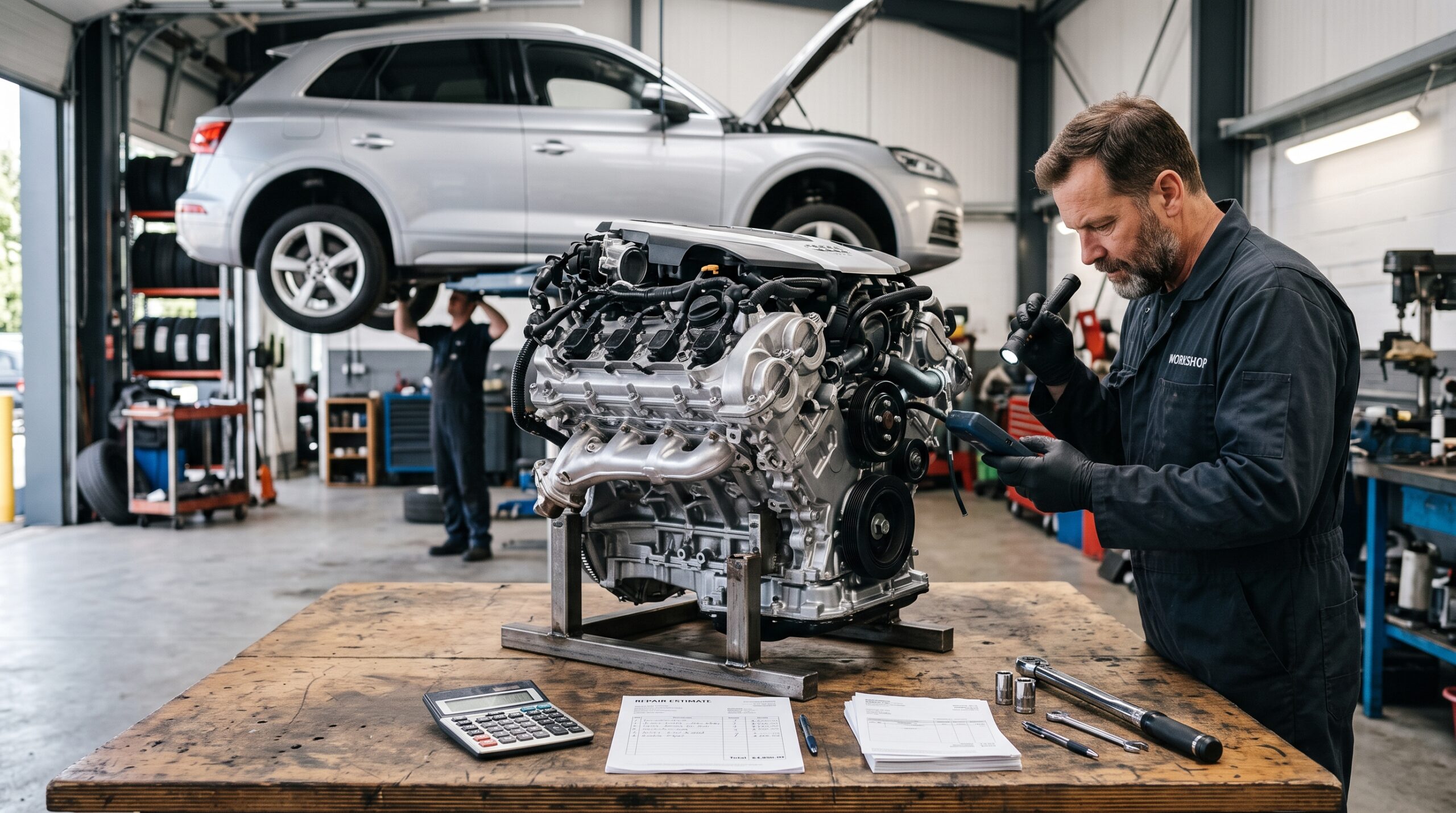
For a meaningful estimate, ask the engine shop to separate inspection, machining, parts, and assembly costs.
Factors That Affect Blueprinting Costs
Several factors influence the final bill.
Engine size and design: Some engines are easier to access and machine than others. Complex designs may require more labor or specialized tools.
Engine condition: A clean engine with sound components may need less repair work than one with worn cylinders, damaged bearings, or a cracked block.
Machining requirements: Boring, honing, crankshaft grinding, cylinder head work, and balancing all add to the cost when required.
Parts quality: Forged pistons, performance connecting rods, upgraded bearings, and specialized valve train components can increase the parts budget.
Level of blueprinting: Checking a few critical dimensions is not the same as measuring and documenting a complete performance engine.
Testing: Additional checks, such as a professional engine dyno session, may increase the total cost.
Labor Costs and Machine Shop Services
Blueprinting takes time because the builder must measure, record, compare, and verify important dimensions.
Machine shop work may be billed separately from engine assembly. Some shops offer a complete package, while others charge for each operation.
Before agreeing to a quote, ask whether it includes:
- Complete engine disassembly and inspection.
- Cleaning and crack inspection.
- Measurements and written specifications.
- Required machining.
- Rotating assembly balancing.
- New bearings, seals, and gaskets.
- Final engine assembly.
- Break-in guidance and testing, if offered.
Not every package includes all these services.
If you are located in Bangladesh and plan to have the work done locally, request prices from several qualified engine workshops. Ask whether they have experience with your specific engine model and whether their measuring and machining equipment is suitable for the job.
Imported performance parts, shipping, customs charges, and limited parts availability may also affect the total cost.
Additional Costs for Performance Parts
Some blueprinting projects require new components.
These might include pistons, rings, bearings, connecting rods, valves, valve springs, camshaft components, or specialized fasteners.
A worn crankshaft may need grinding or replacement. A damaged block may require more extensive repair or may not be suitable for rebuilding at all.
Performance parts should be selected as a matched package where appropriate. Installing an expensive camshaft or forged pistons without considering the rest of the engine can lead to poor results.
It is also important to budget for supporting systems, such as cooling, lubrication, fuel delivery, and engine management, when building a high-performance engine.
Is Engine Blueprinting Worth the Money?
Blueprinting is most valuable when precision has a clear purpose.
It may be worth the investment if you are building an engine for racing, high-performance driving, or a long-term custom project where detailed quality control matters.
It may be less valuable if your goal is simply to return an ordinary commuter car to dependable service at the lowest reasonable cost.
For example, if a healthy factory engine already delivers the performance you need, spending extra on a complete blueprinting project may offer limited practical benefit.
On the other hand, a modified engine that will face sustained high loads may benefit from carefully verified clearances and balancing.
Ask the builder to explain which specific benefits you can expect and which costs are necessary for your application.
Is Engine Blueprinting Better for Racing or Daily Driving?
Engine blueprinting can suit both street and racing applications. The important difference is the specification used and the demands placed on the engine.
Blueprinted Engines for Street Cars
A street engine must work across a range of conditions.
It may need to start in cold weather, idle smoothly in traffic, operate at highway speed, and tolerate frequent starts and stops.
For this reason, a street-oriented build should prioritize sensible clearances, reliable lubrication, suitable cooling, and compatibility with the vehicle’s fuel and engine management systems.
Blueprinting can help verify these details, especially during a complete rebuild or restoration.
However, most daily drivers do not need a costly racing-engine build. A well-maintained factory engine or a properly rebuilt replacement may be the more practical option.
Blueprinted Engines for Racing Applications
Racing engines may face high temperatures, heavy loads, and extended operation at high engine speeds.
These conditions can make accurate measurements and careful component selection especially important.
A racing build may require detailed checks of bearing clearances, ring gaps, valve spring characteristics, rotating assembly balance, and lubrication requirements.
The builder must also account for the rules of the racing series, the type of fuel, and the intended engine-speed range.
Blueprinting does not mean using the tightest clearances possible. A racing engine may require different clearances from a street engine because of its operating conditions.
Racing engines may also need more frequent inspection and maintenance, even when they are built with great care.
Choosing the Right Engine for Your Needs
Before choosing blueprinting, consider how you use the vehicle.
Ask yourself:
- Is the vehicle mainly used for commuting?
- Do you want more power for a performance project?
- Will the engine face sustained high loads?
- Is the vehicle a restoration project?
- How much can you reasonably spend?
- Are replacement parts and qualified machine shops available?
Your answers help determine whether basic rebuilding, detailed blueprinting, or a complete performance build is the best fit.
The most expensive option is not automatically the best option for every driver.
Does Engine Blueprinting Increase Horsepower?
Engine blueprinting can help an engine reach its intended performance, but it does not automatically add a fixed amount of horsepower.
The results depend on the engine’s original condition, the accuracy of its existing parts, and the work performed.
How Precise Clearances Affect Performance
Engine clearances influence lubrication, friction, heat, sealing, and the movement of internal parts.
If a cylinder bore is out of specification, correcting it and fitting the right pistons and rings may improve cylinder sealing.
If camshaft timing is incorrect, setting it properly can help restore the expected power delivery.
If the rotating assembly has excessive imbalance, correcting it can reduce vibration.
These improvements may help the engine perform better than it did before the work. However, they do not all produce a direct or measurable horsepower gain.
Clearances must be chosen for the application. Reducing a clearance without considering lubrication and thermal expansion can damage the engine instead of improving performance.
Blueprinting vs. Performance Modifications
Blueprinting and performance modifications have different purposes.
Blueprinting focuses on measurement, accuracy, and correct assembly. Performance modifications change the engine’s design or operating characteristics to target a particular result.
Common modifications include:
- Installing a different camshaft.
- Improving cylinder head airflow.
- Changing the intake or exhaust system.
- Increasing displacement where practical.
- Modifying compression ratio.
- Upgrading fuel delivery and engine management.
These changes can affect power, but they must work together as a complete system.
For example, a high-performance camshaft may work well at high engine speeds but make a vehicle less pleasant to drive in traffic. Correct blueprinting helps ensure that the modified engine is assembled properly, but it does not remove the trade-offs created by the camshaft choice.
What Results Can You Realistically Expect?
There is no reliable universal horsepower figure for blueprinting.
An engine with incorrect clearances, poor ring sealing, or other dimensional problems may benefit significantly from correcting those issues.
An engine that already meets its specifications may show little or no measurable increase in peak horsepower.
The best way to assess power is to test the engine under controlled conditions before and after the work, when practical. A chassis dyno measures power at the wheels, while an engine dyno measures output at the engine under its test setup.
Other factors, such as temperature, fuel, tuning, and test conditions, can affect the results.
Ask the engine builder to distinguish between expected improvements in reliability, smoothness, and consistency and any claimed horsepower increase.
What to Consider Before Blueprinting an Engine
Blueprinting is a technical process, so selecting the right builder is as important as selecting the right parts.
Choosing an Experienced Engine Builder
Look for a builder who has experience with your engine type and intended application.
Ask about previous projects, machine shop facilities, measuring equipment, and quality-control procedures.
A good builder should explain the work in clear terms and be willing to discuss why specific machining or replacement parts are needed.
Be cautious of promises of large horsepower gains without a clear explanation of the changes being made.
You should also ask who performs the machining if the builder uses an outside machine shop.
Understanding Engine Specifications
Before work begins, establish which specifications the builder will follow.
These may be factory service specifications, component manufacturer recommendations, or documented performance targets developed for the particular engine.
Ask which measurements will be recorded and whether you will receive a build sheet.
A build sheet can include actual bearing clearances, bore measurements, piston and ring specifications, crankshaft dimensions, and other relevant information.
The exact contents vary by engine, but documentation helps show what was checked and how the engine was prepared.
Checking Your Budget and Performance Goals
Set a budget before the engine is dismantled.
Keep some money available for unexpected repairs because internal damage may not become clear until the engine has been inspected.
Also consider the cost of installation, fluids, filters, tuning, and any required supporting upgrades.
Define what you want from the engine. Better daily drivability, dependable restoration, higher output, and competitive racing are different goals.
A clear goal helps the builder avoid unnecessary modifications and recommend suitable specifications.
Asking About Testing and Quality Control
Ask how the shop verifies its work.
Depending on the project, checks may include dimensional inspections, oil clearance verification, leak testing, cylinder head testing, or engine dyno testing.
Not every engine requires a dyno session, and a dyno test does not replace accurate measurements during assembly.
You should also ask about the recommended break-in process, oil requirements, maintenance schedule, warranty terms, and documentation.
Clear answers can help you understand what you are paying for and what responsibilities remain after the engine is installed.
Frequently Asked Questions
What does it mean when an engine is blueprinted?
It means the engine has been carefully measured, checked, and assembled to specific technical dimensions and tolerances. The builder may machine or match parts when needed to ensure they work together as intended.
Does a blueprinted engine make more horsepower?
It can help an engine produce its intended power if the work corrects dimensional problems or improves component matching. However, blueprinting alone does not guarantee a horsepower increase. The result depends on the engine’s original condition and the work performed.
Is a blueprinted engine more reliable?
It can be more consistent and may be less likely to suffer from certain assembly or dimensional problems when the work is performed correctly. Reliability also depends on component quality, machining, lubrication, cooling, tuning, driving conditions, and maintenance.
How much does it cost to blueprint an engine?
The cost varies by engine type, condition, labor rates, machine work, and parts. Basic measuring work costs less than a complete performance build. Request an itemized quote that explains the measurements, machining, parts, assembly, and testing included.
Can any engine be blueprinted?
Many conventional internal combustion engines can be blueprinted, but the practical scope depends on their design, condition, parts availability, and repair limits. Some damaged engines may not be economical or suitable for rebuilding. A qualified engine builder can inspect the engine and explain the available options.
Is a blueprinted engine worth it for a daily driver?
It can be worthwhile during a complete rebuild if you want detailed measurement and quality control. However, most daily drivers do not need a full performance blueprinting package. A well-maintained factory engine or a properly rebuilt engine may meet everyday needs at a lower cost.
Conclusion
A blueprinted engine is carefully measured, inspected, and assembled to precise specifications. The process may include machining, component matching, balancing, and detailed checks of critical clearances.
These steps can improve consistency, support reliable operation, and help an engine achieve its intended performance. However, they do not guarantee extra horsepower or prevent every possible failure.
Whether blueprinting is worth the cost depends on the engine’s condition, your performance goals, and how you plan to use the vehicle.
Before making a decision, speak with an experienced engine builder, request a clear estimate, and ask for documentation of the measurements and work performed. This will help you choose the right approach for your engine and budget.


One thought on “What Is a Blueprinted Engine? Benefits, Costs, and More”