



Our Blogs
Does Tohatsu Make Mercury Outboards? The Facts

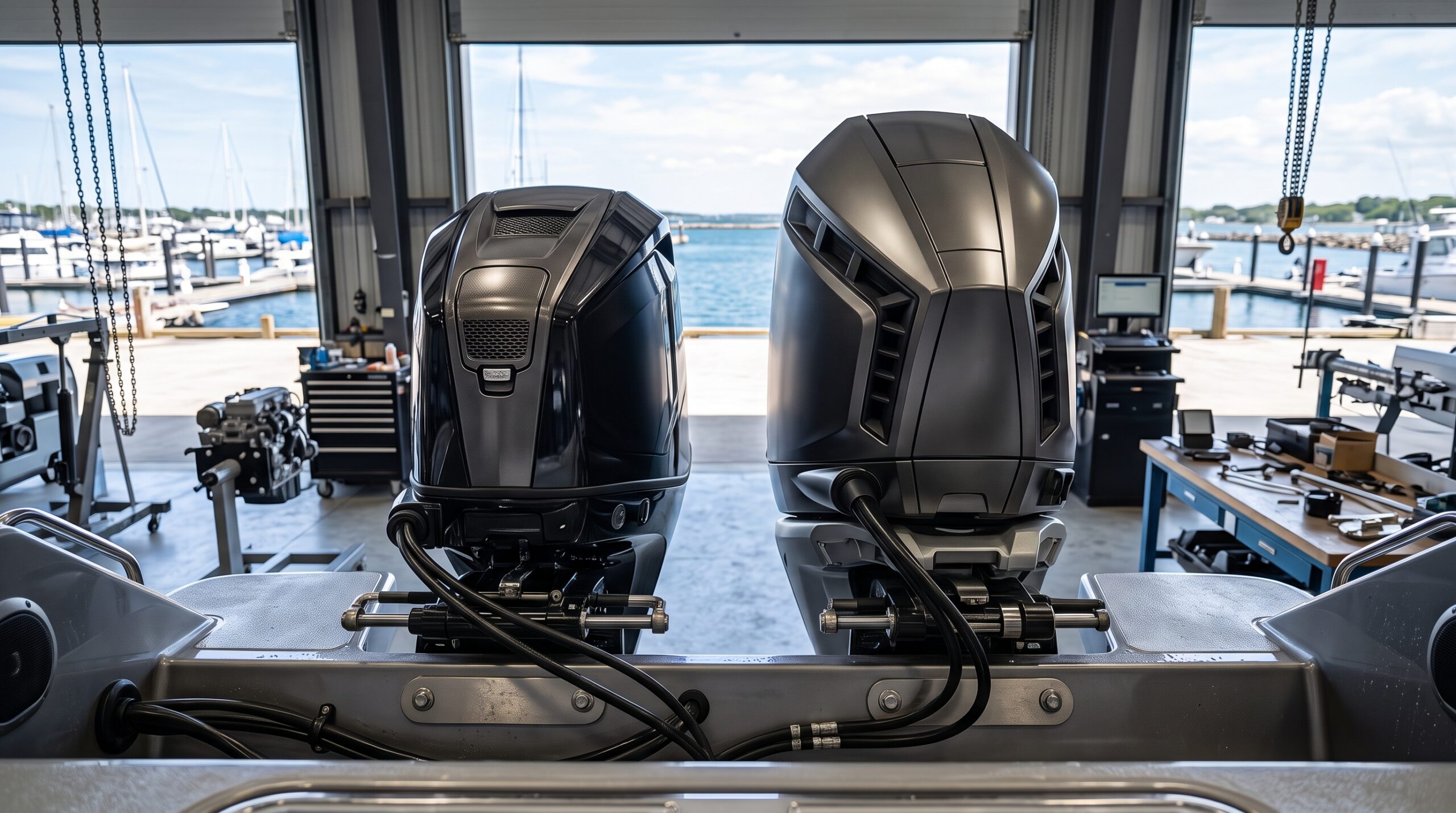
Boat owners often ask, does Tohatsu make Mercury outboards? The answer is yes for certain models, but the relationship is more specific than many people realize. Tohatsu has manufactured outboard engines for Mercury Marine through a long-standing business relationship. However, this does not mean that every Mercury outboard is made by Tohatsu or that the two brands are identical in every way.
Tohatsu is a Japanese outboard motor manufacturer with decades of experience in marine engine production. Mercury Marine is a major marine propulsion brand owned by Brunswick Corporation. The relationship between the companies developed because Mercury’s parent company sought a manufacturing partner with strong technical skills and production capacity. Tohatsu Marine Corporation was established in 1988 as a joint venture between Tohatsu Corporation and Brunswick, helping expand production for both Tohatsu-branded and Mercury-branded outboards. Tohatsu’s official company history describes this manufacturing relationship and explains how it helped increase production.
Understanding this connection is useful when buying a new boat motor, maintaining an existing engine, or searching for replacement parts. Two outboards can have a connection through manufacturing without having exactly the same specifications, equipment, warranty, or service requirements. The model, serial number, production year, and market all matter when identifying an engine’s origin.
This guide explains whether Tohatsu makes Mercury outboards, how the two companies are connected, what their manufacturing partnership means, and how boat owners can verify the manufacturer of a specific engine. It also covers differences in branding, maintenance, parts compatibility, reliability, and customer support.
Does Tohatsu Make Mercury Outboards?
Yes, Tohatsu has manufactured certain outboard motors sold under the Mercury brand. The relationship is supported by the history of Tohatsu Marine Corporation, which was created in partnership with Brunswick, Mercury Marine’s parent company. Tohatsu Marine manufactures outboard engines for Tohatsu and Brunswick’s marine business, which includes Mercury-branded products.
The important point is that this arrangement applies to certain engines, not the entire Mercury product range. Mercury sells outboards across many horsepower classes, designs, and technology levels. Its broad lineup includes portable motors, mid-range engines, and high-powered models. These products do not all necessarily share the same manufacturing source.
The answer to whether Tohatsu makes Mercury outboards therefore depends on the particular model. Some Mercury outboards have been produced through Tohatsu’s manufacturing operations, while other Mercury engines come from different production arrangements. It would be inaccurate to assume that every Mercury motor has a Tohatsu-built powerhead or that every engine with a similar appearance comes from the same factory.
It is also important to separate manufacturing from brand ownership. Tohatsu is responsible for its own brand and products, while Mercury Marine operates under Brunswick Corporation. A manufacturing partnership allows companies to work together while maintaining separate brands, product identities, and customer-facing services.
For boat owners, the practical lesson is simple: do not identify an outboard’s manufacturer by its paint, logo, or horsepower rating alone. Check the engine’s identification plate, model information, documentation, and authorized service records. These details are more reliable than general statements about the relationship between the two brands.
What Is the Relationship Between Tohatsu and Mercury Marine?
Tohatsu and Mercury Marine have a long history of cooperation in outboard engine manufacturing. Their relationship developed from a business need to produce dependable marine engines efficiently and serve a large international market. The partnership also helped Tohatsu expand production beyond the volume it could achieve by selling engines only under its own brand.
Tohatsu Marine Corporation was established in February 1988 as a joint venture between Tohatsu Corporation and Brunswick Corporation. Brunswick was seeking a Japanese partner with established engine technology and manufacturing capability. Tohatsu had experience producing outboards and was positioned to support greater production requirements.
The joint venture gave the companies a way to combine manufacturing expertise with access to a wider market. Tohatsu could use its engineering and factory capabilities to produce engines, while Brunswick could source selected products for sale through its marine business. This arrangement contributed to the growth of Tohatsu Marine’s production operations.
The relationship does not mean that the companies merged into one brand. Tohatsu and Mercury continue to market outboards under their own names. Their product ranges, branding, dealer arrangements, and support systems can differ. Manufacturing cooperation is one part of the relationship, while product development, distribution, sales, and after-sales service are separate considerations.
For customers, this distinction helps explain why two engines may have a manufacturing connection yet appear different in a showroom. Brand identity includes more than the physical engine. It can also include the product specification, available controls, standard equipment, warranty terms, dealer network, and the support offered after purchase.
A Brief History of Tohatsu
Tohatsu is a Japanese company with a long history in engine manufacturing. Its official corporate history records the production of Japan’s first outboard engine in 1956. Over time, the company developed its marine business and expanded its manufacturing capabilities to serve customers in multiple markets.
Outboard engine production requires precise machining, careful assembly, corrosion-resistant finishes, and consistent quality checks. These requirements become more demanding when a factory must produce many engine models and specifications. Tohatsu built its manufacturing operations around these needs and expanded production as demand grew.
The establishment of Tohatsu Marine Corporation in 1988 was an important step in this development. The partnership with Brunswick created a route for producing engines for an additional major brand. It also helped increase the scale of the factory’s operations and made it possible to support a broader customer base.
Tohatsu Marine later moved its main manufacturing operation to Komagane, Nagano Prefecture, where it developed a more integrated production system. The company’s official materials describe machining, coating, assembly, and testing processes designed to maintain manufacturing quality. These processes are important because an outboard engine operates in a demanding environment where moisture, vibration, heat, and salt exposure can affect long-term performance.
Today, Tohatsu offers its own range of outboards in several power categories. Its official international product lineup includes portable engines, mid-range models, and higher-powered outboards. The company’s independent product range shows that Tohatsu is not simply a factory making motors for another company. It is also an established marine brand with its own engineering, product identity, and dealer support.
A Brief History of Mercury Marine
Mercury Marine is a major name in the marine propulsion industry. It supplies engines and related products for recreational boating, fishing, and other marine uses. Its product range covers different boat sizes and performance needs, giving buyers a choice of engines for a wide range of applications.
Mercury Marine operates as part of Brunswick Corporation. This corporate connection is central to understanding the Tohatsu relationship because Brunswick participated in establishing Tohatsu Marine Corporation. Rather than buying every engine from a single source, a large marine business may use multiple manufacturing facilities and production arrangements to serve its market.
Mercury’s brand includes product development, engine specifications, controls, rigging, technical documentation, dealer support, and warranty policies. These elements help define the product customers purchase, regardless of where a particular engine or component is manufactured.
A Mercury-branded outboard should therefore be evaluated according to its exact model and specification. The brand name alone does not provide a complete manufacturing history. If the factory origin matters to a buyer, it should be confirmed using the identification information for the specific engine rather than assumptions about the brand as a whole.
How the Two Companies Work Together
The relationship between Tohatsu and Mercury is based in part on manufacturing cooperation. Tohatsu Marine’s official history explains that Brunswick sought products from Tohatsu as the Japanese manufacturer improved its engine technology and production capability. The joint venture helped support higher output and enabled the factory to manufacture engines for more than one brand.
This type of arrangement is common in manufacturing industries. A company may develop and sell products under its own name while also producing goods for a partner. The partner can then distribute those goods through its established brand and sales network. The precise responsibilities can vary by product and agreement.
In the outboard motor market, this means that a Tohatsu-manufactured engine may be sold under Mercury branding when it is part of the relevant product arrangement. It does not automatically mean that Tohatsu designed every feature, supplied every component, or manufactured every Mercury model.
It is also important not to assume that every engine produced through the partnership uses the same specifications across both brands. Product requirements may vary by model, market, production year, and intended use. The manufacturer’s documentation should be used to confirm details such as horsepower, operating requirements, maintenance intervals, and compatible parts.
For consumers, the partnership can help explain similarities between certain engines. However, the best way to establish a relationship between two particular models is to compare their official model information and parts documentation rather than relying only on visual similarities or online discussions.
Which Mercury Outboards Are Made by Tohatsu?
Determining which Mercury outboards are manufactured by Tohatsu requires looking at the exact engine rather than relying on a general horsepower rule. Tohatsu Marine has manufactured engines for Mercury, but the manufacturing source can vary across Mercury’s extensive product lineup. Product specifications and production arrangements can also change over time.
A model’s horsepower rating can provide useful context, but it is not enough to confirm its manufacturer. Two outboards with the same horsepower may have different designs, production origins, control systems, and parts requirements. Similarly, an engine sold in one country may not have precisely the same configuration as a similarly named engine sold in another market.
Tohatsu’s manufacturing relationship with Brunswick is well documented in its official company history. However, that history does not establish that every engine in a particular horsepower category is manufactured by Tohatsu today. Buyers should confirm specific models through official product information and manufacturer or dealer records.
Smaller-Horsepower Mercury Outboard Motors
The relationship between Tohatsu and Mercury is particularly relevant when researching smaller outboard motors. Tohatsu has manufactured Mercury-branded outboards, and its production capabilities have supported the supply of engines for Brunswick’s marine business.
Smaller outboards are often used on compact fishing boats, tenders, inflatable boats, and other vessels that require a portable propulsion system. Their owners may be especially interested in the manufacturing source because they want to understand parts availability, service requirements, and long-term maintenance costs.
However, it is not safe to conclude that every small Mercury outboard is a Tohatsu product. The manufacturing arrangement may depend on the model, production period, and market. A specific engine’s identification information provides a stronger basis for determining its origin.
When researching a small Mercury motor, start with its complete model designation and serial number. Compare that information with the official Mercury documentation for the relevant production year. If the documentation does not identify the manufacturing source clearly, contact an authorized Mercury dealer or the manufacturer’s customer support team.
This approach is more reliable than using general online claims that all engines below a particular horsepower are made by Tohatsu. Such claims can become outdated or overlook differences between model generations.
Mercury Outboards Made by Mercury Marine
Mercury Marine has its own manufacturing and product development operations. Its outboard lineup includes a broad range of engines, and the company operates within Brunswick’s wider marine business. Consequently, Mercury should not be described simply as a brand that buys all its outboards from Tohatsu.
Manufacturing arrangements can differ between engine families. Some models may be produced in Mercury facilities, while others may be sourced through manufacturing partnerships or other arrangements. The exact origin must be established at the model level.
This distinction matters when comparing engines because manufacturing location alone does not tell a buyer everything about quality or performance. Engineering specifications, production standards, quality control, maintenance history, and correct installation all contribute to the ownership experience.
A Mercury outboard remains a Mercury-branded product even when a partner manufacturer has produced it. The applicable owner’s manual, service instructions, warranty documentation, and parts catalogue should guide maintenance and repair decisions.
How to Identify the Manufacturer of a Mercury Outboard
The most dependable way to investigate a Mercury outboard’s origin is to identify the engine precisely. Begin by locating its identification plate or label. The location can differ by model, so consult the owner’s manual if you cannot find it.
Record the complete model designation and serial number. These identifiers help a dealer distinguish between engine generations, production specifications, and applicable service information. The model name alone may not be sufficient because similar names can be used across different production years.
Next, consult the official documentation for the engine. The owner’s manual and product records can confirm important details about the engine’s configuration, recommended maintenance, and technical requirements. If the manufacturing source is not explicitly stated, ask an authorized Mercury dealer to verify it using the identification details.
For an older used outboard, the seller’s description should not be treated as definitive proof of origin. A motor may have replacement parts, repaired components, or incomplete documentation. Confirming the identification details can help avoid ordering the wrong parts or following instructions intended for a different model.
Are Tohatsu and Mercury Outboards the Same?
Tohatsu and Mercury outboards are not universally identical. The companies have a manufacturing relationship, and certain Mercury models have been produced by Tohatsu. Nevertheless, the two brands offer different product ranges, and the specifications of any related engines must be checked individually.
A manufacturing connection can result in similarities in engine design or construction. It does not automatically establish that two models have identical equipment, controls, software, components, or service procedures. Even engines that share an underlying design may be configured differently for their respective brands or markets.
The distinction becomes important when choosing a motor, maintaining an existing one, or comparing prices. A buyer should consider the entire product package instead of assuming that two similar-looking engines are interchangeable.
Differences in Branding and Design
Branding is one of the most visible differences between the two companies. Tohatsu sells engines under the Tohatsu name, while Mercury Marine sells its products under the Mercury brand. The paint, decals, cowling design, and model names reflect these separate identities.
Appearance alone, however, cannot prove where an engine was manufactured. An outboard’s exterior can be designed to meet a brand’s visual standards even when a partner company has participated in production.
Equipment and specifications may also vary. Depending on the model, differences can involve available controls, included accessories, shaft length options, propeller arrangements, charging systems, and other features. Not every difference will apply to every related engine, so the manufacturer’s specification sheets are essential.
When comparing a Tohatsu and a Mercury motor, use the official information for both models. Compare the rated horsepower, recommended operating range, engine weight, shaft configuration, fuel requirements, control compatibility, and maintenance schedule. These details are more useful than judging a motor by its logo or external appearance.
Similarities in Engine Technology
Related manufacturing arrangements can lead to similarities between some outboards. If two engines come from a shared production arrangement or have related underlying designs, they may share certain components or technical characteristics.
However, a similar appearance does not guarantee that the engines use the same internal parts. Differences can exist between production years, specifications, and market versions. A part that fits one model may be unsuitable for another, even when both engines look almost identical.
It is also important to distinguish between the manufacturer of an engine and the company responsible for the brand under which it is sold. A production partner may assemble an engine according to agreed specifications, while the brand owner provides the product identity and customer-facing support.
For a boat owner, the useful question is not simply whether two motors are similar. It is whether the exact models share the relevant component or specification. Official parts catalogues, service documentation, and authorized dealer guidance are the appropriate sources for that information.
Differences in Warranty and Customer Support
Warranty coverage is determined by the applicable terms and conditions, not simply by a manufacturing connection. A Mercury-branded outboard may be covered by Mercury’s warranty arrangements, while a Tohatsu-branded engine may follow Tohatsu’s own policies.
Coverage can vary by country, model, purchase date, intended use, and other conditions. Commercial use may be treated differently from recreational use, and maintenance or registration requirements can affect a claim. Buyers should read the actual warranty document provided with the engine.
Dealer support is another important consideration. A local authorized dealer may offer routine servicing, diagnostic support, genuine parts, and warranty assistance for one brand but not the other. Availability can vary by region, so the nearest service network should be considered before making a purchase.
A manufacturing relationship does not mean that every dealer can service every related engine under the same conditions. Always confirm the correct service channel and warranty process for the brand and model you own.
Is a Tohatsu Outboard Better Than a Mercury Outboard?
There is no single answer that applies to every boat and every owner. Both brands have experience in the outboard motor market, but the right choice depends on the specific models being compared and the needs of the vessel.
The engine must suit the boat’s design, weight, intended use, and manufacturer-approved horsepower range. An engine that is too small may not provide the required performance, while an unsuitable or excessively powerful motor can create safety and handling problems. The boat manufacturer’s recommendations should always take priority.
Purchase price is only one part of the decision. Buyers should also consider routine servicing, parts availability, warranty coverage, fuel requirements, dealer access, and the engine’s suitability for their typical operating conditions.
A lower purchase price may not represent the best long-term value if service support is difficult to obtain. Likewise, a more expensive engine is not automatically the better choice if its extra features are unnecessary for the boat’s intended use.
Reliability and Durability
Reliability depends on multiple factors, including engine design, manufacturing quality, correct installation, regular maintenance, and operating conditions. It is not accurate to claim that one brand is always more reliable simply because of a manufacturing connection between the companies.
Outboard motors operate in a demanding environment. Water exposure, salt, vibration, heat, and extended use can all affect components over time. Following the maintenance schedule helps owners detect wear and address issues before they become more serious.
The engine’s service history is especially important when buying used. A well-maintained motor with complete records may be a more sensible purchase than an engine with an uncertain history, regardless of brand. Signs of corrosion, neglected maintenance, damaged wiring, or unexplained running problems deserve professional inspection.
Buyers should also consider whether authorized servicing and genuine replacement parts are available locally. Reliable support can make ownership easier and help the engine remain in good working condition.
Fuel Efficiency and Performance
Fuel efficiency varies with the engine’s design, horsepower, operating speed, load, propeller selection, and the boat’s hull. Wind, waves, water conditions, and driving habits also affect fuel consumption.
Comparisons should therefore use the exact engines being considered rather than relying on general brand claims. Manufacturer specifications provide useful technical information, but real-world fuel consumption depends on how the engine is installed and operated.
Performance should be judged against the boat’s intended purpose. A motor for occasional trips on calm water may have different requirements from an engine used regularly in demanding conditions. The correct shaft length, propeller, mounting height, and control setup can influence how effectively an outboard performs.
An owner should follow the boat and engine manufacturers’ recommendations when selecting and installing a motor. A qualified marine technician can help confirm that the engine and related equipment are appropriate for the vessel.
Maintenance and Replacement Parts
Maintenance costs can affect the total cost of ownership. Routine servicing may include engine oil and filter changes where applicable, inspection of fuel and cooling systems, checking the propeller, and following the recommended service intervals. The exact requirements depend on the model.
A shared manufacturing history does not make every component interchangeable between Tohatsu and Mercury engines. Some components may be shared between particular related models, while others may differ in design, dimensions, materials, or calibration.
Before purchasing replacement parts, verify the part number against the engine’s serial number and the official parts catalogue. Do not rely only on a seller’s claim that a component fits both brands. An incorrect component can cause poor performance, equipment damage, or safety concerns.
The availability of authorized service and genuine parts should be part of the buying decision. An engine that is easy to service in the owner’s area may be more practical than one that requires difficult-to-obtain parts or specialist support.
Are Tohatsu and Mercury Outboard Parts Interchangeable?
Some components may be compatible between specific Tohatsu and Mercury models, but compatibility should never be assumed across the two brands. The fact that Tohatsu has manufactured certain Mercury outboards does not prove that all parts from one brand will fit the other.
An outboard consists of many systems, including the powerhead, fuel delivery system, cooling system, ignition components, gearcase, propeller, steering connections, and electrical equipment. These parts must work together within the engine’s approved specifications.
Even when two engines share a design, their part numbers can differ because of production updates, supplier changes, or brand-specific configurations. A component can also vary by model year or market. These details make accurate identification essential.
The safest approach is to use the engine’s model and serial number when searching for parts. Consult the official parts catalogue or ask an authorized dealer to confirm compatibility. If an alternative component is being considered, verify that it is approved for the exact engine rather than relying on appearance or a general cross-reference.
Owners should also distinguish between physical fit and proper operation. A part may appear to fit but still have different electrical characteristics, tolerances, or performance specifications. Correct compatibility is more than a matter of whether the component can be attached.
Following the manufacturer’s specifications protects the engine and helps ensure that repairs are completed correctly. When there is uncertainty, a qualified marine technician can identify the appropriate component and explain whether an approved alternative exists.
Who Should Buy a Tohatsu or Mercury Outboard?
The best choice depends on the boat, the owner’s budget, the intended use, and the availability of support. Neither brand is automatically the right option for everyone. Comparing the exact engine specifications and ownership requirements will provide a more useful answer than focusing on the companies’ manufacturing relationship alone.
Start by identifying the boat’s approved horsepower range and the type of engine it requires. Consider how often the boat will be used, what loads it will carry, and the conditions in which it will operate. These factors help narrow the choice to suitable models.
Next, compare the purchase price and the expected cost of ownership. Include routine maintenance, replacement parts, fuel consumption, installation, and warranty conditions. Local service availability can be particularly important for owners who depend on their boat regularly.
Finally, review the documentation for each engine. Confirm that the model is suitable for the vessel and that its service requirements can be met. A good buying decision should balance performance, safety, support, and cost.
Choosing Tohatsu for Your Boat
Tohatsu may be worth considering for buyers who want an engine from an established Japanese outboard manufacturer with its own product range. The company offers engines across several horsepower categories and maintains an international dealer network.
The appropriate Tohatsu model depends on the boat’s requirements and the availability of service in the owner’s area. Buyers should review the official specifications, warranty terms, and recommended maintenance schedule before purchasing.
Tohatsu’s manufacturing experience is relevant when assessing the company’s background, but no brand history can replace a model-specific evaluation. The engine must be suitable for the vessel, and the owner must be able to maintain it correctly.
Choosing Mercury for Your Boat
Mercury may appeal to buyers who want a particular Mercury model, access to its dealer network, or features available within its product lineup. The brand offers outboards for different vessel types and performance needs.
The best choice still depends on the exact engine. Review the horsepower, weight, shaft length, controls, warranty, and service requirements. Confirm that the motor is compatible with the boat and that local authorized support is available.
A Mercury engine manufactured through a partner arrangement remains a Mercury-branded product. Buyers should follow the documentation and warranty terms associated with that specific engine rather than assuming that the manufacturing partner determines every aspect of ownership.

FAQ
Does Tohatsu make Mercury outboards?
Yes. Tohatsu has manufactured certain Mercury-branded outboards through its long-standing relationship with Brunswick, Mercury Marine’s parent company. However, not every Mercury outboard is manufactured by Tohatsu. The production origin depends on the specific model and manufacturing arrangement.
Are Mercury and Tohatsu outboards made in the same factory?
Some Mercury outboards have been manufactured by Tohatsu Marine in Japan, but the brands’ entire product ranges do not necessarily come from the same factory. Manufacturing location can vary by model, production year, and product arrangement. Check the engine’s official documentation or ask an authorized dealer to confirm its origin.
Does Mercury own Tohatsu?
Tohatsu is a separate Japanese company. Tohatsu Marine Corporation was established as a joint venture between Tohatsu Corporation and Brunswick Corporation. Brunswick is the parent company of Mercury Marine. This relationship is different from saying that Mercury owns the entire Tohatsu Corporation.
Are Tohatsu and Mercury small outboards identical?
Not necessarily. Some models may have a manufacturing connection or share certain design features, but specifications and equipment can differ. Compatibility should be confirmed using the exact model information, serial number, and official parts documentation.
Are Tohatsu outboards reliable?
Tohatsu has a long history of outboard engine manufacturing. However, reliability depends on the specific model, maintenance, installation, operating conditions, and service history. Regular servicing and access to appropriate parts are important for long-term performance.
How can I find out who made my Mercury outboard?
Locate the engine’s identification plate and record the complete model and serial numbers. Check the official documentation for the relevant model and production year. If the manufacturer is not clearly identified, contact an authorized Mercury dealer for confirmation.
Can I use Tohatsu parts on a Mercury outboard?
Only when the particular part is confirmed to be compatible with the exact Mercury engine. A manufacturing relationship does not make every component interchangeable. Verify part numbers through official catalogues or an authorized dealer before buying or installing a replacement.
Should I buy a Mercury outboard or a Tohatsu outboard?
Compare the specific models rather than choosing based only on the brand name. Consider the engine’s suitability for your boat, purchase price, maintenance requirements, warranty, parts availability, and local dealer support. The best option is the one that meets your requirements and can be serviced correctly.
Conclusion
So, does Tohatsu make Mercury outboards? Yes, Tohatsu has manufactured certain Mercury-branded engines through its long-standing manufacturing relationship with Brunswick, the parent company of Mercury Marine. The partnership dates back to the establishment of Tohatsu Marine Corporation in 1988 and has played an important role in outboard engine production.
However, the relationship does not mean that every Mercury outboard is made by Tohatsu. Mercury has a broad product range, and manufacturing sources can differ by model and production arrangement. Similar-looking engines may also have different specifications, components, warranty conditions, and service requirements.
For boat owners, the most important step is to verify the exact engine. Use its model designation, serial number, official documentation, and authorized dealer support to confirm its manufacturing origin and identify compatible parts. When choosing a new outboard, compare the engine’s specifications, maintenance needs, total ownership cost, and local service availability.
Understanding the connection between Tohatsu and Mercury helps buyers make informed decisions without confusing manufacturing partnerships with brand ownership. By checking the details of the specific engine, boat owners can choose appropriate products, maintain their motors correctly, and avoid unnecessary problems when purchasing replacement parts.